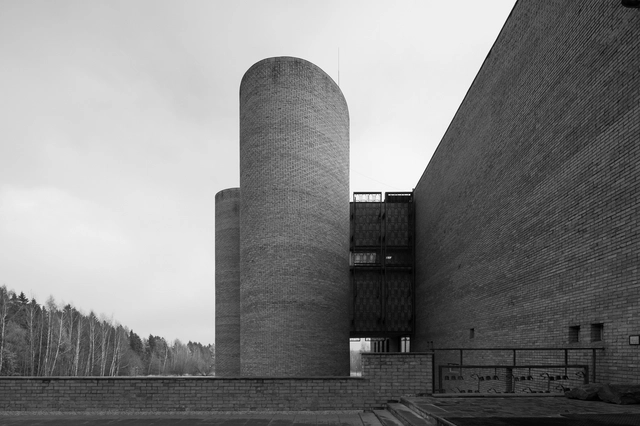
Father of Iraqi architecture Rifat Chadirji has passed away at 93, on April 10 in London, after contracting the novel coronavirus. Born in 1926 in Baghdad, he is responsible for more than 100 buildings across Iraq.
Some of his most iconic works include the Tahrir Square's Freedom Monument, the Tobacco Monopoly Headquarters in 1965, the Central Post Office in Baghdad in 1975 and the Unknown Soldier Monument, one of his most culturally significant intervention designed in 1959, demolished in 1982 and then replaced by a statue of Saddam Hussein in 2003.
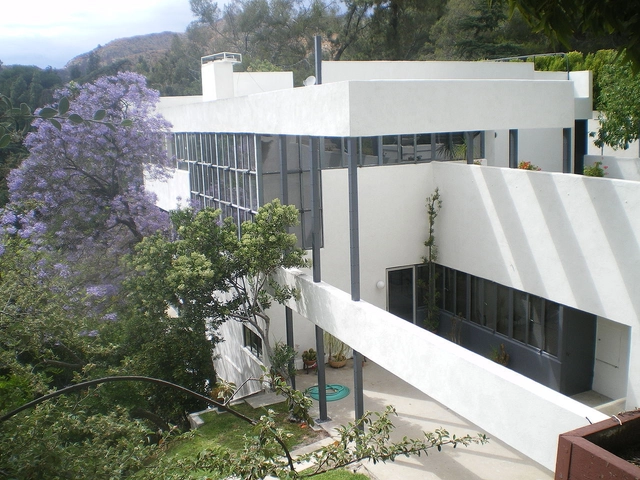
Though Modernism is sometimes criticized for imposing universal rules on different people and areas, it was Richard J. Neutra's (April 8, 1892 – April 16, 1970) intense client focus that won him acclaim. His personalized and flexible version of modernism created a series of private homes that were—and still are—highly sought after, making him one of the United States' most significant mid-century modernists. His architecture of simple geometry and airy steel and glass became the subject of the iconic photographs of Julius Schulman, and came to stand for an entire era of American design.
Modernism could be described as one of the most optimistic styles in architectural history, drawing from notions of utopia, innovation, and the reimagination of how humans would live, work, and interact. As we reflected in our AD Essentials Guide to Modernism, the philosophy of Modernism still dominates much of architectural discourse today, even if the world that gave rise to Modernism has changed utterly.
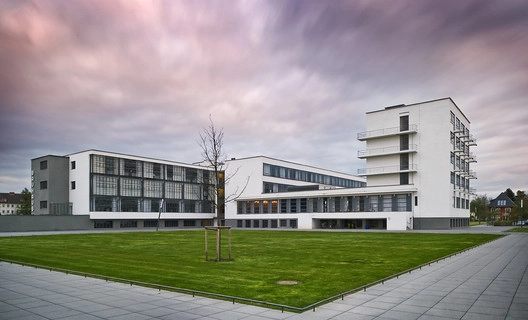
As we say goodbye to 2019, a year that saw the centenary of the Bauhaus, we have collated a list of key architectural styles that defined Modernism in architecture. This tool for understanding the development of 20th-century design is complete with examples of each style, showcasing the practice of Modernism that lay behind the theory.
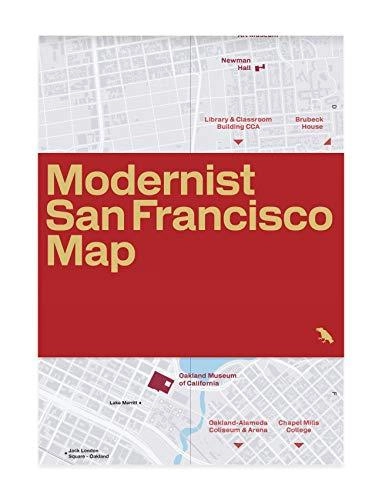
Description via Amazon.Guide map to Modernist architecture across San Francisco and the Bay Area. This two-sided folded map with original photography by Jason Woods is edited by Mitchell Schwarzer, Professor at California College of the Arts, and author of numerous books about architecture. The guide features over fifty influential examples of Modernist and Brutalist architecture from Berkeley and Oakland to Palo Alto and San Mateo. Details for individual buildings are supported by an introduction to Modernism in the Bay Area by Schwarzer. Architects featured include Vernon de Mars, Beverley Thorne, Skidmore, Owings & Merrill, Frank Lloyd Wright, Richard Neutra, Pier Luigi Nervi, Mario Ciampi, Kevin Roche and John Dinkeloo and many others.
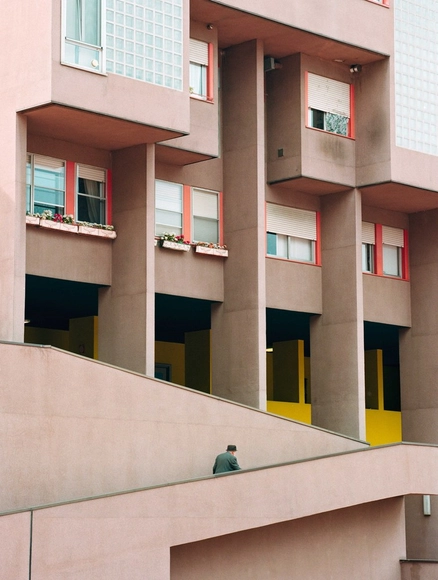
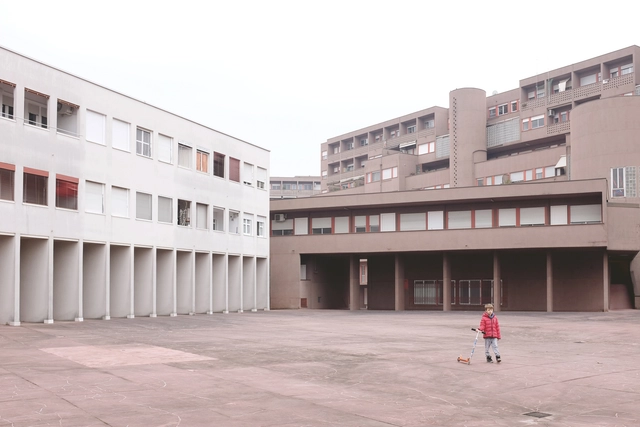
As the dust settled following the Second World War much of Europe was left with a crippling shortage of housing. In Milan, a series of plans were drafted in response to the crisis, laying out satellite communities for the northern Italian city which would each house between 50,000 to 130,000 people. Construction the first of these communities began in 1946, one year after the end of the conflict; ten years later in 1956, the adoption of Il Piano Regolatore Generale—a new master plan—set the stage for the development of the second, known as 'Gallaratese'. The site of the new community was split into parts 1 and 2, the latter of which was owned by the Monte Amiata Società Mineraria per Azioni. When the plan allowed for private development of Gallaratese 2 in late 1967, the commission for the project was given to Studio Ayde and, in particular, its partner Carlo Aymonino. Two months later Aymonino would invite Aldo Rossi to design a building for the complex and the two Italians set about realizing their respective visions for the ideal microcosmic community.[1]
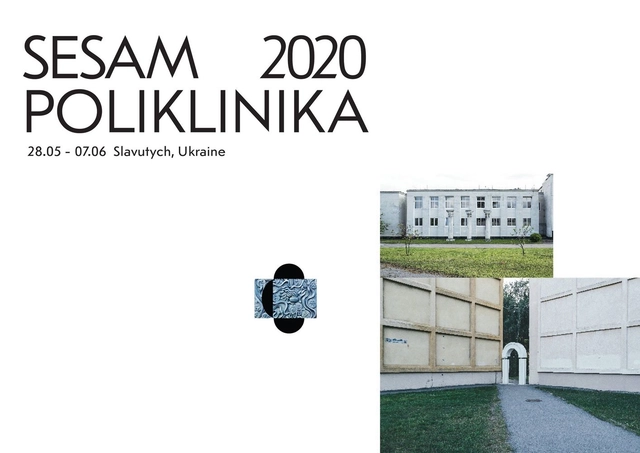
Call for workshop tutors for SESAM 2020 Poliklinika is now officially open! The event will take place between 28th May and 7th June 2020 in Slavutych, Ukraine.
Anyone studying or working in the field of architecture, or any other area of expertise closely related to spatial practices, anywhere in the World, can apply by submitting a single pdf file in English to easaukraine@gmail.com by Feb 17, 23:59 Slavutych TIME (EET, GMT +2).
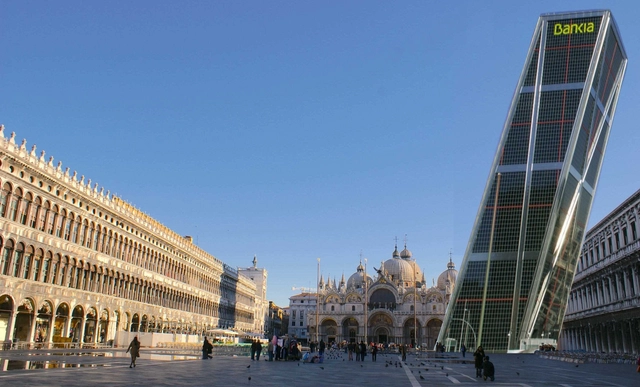
Imagine the following scenario. It is 1902, and to the great shock and distress of the citizens of Venice, the beautiful campanile tower in its Piazza San Marco has just collapsed. That very evening, the city’s communal council votes to approve 500,000 Lire for the prompt rebuilding, “com’era, dov’era” — “as it was, where it was”. Future residents and visitors alike may now continue to enjoy this beautiful structure, which had also been restored and added to many times previously.
But then an authority from far away steps up to speak. “Our regulations do not allow this! Our funding policies require that ‘a project shall use contemporary design’ — which means that you may use only current styles of which we approve, and you may not use the local traditional styles of Venice. That would be a ‘falsification of history’, a ‘mingling of the false with the genuine’, and we decree that this would have harmful consequences!” The project does not go forward, and something entirely “contemporary” is built instead.
In some theoretical books, architecture and the human body are more or less the same, each depending on one another. Oftentimes, however, it is the body that undergoes detrimental adjustments to adapt to the architecture, not the other way around.
In the newly released book X-Ray Architecture, architectural historian Beatriz Colomina argues that health facilities inspired modern architecture's most dominant formal signatures.
Architecture theorist, historian, and curator Beatriz Colomina talks about our discipline and its difficulty to accept the work as the result of a collaborative effort. When asked about sexism and gender issues within architecture, Colomina broadens the discussion and tackles the historical myth of architecture as the product of one single, brilliant - and always masculine - mind. A fiction that has obscured the role of a number of women, and whole teams, committed to the design process.
In recent years, people started to regain interest in a movement that dates back to the last century; a movement, first introduced during the 1940s and 1950s, through the works of Le Corbusier and Alison and Peter Smithson. With monolithic structures, modular shapes, and impressive massing, Brutalism highlights architectural integrity. This movement is highly characterized by rough, raw, and pure surfaces that underline the essence of the substances in question. Spread across the globe, architects have adopted and developed their own vision of this modern movement, creating contextual variations.
In the midst of all the chaos currently taking place in the city of Beirut, we look back on the Lebanese capital’s hidden Brutalist gems. To shed the light on a movement that's often neglected and forgotten, Architect Hadi Mroue created a series of images that highlight the Lebanese Brutalism movement as well as its evolution as an important part of the Lebanese modern heritage.
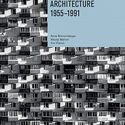
After the success of the original guide-book on underrated Soviet architecture, Garage Museum of Contemporary Art is publishing an English version of the bestselling guide: Moscow: A Guide to Soviet Modernist Architecture 1955–1991in a new digitalized format with six new chapters.
Oscar Niemeyer was a revolutionary of modernism, with an architectural language characterized by audacious curves and elaborated structures. The Brazilian architect established an architectural vision of a future utopian Brazil, one that ultimately has not come to pass. While public attention is often drawn to his masterpieces in Brasília, somewhat hidden from the architectural discourse is a house that Niemeyer designed for himself; a colonial-style scheme offering a radical departure from the expressive forms of his more noted works.
Born in the small Swiss city of La Chaux-de-Fonds, Charles-Édouard Jeanneret-Gris—better known by his pseudonym Le Corbusier (October 6, 1887 – August 27, 1965)—is widely regarded as the most important architect of the 20th century. As a gifted architect, provocative writer, divisive urban planner, talented painter, and unparalleled polemicist, Le Corbusier was able to influence some of the world’s most powerful figures, leaving an indelible mark on architecture that can be seen in almost any city worldwide.
A special night to support DOCOMOMO US/New York Tri-State, honor the Ford Foundation Center for Social Justice for the renovation of its landmark building, and celebrate the legacies of Kevin Roche and Dan Kiley.
Modern architecture, visible in contemporary production, is usually related to the use of guidelines established by Le Corbusier's five points of architecture. Despite being widely known and debated for years, these points continue to be revisited and rethought in projects from various places and contribute to the creation of interesting buildings in various programs.
Modern architecture emerged during the late 19th - early 20th century to break away from historical styles and create structures based on functionality and novelty. Regardless of the style's prominence, post-modernist architecture emerged a few decades later as a reaction to modernism's uniformity and formality, adding complexity, asymmetry, and color into architecture.
Terrazzo is made by combining a cement base (sand, water, and cement) with a mixture of ground minerals - like marble, granite, and quartz - and can be applied to almost any surface, vertical or horizontal. The technique, produced using a completely hand-crafted method, was used worldwide in the construction of modern buildings and is noted for its durability, resistance (to water and abrasion), and easy maintenance. This made it a go-to material in the creation of flooring for houses and the common areas of residential and office buildings.
Today, terrazzo is experiencing a revival as one of the key trends in contemporary architecture. Here, we will discuss the whats and hows of terrazzo and illustrate some of its uses in current projects.
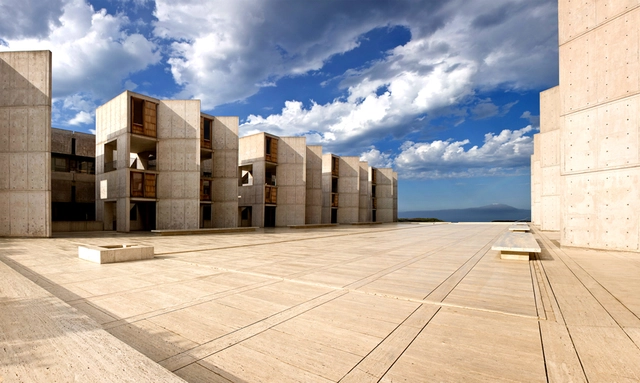
Courtesy Joe Belcovson for the Salk Institute for Biological Studies. ImageIn 2012, the Getty Conservation Institute founded its Conserving Modern Architecture Initiative (CMAI), with the Getty Foundation’s Keeping It Modern grant following two years later. Working synergistically, the two programs are dedicated to supporting new methods and technologies for the conservation of Modernist buildings. Louis Kahn’s Salk Institute for Biological Studies (1965) in La Jolla, California, has been the beneficiary of both CMAI and Keeping It Modern.
The Conserving Modern Architecture Initiative (CMAI) and Keeping It Modern grant are dedicated to supporting new methods and technologies for the conservation of Modernist buildings.






.jpg?1577789705 "Villa Savoye / Le Corbusier")
.jpg?1577789737 "Vitra Design Museum / Gehry Partners. Image © Liao Yusheng")





.jpg?1573123210&format=webp&width=640&height=580)