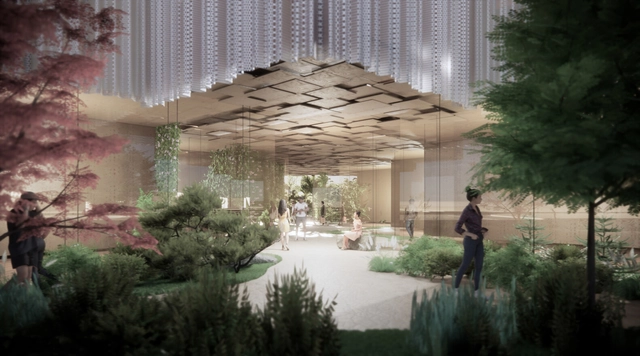
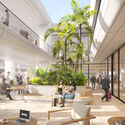
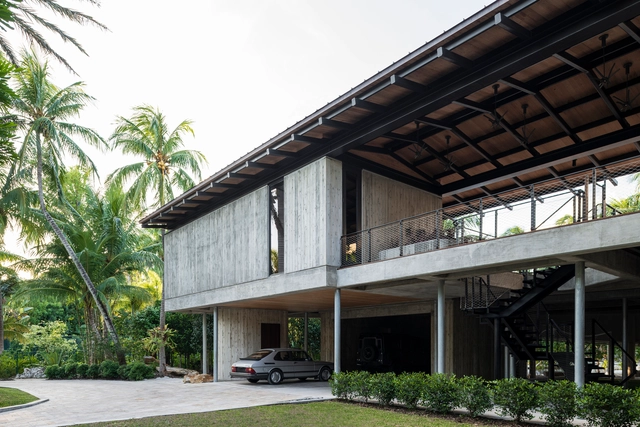
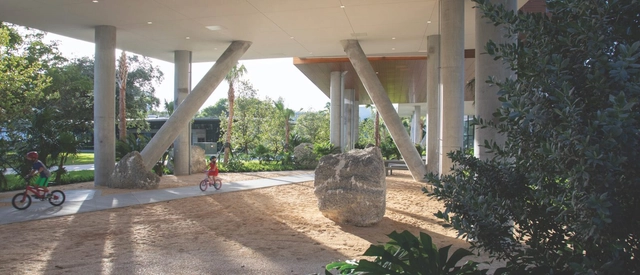
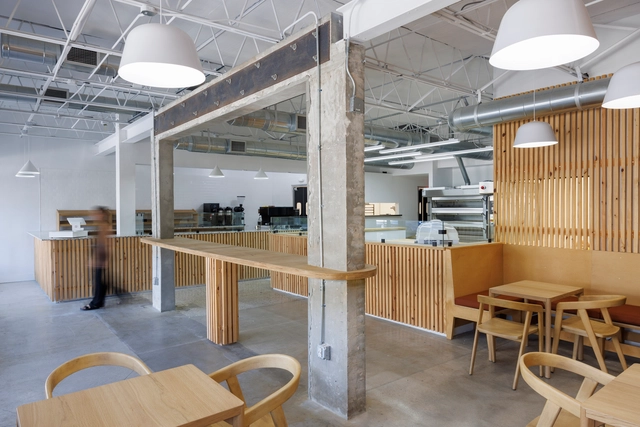
Kengo Kuma and Associates has just unveiled the designs of a new mixed-use project in Miami, Florida. Standing as the first mixed-use initiative by the architect in the United States, the scheme is set to become a popular attraction in the city. “MIRAI Design District” is comprised of retail spaces, office spaces, and commercial units.
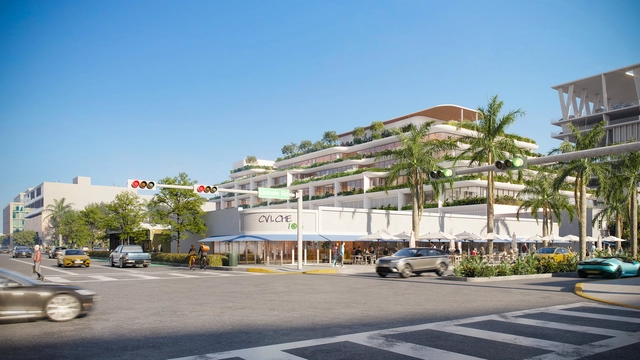
Foster + Partners has unveiled the plans for a new multi-purpose design in the heart of Miami Beach. “The Aalton” is a six-story building encompassing ground-level retail, offices, and residential spaces. Positioned at the intersection of Aalton Road and Lincoln Road, the renowned pedestrian shopping street, the building embraces Florida’s architectural heritage.
Highway interchanges have evolved from important infrastructures that help distribute traffic to unique landmarks that define cities. As multiple road networks embrace and form distinctive sculptures, these road intersections range from singular bridge connections and roundabouts to numerous, layered and multi-layered interchanges. They twist, turn, loop, and wrap around sparse land, vegetation, or existing structures in a bid to transfer travelers from one roadway to another. However, they also create a moment of enclosure, forming partially bounded areas and a sense of space. These spaces could be viewed as liminal and transitional, with no fixed typology able to be hosted. But that blurring character calls for ideas of urban intervention to disrupt the notion of what these spaces can be. They can be readapted from car-dominant sculptures into more human-friendly places and re-integrated as extended schemes of the city's architecture.
Arquitectonica has refuted Koolhaas’ accusation that “Modern architecture had never achieved the promised alchemy of quantity and quality,” and Alistair Gordon’s enormous compendium of the firm’s work certainly disproves it.
But what of Rossi’s backhanded praise: “In America … quantity is quality!”? Although absolutely deserving of praise, the quantity of the work is not the basis for Arquitectonica’s achievement—even when associated with the virtuosity of design. The importance of Arquitectonica derives from certain specific contributions to modern architecture in the United States.
Tu Casa by Lutolli Architects + Partners. Image Courtesy of Lutolli Architects + Partners
Architects play an important role in creating healthy, functional and aesthetically pleasing environments. Interior design represents a natural continuation of the same prerogative, and its importance has been accentuated in recent years, from the lockdown forcing many people to remain indoors for extended periods of time, to the rise of remote work. The task of the interior designer is not decorating spaces, but planning for an effective use of space, understanding the needs of the user and highlighting the intrinsic qualities of a space. Acoustics, lighting, material properties and proportions all play a role in achieving a coherent and enjoyable interior space.
This week’s curated selection of Best Unbuilt Architecture highlights interior design projects submitted by the ArchDaily community. From a pastel-colored library in Turkey to a renovated symphony hall in San Diego, US, this selection of unbuilt projects showcases how architects design interior spaces by integrating textures, materials, light, and color in well-proportioned spaces. The article includes projects from Turkey, US, Switzerland, Indonesia, UK, and Denmark.
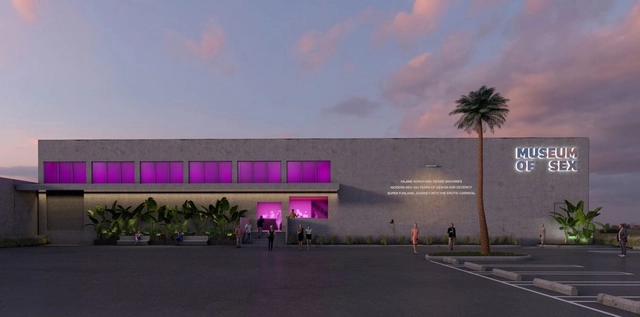
New York’s Museum of Sex announces its expansion to Miami in spring 2023 with a 3000-square-meters museum designed by the international studio Snøhetta. The converted warehouse will feature three extensive exhibition galleries, retail space, and a bar to preserve, present, and celebrate the cultural significance of human sexuality in one of the most vibrant and diverse arts communities in the USA. The inaugural program will include work by Hajime Sorayama and Super Funland: Journey into the Erotic Carnival, the museum’s main immersive experience.
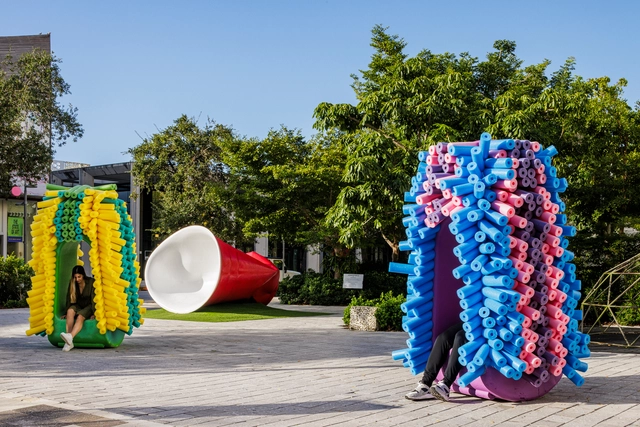
Rock | Roll by Germane Barnes. Image Courtesy of Miami Design District
Distinguished for its quality, depth, and diversity, Design Miami 2022 has concluded, giving worldwide collectors and locals the best in contemporary and emerging art and design. Kicking off at the end of November and running through the first week of December, this event ran alongside the annual Art Basel Miami Beach. The ultimate international art fair ranged from interactive installations to art exhibitions by promising up-and-comers to 20th-century masterworks, including Daniel Arsham and Andrés Reisinger, and Stefano Boeri. Also during this event, MetaMundo has presented their Top 50 Creators of the Metaverse - a hand-picked collection of some of the world’s best 3D artists.
For this edition, The Miami Design District has awarded Miami-based architect and designer Germane Barnes and commissioned a multifaceted installation that honors the city's polyethnic culture. Along with other relevant architectural installations during the Miami Art Week, the following selection includes work by Leandro Erlich at Perez Art Museum Miami and Pilar Zeta.
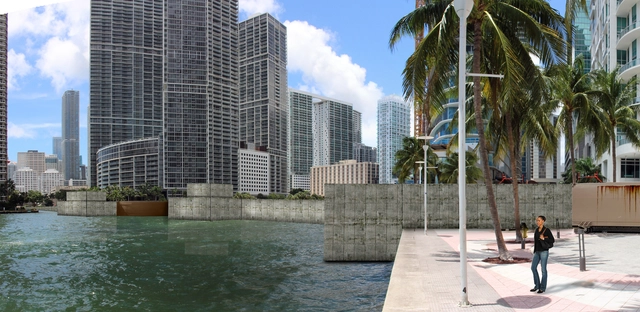
Visualization of U.S. Army Corps of Engineers’ grey infrastructure proposal. Response to the U.S. Army Corps of Engineers’ Back Bay Coastal Storm Risk Management Study / Curtis + Rogers Design Studio. Image Courtesy of Miami Downtown Development Authority
A persuasive local advocacy and media campaign convinced the U.S. Army Corps of Engineers to conduct a new, expanded study for a $6 billion project to protect Miami from future hurricanes, coastal flooding, and climate impacts. Critics argued that the Army Corps’ initial draft plan for the project, which had proposed a series of sea walls and gates, would have negatively impacted the character of Miami, reduced property values, and cut-off access to important waterfront parks, exacerbating existing inequities in access to public space.
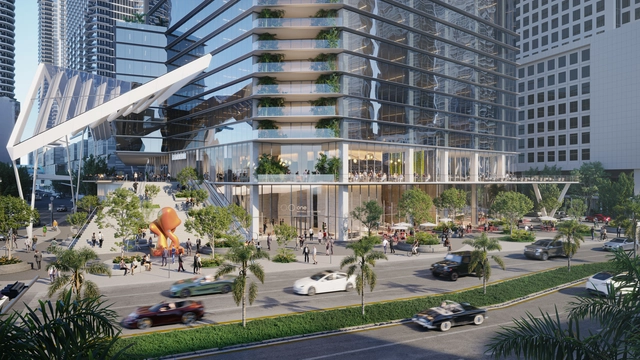
One Brickell City Centre by Arquitectonica. Image Courtesy of Swire Properties Inc and Related Companies
Arcquitectonica unveiled the design of One Brickell City Centre, an approximately 1,000-foot (approximately 300 meters) office tower planned to become the tallest commercial tower in Florida. Located in Miami’s financial district on Brickell Avenue, the office building represents the second phase of Brickell City Centre, a 4.9-million-square-foot (450,000 square meters) mixed‐use development that opened in 2016. One Brickell City Centre is developed by Swire Properties Inc. and Related Companies. Construction it set to begin in 2023.
Fotografías de la escenografía en la serie Gordita Chronicles. Image Cortesía de Amy Wheeler
Amy Lee Wheeler is the production designer for "Gordita Chronicles", an HBO series that tells the story of a girl and her family from the Dominican Republic who immigrates to Miami in 1985, after the country's political and economic instability. Upon arrival, the "American dream" brings them an unpleasant surprise after discovering a materialistic city concerned about social status.
How was the home where she lived and the school where she studied? How was the office where her father worked? These were some of the spaces that Amy Lee Wheeler had to design and set with furniture and colors of iconic vintage styles, drawing inspiration not only from old movies, books, and catalogs but also from personal photographs. The construction of the set in Puerto Rico and the ongoing pandemic presented unique and unprecedented challenges, so ArchDaily interviewed her to learn about the work process behind the scenes.
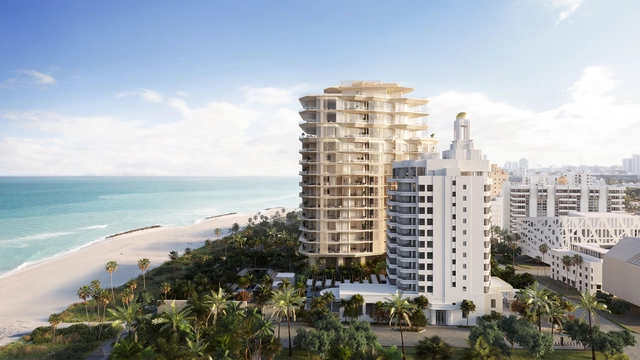
Japan-based architectural office Kengo Kuma and Associates has unveiled the design for what will become the studio’s first residential tower in the United States. Located on the oceanfront of Miami Beach, the 18-story structure will accommodate private condominiums for hospitality brand Aman. The project is adjacent to the Versailles building, a 1940s Art Deco hotel currently under restoration by architect Jean-Michel Gathy. The Art Deco architecture of Miami’s Faena district has a unique rhythm, which, according to the architect, was translated into the geometry of the new building through its vertical and horizontal lines.
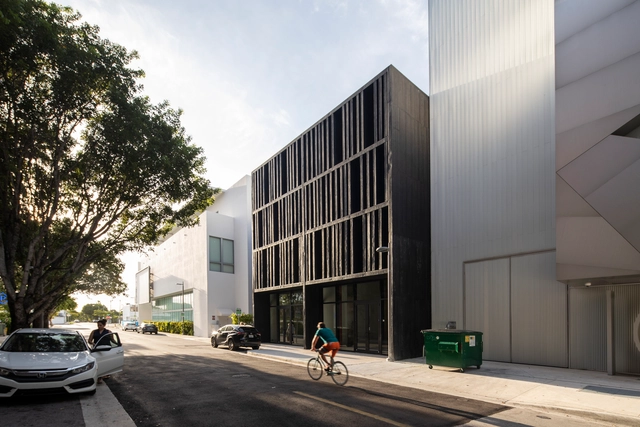
Oolite Arts revealed the design of its new Miami headquarters designed by Spanish architecture practice Barozzi Veiga, making it the studio’s first built project in the United States. The design’s morphology echoes the idea of a village for artists through a collection of rooms and a rhythm of vertical structures. The structure incorporates rich vegetation and strives to balance public and private, thus prioritizing both artists and community needs. The project, created in collaboration with local firm Charles H. Benson & Associates, is set for completion in 2024.
Construction broke ground on a new cruise terminal at Port of Miami designed by Arquitectonica for cruise operator MSC Cruises. With the capacity to process 36,000 passengers per day and simultaneously accommodate three mega cruise ships, the structure due for completion in 2023 will be the largest cruise terminal in North America. Located on the eastern end of the Port, the 4-storey structure makes the most of the long, narrow site by creating a layered embark and debark experience, expressed in its architectural image.
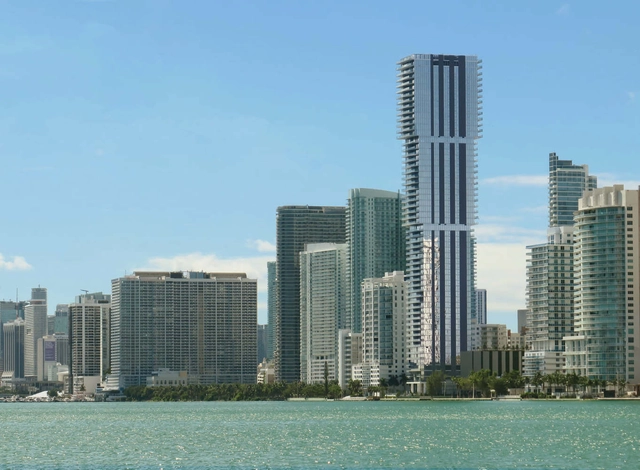
Miami’s long-awaited landmark, the Elysee Edgewater has finally reached construction completion. Designed by Arquitectonica, the 649-foot-tall glass tower features 57 storeys of luxury residences, as well as recreational and fitness amenities across its tiered floors. Architectural photographer Paul Clemence released images of the newly-completed tower, which now sits as the tallest residential building in the Edgewater district.