This week's review focuses on concrete responses to shared urban challenges, including housing affordability, long-term resilience, and the role of cultural and material innovation in shaping cities. The selection spans regulatory measures affecting housing markets in European cities, high-density residential and mixed-income proposals in New York, and major renewal and planning efforts in London, Barcelona, Ulaanbaatar, and Drammen. It also highlights research-driven and built projects in Chicago, Buenos Aires, Las Vegas, and Riyadh that explore circular construction, adaptive reuse, and new models for cultural and public infrastructure. Together, these worldwide projects offer a snapshot of how architecture and urban planning are addressing immediate pressures while laying the groundwork for more resilient and inclusive urban futures across diverse geographic and cultural contexts.
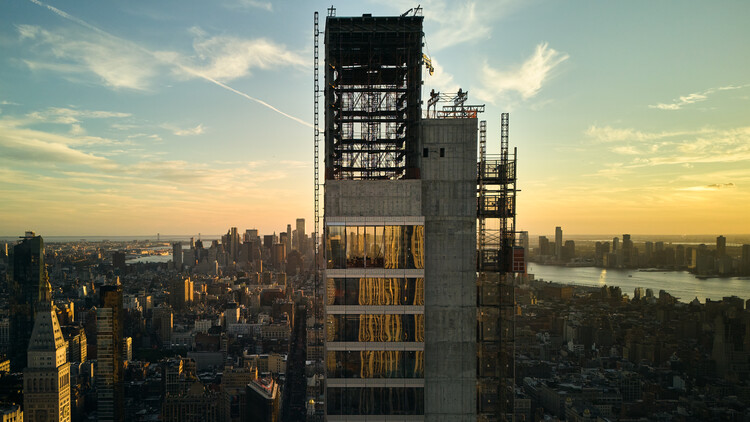
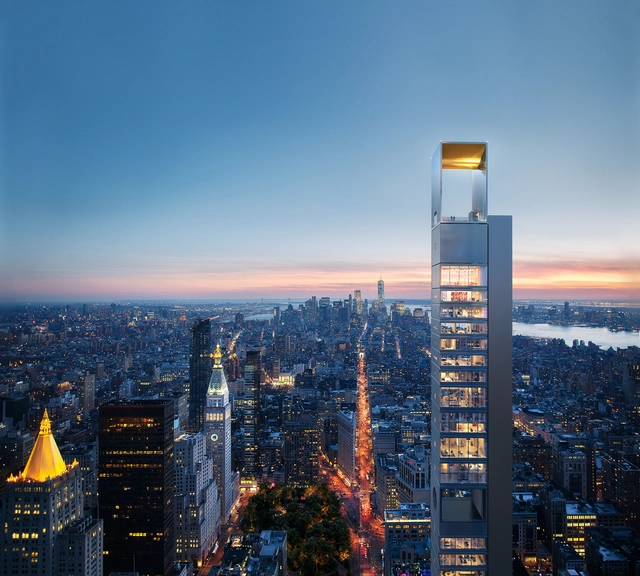
Moscow-based architecture, urban design, and research practice Meganom is nearing completion of its residential skyscraper at 262 Fifth Avenue in Manhattan, New York City. Designed for client Five Points Development, the project dates back to 2015 and brings together an international team that includes Norm Architects as interior architect, SLCE Architects as architect of record, and untitled architecture overseeing architectural supervision and project management. Rising 860 feet over 52 stories, the tower contains 26 residential units within approximately 140,000 square feet and draws conceptual inspiration from aeronautics, envisioning apartments as elevated "shelves" that frame expansive views of the city.
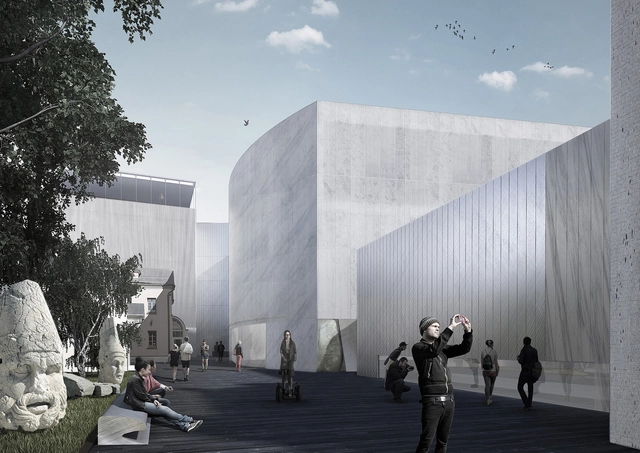
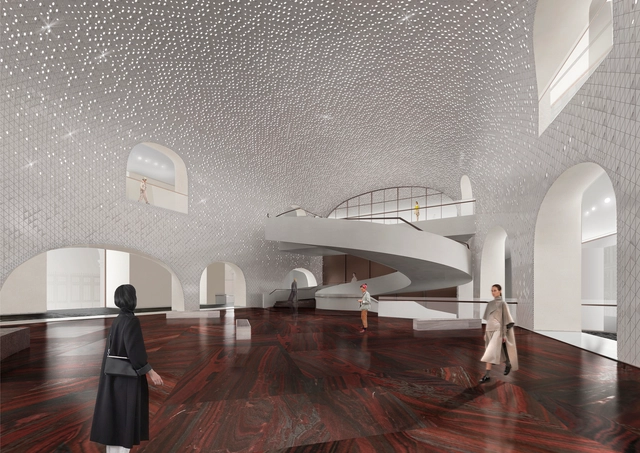
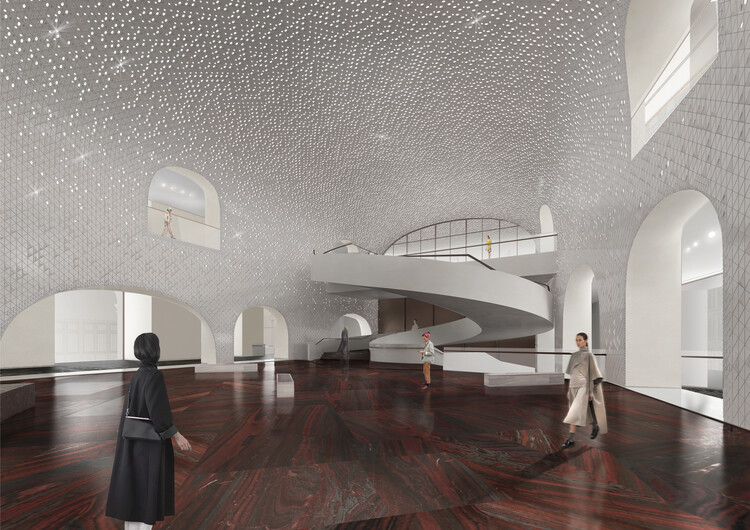
The new Kremlin museum set within the UNESCO protected museum ensemble in Red Square nestles a contemporary structure within the vast courtyard of a 19th-century building. Designed by Moscow-based practices NOWADAYS office and Meganom, the project will house the vast Armory collection, of which only 30% is currently available to the public with the Kremlin walls. The refurbishment of the historic Middle Trading Rows building, together with the new extension, complement each other, creating a diverse and complex museum experience.
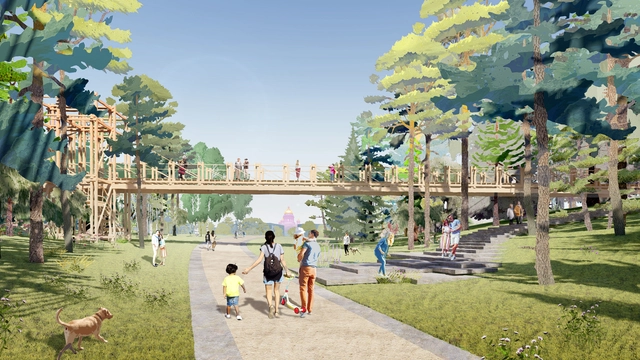
The results of the International Competition for the Architectural Landscape Design Concept for the Tuchkov Buyan Park were just revealed. The proposal by Studio 44 in consortium with WEST 8 won the first place, JV Vogt in consortium with Herzog & de Meuron won the second place while AB CHVOYA in consortium with KARAVAN landskapsarkitekter took the third position.
Russia is an enigmatic country known for its sublime constructivism developed during Soviet times, its greatness and enormous scale. It comes as no shocker — architects, such as Ivan Leonidov and his student Leonid Pavlov, and artists like El Lissitzky, have definitely contributed to the history and image of a strong Russian personality.
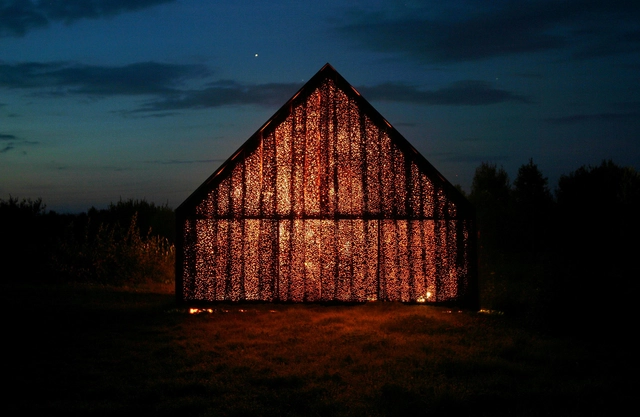
Considering the prevalent poverty in Russia, the reason for the fixation on cheap construction is rather clear. However, even local leading architects find something attractive and beautiful in the suburban barns and flimsy dwellings. Creating authentic installations in the shape of houses or changing and enhancing the experience of existing structures with materials at hand, Russian artists and architects express the country's skill of turning the ruined and inhabitable into the lively and cozy.
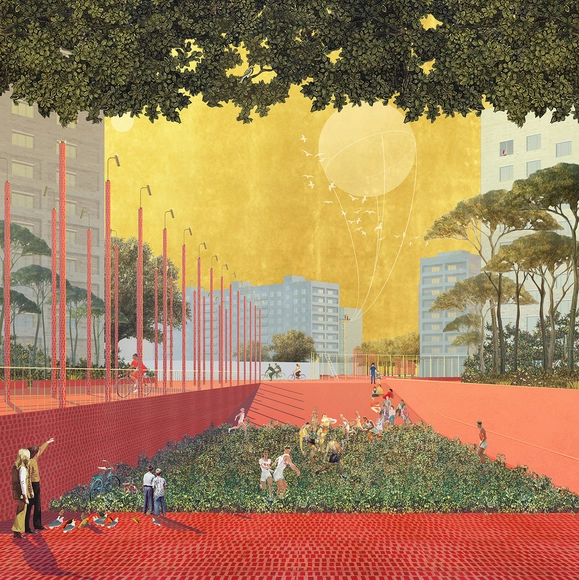
Amidst efforts to revitalize and improve urban centers, the peripheral areas of cities are often ignored or forgotten. The intense focus on the downtown core means, in terms of land use, that only a relatively small area receives the majority of designers’ attention. "Dvorulitsa" (literally "Yardstreet" in Russian) is an urban development strategy proposed by Russian architecture firm Meganom, aiming to shift that focus. Taking the idea of the “superpark” from the 2013 study, "Archaeology of the Periphery," the yardstreet project presents an alternative method of viewing the periphery of a post-soviet city.
Moscow-based architecture practice Meganom has unveiled their design for a supertall luxury skyscraper in Manhattan. The parcel, on 262 Fifth Avenue is located in the city’s NoMad neighborhood near Madison Square Park. The site owner, Israeli developer Boris Kuzinez from Five Points Development, submitted plans for the project in September 2016. Kuzinez and Meganom have previously worked together on several projects, including the award-winning Tsvetnoy Central Market in Moscow. 262 Fifth Avenue will be the debut project in the U.S. for both, and the skyscraper will be the tallest ever built by a Russian architect in America.
Our experience of information is changing. We now consume more and more information digitally, with much of this being non-textual. Videos, photos and GIFs have become commonplace, with technology allowing these mediums to be as easily shareable as text. This gives way to another trend: the increase in the number and accessibility of online platforms. Not only is more information being digitized, but more dynamic ways of digitization are being developed; multimedia articles and online exhibitions, for example, hope to provide a more engaging way of sharing information.
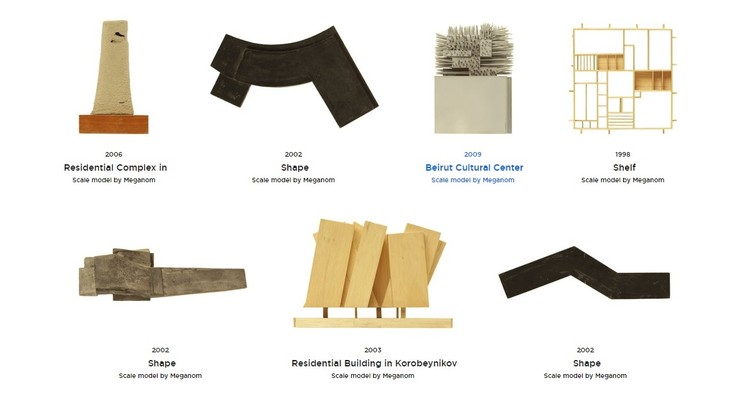
Yuri Grigoryan founded Project Meganom in 1999 in Moscow with his partners Alexandra Pavlova, Iliya Kuleshov, and Pavel Ivanchikov. Together, the group all graduated from Moscow’s Architectural Institute, MArchI in 1991, the year of the Soviet Union’s collapse, and then practiced at the studio of Moscow architect Alexander Larin. Today Project Meganom is headed by Grigoryan, Iliya Kuleshov, Artem Staborovsky, and Elena Uglovskaya, and keeps in close contact with the theoretical side of architecture: Grigoryan teaches at his alma mater and until recently he was the Director of Education at Strelka Institute, founded in 2009 under the creative leadership of Rem Koolhaas, while in 2008 the practice was involved in the Venice Architecture Biennale with their San Stae project for curator Yuri Avvakumov's “BornHouse” exhibition. All of this gives Grigoryan an interesting overview of Russia's unique architectural context. In this interview from his “City of Ideas” column, Vladimir Belogolovsky speaks with Grigoryan about the issues facing Russian architecture and how Project Meganom has responded to those challenges.
Videos
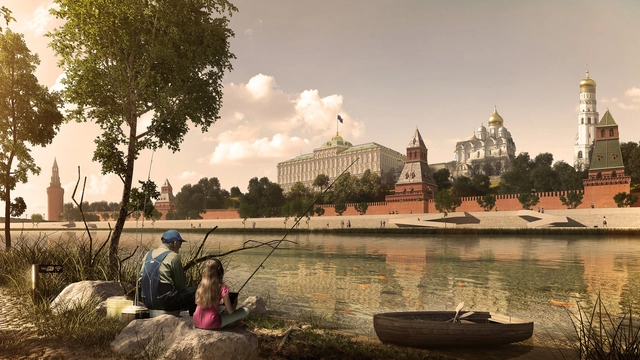
Fishing on Kremlin. Image Courtesy of Meganom
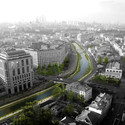
Russian practice Meganom has been announced as the winner in a competition to drastically transform the Moscow riverfront. Their masterplan proposal aims to create a series of linear green spaces, while also incorporating new cultural and education spaces along the waterfront and improving the surrounding public transport. Announced at the IV annual Moscow Urban Forum which opened earlier today, the goal of the competition was to return the Moscow river from a "barrier" into a "link" in the city, restoring its historical status as the city's heart and most important transportation route.
Read on after the break for more details of Meganom's masterplan
Russian practice Meganom has won a competition to redesign the Pushkin State Museum of Fine Arts in Moscow. Their winning entry seeks to transform the museum complex into a hive of cultural activity, preserving the institution's world-class art collection whilst "actively engaging with the surrounding territory as a potential space for exhibition, dialogue, and communication." The project focuses less on the provision of new areas but rather provides a single unified platform for a series of discordant parts, tying together all the elements of the environment into one cohesive design - "from buildings and monuments to benches and navigation."
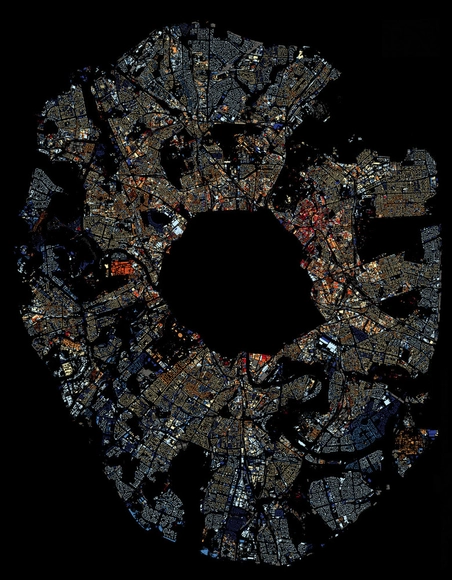
In Archaeology of the Periphery, a publication emerging out of the Moscow Urban Forum, a variety of specialists tackle the issue of a strategy for the development of Moscow's metropolitan area. As one of the best examples of urban concentric development, teams of engineers, architects, planners, economists and sociologists, studied the Russian metropolis with a pointed focus on the periphery—specifically the territory between the Third Ring Road and the Moscow Ring Road. Using an "archaeological" approach, the study reveals entrenched and hidden planning structures in order to increase the awareness and attractiveness of the periphery. Archaeology of the Periphery argues that examination of the city's fringe requires different methods of analysis than would be applied to traditional city centers.
"As the centre sets a certain quality of life and serves as a benchmark for the entire city, the high "gravitation" of the centre makes the signs of urban life invisible on the outskirts. Different optics are required in order to work with the non-central urban space. The tactic of "taking out" the centre and "sharpening the focus" on the peripheral territory will reveal what has been obscured and help identify the processes that take place, study potential, support or control the current forces at play.
The term "periphery," which is based on the opposition to a semantic centre is used in a wide range of scientific fields. The myriad of approaches underlines the ambiguity of the phenomenon and at the same time provides a base for an multidisciplinary research. This research was performed by experts in sociology (S), politics (P), architecture and urban planning (A), culture (C), economics (E) and big data (D). Methodology — SPACED — allows a broader view of the actual and potential intersections, going."



















.jpg?1470952641 "Theater Mercury, Moscow, 2006. Image © Marco Zanta")
.jpg?1470952609 "Molochny Lane residential building, Moscow, 2003. Image © Yuri PALMIN")