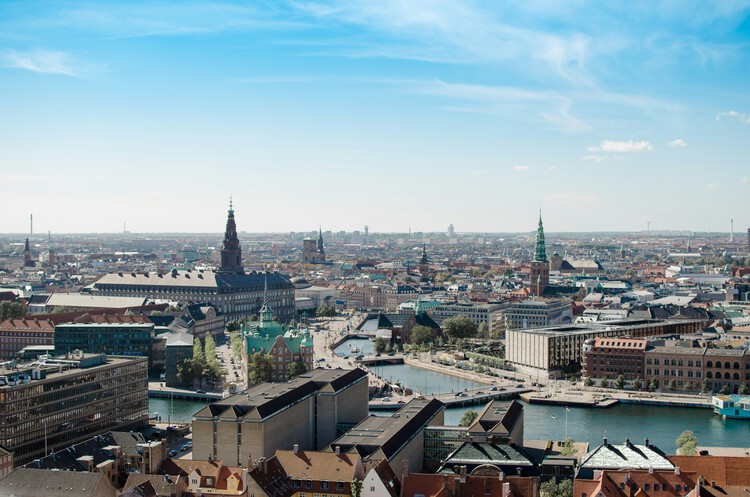
For most architecture enthusiasts, mentions of the city of Copenhagen will prompt images of pedestrian-friendly streets, suspended bike lanes, quaint water canals, and overall happy residents. The capital of Denmark has many accomplishments to boast: over 60 percent of its residents commute to work by bike, it was among the first cities to set up a strategic plan to achieve carbon neutrality, resulting in an 80% decrease since 2009, and it has become one of the most cited study cases for its urban planning and infrastructure. This reputation was officially cemented when UNESCO named Copenhagen the 2023 World Capital of Architecture, recognizing the city's enduring role as a laboratory for innovative contemporary design and people-centered urbanism. This September,the inaugural Copenhagen Architecture Biennial transforms the city into a global platform for dialogue under the theme "Slow Down," exploring how architecture can respond to global pressures by rethinking the pace of change. The occasion is also marked by the launch of ArchDaily's 5th edition of Next Practices Awards, solidifying the city's status as a nexus for contemporary architectural thought.
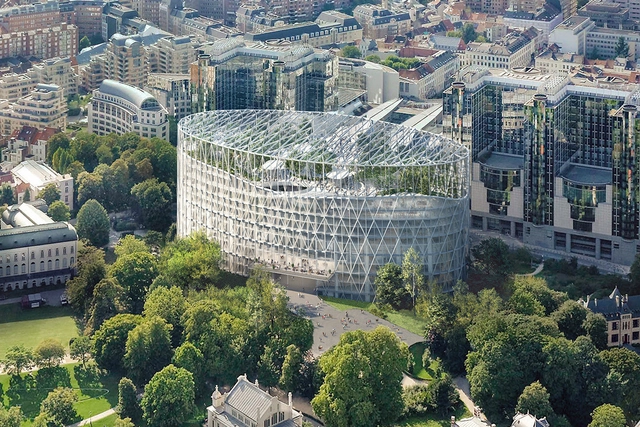
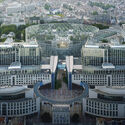
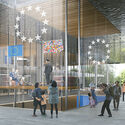
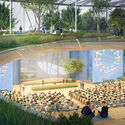
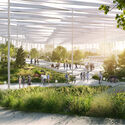
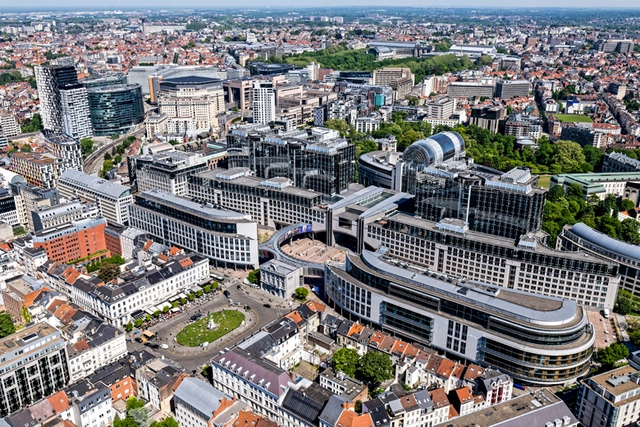
EUROPARC, a pan-European design collective, has been announced as the winners of the international competition to renew the Paul Henri SPAAK Building in Brussels, Belgium. The building housing the Parliament of the European Union has many shortcomings, yet the winners of the competition recognize that demolishing and replacing it might not be a responsible or sustainable solution. The existing building is, therefore, reimagined and adapted better to fit the needs and the identity of the EU. EUROPARC is made up of five architectural studios from five European countries: JDS Architects (DK/BE), Coldefy (FR), CRA-Carlo Ratti Associati (IT), NL Architects (NL), and Ensamble Studio (SP), with the support of engineering companies from UTIL (BE) and Ramboll (DK).
The European design team integrated by architectural firms JDS Architects, Coldefy, Carlo Ratti Associati, NL Architects, and Ensamble Studio has been announced as the winner of the international design competition for the renewal of the Paul-Henri SPAAK Building, the European Parliament plenary building in Brussels, Belgium.
March 22 is World Water Day, an annual international celebration launched and organized by the United Nations. The goal of the day is to raise awareness about a wide range of water-based issues from around the world. This year’s theme is “Nature From Water”, which invites everyone to think about how nature can provide solutions to the water challenges we face today.
To celebrate World Water Day this year, we’ve rounded up 20 of our favorite projects that utilize water as a central design feature. Whether it be Zumthor'sThermal Vals or Chritso and Jeanne-Claude'sFloating Piers, water has been playing an important role in architectural design and in demarcating the boundaries of nature against our built environment.
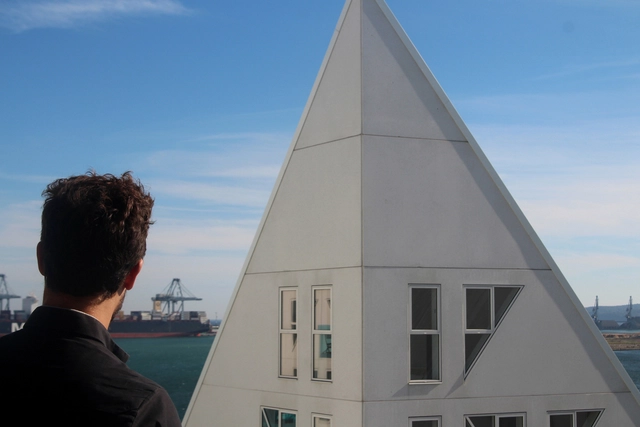
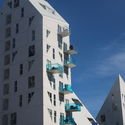
In this animated clip from French film production studio 11h45, penguins have taken over ‘The Iceberg,’ winner of ArchDaily’s 2015 Building of the Year for Best Housing Project. Imagining the building as a literal iceberg, the filmmakers envisioned the designed by SeARCH + CEBRA + JDS + Louis Paillard Architects-designed complex as an antarctic wonderland where penguins could slip, slide and dive down the structure’s sharp rooflines.
https://www.archdaily.com/873510/watch-the-iceberg-in-aarhus-turn-into-a-penguin-paradise-in-this-fun-animationAD Editorial Team
It is often said that architecture only makes projects more expensive; that architects only add a series of arbitrary and capricious complexities that could be avoided to lower costs, suggesting that the project could function exactly the same without them. Is this true in all cases? Although they may be more profitable economically, human beings don't seem to be happy inhabiting cold concrete boxes without receiving sunlight or a breeze every now and then, or in an unsafe neighborhood where there's no possibility to meet your friends and family outdoors. Quality in architecture is a value that sooner or later will deliver something in return.
Balance is key, and a good design will never be complete if it's not economically efficient. How do we achieve this ideal? We reviewed the design process for 'The Iceberg' in Aarhus, Denmark, a project that managed to convince the authorities and investors by proposing a high-impact and tight-budget design, which seeks to respond to the objective of guaranteeing the quality of life of its users and their neighbors.
120 Hours, an open architectural competition organised by students from the Oslo School of Architecture, is inviting fellow students from around the world to explore the role of the architect in today's society. The competition, according to its organisers, is in "a unique position to make students reflect on their future profession. We want to challenge people to rethink the future of architecture." Last year's competition, chaired by Julien de Smedt, received 741 submissions from 90 different countries.
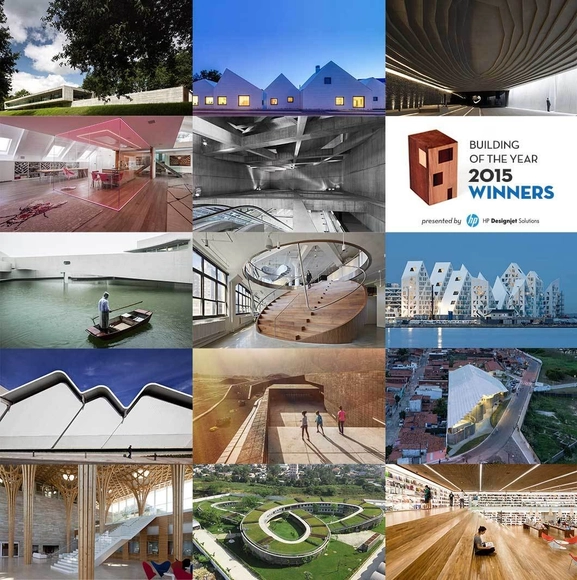
With our annual Building of the Year Awards, over 30,000 readers narrowed down over 3,000 projects, selecting just 14 as the best examples of architecture that ArchDaily has published in the past year. The results have been celebrated and widely shared, of course, usually in the form of images of each project. But what is often forgotten in this flurry of image sharing is that every one of these 14 projects has a backstory of significance which adds to our understanding of their architectural quality.
Some of these projects are intelligent responses to pressing social issues, others are twists on a well-established typology. Others still are simply supreme examples of architectural dexterity. In order that we don't forget the tremendous amount of effort that goes into creating each of these architectural masterpieces, continue reading after the break for the 14 stories that defined this year's Building of the Year Awards.
After two weeks of nominations and voting, we are pleased to present the winners of the 2015 ArchDaily Building of the Year Awards. As a peer-based, crowdsourced architecture award, the results shown here represent the collective intelligence of 31,000 architects, filtering the best architecture from over 3,000 projects featured on ArchDaily during the past year.
The winning buildings represent a diverse group of architects, from Pritzker Prize winners such as Álvaro Siza, Herzog & de Meuron and Shigeru Ban, to up-and-coming practices such as EFFEKT and Building which have so far been less widely covered by the media. In many cases their designs may be the most visually striking, but each also approaches its context and program in a unique way to solve social, environmental or economic challenges in communities around the world. By publishing them on ArchDaily, these buildings have helped us to impart inspiration and knowledge to architects around the world, furthering our mission. So to everyone who participated by either nominating or voting for a shortlisted project, thank you for being a part of this amazing process, where the voices of architects from all over the world unite to form one strong, intelligent, forward-thinking message.
Back in June, we sharedJDS‘ winning mixed use project for Hangzhou, China. Conceptualized as the iconic link that fuses two prominent parts of the city, the Hangzhou H project is a dynamic experiment of formal expression. The tiered volume opens pedestrian connections at the ground level, and supports a generous landscape that functions as a rain water retainer on the roof level. The young firm has just received the necessary building permits, and will begin construction in March of 2012. We’ll keep you covered on the building’s progress, and be sure to view our previous coverage of the winning competition proposal here.
JDS has just been awarded first prize for their Hangzhou Waves scheme – a competition entry that called for the design of not one, but two buildings for the financial district of Hangzhou Xintiandi of Hangzhou, China. The two sloping volumes offer different exterior expressions and hold different programmatic entities (a hotel and an office building); yet, the forms are guided by similar attitudes regarding sunlight, green roofs, an active ground plane, etc, which immediately creates a strong relationship between the pair.
More about the winning competition entry after the break.
We’ve been coveringCEBRA + JDS + SeARCH + Louis Paillard’s geometric harbor project for Arhus, Denmark. The huge project, which measures over 21,000 sqm, will include mixed dwellings types and commercial space. CEBRA has shared a few short video clips with us, highlighting the progress of the project. This featured clip is shot from the bridge connecting the future harbor promenade across the nearby canal. The grey concrete wall shown is the beginning of the southern facade (the actual floor is on top of the wall) and behind the wall is where the parking is situated.
Another video, as well as a few construction photos, after the break.