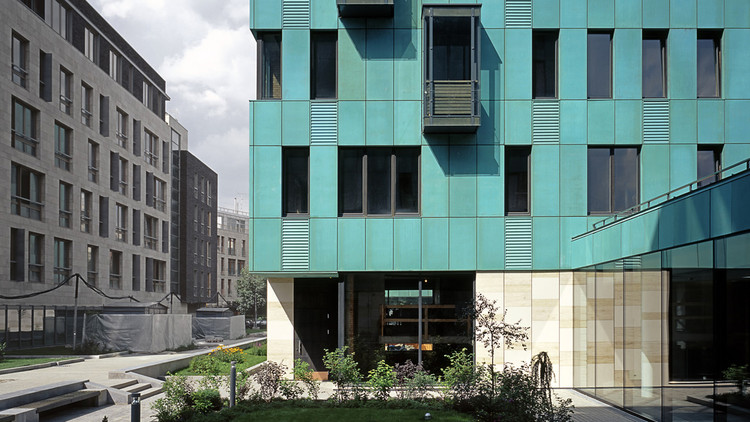
Sergey Skuratov, founder of Sergey Skuratov Architects, an award-winning Russian practice (2008 Architect of the Year), is known for his sleek and well-composed portfolio. Projects such as Copper House, Art House, and House on Mosfilmovskaya Street demonstrate his sensitivity to materiality and ability to retain his vision from concept to reality. Over the last two decades Skuratov has succeeded in producing a whole strata of world-class architecture in Moscow, far more than any other local practitioner. His projects, predominantly residential and office complexes, have remained attractive and versatile without ever veering into conservatism.
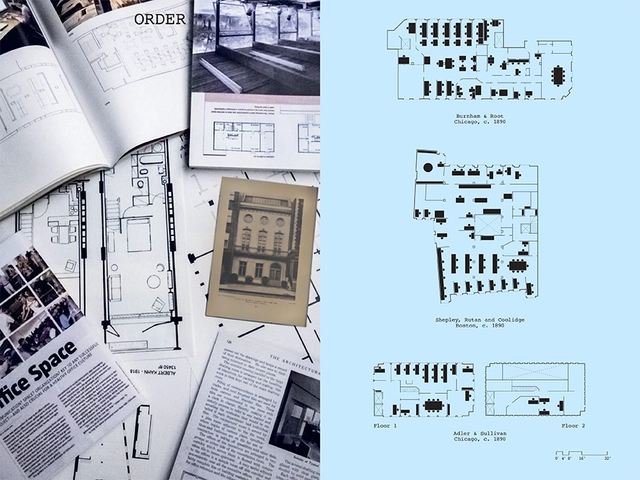
The guiding principles and priorities that drive the professional practice of architecture are the subject of abundant philosophical ideas and entrenched opinions—but how can we understand the current state of the profession without sweeping generalizations? Towards that goal, OfficeUS (the experimental institution born from the US Pavilion at the 2014 Venice Biennale) has published a book examining the realities of today’s architectural workplace culture based, like countless works of cultural studies across many academic disciplines, on the documents produced by that culture. Specifically, the OfficeUS publication compiles information from office manuals and workplace handbooks spanning the last century of architectural practice to offer a practical but insightful portrait of how architects organize, run, and view their own profession.
In the ten years since our site was launched, ArchDaily has grown into the world’s most visited architecture website; it is now a project with greater reach and scale than the site’s founders could ever have anticipated. Thanks to our readers, contributors and leadership, the initial iteration of the site (based in Chile and known as Plataforma Arquitectura) has evolved into a global architecture media network that includes the English site you’re reading right now as well as region and language-specific sister sites in Brazil,China,Colombia, Mexico, and Peru.
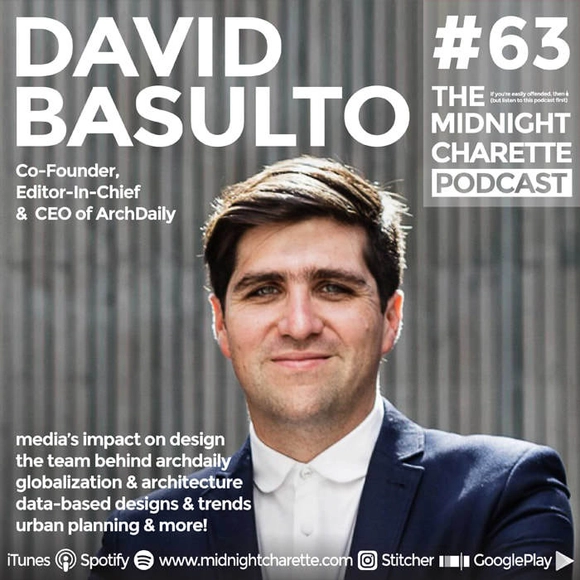
The story of ArchDaily's growth is one of the many topics covered in a new 114-minute interview with ArchDaily’s co-founder David Basulto on this week’s episode of the Midnight Charette podcast. Hosted by David Lee and Marina Bourderonnet, the podcast features weekly discussions on design issues of the day and interviews with figures in the architecture community. In their talk with Basulto, the conversation wanders from the story of our company and some behind-the-scenes trivia about how our site works (did you know our custom content management system is named after the biblical Tower of Babel’s designer?) to insights on how architects will shape our future cities and the ways that data collection and analysis could shape the designs of tomorrow.
As identity-based politics continues to grow in influence, we may do well to examine the effect it has on the way we think about and design our cities. In a recent interview with the Washington Post, Rem Koolhaas discusses these changes - and how they mark an evolution from the generic city concept he introduced in S,M,L, XL.
https://www.archdaily.com/898006/rem-koolhaas-on-identity-and-conformity-in-the-digital-cityKatherine Allen
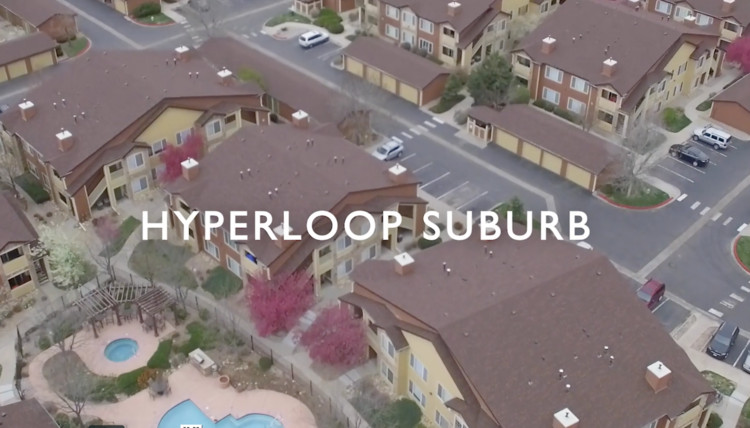
How do we want to live? Should we lean towards a turbulent metropolitan life with an all-inclusive advantage, or should we favor the composed suburban life with sufficient services? What if architects and urbanists were able to implement some of these all-inclusive services into disregarded areas of the suburbs? In the latest installment of PLANE—SITE’s short video series of the Time-Space-Existence exhibition, Louise Braverman Architect, a New York-based firm, explores the utopic and dynamic vision of the future of suburbs, and how Hyperloop technology could breathe a new life into these often overlooked places.
Celebrated for their unique, lively, and intimate take on architecture, in their films Ila Bêka and Louise Lemoine break with the traditional representation of architecture, choosing instead to follow people living inside buildings, focusing on them instead of capturing empty structures. In a new video, Louisiana Channel interviews the Italian filmmaker and architect Ila Bêka, in which he discusses the rhythm of everyday life within contemporary architecture projects, and their importance in triggering emotions.
We felt that the movement inside architecture is very important to understand how the architecture works. – Ila Bêka
In this video from the Louisiana Channel, Finnish architect Juhani Pallasmaa expounds on his view of the importance of art and architecture. In order to begin to understand this relationship, Pallasmaa stresses the importance of literature and self-construction, along with understanding the history and culture of a place.
Louisiana Channel has released a new video interview with acclaimed architect Daniel Libeskind, in which he retraces the story behind his architectural career. In the interview, Libeskind unravels his view of architecture, and the architectural profession, drawing comparisons between architecture and music, while reflecting on the adherence to legislation and inherent optimistic outlook required to practice architecture.
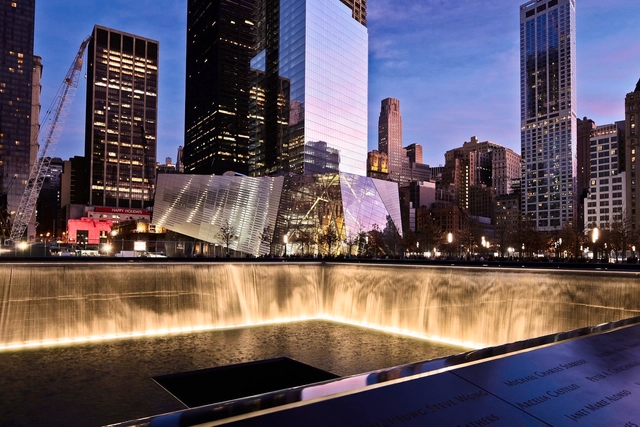
In the 30-minute in-depth interview, Libeskind guides observers through his childhood, the roots of his architectural career, and reflects upon his most noted schemes, including the Jewish Museum in Berlin and the World Trade Center Masterplan in New York.
https://www.archdaily.com/895087/daniel-libeskind-retraces-his-life-and-architectural-career-in-engaging-in-depth-interviewNiall Patrick Walsh
Spanish architect Anna Puigjaner has revealed how she is applying her “Kitchenless” housing typology within her own projects in a recent interview with Metropolis Magazine as one of their 2018 Game Changers. After receiving funding from the Harvard GSD Wheelwright Prize for her controversial proposition in 2016 (after which ArchDaily published an interview with her), Puigjaner talks about the time she spent traveling the world and visiting the many different cultures that share her idea of communal cooking, adding that millennials are more inclined to co-habit or share resources.
The kitchen is the most provocative part of the house. It has been used as a political tool for a long time, to the point that nowadays we can’t accept living without a kitchen.
While Moshe Safdie may be more well known for the bold forms defining his portfolio of built projects—ranging from the National Gallery of Canada and the horizontal Raffles City Chongqing to the iconic Habitat 67—the architect considers his unbuilt works as important, if not more. Safdie ponders the role of these projects and more in PLANE-SITE’s latest addition to the series Time-Space-Existence.
If you are missing the capacity to create emotion, then it doesn’t work, it’s not enough. – Renzo Piano
In this in-depth biographical video by the Louisiana Channel, Renzo Piano talks about his earliest influences, why traveling is essential, the pleasures of drawing, what creativity really means, how “computers are a bit stupid,” the way “beauty can change the world,” and more.
https://www.archdaily.com/886603/renzo-piano-creativity-is-only-possible-when-you-share-creativityZoya Gul Hasan
The "about" section of Vancouver-based studio Henriquez Partners Architects' website boldly states: "We believe that architecture should be a poetic expression of social justice." While empowering communities through socially conscious design is hardly a new concept, the term "public-interest architecture" tends to call to mind images of low-budget constructions. Rarely is it employed to describe the large, mixed-use projects that have come to characterize downtown Vancouver and Gregory Henriquez's firm.
However, experimenting with different models of social regeneration through architecture is the driving principle of the studio's work. Throughout the years, Henriquez has explored concepts such as affordable ownership and dignifying design for the city's disenfranchised communities. In partnership with local real-estate development and culture company Westbank, he has built a number of projects that seek to equalize living conditions for all in one of the world's most affluent and progressive societies. Here, in an exclusive interview with ArchDaily, Henriquez describes his firm's ethos, his stance on issues such as homelessness, affordable housing, and gentrification, and the lessons he's learned in over 30 years of heading Henriquez Partners Architects.
“Lightness and transparency are very close friends. You start from something and then you take off, you take off, you take off... And at a certain point you have to stop taking off, otherwise, everything falls down. If you do this you find that there’s a kind of beauty there. It’s a beauty that is profound, it’s not cosmetic.”
Early on in my career I had to decide between honest arrogance and hypocritical humility. I chose honest arrogance and have seen no occasion to change.
Frank Lloyd Wright is the household name of architects in the United States, with stories of his ego as widespread as his prolific work. Watching Frank Lloyd Wright at 83 years old is not your typical history lesson. The interview aired on NBC Chicago in 1958 and captures Frank Lloyd Wright telling stories to Hugh Downs about his education, early career with Louis Sullivan, an inspiration for Taliesin and Taliesin West and his own innovations in architecture (let's just say this question didn't get a humble response).
India’s renowned architect Anupama Kundoo has experimented with locally sourced materials to develop Wall House and others for non-profit organizations to minimise impact in the construction process whilst maintaining the connection to the community. She tells us how she integrates hybrid technologies into the building, a response to the growing segregation in India and developing countries.
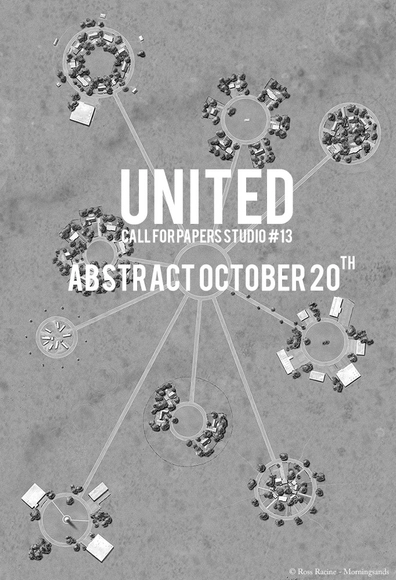
How does formal commitment of architecture and urban planning give us a UNITED (or not) city landscape, through the transformation of its knowledge into aggregational processes? Territories have different strategies of possession by its inhabitants, in between different narratives, epistemological discourses, and fragmentation processes. Within this context, the city is characterized by structural UNITED elements that shape urban futures.
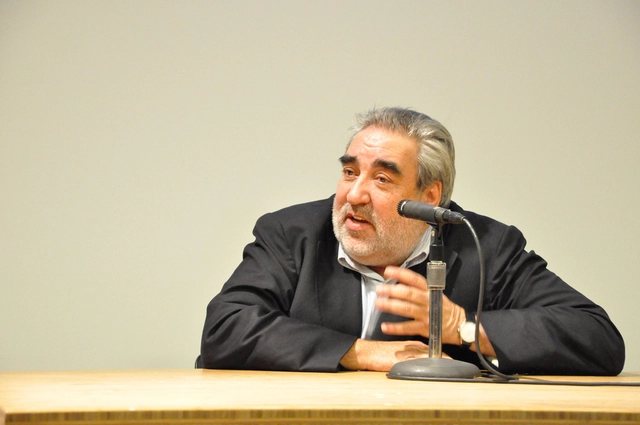
During an interview with Portuguese newspaper Diário de Notícias, Pritzker Prize laureate Eduardo Souto de Moura spoke to Ana Sousa Dias about his path through the Fine Arts School, his work alongside Noé Diniz and Álvaro Siza, and his consolidated international career – which he says has given him projects, but not pleasure.
"If I have to do 30 projects, there are three that give me joy and 27 that don't. I'm tired of it. It doesn't annoy me arguing when the assumption is intelligible, but when only time and money matters, it can get ugly. Respecting elections and economically have big profits," said Souto de Moura.
"It's quite evident that you're prepared to abandon traditional ways of sitting," Bernard Keeffe exclaims as he collapses into a bright yellow beanbag in Norman Foster's home. "For years," he continues, "people have thought that if they sat down they would have to sit on a chair, but now you have demonstrated that this is not necessary!" In this lengthy 1971 interview with Lord Foster, drawn from the archives of Thames TV, Keeffe questions the practice's early hi-tech approach to architecture in the context of a landscape in which buildings were becoming "ever more complicated."
https://www.archdaily.com/876459/norman-foster-discusses-the-dawn-of-high-tech-architecture-in-this-1971-interviewAD Editorial Team












.jpg?1506638347&format=webp&width=640&height=580)