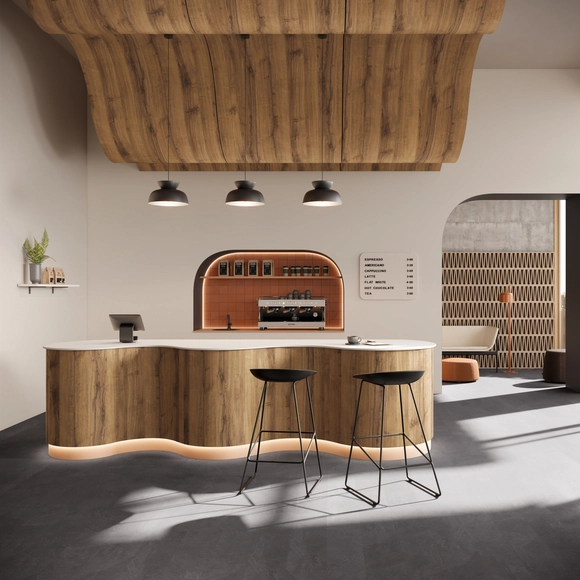
Laminates combine look, feel and function in a practical way. Image Courtesy of Egger
Playing with the balance between form and function, laminates enable architecture to perform a variety of tasks at the same time, being robust, flame-retardant, stain-resistant and antibacterial. With a wide range of applications in architecture, Egger has developed a range of products that can be applied to many of the spaces we inhabit daily, such as kitchens, bathrooms, offices, hotels and shops. Diving into the specifics of laminates and how they can be applied in architecture, we showcase how these materials are an ideal coating material with extra-wide format alternatives.
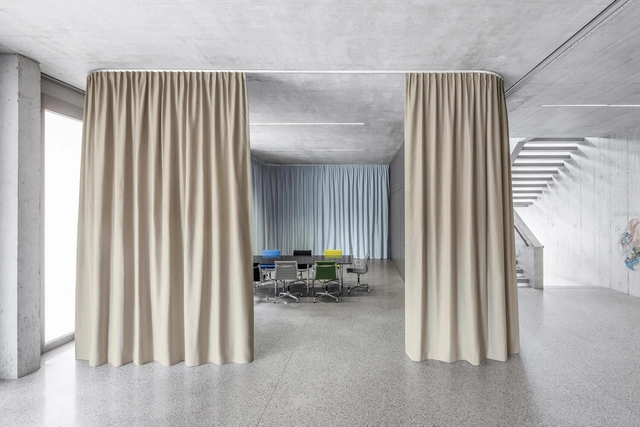
Acoustic Divider Vario / Création Baumann. Image Courtesy of Création Baumann
Beyond their features in the world of fashion, fabrics can also be an essential part of an interior design’s creative possibilities. While enhancing the aesthetic appeal of a space, these versatile materials –made from fibers or yarn that have been interlaced, knitted, or bonded together– also provide functionality to space. As part of a holistic architectural strategy, these natural and synthetic elements are essential for designing upholstery for furniture, curtains and drapes, space divisions and wall coverings. Changing the traditional notion of fabrics –known as stain collectors, bug homes and easily catching fire– the latest design innovations are exploring properties which take the use of fabrics one step further. Diving into Architonic’s fabric catalog, we take a look at different products with distinctive acoustic, fireproof and repellent properties.
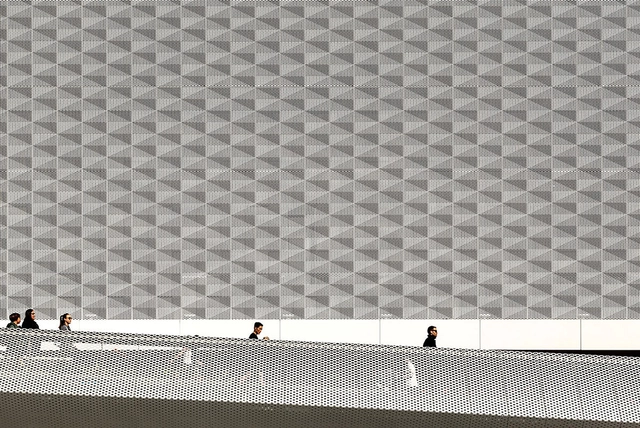
Besides providing external protection, natural ventilation, insulation and energy efficiency, the presence of façades enhances the building’s personality and character. Among the different types of façade systems, cladding strategies stand out for their variety of materials and textures –such as metal, glass, stone, wood and composite– all of which build durable, low-maintenance and visually appealing structures. Innovating with textures, forms and technologies, BŌK Modern has developed different metal panels for creating functional and aesthetic façade cladding systems. Showcasing six architectural projects, we delve into the practical and visual attributes of rainscreens and wallscreens.
Sustainability is much more than simply deciding for or against a specific product. It is a concept that must be integrated into the way we build and design architecture, as well as the intelligent use of existing buildings and their potential renovations. From a sustainability perspective, demolishing an old building is just as unsustainable as building a new one. Both use large amounts of embodied energy that can be avoided when all planning parties consider new ways of working and collaborate more closely.
In this sense, the efficient use of raw materials and the reduction of waste for reuse is essential. Polycarbonate in façades, for example, has a life cycle of at least 20 years on average and can be recycled and reused in many ways, thus doubling its useful life until it can no longer be usefully recycled.
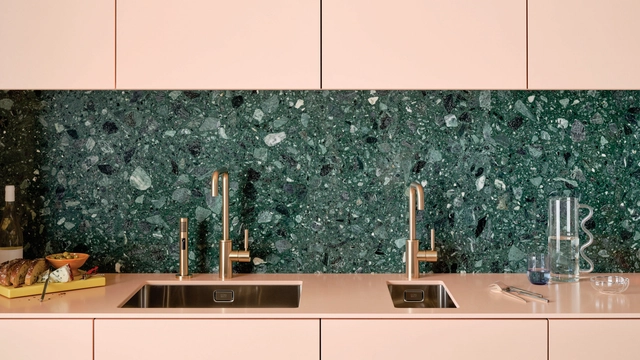
META SQUARE Brushed Champagne. Image Courtesy of Dornbracht
Appropriate fittings are as crucial to interior design as any other prominent feature, enhancing aesthetic appeal and providing the finishing touches to a space. Considered spaces where some of our most basic needs are met, kitchens are ideally designed to suit the lifestyles of its inhabitants, and can include customized fittings with diverse faucet systems, functions and finishes. Seeking style and functionality, we showcase a round-up of Dornbracht’s latest series of kitchen faucets, which seamlessly integrate cutting-edge refinements with timeless design to create versatile living spaces.
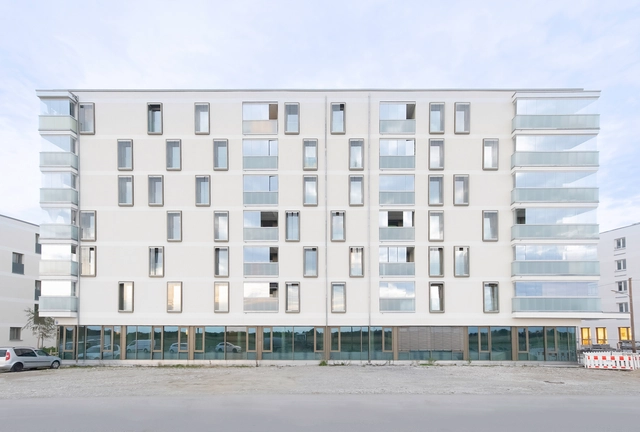
Higher noise emissions, higher wind loads and a desire for greater energy efficiency – the structural requirements for façades in multi-storey residential buildings and skyscrapers are becoming increasingly demanding, for both new builds and renovations. This is the result of the urban densification that is taking place in response to the acute lack of available housing and the more extreme weather conditions brought about by climate change.
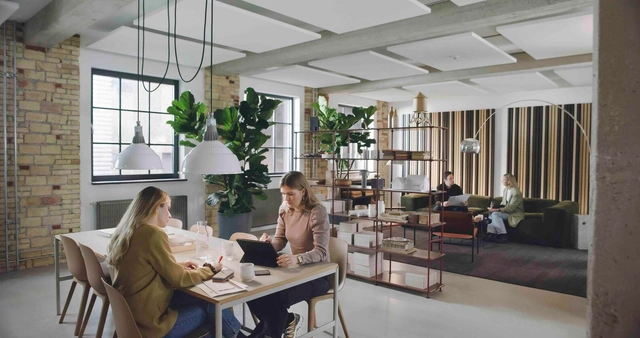
Rockfon are to host a debate about what it means to be human-centric when it comes to office design, and is expected to address everything from acoustic comfort to engendering community and inclusion. Image Courtesy of Rockfon
What’s more important, work or wellbeing? Should we have to choose? A ‘good work ethic’ –as in placing work before all else– used to be a badge of honour, certainly among generation X-ers who grew up with post-war parents and a recession to wrestle with just as they were getting going on working life in the 1990s. Today’s economic situation might present similar wrangles in securing a wage among their off-spring, so-called generation Z, but it is nevertheless this emerging set of workers that are teaching the rest of us that work at any cost –particularly that of our mental and physical wellbeing– should not be a life ambition.
https://www.archdaily.com/997709/the-art-of-human-centric-design-for-healthy-office-spacesEmma Moore
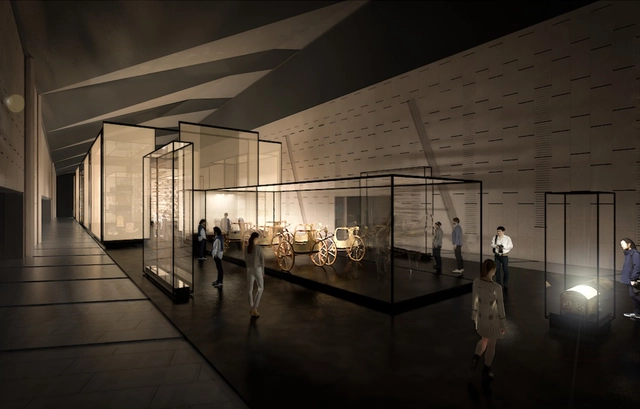
Two decades in the making, the Grand Egyptian Museum (GEM) in Cairo is one of the most anticipated cultural buildings, set to be an architectural marvel and a leading scientific, historical and archeological study center. The vast, billion-dollar mega-project occupies a site of around 500,000 square meters adjacent to the Pyramids UNESCO World Heritage Site in the Giza Plateau. Within its halls, what will soon be the world’s largest archeological museum will showcase 3,500 years of ancient Egyptian history, revealed through a collection of more than 100,000 artifacts –many of which will be displayed for the first time.
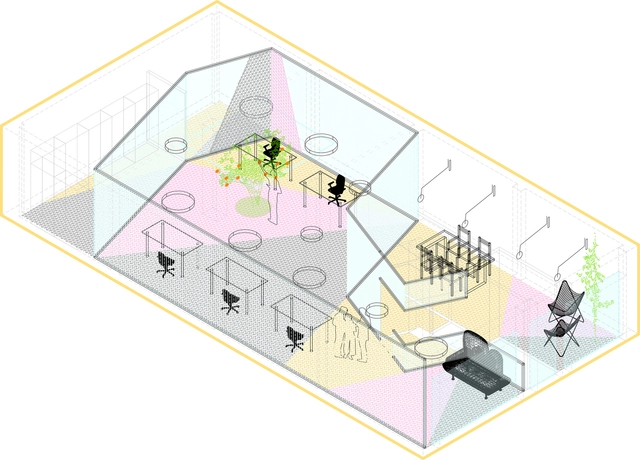
LANO FRUITS Office / Laura Ortín. Image Courtesy of Laura Ortín
From assigned cubicles to open plan coworks, workspaces have been transforming their design strategies following society’s changing lifestyles. While traditional layouts encouraged more independent work (avoiding social distractions), adjusting to new technologies and ways of thinking has enhanced productivity while respecting communication, wellness consciousness and the benefits of feeling comfortable at work.
Architects have followed these changing trends, proposing diverse workspace typologies, adapting to multiple working styles, and organizing them to create optimal productive spaces. Among them, Spanish women-led architecture offices from different backgrounds and styles stand out for introducing layouts that redefine what is commonly known as a workspace. Below we present a selection of innovative refurbishment projects, all of which showcase flexible and dynamic workspace design.
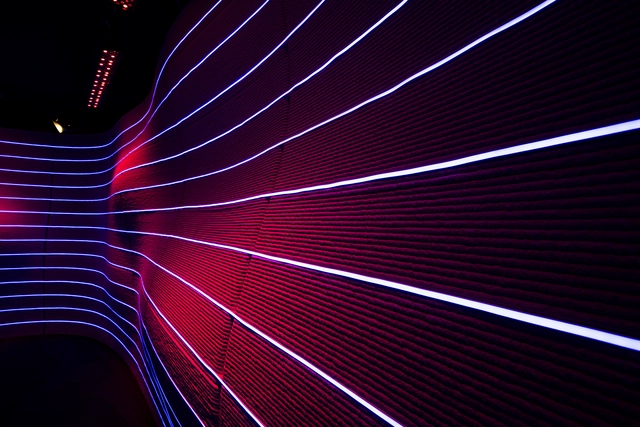
By emulating manual manufacturing techniques, 3D printing utilizes digital models to create customized three-dimensional objects through an additive production process. This tool enables architecture to explore innovative forms, structures, and materialities, providing new paths for creative thinking. Progressively expanding its limits, 3D printing is integrating other existing technologies to unlock new uses and typologies. Such is the case with the work of Philipp Aduatz, which combines 3D printed textured structures with LED lighting, adding a new layer of complexity to enable the creation of the world's first 3D printed film studio.
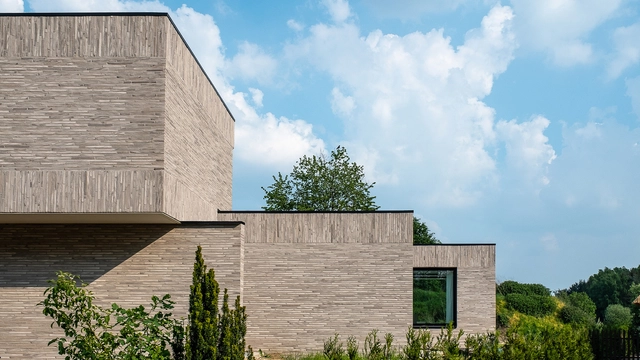
Villa Peer / UAU Collectiv Architects. Image Courtesy of Randers Tegl
Identified as small rectangular blocks made of fired or sun-dried clay, bricks have traditionally been used for building pavements, walls and other elements of masonry construction. Laid in courses or rows and joined together with mortar, bricks are known for their strong structural strength and durability. But beyond their basic functional purposes, their multiple patterns, sizes and shapes allow for a distinctive aesthetic with an infinite design versatility, becoming a design feature themselves. Showcasing an example of aesthetic brickwork, we will take a closer look of Villa Peer, an architecture project in Belgium that uses Randers Tegl’s long format waterstruck bricks as the main design feature for the whole building’s facade.
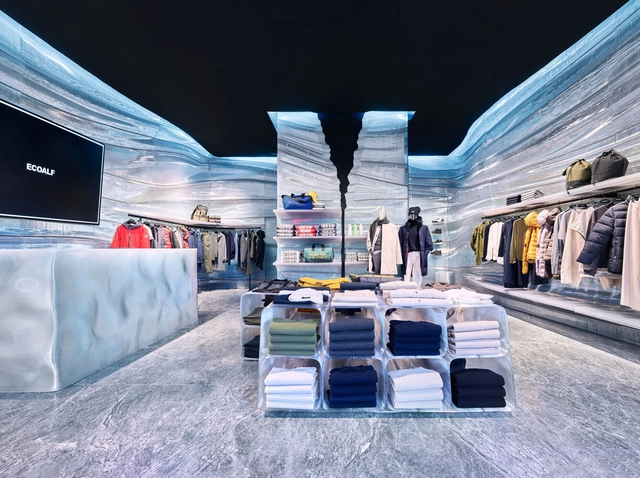
“Our planet is choking in plastic,” states the United Nations. While the man-made material has many valuable uses, our addiction to single-use plastic products has led to severe economic, health and environmental issues. Roughly one million plastic bottles are purchased every minute, and five trillion plastic bags are used every year worldwide –used just once, then thrown away. Plastics and microplastics have found their way into every corner of our natural environment, from the peaks of the highest mountains to the depths of the deepest oceans. So much so, that they have become part of the Earth’s fossil record and created an entirely new marine microbial habitat known as the “plastisphere.”
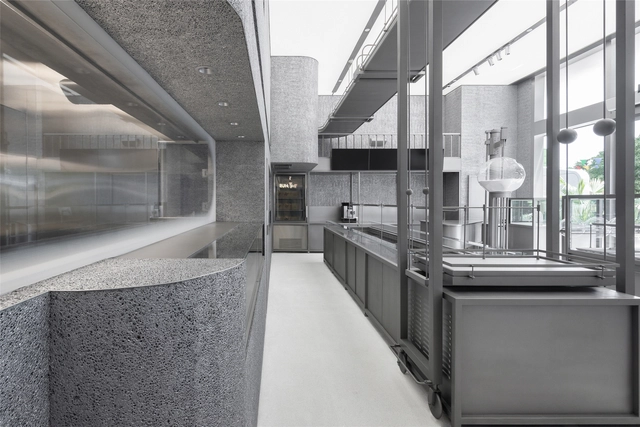
Stabilized Aluminum Foam is a unique looking material that combines the aesthetics of aluminum (its texture, shades and brightness) with a spongy, porous appearance. It is produced by injecting air into a cast aluminum alloy with stabilizing agents, which after curing, creates a porous and lightweight, yet highly resistant and rigid cellular structure. Because of its mechanical and thermal properties, it is particularly useful in applications in various industries, such as automotive, aerospace and marine, especially for energy absorption, thermal insulation, and sound dampening.
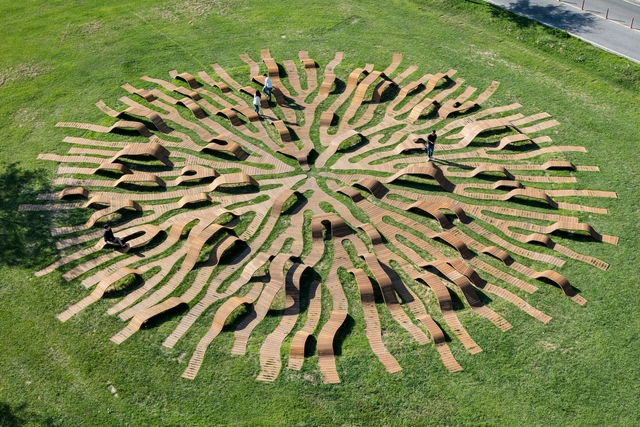
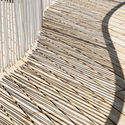
Wooden floors are know for their warm appearance, rich texture, and natural tones that vary according to the origin of the planks, changing with the weather and the passage of time. Outdoors, wooden surfaces are widely used for terraces and living areas, taking advantage of these inviting qualities to bring people together on warm and welcoming floors. Built with modular pieces, wooden decks can easily form artificial topographies, shaping creative and effective public spaces for rest, sports, games, and collective gathering.
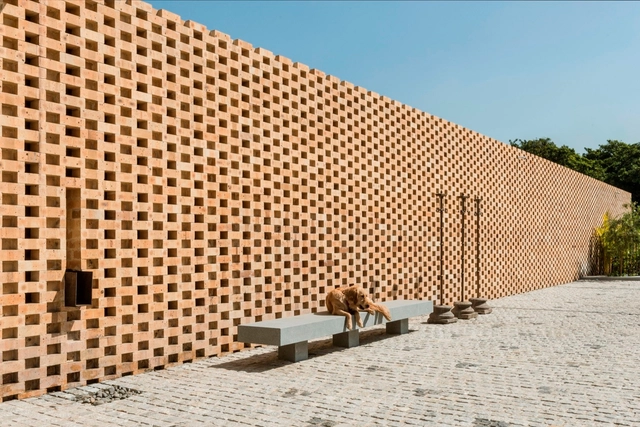
Ranging from yellow, to gray, to traditional red and orange, bricks are ubiquitous in many of our cities and widely used in construction. Briefly, the manufacturing process of traditional bricks involves molding clay and firing it in ovens, facilitating the creation of solid blocks, perforated blocks, cobogós, tiles, and other shapes. Ceramic bricks are inexpensive; easy to find; boast strong resistance, thermal inertia, and finish; and do not require such specialized labor for construction. But if the installation is done near sources of high heat, the common brick will end up cracking and breaking, making refractory bricks more suitable. But what does that mean?
While concrete is without a doubt the world's go-to building material thanks to its durability, malleability, and ability to withstand a wide range of climates, it is also the principal source of CO2 emissions within the realm of construction. To combat this and reduce their creations' carbon footprint, many architects have begun experimenting and innovating in a bid to optimize concrete's technical qualities while diminishing its impact on the environment. Among these efforts, there are several projects that have explored the possibility of replacing traditional frameworks with more sustainable materials like bamboo, a resource that grows in abundance throughout many regions of the world and, along with having minimal environmental impact, renders high quality textured detailing on a variety of architectural surfaces.
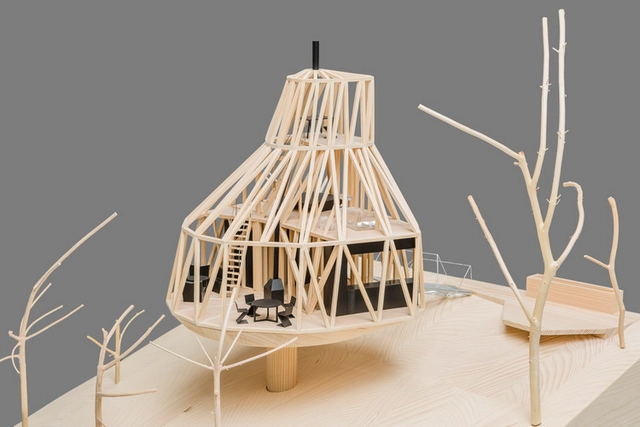
For centuries, physical modeling has been a staple of architectural education and practice. Allowing the designer and client to explore a scheme in plan, elevation, and perspective all at once, the physical model aims to simulate the spatial relationship between volumes and to understand constructive systems.
Even in an age of ultra-high quality rendering, and virtual reality, physical material models represent a beloved, tried and tested method of conveying ideas both during the design process and at presentation stage. Whether through a rapid, five-minute volumetric test of paper models, or a carefully sculpted timber construction detail, careful choice of material can greatly assist the modeling process, allowing designers to remain abstract, or test physical properties of structural systems.
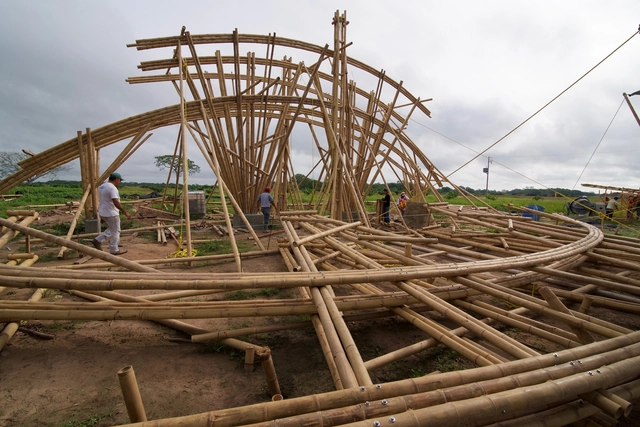
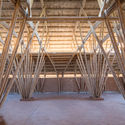
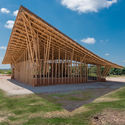
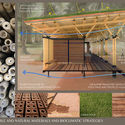
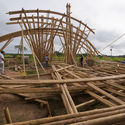
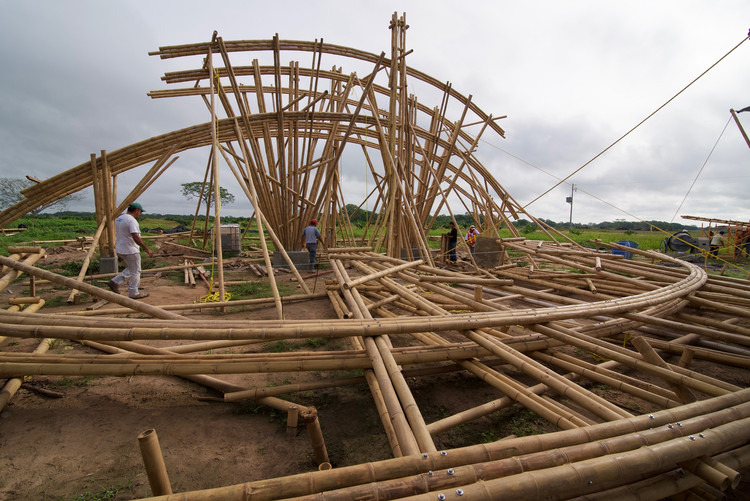
Bamboo is an ancient building material that has been used in a variety of countries and building types. A sustainable material with a unique aesthetic, it is arguably one of the greatest architectural trends of the moment.
This material's structural and sustainable qualities demonstrate that bamboo can be three times more resistant than steel and grow about 4 feet (1.22 meter) in just one day.