In this week's reprint, author Walter Jaegerhaus explores the U.S. housing challenge, drawing a timeline of the evolution of different architectural solutions, from around the world. Seeking to "inspire designers today to create new housing options", and hoping "that the U.S can again embrace its experimental origins and try out new ideas and methods", the article highlights examples from Europe and the Americas.
Developed by architect Gerardo Caballero, in collaboration with Paola Gallino, Sebastian Flosi, Franco Brachetta, Ana Babaya, Leonardo Rota, Emmanuel Leggeri, Sofia Rothman, Gerardo Bordi, Edgardo Torres, and Alessandro De Paoli, "The Infinite House", a project inspired by traditional Argentine houses, will represent Argentina in the upcoming 2021 VeniceArchitecture Biennale. The project reflects on the identity of Argentine public housing and the role collective housing, both public and private, has played in the country's history and society. The Infinite House aims to push the limits of the domestic and to highlight the importance of the collective rather than the individual by illustrating that a home extends beyond one's own living space: "it is the city, the country, and even the world."
Corviale is one of Italy’s biggest postwar public housing projects and, arguably, one of the most controversial. Both revered and abhorred, the complex remains a pilgrimage site for architectural schools from around the world. Il Serpentone (The Big Snake), as it is affectionately called, stretches nearly a kilometer in a straight line, a monolithic, brutalist building that hovers over the countryside on the outskirts of Rome. But there is nothing sinuous about a construction made up of 750,000 square meters of reinforced concrete condensed into 60 hectares. This hulking horizontal skyscraper is formed by twin structures, each 30 meters high, connected through labyrinths of elongated hallways, external corridors, and inner courtyards. Divided into five housing units, each with its own entrance and staircase, it contains 1,200 apartments and houses up to 6,000 people.
https://www.archdaily.com/960563/chilometro-verde-five-women-architects-revitalizing-the-corviale-a-giant-public-housing-project-in-romeMarina Engel
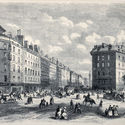
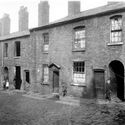
The introduction of new techniques and materials, along with innovations in indoor plumbing systems, resulting from the industrial revolution, paved the way for vertical living. Investigating specifically a period of time where a flux of population was driven to cities, and social class divisions were being questioned, this article looks back at the evolution of the house plan in Europe between 1760 and 1939.
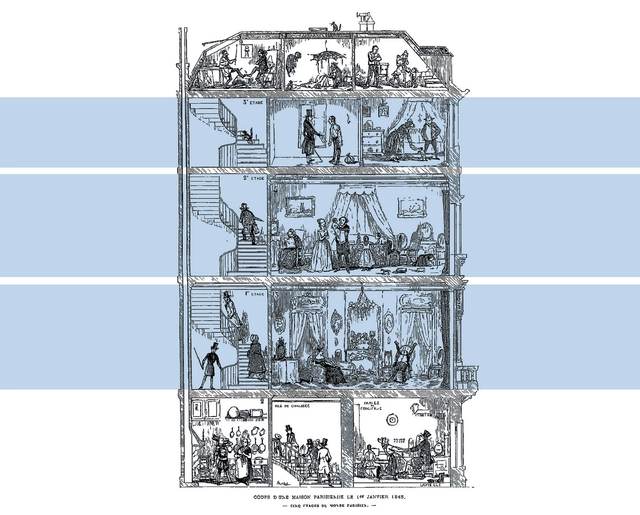
Tackling the transformation of the housing unit during the industrial revolution all the way to the interwar period, this feature highlights four prominent examples that rethought traditional layouts and responded to the challenges of their time. Still influential today, the mentioned models, restored for use, happen to be part of the 21st-century urban fabric. Located in London, Paris, Amsterdam, and Moscow, the plans showcase the ever-changing interior wellbeing standards, directly linked to a broader metamorphosis, equalizing and providing for growing urban populations. Discover the evolution of living units from the Back to Back Houses to the Garden Cities of England; the Haussmannien Block, a Vertical Living for a Modern Bourgeoisie; the Extension of Amsterdam, from Alcove Housing to Social Housing Blocks; and the Transition Type House in Russia.
WELCOMEPROJECTS’s The Breadbox ADU. Image Courtesy of Los Angeles Department of Building and Safety
It’s a rather unfortunate platitude that good design and government programs don’t mix. More than unfortunate, it’s also untrue, as a new initiative from the City of Los Angeles demonstrates.
The newly launched Accessory Dwelling Unit (ADU) Standard Plan Program offers homeowners 20 eye-catching, pre-approved designs for the increasingly popular typology, which many see as a viable alternative to costlier mid-rise apartment buildings. Administered by the Los Angeles Department of Building and Safety (LADBS) in United States and featuring designs from firms including SO – IL and LA-Más, the program is a bid to fast-track permits for these humble, backyard homes—better known as ADUs—as well as making them “more accessible, more affordable, and more beautiful,” said L.A. Mayor Eric Garcetti in a press statement.
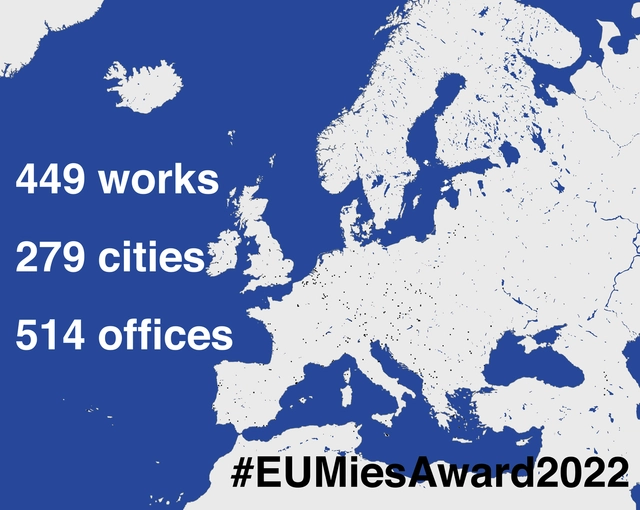
The European Union Prize for Contemporary Architecture, the Mies van der Rohe Award has just announced the first 449 works competing in its 2022 edition. Selected from 279 cities in 41 countries, the projects have been nominated by European independent experts, the national architecture associations, and the Prize Advisory Committee.
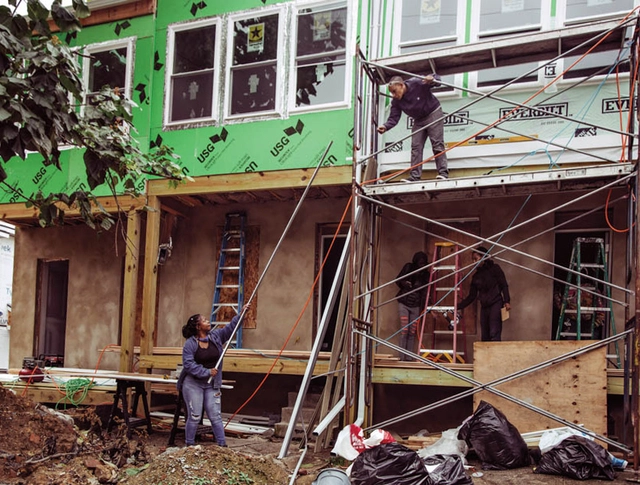
Newly built houses, with their sizable carbon footprints, don’t just contribute to climate change. For many Americans, they’re also too expensive—a bitter irony in cities rife with vacant buildings and record evictions.
Given the urgency of both issues, projects that retrofit livable housing into existing low-carbon shells (the initial embodied carbon was spent long ago) might be worth a closer look. We searched for them and came across a handful that promise a cure for housing insecurity and excessive greenhouse gas emissions.
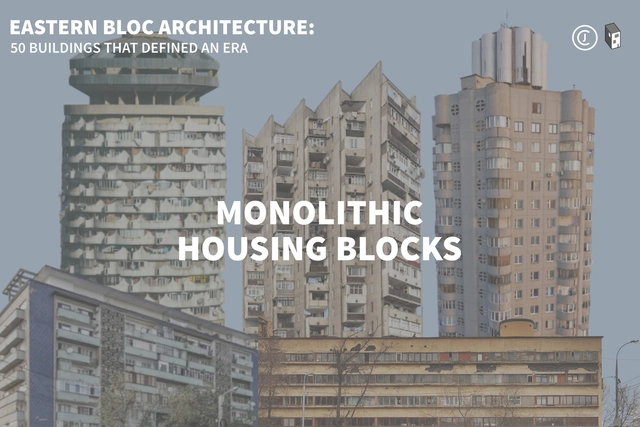
This article is part of "Eastern Bloc Architecture: 50 Buildings that Defined an Era", a collaborative series by The Calvert Journal and ArchDaily highlighting iconic architecture that had shaped the Eastern world. Every week both publications will be releasing a listing rounding up five Eastern Bloc projects of certain typology. Read on for your weekly dose: Monolithic Housing Blocks.
https://www.archdaily.com/945134/eastern-bloc-buildings-monolithic-housing-blocksLucía de la Torre
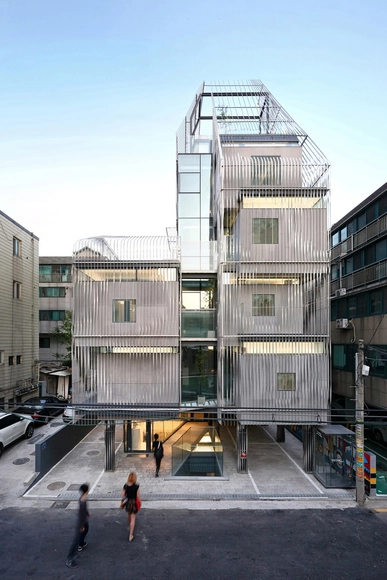
If you come to think of it, the urban development of the world's largest cities is like playing a game of Tetris; No matter how condensed or crowded, for architects, there is always room for more. However, this act of 'structural stacking' often creates unique architectural compositions.
As a follow-up to his first photo-series, Singaporean photographer and visual artist Kevin Siyuan put together 'Corridors of Diversity', a short montage of communal corridors and HDB (Housing and Development Board) block facades, featuring the dynamic designs and forms of Singapore's densely built environment.






.jpg?1619126725&format=webp&width=640&height=580)


.jpg "Residential houses \"Eigen Haard\", Spaarndammerplantsoen, Amsterdam, Original state, 1915. Image Courtesy of Wikimedia")

.jpg?1615577970&format=webp&width=640&height=580)