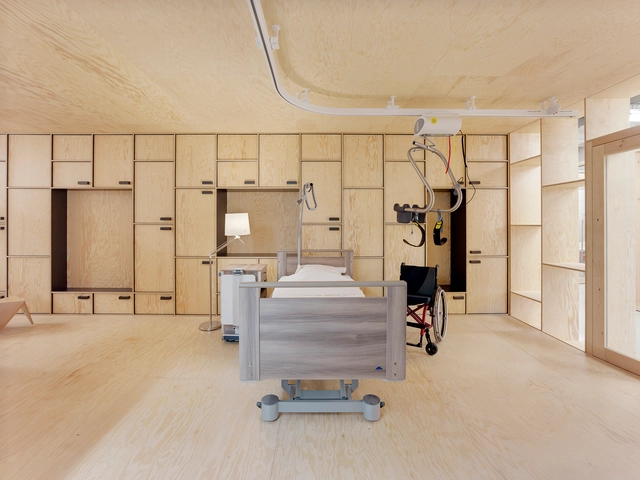
Addressing contextual severe healthcare problems, like the outbreak of infectious diseases or maternal mortality, MASS has helped in setting design strategies to mitigate and reduce critical medical concerns. With some projects operational, and others in the pipeline, the facilities imagined, tackle a wide range of complications.
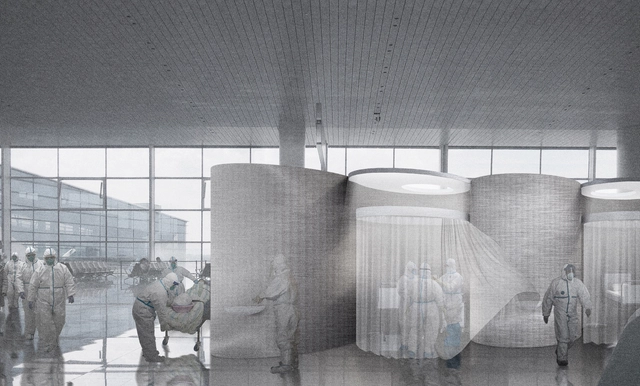
Opposite Office has proposed to transform the new Berlin airport, under construction since 2006, into a “Superhospital” for coronavirus patients. In an attempt to prepare the healthcare system and increase its capabilities, Opposite Office presented an adaptive reuse alternative, drawing contextual solutions to fight the pandemic.
Hospitals and projects related to healthcare must follow specific guidelines based on the rules and regulations of their country. These standards help us to design complex spaces, such as those located in areas of surgery, hospitalization, diagnostics, laboratories, and including areas and circulations that are clean, dirty, restricted or public, which create a properly functioning building.
There are a few spaces that we, as architects, can develop with great ease and freedom of design: waiting rooms, reception areas, and outdoor spaces. These are spaces where architects can express the character of the hospital. To jump-start you into this process, we have selected 43 projects that show us how creativity and quality of a space go hand-in-hand with functionality.
A wave of service providers and clinics is using catchy branding and interior design to attract patients frustrated with old-guard medical facilities. But is further commodification of health care the answer?
A few years ago I signed up for Oscar health insurance. Cofounded in 2012 by Joshua Kushner and headquartered in New York City, it was the health-care plan most of my similarly freelance friends used. Plus, if you lived in Brooklyn, as I did at the time, you could easily visit its Oscar Center, a primary-care space in a warehouse loft that also boasted the offices of literary magazines. I went in for a checkup, feeling slightly nervous as with any doctor appointment, but was surprised when I opened the door onto a spacious, minimalist, wood-floored, primary-colored office installed with glass walls and snake plants. There was even a yoga room adorned with the decal “Let the Healing Begin.”
Foster + Partners has created in partnership with Luye Medical and Cleveland Clinic, a healthcare facility, challenging the traditional hospital prototypes. The design of the general medical hospital in Shanghai’s New Hong Qiao International Medical Center aims to generate a new type of patient experience.
Architecture, in all its forms, has the innate ability to trigger our emotions and alter our perceptions. Consequently, a lot of light is currently being shed on the relation between architecture, landscape, and health.
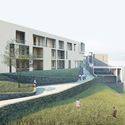
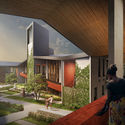
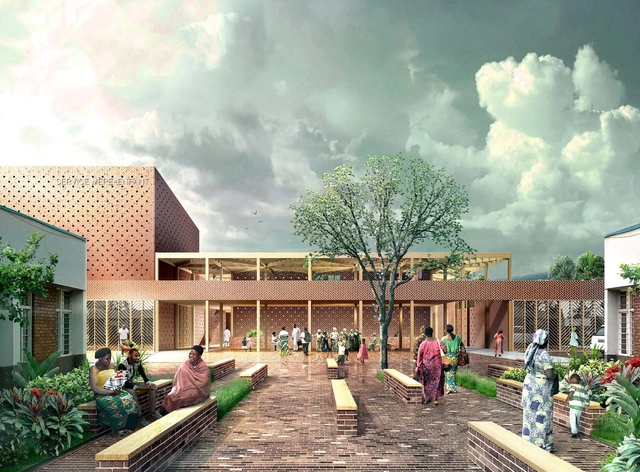
White Arkitekter has unveiled its design for a mother and baby unit for the Panzi Hospital in the Democratic Republic of Congo. The Scandinavian firm developed a new facility to be built onto the existing hospital, designed to improve the wellbeing for mothers and children. The project was highly commended at WAF 2018 in the Health-Future Project category.
The Panzi Hospital, set up following 20 years of war and devastation, has expanded its focus to treating survivors of sexual violence and serves over 400,000 people. The new unit will replace the overcrowded facilities at Panzi Hospital, which deals with up to 3500 births per year, and aims to reduce the maternal and post-natal mortality rate while providing more positive birth experiences.
When the world undergoes major changes (be it social, economic, technological, or political), the world of architecture needs to adapt alongside. Changes in government policy, for example, can bring about new opportunities for design to thrive, such as the influx of high-quality social housing currently being designed throughout London. Technological advances are easier to notice, but societal changes have just as much impact upon the architecture industry and the buildings we design.
This article was originally published on August 15, 2016. To read the stories behind other celebrated architecture projects, visit our AD Classics section.
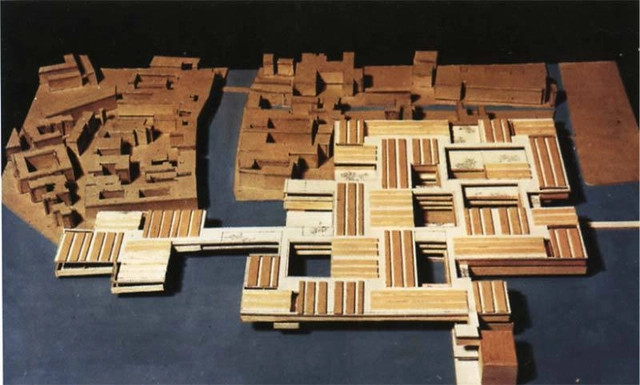
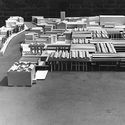
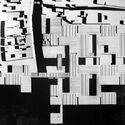
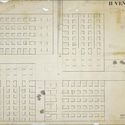
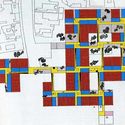
Le Corbusier made an indelible mark on Modernist architecture when he declared “une maison est une machine-à-habiter” (“a house is a machine for living”). His belief that architecture should be as efficient as machinery resulted in such proposals such as the Plan Voisin, a proposal to transform the Second Empire boulevards of Paris into a series of cruciform skyscrapers rising from a grid of freeways and open parks.[1] Not all of Le Corbusier’s concepts, however, were geared toward such radical urban transformation. His 1965 proposal for a hospital in Venice, Italy, was notable in its attempt at seeking aesthetic harmony with its unique surroundings: an attempt not to eradicate history, but to translate it.
This article was originally published on September 28, 2013. To read the stories behind other celebrated architecture projects, visit our AD Classics section.
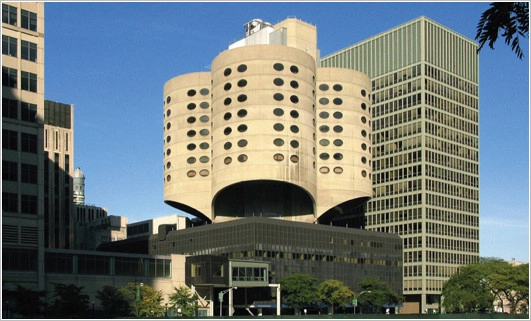
Hospital buildings, with their high standards of hygiene and efficiency, are a restrictive brief for architects, who all too often end up designing uninspiring corridors of patient rooms constructed from a limited palette of materials. However, this was not the case in Bertrand Goldberg's 1975 Prentice Women's Hospital. The hospital is the best example of a series of Goldberg-designed medical facilities, which all adhere to a similar form: a tower containing rooms for patient care, placed atop a rectilinear plinth containing the hospital's other functions.
A floor plan is an interesting way to represent and approach the functional program of hospitals and health centers, where the complexity of the system implies the need for specific studies of the distribution and spatial organization for proper health care.
From our published projects, we have found numerous solutions and possibilities for health centers and hospitals depending on the site's specific needs.
Below, we have selected 50 on-site floor plan examples that can help you better understand how architects design hospitals and health care centers.
The Renzo Piano Building Workshop (RPBW) has presented their preliminary design approaches for three hospitals in Greece. Part of a €200 million ($240 million) healthcare initiative launched by the Greek government, RPBW will produce designs for a General Hospital of Kromotini, a Children’s Hospital in Thessaloniki, and the Evangelismos Hospital in Athens which will also form part of the University’s Faculty of Nursing.
The three schemes are united by a “people-centric” approach, with each project seeking to integrate into their natural environments with an emphasis on natural light. The projects will follow the design ethos of the Stavros Niarchos Foundational Cultural Center by RPBW, completed in 2016.
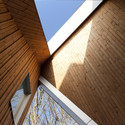
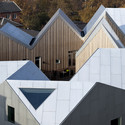
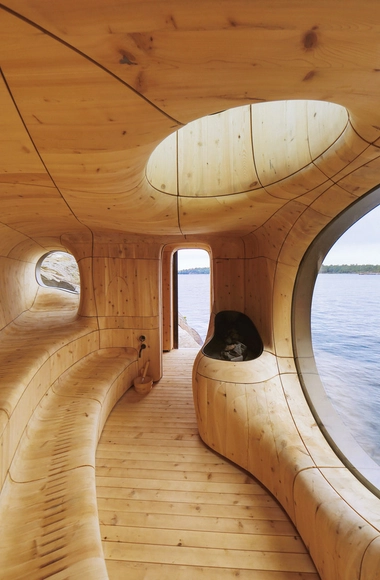
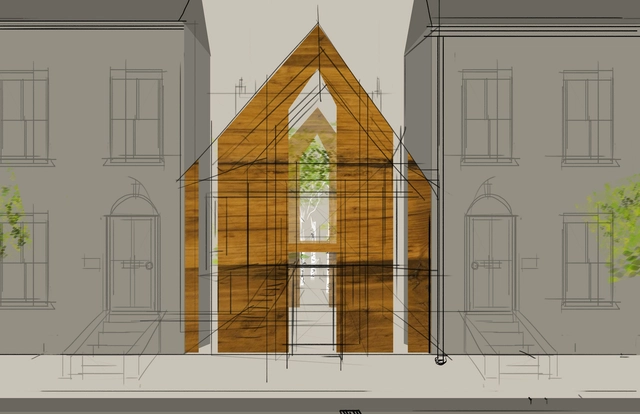
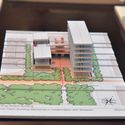
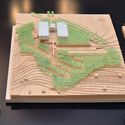
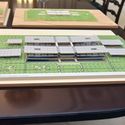
The extension is viewed as an urgent project to address overcrowding in the vital facility, with the demands of 20,000 annual patients resulting in hot, overcrowded communal spaces, and children sharing beds in wards. The Foundation described Manuel Herz as the “unanimous choice” with an approach showing “a mix of visual flair, practical understanding, and profound humanitarianism.”
https://www.archdaily.com/895766/manuel-herz-to-design-curvilinear-expansion-of-rural-senegal-hospitalNiall Patrick Walsh
The gas station does not usually catch one’s fancy. It is a ubiquitous building, one built primarily for function instead of for pleasure or community. We see them all the time but barely give them a second glance unless the need arises – and then, we get our fuel, and we are out of the station in minutes.
With the smell of gasoline and the usual convenience store spread, these service stations do not exude any particular sense of wellness. Neither have their flat, perennial structures captured the imagination of architects – until now.
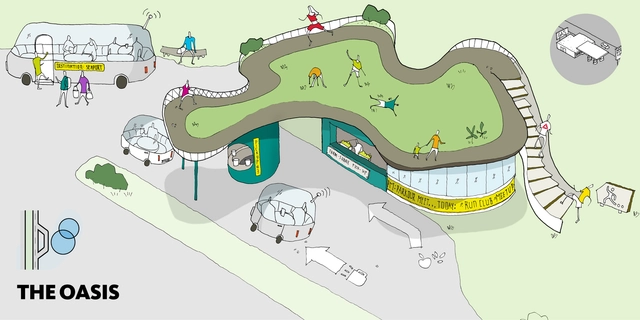
Reebok and Gensler are the first to catch on to the enormous potential of the common gas station. These buildings sit on prime real-estate all over the country, from highways to local streets. In their new collaborative project, “Get Pumped,” the global architecture firm and the fitness brand are coming up with a plan to re-do the gas station as we know it.
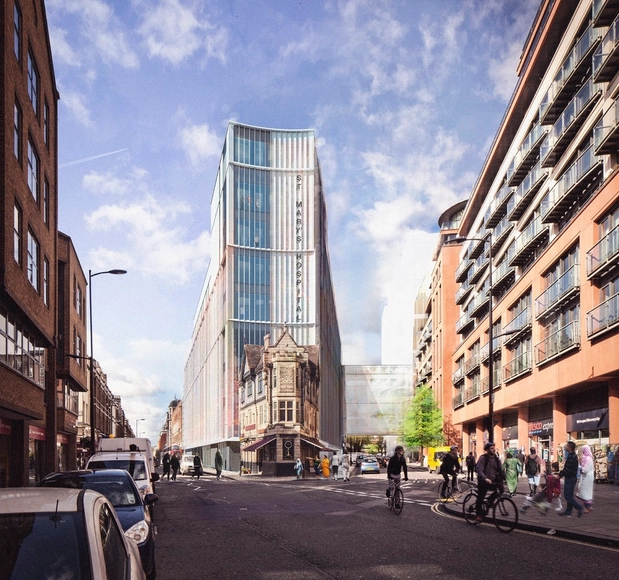
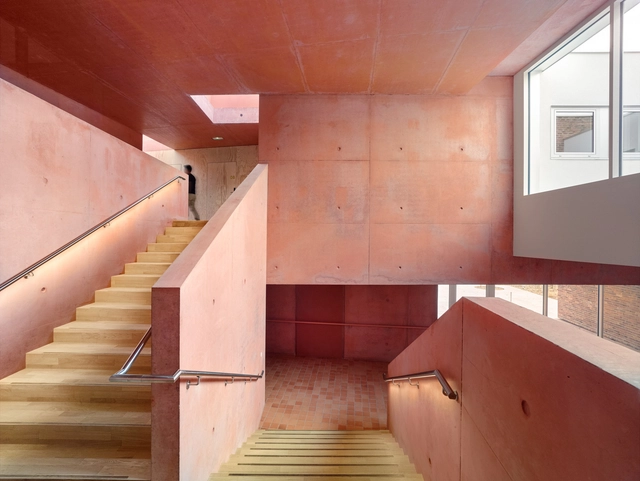
The Westminster City Council has granted planning permission for the New Outpatients Building at St Mary’s Hospital in Paddington, London. Designed by Feilden Clegg Bradley Studios, the 8-story building will consolidate outpatient services currently spread across 40 different locations into one comprehensive care center, increasing comfortability and ease-of-use for both patients and employees.






























.jpg?1528130931&format=webp&width=640&height=580)
.jpg?1528130951 "Image by Play-Time © Manuel Herz Architects")
.jpg?1528130941 "Image by Play-Time © Manuel Herz Architects")
.jpg?1528130931 "Image by Play-Time © Manuel Herz Architects")
.jpg?1528130920 "Image by Play-Time © Manuel Herz Architects")
.jpg?1528130931)