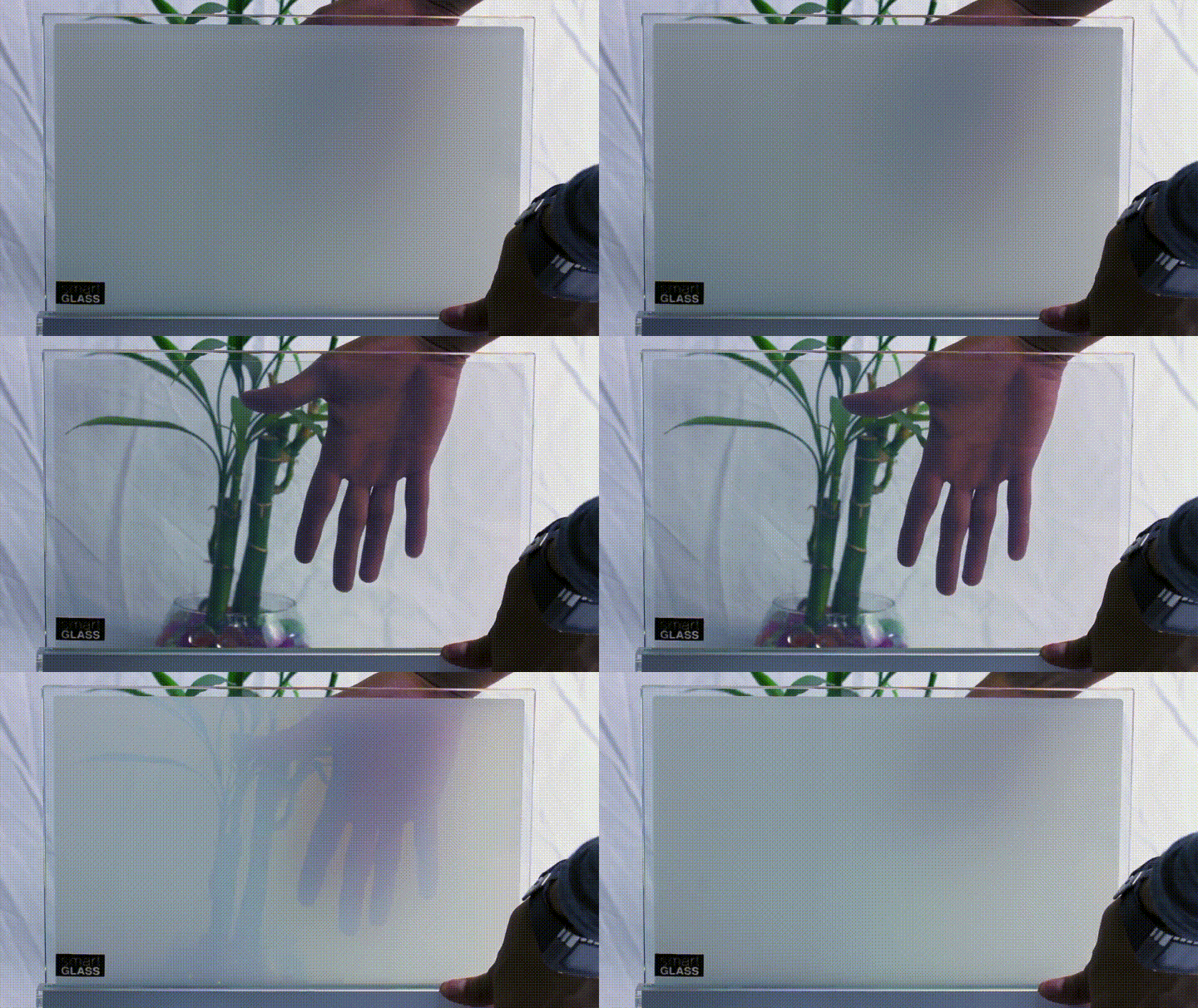
A relative newcomer to the material world, smart glass (also known as switch glass or electrochromic glass) has the ability to change its properties and appearance, allowing the environmental conditions of a space to be optimized according to the use and needs of its users.
Electrochromic glass technology works by changing the electrical polarization between some of its components. Its most widely used variant, known as PDCL, consists of a thin film of liquid crystal that sits between two conductive transparent plastic layers (usually laminated glass). By changing the current running through the liquid crystal, the glass can take on different appearences.
https://www.archdaily.com/876080/this-intelligent-glass-can-change-from-opaque-to-transparent-in-just-secondsAD Editorial Team
In this visual essay, Greek filmmaker Yiannis Biliris documents the all-pervasive pall of glass that covers the modern city. The three-and-a-half-minute-long film, produced by Visual Suspect and shot entirely in Hong Kong, captures the vivid reflections seen in the facades of the city’s buildings, as Biliris selectively pans and zooms his camera to instill a strong sense of urgency in the viewer’s mind.
The essay, beautifully haunting in its imagery, might be seen as a reflective commentary on the state of our built environment today. Inspired by Albert Einstein’s general theory of relativity, which states that mass causes a distortion in space and time, it seems to subtly ask if our understanding of reality is warped itself. Describing the video as "a visual essay about perception and knowledge as [a] reflection of our reality," Biliris comments that "mass curves space and time, while the observer has his own perspective."
There's a creepy transformation taking over our cities, says architecture critic Justin Davidson. From Houston, Texas to Guangzhou, China, shiny towers of concrete and steel covered with glass are cropping up like an invasive species.
“That person sitting right next to you might have the most idiosyncratic inner life, but you don’t have a clue because we’re all wearing the same expression. That is the kind of creepy transformation that is taking over cities.”
Shiny, bland and homogenous. These characteristics are increasingly encapsulating the nature and identity of our cities through the use of glass as a dominant building material, says Pulitzer Prize-winning critic Justin Davidson. In this TED Talk, Davidson stresses the importance of the use of a varied palette of materials that evoke texture, color, roughness, and shadow, in order to create architecture of individuality and character to define and populate the world’s cities. The rapid growth of glassy skylines, which express a disdain for communal urban interaction, can be curbed through a combination of new and old building and material techniques, creating architecture that absorbs history and memory as a reflection of the diverse society it lives in.
https://www.archdaily.com/873289/ted-talk-justin-davidson-on-the-pitfalls-of-glass-skylinesOsman Bari
On a tree-lined avenue in Singapore, fittingly named Orchard Road, Apple has opened its first Flagship store in the city-state, highlighting its role as a global center for creativity and innovation. Designed by Fosters + Partners, in collaboration with the design team at Apple, the Orchard Road Flagship seeks to create a new social focus by working in tandem with nature, blurring the boundaries between inside and out.
https://www.archdaily.com/872749/apple-opens-its-first-flagship-store-in-singaporeNiall Patrick Walsh
North light, south light, warm light and cool light – the diversity of skylights mean they can illuminate any space. Both a window and a ceiling, the hybrid nature of a skylight enables it to be a key element used in architectural spaces. The cool light of a north skylight is instrumental in creating a space to focus and work, while its south-facing counterpart lights up a space with that golden glow. Through its flexibility also come opportunities for expression, from its shape to its angle. Is a skylight a ribbon weaving through a roof panel? Or is it a series of dotted openings creating a mosaic of daylight on the floor? Check out these 16 examples of contemporary spaces lit by this key element below:
Italian firm Giovanni Vaccarini Architetti has designed the new Headquarters of the Swiss Société Privée de Gérance (SPG), built on Route de Chêne, at the gates of the historical center of Geneva. The work involved the conversion and extension of the existing building, starting with a glass façade that meets the need for solar shading in the interiors while achieving maximum visual permeability.
This façade also improves the acoustic and thermal insulation performance of the building: the double skin allows the envelope to be naturally ventilated and the perimeter ventilation system, combined with the internal forced ventilation system, reduces overall energy consumption. The steel structural elements on the façade, produced by Stahlbau Pichler (a specialist in the sector) produce a modular rhythm and the reflections on the glass shading panels give the project a particular "material weight."
https://www.archdaily.com/869374/this-building-saves-energy-with-a-pioneering-triple-layer-glass-facadeAD Editorial Team
Now, a new pool at Houston’s Market Square Tower is upping the ante even further with a transparent plexiglass wading pool that projects out 10 feet past the end of the building – and 500 feet above the busy street below.
https://www.archdaily.com/868968/this-glass-bottomed-sky-pool-is-suspended-500-feet-from-the-groundAD Editorial Team
Professor Alan Short of the University of Cambridge has published a book advocating for the revival of 19th-century architectural ideas to address the crippling energy use of modern skyscrapers. The Recovery of Natural Environments in Architecture proposes an end to the architectural fetish for glass, steel, and air conditioning, instead drawing inspiration from forgotten techniques in naturally ventilated buildings of the 1800s. The book is a culmination of 30 years’ research and design by Prof. Short and his colleagues at the University of Cambridge.
https://www.archdaily.com/866864/new-book-calls-for-an-end-to-our-fetish-for-conditioned-skyscrapersNiall Patrick Walsh
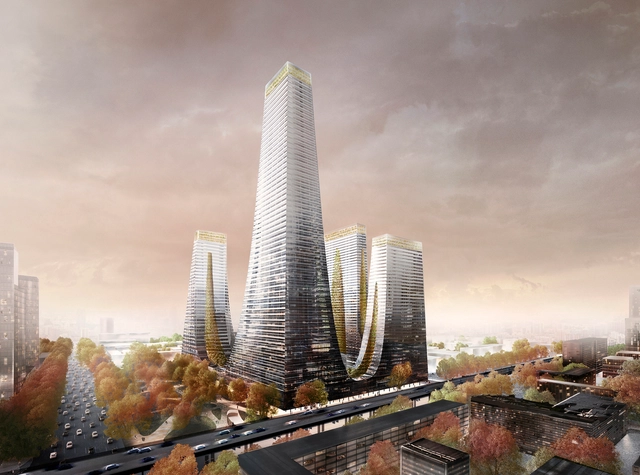
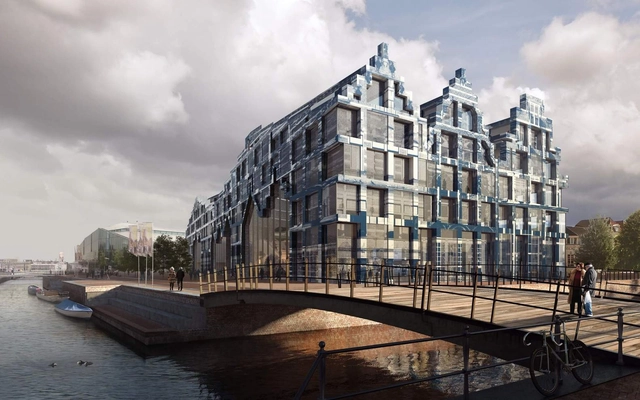
Three tall facades take inspiration from famous historic Delft dwellings. Image Courtesy of Van Dongen-Koschuch Architects and Planners
Van Dongen–Kuschuch Architects and Planners has released images for its ‘House of Delft’ mixed-use hub in the Netherlands. Located beside Delft Central Train Station, the scheme will act as a gateway to both the historic city center and the renowned University of Technology. The architectural intent behind the proposal is to celebrate the artistic, scientific and innovative achievements which came from the city throughout its history. As visitors step off the train, it will be both an introduction to the city, and an indicator of what it has to offer.
Superthin, flexible glass sounds like something out of a fantasy world – but in fact, it’s something many of us already use everyday as screens for our smartphones and watches. In this video from the Science Channel’s How It’s Made, the intricate process for creating this material, produced by glass manufacturer Schott, is revealed. Watch as the components of the glass are carefully measured out and blended before being melted and reformed into ultrathin sheets.
The physical properties of glass are invaluable and unequaled when it comes to the architect’s material palette. From the time of the cathedrals and the the brilliantly colored stained glass that served a functional and didactic purpose, to the modernist liberation of the floor plan and the exquisitely-framed horizontal views provided by ample windows, architects have turned to glass to achieve not only aesthetic but performative conditions in their projects.
Today, Architects face an increasing array of choices in specifying and designing with glass for building facades, as glass manufacturers propose a greater variety of colors, textures and patterns than ever before. A wider range of coatings and treatments has also been developed, allowing for a finer selection of glass panes with a combination of light transmittance, reflectance and absorption to meet the needs of outstanding architectural projects. These options affect the aesthetics and energy performance of the glass, and therefore of the overall building.
Thanks to advanced calculation tools, energy performance can now be anticipated accurately, but the graphic representation of glass is still a challenge, and yet a crucial need for architects.
https://www.archdaily.com/797724/how-physico-realistic-rendering-helps-architects-choose-the-right-glass-for-facadesSponsored Post
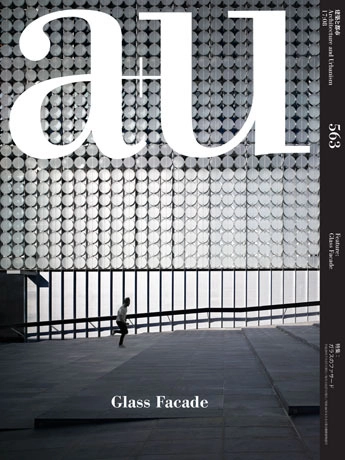
Even as modernism promoted the transparency of glass architecture, many within the movement were conscious of the monotony of large glass facades, with even Mies van der Rohe using elements such as his trademark mullions to break up his facades. But in the years since, countless uniform structural glazing skyscrapers have emerged and bored urban citizens. In response to this, unconventional reinterpretations of facades have gained interest.
Accompanied by the belief that light and brilliance could help in creating iconic architecture and a better human world, glass and metal have been innovatively transformed to create crystalline images. As a result, the locus of meaning in architecture has shifted from the internal space-form towards the external surface.
Found in places as diverse as the Zhangjiajie Grand Canyon, Willis Tower, and Tokyo Skytree, glass bottom observation decks have become the favorite engineering marvel of thrill seekers looking for a new perspective on the world. Now, the U.S. Bank Tower in downtown Los Angeles has upped the ante for adrenaline-spiking structures – affixing a glass side to the building’s facade. Spanning from a window on the 70th story to a terrace on the 69th, the 45-foot-long chute opened to the public on Saturday, providing those brave enough to ride it with unprecedented views of the city.
Discovered by archaeologists in civilizations as old as ancient Egypt and Mesopotamia, fritted glass is hardly a new technology. Yet thanks to its energy-saving abilities and the smooth, gradient aesthetic it produces, fritted glass has seen a rebirth in contemporary architecture.
Frit itself is a ceramic component that can be laid out into an assortment of patterns, most typically consisting of dots or lines. These patterns can then be silk-screened onto annealed glass using frit paint. Then, the glass is fired in a tempering furnace, which strengthens and improves the safety of the glass under thermal stress. The resulting product is glass of determined transparency that, when used in building facades, can reduce solar heat gain and even make buildings more visible and less deadly for birds.
Jyväskylä, a city whose status as the center of Finnish culture and academia during the nineteenth century earned it the nickname “the Athens of Finland,” awarded Alvar Aalto the contract to design a university campus worthy of the city’s cultural heritage in 1951. Built around the pre-existing facilities of Finland’s Athenaeum, the new university would be designed with great care to respect both its natural and institutional surroundings.
The city of Jyväskylä was by no means unfamiliar to Aalto; he had moved there as a young boy with his family in 1903 and returned to form his practice in the city after qualifying as an architect in Helsinki in 1923. He was well acquainted with Jyväskylä’s Teacher Seminary, which had been a bastion of the study of the Finnish language since 1863. Such an institution was eminently important in a country that had spent most of its history as part of either Sweden or Russia. As such, the teaching of Finnish was considered an integral part of the awakening of the fledgling country’s national identity.[1]
The West Coast's tallest building, Los Angeles' US Bank Tower is going to be outfitted with a terrifying glass slide designed by engineering firm M.Ludvik & Co. Set to hang 1000-feet above the street, the project will be part of the building's Gensler-designed OUE Skyspace LA attraction - soon to be California's tallest open-air observation deck.
Grace Farms by SANAA perfectly illustrates the firm’s sinuous, elegant style, combining their understanding of glass and structure to create spaces so fluid that they’re hard to believe from just a photo. A new time lapse by Work Zone Cam shows the construction of this project in HD, capturing a period between September 2013 and October 2015. Work Zone Cam worked with Project Manager, Paratus Group, to document Grace Farms’ construction, including its central piece “The River”: a ribbon-like roof that blends seamlessly with the landscape. Watch the entire construction of the project in just 180 seconds after the break.