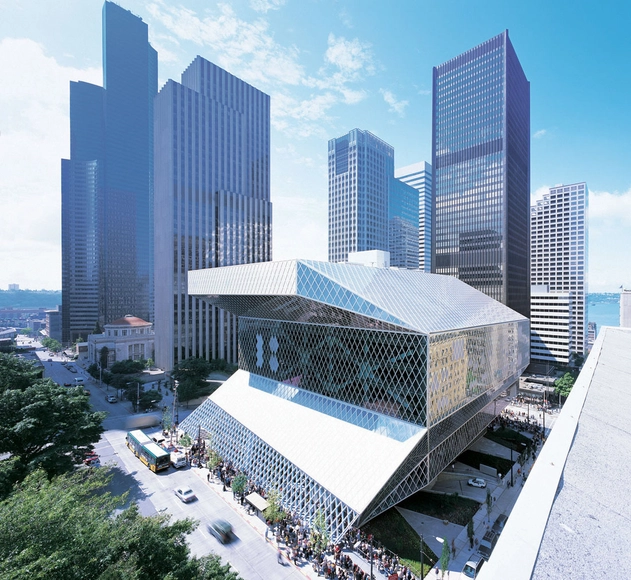
Bjarke Ingels worked on the Seattle Central Library during his time at OMA. Image Courtesy OMA
The world of architecture is small. So small in fact, that Rem Koolhaas has been credited with the creation of over forty practices worldwide, led by the likes of Zaha Hadid and Bjarke Ingels. Dubbed “Baby Rems” by Metropolis Magazine, this Koolhaas effect is hardly an isolated pattern, with manifestations far beyond the walls of OMA. The phenomenon has dominated the world of architecture, assisted by the prevalence and increasing necessity of internships for burgeoning architects.
In a recent article for Curbed, Patrick Sisson dug into the storied history of internships to uncover some unexpected connections between the world's most prolific architects. With the help of Sisson's list, we've compiled a record of the humble beginnings of the household names of architecture. Where did Frank Gehry get his start? Find out after the break.
The opening of the exhibition American Perspectives: From Classic to Contemporary presents the hand-drawn worlds of prominent American architects and architectural draftsmen. The art of architectural representation in the USA, particularly at the beginning of the 20th century, reached heights of originality and perfection, which still stands out today. On show will be works by Frank Lloyed Wright, Richard Neutra, Lebbeus Woods and Achilles Rizzoli.
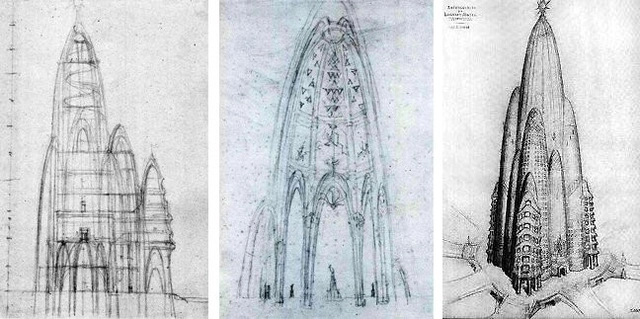
Sketches by Gaudí on the left, with Joan Matamala's drawing of the building on the right. Image Courtesy of 6sqft
Ever since its unprecedented skyward growth in the late 19th and early 20th centuries, Manhattan has been an icon of construction all over the world, with recent estimates concluding that the island contains some 47,000 buildings. However, as with all construction, completed projects are just the tip of the architectural iceberg; Manhattan is also the home of many thousands of unloved, incomplete, and downright impossible proposals that never made it big in the Big Apple.
Of course, the challenges of New York are indiscriminate, and even world-renowned architects often have difficulties building in the city. After the break, we take a look at just three of these proposals, by Antoni Gaudí, Frank Lloyd Wright and Frank Gehry, courtesy of 6sqft.
Yesterday afternoon, I was able to visit the University of Arkansas exhibition “Fay Jones and Frank Lloyd Wright: Organic Architecture Comes to Arkansas” - without purchasing a ticket or leaving my apartment. This extensive exhibition on the life and development of these two notable architects was made possible through a collaboration between University of Arkansas Libraries’ Special Collections and Crystal Bridges Museum of American Art Library and Archives. Exhibitions such as this are part of a broader movement in recent years towards making archived content more easily accessible to the public through web platforms. The concept of the online exhibition, however, is still in its infancy and there remains significant room for innovation.
A recent nomination by the United States seeks to elevate ten celebrated buildings characteristic of influential architect Frank Lloyd Wright's style to UNESCO World Heritage Sites. If the nomination is fulfilled, the collection of buildings will join the 1,007 designated sites currently on the UNESCO World Heritage List, including some of the most recognizable buildings in the world like the Taj Mahal and Sydney Opera House. These structures are recognized for their extraordinary cultural significance and "outstanding universal values." See the ten nominated buildings, after the break.
Critic, curator and educator Aaron Betsky has been announced the new dean of the Frank Lloyd Wright School of Architecture. Betsky will assume his role immediately, taking over responsibilities regarding the School’s academic programs, personnel, students, finances, and character, as well as relations with the Frank Lloyd Wright Foundation’s broader programs.
“I am honored and humbled to have the opportunity to continue the work that for so long made Taliesin into a workshop for reinventing American architecture,” said Betsky. “I look forward to continuing its traditions and making the School into the best experimental school of architecture in the country.”
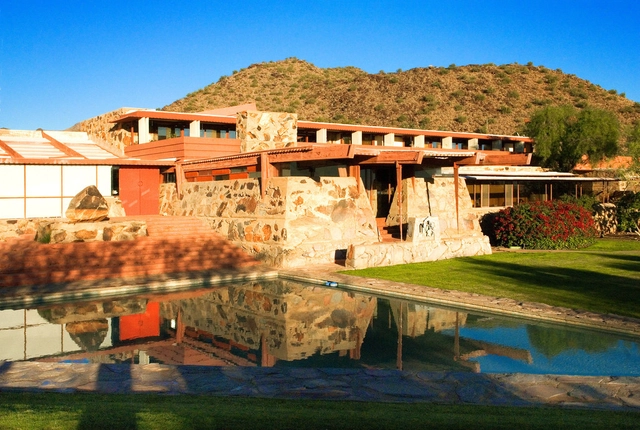
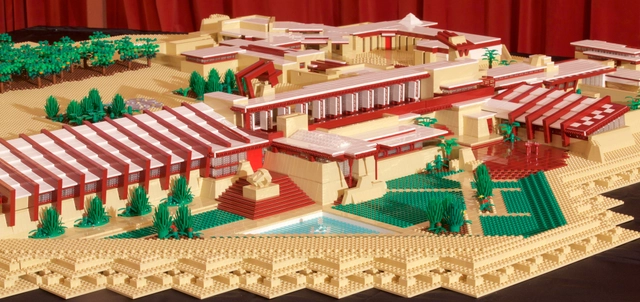
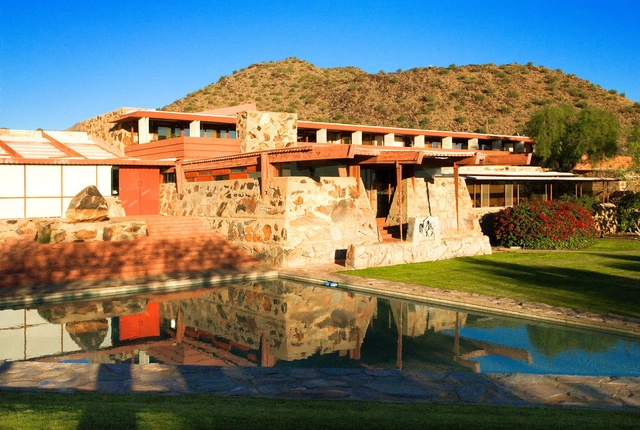
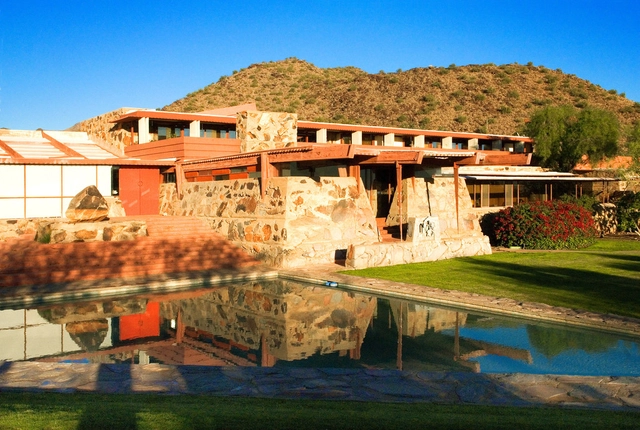
Architectural LEGO® artist Adam Reed Tucker has summoned a team of kids to help him rebuild Taliesin West as the largest Frank Lloyd Wright LEGO® structure in history. Unveiled this past Thursday, the eight by four foot model was comprised of more than 180,000 standard LEGO® parts. Tucker spent 40 hours researching and studying the project, 120 hours designing and 260 hours constructing the final model. Taliesin West, nestled in Scottsdale, Arizona’s Sonoran desert, was the winter home of Wright and is home of the Frank Lloyd Wright School of Architecture. It remains one of the most visited Wright sites in the world.
What does it take for a 22-year-old art school drop-out to start a lifelong professional relationship with "the greatest American architect of all time"? Originally published by Curbed as "How a 22-Year-Old Became Wright's Trusted Photographer," this article reveals that for Pedro E. Guerrero, it took some guts and a lot of luck - but once they were working together this unlikely pairing was a perfect match.
When Frank Lloyd Wright hired Pedro E. Guerrero to photograph Taliesin West in 1939, neither knew it would lead to one of the most important relationships in architectural history. Wright was 72 and had already been on the cover of Time for Fallingwater. Guerrero was a 22-year-old art school drop-out. Their first meeting was prompted by Guerrero's father, a sign painter who vaguely knew Wright from the neighborhood and hoped the architect would offer his son a job. Any job.
Young Guerrero had the chutzpah to introduce himself to the famous architect as a "photographer." In truth, he hadn't earned a nickel. "I had the world's worst portfolio, including a shot of a dead pelican," Guerrero said later. "But I also had nudes taken on the beach in Malibu. This seemed to capture Wright's interest."
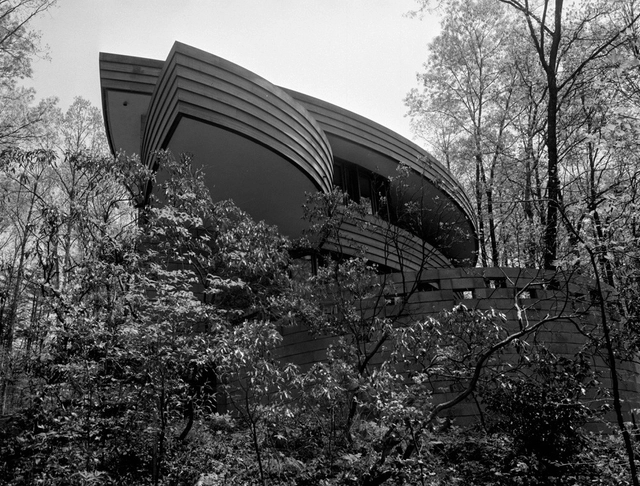
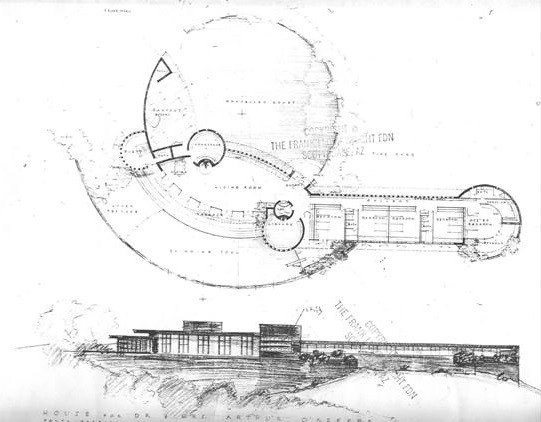
A plan by Stephen Brooks Architects to build the first Frank Lloyd Wright-designed home in the UK has been blocked at the appeal stage by a planning inspector, reports the Architects' Journal. Based on a 1947 design by Wright for the O'Keefe family in California, the project was the brainchild of Dr Hugh Petter, a Frank Lloyd Wright enthusiast who negotiated for eight years with the Frank Lloyd Wright Foundation before gaining permission to build the unrealised design in Tyntesfield Springs near Bristol, thousands of miles from its intended location.
Among the vast coverage of 3D printing in the media, the technology is frequently cited as the 'future' of production, focusing on its ability to bring new things into existence quickly and cheaply. But does 3D printing have to be all about the future? As this article originally printed by Metropolis Magazine as "3D Printing Saves a Frank Lloyd Wright Treasure" attests, 3D printing also has something to offer to the past; specifically, to a deteriorating Frank Lloyd Wright building whose 'textile block' was simply too complex to restore through any other modern techniques. Read on after the break to find out how this high-tech rescue mission is being achieved.
A group of alumni from the Frank Lloyd Wright School of Architecture have launched a petition on change.org to incorporate the school “as an independent subsidiary as required by the Higher Learning Commission (HLC) to ensure this irreplaceable treasure is perpetuated.” The school is currently at risk of losing its accreditation due to a recently enacted HLC law that requires colleges and other institutions to be accredited separately from the organizations that sponsor them. The Frank Lloyd Wright School is currently funded as a part of the Frank Lloyd Wright Foundation, which supports both of the school’s campuses, and preserves collections of Wright’s work.
The Spring House, also known as the Clifton and George Lewis II House, is the only private house designed by Frank Lloyd Wright that was ever built in Florida. The design embodies the final and shortest stylistic phase in Wright's career – the hemicycle style. The plan is characterized by concentric and intersecting circles, while the elevations are consistent with Wright's other designs in how they accentuate the horizontal.
After the death of her husband in 1996, Clifton Lewis formed the Spring House Institute, a not-for-profit organization dedicated to preserving the historic property and turning it into a public legacy. In order to restore and complete the house (some elements were never built, including a semi-circular pool on one of the terraces), the organization needs to raise $256,250, which will then be matched by the Division of Historical Resources to pay the $512,500 purchase price. To meet the Division of Historical Resources' October 15th deadline, they have launched an IndieGoGo campaign with a target of $100,000. For more on the historical landmark and the organization's fundraising efforts, keep reading after the break.
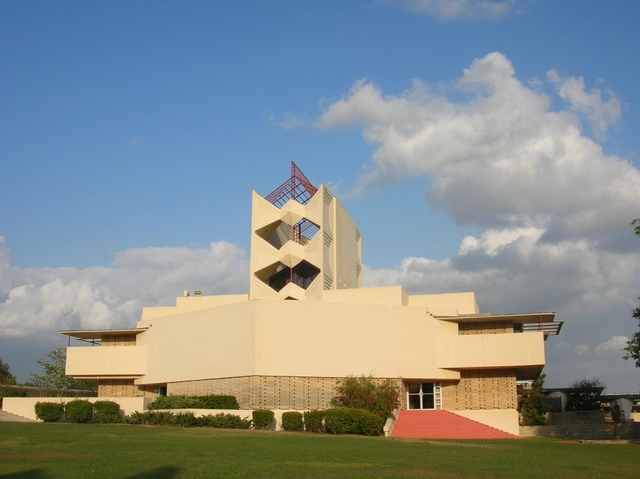
The Frank Lloyd Wright School of Architecture is currently at risk of losing its accreditation. The school has been cited as no longer meeting requirements by the Higher Learning Commission, a non-profit group whose approval is a prerequisite for the National Architectural Accrediting Board (NAAB)’s accreditation process. Founded in 1932 by Frank Lloyd Wright himself and still operating out of his campuses at Taliesin West and Taliesin, the school must now decide how best to meet HLC requirements, or risk losing the ability to confer Masters of Architecture degrees on its students.
Read on after the break to find out why the school faces this risk, and their plans to combat it
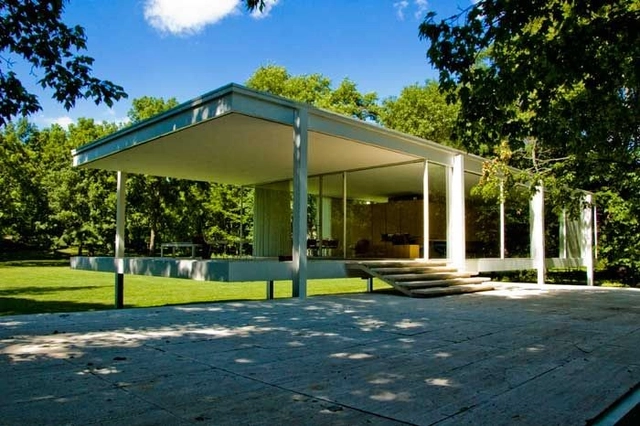
The Farnsworth House by Mies Van Der Rohe, 1951. Plano, Illinois. Image Courtesy of Blouin Art Info
What is the true value of architecture in today's society? According to this article by Anna Katz, rare pieces of architectural history have recently soared in value. Katz discusses the booming world of architecture at auction, featuring pieces by Mies Van Der Rohe and Frank Lloyd Wright among others. The article gracefully compares some of the most important architecture of our time against current real estate prices, exploring the catalyst of rising values in architecture of the recent past, while deliberating on the pitfalls of owning a delicate piece of architecture history. Read the story in full on Blouin Art Info.
Five of history's most iconic modern houses are re-created as illustrations in this two-minute video created by Matteo Muci. Set to the tune of cleverly timed, light-hearted music, the animation constructs the houses piece-by-piece on playful pastel backgrounds. The five homes featured in the short but sweet video are Le Courbusier's Villa Savoye, Gerrit Rietveld's Rietveld Schröder House, Ludwig Mies van der Rohe's Farnsworth House, Philip Johnson's Glass House and Frank Lloyd Wright's Fallingwater.
Material Minds, presented by ArchDaily Materials, is our new series of short interviews with architects, designers, scientists, and others who use architectural materials in innovative ways. Enjoy!
Arthur Andersson of Andersson-Wise Architects wants to build ruins. He wants things to be timeless - to look good now and 2000 years from now. He wants buildings to fit within a place and time. To do that he has a various set of philosophies, processes and some great influences. Read our full in-depth interview with Mr. Andersson, another revolutionary "Material Mind," after the break.
In Kengo Kuma’s work you may see influences of light, transparency and materiality. But when visiting the Woodbury School of Architecture in San Diego, Kengo Kuma shared a few of his not so apparent influences, from Frank Lloyd Wright and Louis Kahn to jazz music. Make sure to view “Knowing Kuma” to see the architect’s definition of architecture, materials and more.