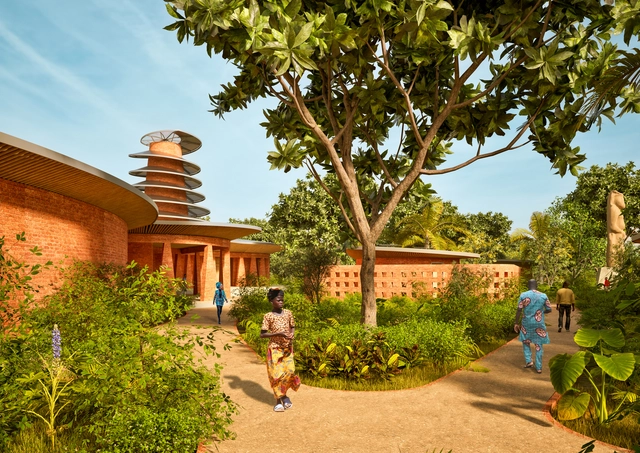
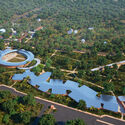
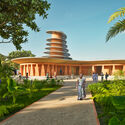
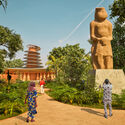
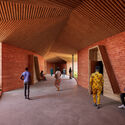
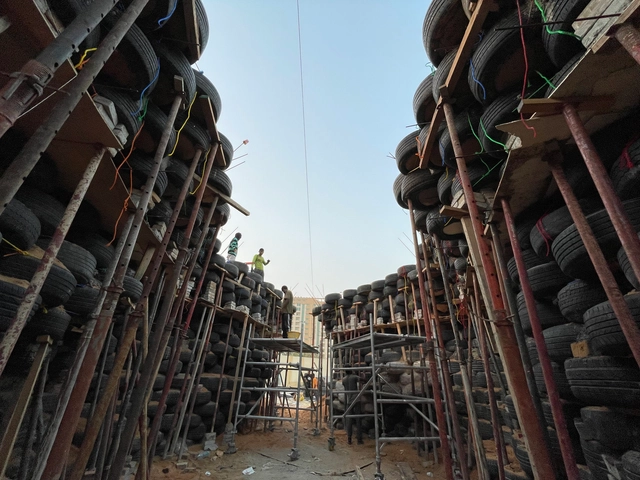
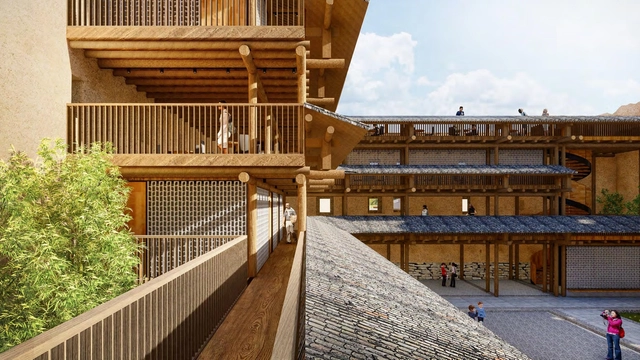
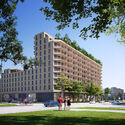
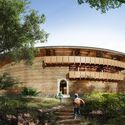
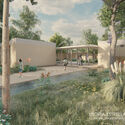
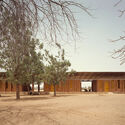
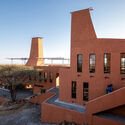
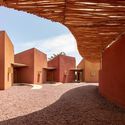
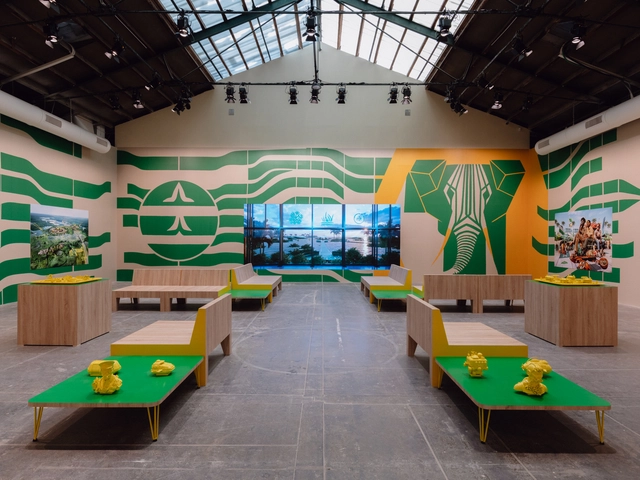
Kéré Architecture has revealed the design of a masterplan and series of buildings dedicated to the cultural and spiritual heritage of the Ewé people in the town of Notsé, in Togo. Commissioned by the Kothor Foundation, the center incorporates a sanctuary, several temples, a large-scale open-air amphitheater, as well as cultural functions such as exhibition halls, an auditorium, restaurants, and a reconstruction of the ancient royal palace of the Ewé Kingdom. The project, Francis Kéré's first in Togo, started construction in October 2024 and is scheduled for completion in February 2026.
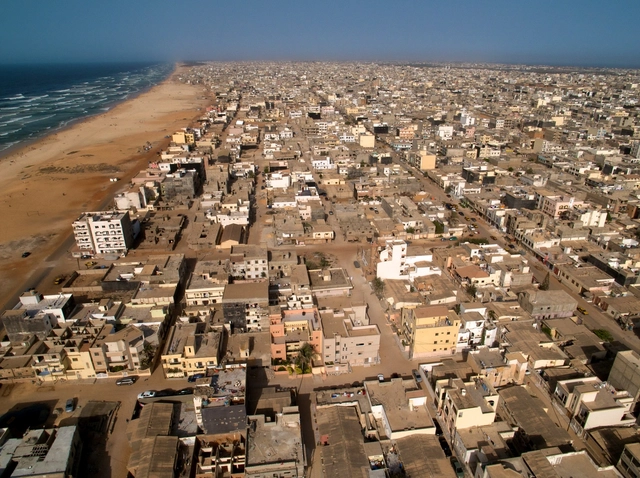
A city that defies expectations, this is what many visitors often express about the Senegalese capital, Dakar. As Africa's most western port city, which gained independence from the French in 1960, Dakar is a regional hub for diversity and culture. While it's often described as an unexpectedly sleek and "modern" city, with its characteristic and sometimes colorful monolithic buildings, Dakar is in fact in constant development and each of its districts tends to reflect a different style and focus, depending on its inhabitants and the dominating functions.
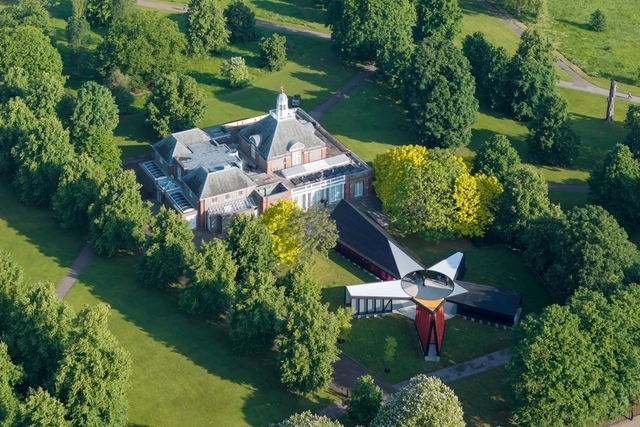
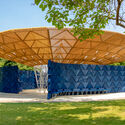
Since its launch in 2000, the Serpentine Pavilion has been providing renowned and emerging architects with a platform for design experimentation, becoming an important display of contemporary architecture. Each year, the commissioned architects and designers envision a temporary structure that speaks not only to their roots as creators, but also brings into focus what they consider to be important themes in the architectural world, from the need to redefine spaces for contemplation or conviviality, to explorations into the potential of natural materials or vernacular building techniques. On the day of the public opening of the 2024 Serpentine Pavilion, the "Archipelagic Void" designed by Korean architect Minsuk Cho and his firm Mass Studies, we look back at the last eight editions of the famous annual structure.
The Pritzker Architecture Prize 2024 Laureate Riken Yamamoto will deliver the lecture, "uncovering his journey in the discovery of communities throughout the world, inspiring his socially-driven architecture that blurs the boundaries between public and private dimensions". Following the lecture, Yamamoto will be joined by recent Laureates, Sir David Chipperfield CH (2023), Francis Kéré (2022), and Anne Lacaton (2021), who share a similar commitment to the value of the social system." They will discuss the responsibility of the architect as a catalyst for change and debate respective challenges of creating and bridging communities as they shape new approaches to the design of the built environment."
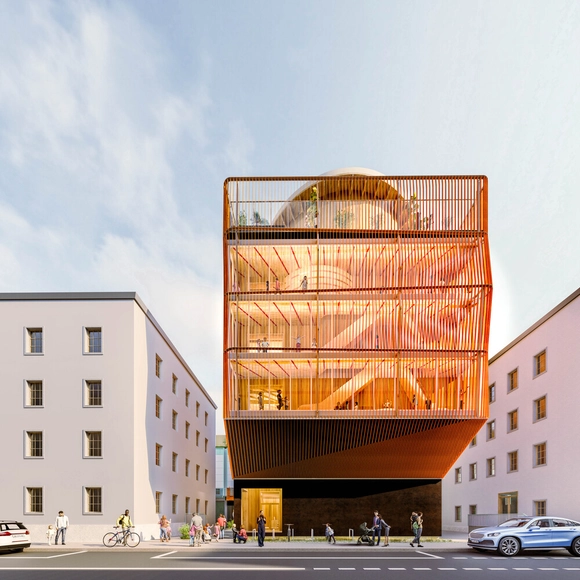
Kéré Architecture has revealed the design for a vertical childcare center at Munich’s Technical University (TUM) in Germany. Named "Ingeborg Pohl Kinderoase an der TUM," the center will be built in wood to the extent allowed by local norms and regulations for energy efficiency, thermal comfort, fire protection, and acoustics. The new building, located between the TUM main campus and the university canteen, broke ground on April 18 and is expected to be completed by the end of 2025.
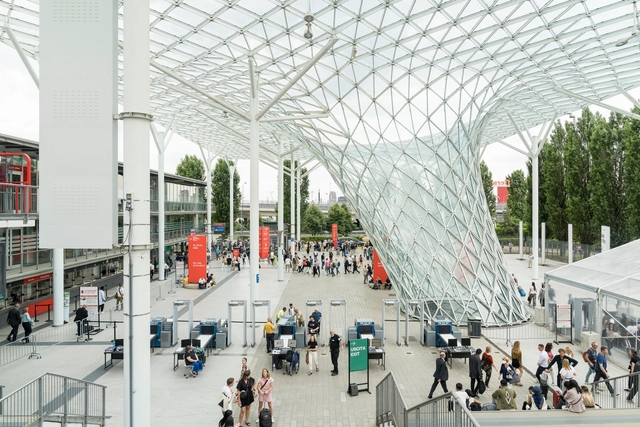
Milan Design Week has long been one of the most significant events in the global design sphere, showcasing groundbreaking concepts and visionary talent and fostering critical discourse in the design community. From the expansive trade fair Salone Del Mobile in Rho Fiera to design districts scattered across the city, Design Week brings together diverse voices, perspectives, and talent. According to Salone del Mobile's press statement, this year’s fair had 17.1% more visitors than in 2023, with a record turnout of 361,417 visitors overall.
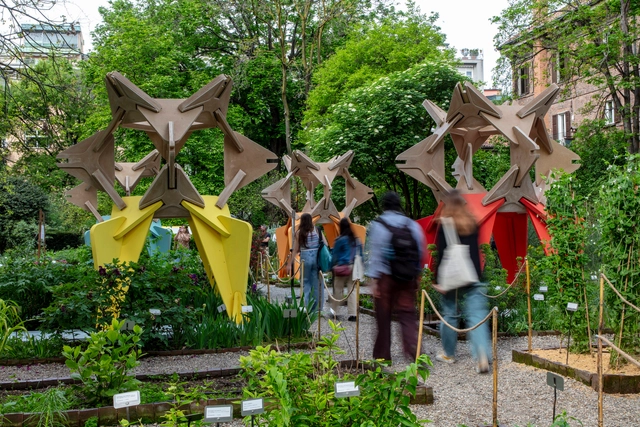
With visitors from China, Germany, Spain, Brazil, India, Turkey, Japan, and many more, the design week showcases a plethora of exhibitions, installations, talks, and panels. As the week comes to a close, running from April 15-21st, 2024, this article highlights diverse installations throughout the city relevant for architects and designers globally. Whether it is Mario Cucinella’s exploration of regeneration, Google’s display experimenting with sensory and color, or MAD architects investigating the boundaries of natural and man-made landscapes, the week was filled with fruitful collaborations that showcase the future of design.
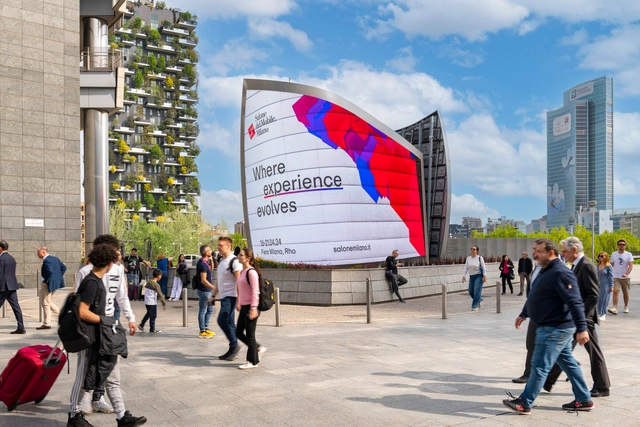
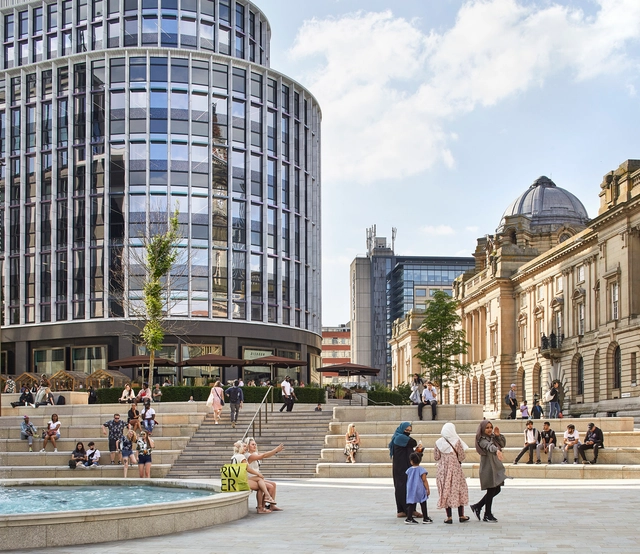
Piazza Gae Aulenti - Milano. Image Courtesy of Salone del Mobile.Milano
As Milan Design Week begins, the Italian city is transformed into the grounds of one of the most expansive celebrations of global design, with its streets and venues brimming with cultural events, exhibitions, large-scale installations, talks and conferences. At Rho Fiera, the 62nd edition of the Salone del Mobile.Milano brings together designers, architects, producers and leading figures of the design world, featuring over 1950 exhibitors which will remain open for the next 6 days. Additionally, across the city Fuorisalone opens up locations across the city with an engaging and varied cultural program.
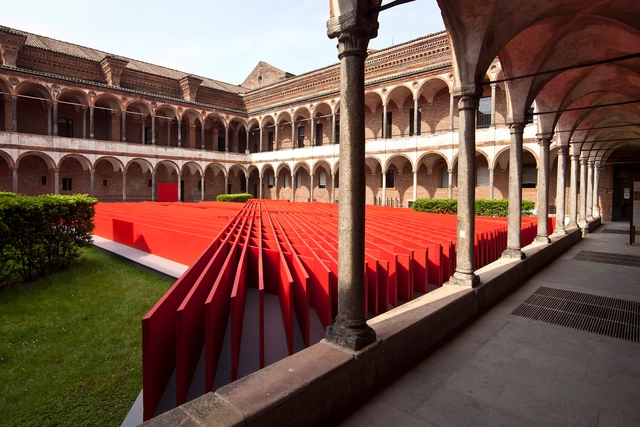
Milan Design Week stands as one of the most important events in the global design calendar, serving not only as a showcase of innovation but also as a catalyst for critical discourse and creative exchange. This year, the event unfolds with a multitude of exhibitions, installations, and talks happening throughout Milano during the week of April 15-21, 2024. By bringing together diverse voices, perspectives, and talents, Milan Design Week becomes relevant for architects and serves as a nexus for interdisciplinary dialogue. To help you better navigate the plethora of events, conferences, and installations, this article highlights the main venues hosting activities revenant for architects and designers, from the expansive trade fair Salone del Mobile in Rho Fiera to design districts across the city and unexpected locations hidden in Palazzo courtyards or reimagined industrial heritage sites.
Between now and 2050, worldwide installation of cooling appliances, like air conditioning, is projected to triple, resulting in a twofold increase in energy consumption. This reliance on such devices, often seen as exacerbating global warming, poses a paradox: how can we fightrising temperatures in cities while simultaneously contributing to them through our dependence on these solutions?
Salone del Mobile.Milano has announced the opening dates and events program, expanding the trade fair event to encompass more narratives and projects relevant to the design community. The 62nd edition will take place at Rho Fiera Ilano from April 16 to 21, 2024. It is expected to include over 1900 exhibitors from around the world, with contributions from emerging designers and several design schools under the recurring SaloneSatellite, now in its 25th-anniversary edition. The cultural program also includes immersive installations, like David Lynch’s “Thinking Rooms.”
The Holcim Foundation for Sustainable Construction has revealed the winning projects for the Holcim Awards 2023 competition, as well as the silver, bronze, and acknowledgement prizes, at a ceremony on November 18 in Venice, Italy. Evaluated by a jury comprising five independent expert panels from around the world, these projects were chosen to highlight contextual and practical approaches to sustainable construction, showcasing diversity across scales, budgets, geographies, and forms. On another hand, Francis Kéré winner of the Global Holcim Gold in 2012 and Laureate of the Pritzker Architecture Prize in 2022 took the stage at the event to talk about the influence of the Holcim Award on his career.
DnA_Design and Architecture Studio took home the golden prize for Asia-Pacific for an adaptive reuse project of a heritage building, while Husos, Elii, and Ultrazul won for Europe with a360° co-design process for the rehabilitation of an industrial building. For the Latin American territory, Cano Vera Arquitectura was selected for an urban forest and social infrastructure precinct, and for the MEA region, Juergen Strohmayer and Glenn DeRoché were praised for a youth empowerment and responsible tourism cooperative. Finally, Partisans Architects and Well-Grounded Real Estate won the first prize for North America with ahigh-tech and low-cost modular housing solution for urban living.
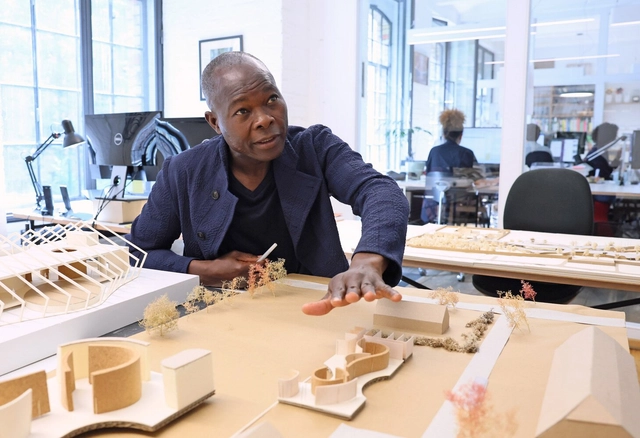
Pritzker Prize winner Diébédo Francis Kéré has been named the 2023 Praemium Imperiale laureate for architecture. The annual award, presented by the Japan Art Association, recognizes and awards 6 artists from different creative fields: architecture, music, painting, sculpture, and theatre or film. Francis Kéré, who leads the Berlin-based office Kéré Architecture, has received the prestigious award for his influence on African and global architecture, engaging local communities and site-specific materials to create innovative design and engineering solutions.
Shifting from an exploitative to a restorative and circular design ideology is fundamental in changing architecture and the built environment to become more sustainable. We look at strategies for a new resourcefulness in architecture and discuss how to bring the built environment back inside the planetary boundaries.
This session is a keynote dialogue moderated by Connie Hedegaard. The UIA World Congress of Architects 2023 keynote dialogues are designed as a series of dialogues between trailblazing architects and experts from science, business and politics. All keynote dialogues are moderated by Connie Hedegaard.
In his latest TED Talk, Thomas Heatherwick decries a condition affecting areas of the city defined by monotonous buildings, or what he calls “an epidemic of boringness.” While recognizing the functionality which drove these designs, he states that functionality alone cannot ensure that the structures become active parts of urban life, as they often fail to provoke an emotional response from passers-by. Heatherwick explains that, in his view, this emotional function, or the ability of buildings to mean something to their users and visitors, is essential. When it succeeds, architecture can positively contribute to the quality of life and well-being of its residents, promote social cohesion and contribute to a sense of identity. So how can architecture provoke a positive emotional connection and provide an enjoyable backdrop to the communities it serves?
The Pritzker Architecture Prize presents The Role of Practice, the 2023 Laureate Lecture and Panel Discussion, today, Tuesday, May 23rd at 3:40 PM EEST, in partnership with the National Technical University of Athens, and with the participation of the Aristotle University of Thessaloniki, University of Patras and the Technical University of Crete.
The Pritzker Architecture Prize 2023 Laureate David Chipperfield will deliver the lecture, reflecting on architectural practice's role, responsibilities, and opportunities. Moreover, the 2023 winner will explore "how market forces have dominated architecture and become increasingly detached from its place, just as the challenges of the climate crisis, loss of biodiversity, and social inequality have heightened the urgency for a more proactive position". Alejandro Aravena, Jury Chair, and 2016 Laureate will introduce the lecture, which will be followed by a conversation between David Chipperfield, Francis Kéré, 2022 Laureate, and Anne Lacaton and Jean-Philippe Vassal, 2021 Laureates, as they each "reveal the successes and failures of their respective journeys which effected their architectural philosophies and works, and led them to the shared stage of the present".