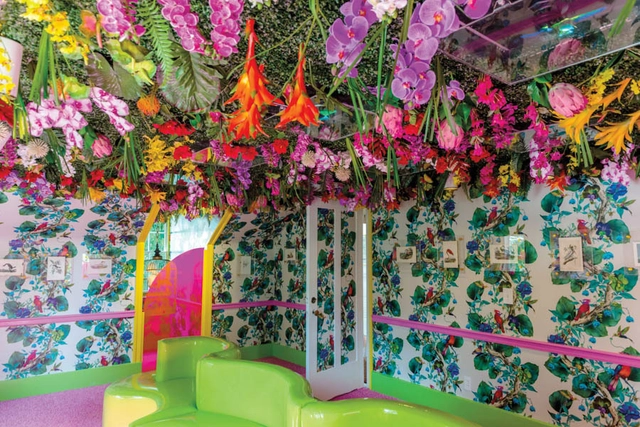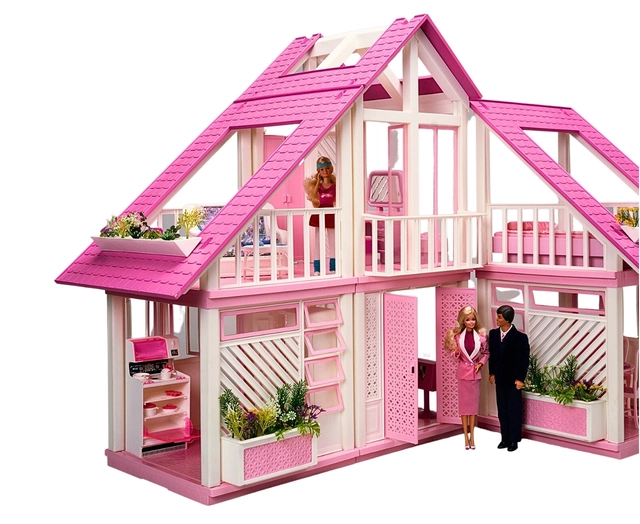
In her 1959 debut by Mattel, Barbie became a doll that transformed the toy industry and has been a popular culture icon ever since. 3 years later, the first accompanying Barbie Dollhouse was created, a home for Barbie representing her domestic, habitual, and day-to-day life. Over the past 60 years, Barbie Dreamhouses have changed and evolved, each iteration adopting the architectural and design fads of the eras in which they were produced. In fact, each dollhouse is an artifact of the unique blend of history, politics, popular culture, trends, and design styles that define architecture as we know it.
The concept of sustainability emerged at the United Nations Conference on the Human Environment (UNCHE) in Stockholm in 1972 and was coined by Norwegian Gro Brundtland in the report "Our Common Future" (1987). According to this definition, the sustainable use of natural resources should "meet the needs of the present generation without compromising the ability of future generations to meet their own needs." However, despite the urgency of the concept and the constant evolution it has undergone over time, its application is often restricted to the controlled use of natural resources and the preservation of wildlife. In other words, it treats the situation from the perspective of "man versus nature," as a dichotomous view, with the loss of a holistic perspective.
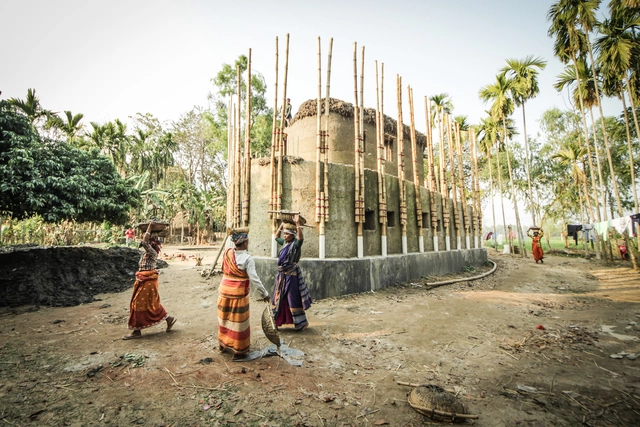
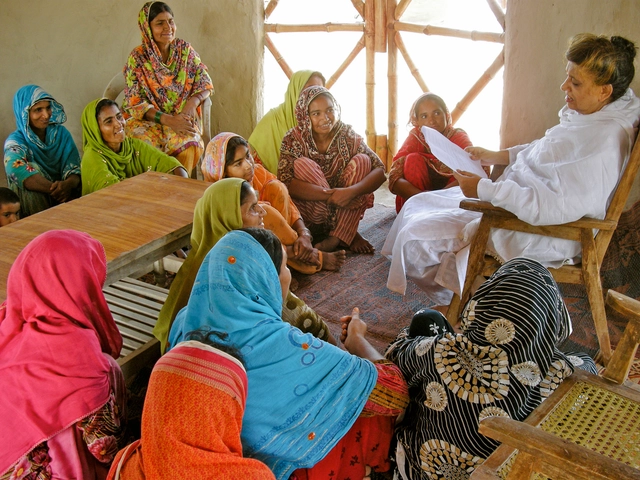
Yasmeen Lari’s Pakistani Chulah - an outdoor stove used by women in South Asia- is a powerful intervention that highlights the architect's commitment to feminist and environmental activism. The project synchronically tackles issues of deforestation, pollution, and health hazards faced by women in rural areas. Her design is systemic, locally specific, and conscious of the needs of society’s most vulnerable - women and nature. Her vast body of humanitarian work elaborated on in Yasmeen Lari: Architecture for the Future, opens up a dialogue for viewing architecture through an eco-feminist lens.
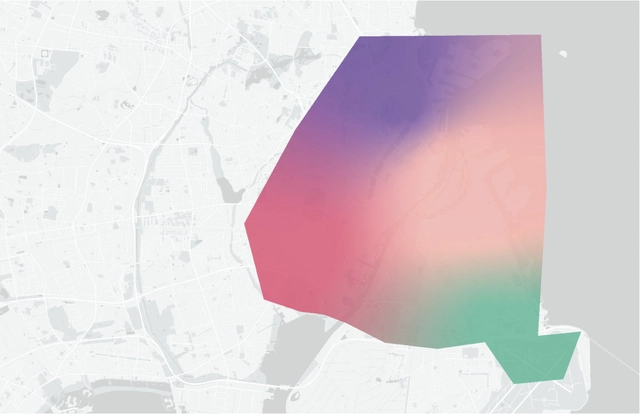
Data Feminism, as conceptualized by D’Ignazio & Klein (2020), introduces intersectional feminism in data science and invites us to examine power relations and dynamics of oppression that are built into data infrastructures that underpin society today.
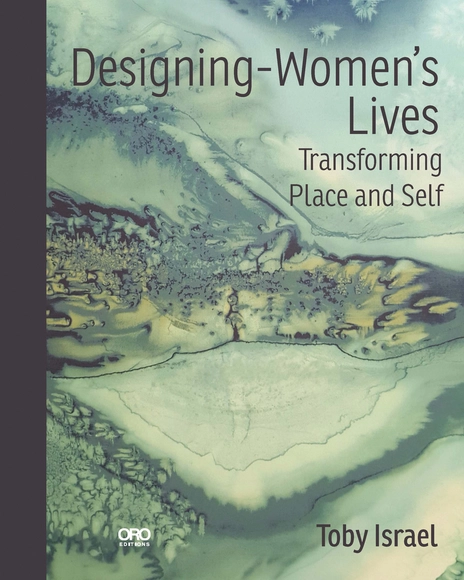
Designing-Women’s Lives calls for a place-making revolution based on women’s culturally nurtured “feeling” sensibility. Women too often have had to repress that sensibility in order to become designers. Now, rather than struggle to fit in, women can break new ground by using Design Psychology as the foundation for creating emotionally satisfying places. To encourage such a heart/mind shift, the author discusses how she took architecture Gold Medalist Denise Scott Brown and interior design legend Margo Grant Walsh through a series of Design Psychology exercises.
Empatitzem / Equal Saree. Image Cortesía de Equal Saree
Equal Saree is an architecture studio based in Barcelona, led by three young architects: Helena Cardona Tamayo, Julia Goula Mejón, and Dafne Saldaña Blasco. All three studied at the Escuela Técnica Superior de Arquitectura de Barcelona (ETSAB), Universidad Politécnica de Cataluña, where they met while taking the subject "Architecture and Politics", taught by Zaida Muxí and Josep María Montaner. The studio is composed of 15 other women architects, in addition to the founding partners.
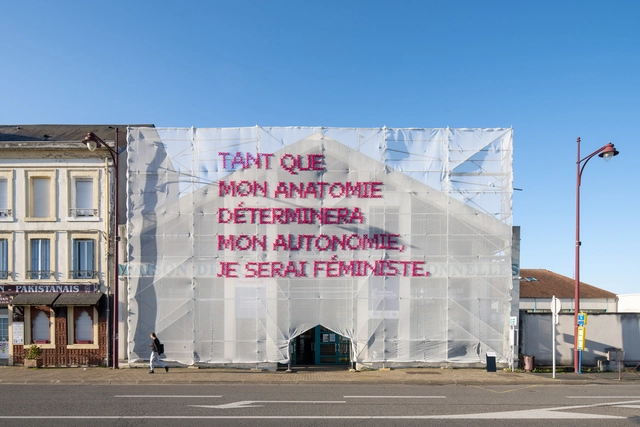
The 2022 Biennale of FRAC in the Centre-Val De Loire Region, France, is exhibiting the work of 55 women for its third edition entitled Infinite Freedom, A World for a Feminist Democracy. The fair showcases pieces from the Center Pompidou and the Cité de l'architecture et du Patrimoine collection and brings special guests such as architect Anna Heringer and Journalist and Director Rokhaya Diallo. From September 2022 to January 1st, 2023, female artists, architects, and politicians will gather to discuss and create a new definition of inclusive and plural democracy in the city, architecture, design, and art.

The National Building Museum has announced that Dolores Hayden, professor emerita of architecture, urbanism, and American studies at Yale University, is this year’s recipient of the Vincent Scully Prize. As an urban historian and architect, Dolores Hayden has focused throughout her career on the politics of place and the stereotypes of gender and race embedded in American-built environments. As the 24th recipient of the Vincent Scully Prize, Dolores Hayden joins esteemed past recipients, including Mabel O. Wilson, Elizabeth Meyer, Robert Campbell, and Inga Saffron.

In the field of design and construction, the question of gender is a point of conflict: who has the possibility of building? What are the alternatives for us architecture professionals? These are the questions that Taller General (re)think about. It is from these questions that Femingas, a participatory construction conference with a gender perspective, arose. These are manifested as an alternative to the construction of "mingas", days of joint work between the members of a community to achieve a common good.
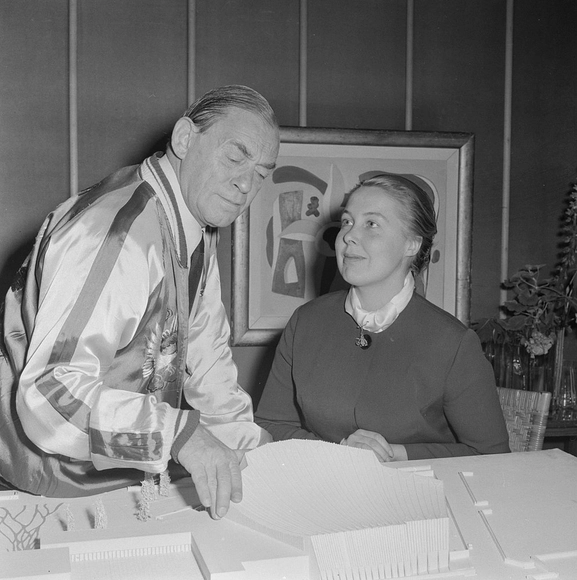
Alvar Aalto and Elissa Aalto in 1956. Via Wikimedia Commons, licensed under CC BY-SA 4.0
While women in architecture already face more obstacles than men in their careers, as proven by studies and research from across the globe, the disparities become even more obvious when it comes to partnerships involving both genders. In the history of the profession, there are many examples of office partnerships or collaborations that reveal the discrepancies in terms of recognition achieved by the work, reflected in awards, honors, citations, and salaries.
Many of these collaborations are between intimate couples who, as in any business partnership, design and make work decisions together. But in the particular case of architects in a heterosexual relationship, the role of the "wife" seems to have prevailed over that of collaborator, architect, or equal partner on many occasions.
Videos
Design proposal: Set design for “The Robot Salon”. Image Courtesy of Gili Ron and Irina Bogdan
Exploring the use of innovative technologies in architecture and practicing at the crossroads between art and spatial design, Gili Ron and Irina Bogdan have imagined project Galath3a, a woman-machine collaboration. The research-based venture uses a UR5 robotic arm named Gala (short for Galatea), to speculate on what is culturally considered as "womanly behavior".
In theory and practice, in the modern era, the idea of spatial separation between home and work was related to the traditional sexual division of men and women, and of their role in life. Going back to the earliest feminist thinking in architecture, in western industrialized communities, we are elaborating in this article on women’s changing role in the 20th century and its impact on the space we experience today.
Do you feel vulnerable as you walk through public spaces? If you are a woman, the odds of answering yes to this question are certainly greater since men are less likely to choose a longer route only to avoid a dark section of the street, or to ponder on what clothes to wear so that they do not feel exposed in public. In this sense, it seems almost obvious that cities designed by men should be perceived as threatening environments, rather than a place where women feel welcome. So, to imagine egalitarian cities, should we persist in a reflection of a gender-oriented approach?
https://www.archdaily.com/956585/how-can-gender-impact-the-future-of-urban-lifeCamilla Ghisleni e Victor Delaqua
Beginning with the moral indignation expressed in Adolf Loos’s 1910 lecture “Ornament and Crime” and Le Corbusier’s 1925 The Decorative Art of Today, decoration has been attacked from every possible angle. Driven by the heroic male architect, Modernist dictates of good design—functionalism, truth to materials, purity of form—quickly took over and continue to be the dominant ideology today in the way architecture and interiors are taught and practiced. If Modern architecture was rational, masculine, and structural, then decoration was considered emotional, feminine, and shallow. Or, according to Loos, it was flat-out degenerate.
https://www.archdaily.com/948321/decoration-deserves-to-be-celebrated-for-what-it-is-rather-than-dismissed-for-what-it-isntLeilah Stone
Although cities are supposed to be built for everyone, they are in most of the time, thought, planned and designed by men: “Cities are supposed to be built for all of us, but they aren't built by all of us.”
With basic different needs, men and women expect different outcomes from their urban surroundings. A city should be able to fulfill everyone’s essentials. Lately, the topic that has everyone's attention revolves around cities designed by women. With a female mayor onboard and a feminist agenda, for the past four years, Barcelona has been undergoing major transformations on this subject.
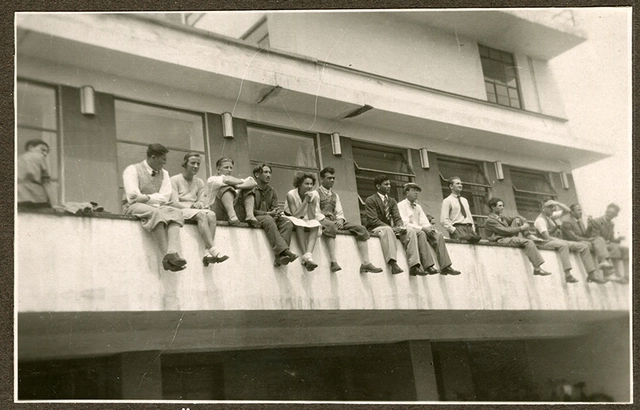
Students on the balustrade of the canteen terrace, around 1931 (photographer unknown). Image Courtesy of Stiftung Bauhaus Dessau
Women are imperative members of the design community, creating innovative and inspiring work in the fields of architecture, design, and urban planning. However, even with the rise of the women's movement, their contributions are still being questioned, compared, or taken for granted.
Metropolis Magazine looked back at the history of feminism in architecture, shedding the light on the times when the advocates witnessed unprecedented progress, and times when they lost their advantage.
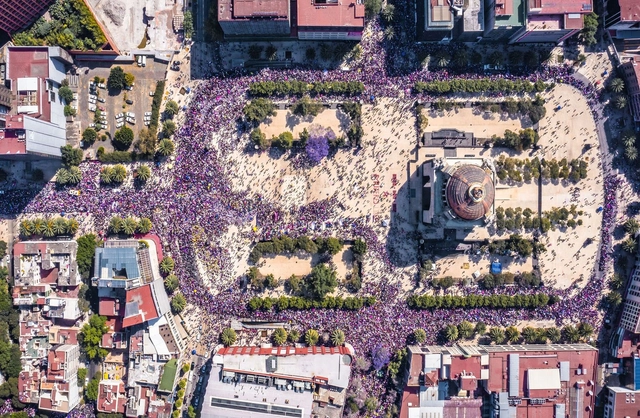
The feminine experience and its contributions in different fields of knowledge have experienced increasing acceptance, being mostly praised. The voice of architects, academics, designers, urban planners and activists has gained strength in view of the relevant reception of issues such as inclusion and gender perspective, in the face of challenges that test the great cities of the world and their inhabitants. Every March 8th – the day women take to the streets as an act of resistance and the exercise of citizenship – there are some brief reflections that highlight the link between the cities and their political-social events, as well as in related disciplines to architecture and urbanism.
https://www.archdaily.com/922613/is-feminism-compatible-with-architecture-and-urban-planningParvin Alexandra Camal Segundo
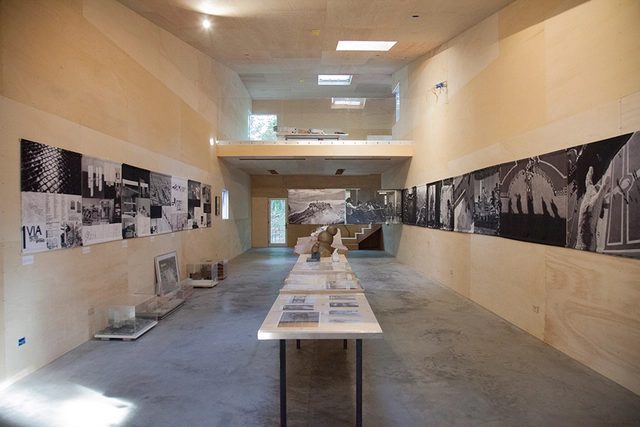
Architect and educator Astra Zarina wasn’t just the teacher of Tom Kundig, Ed Weinstein, and Steven Holl (who designed ‘T’ Space); she was also an advocator for public spaces, cohesive urbanity, and the communities that these attributes fostered. ‘T’ Space’s newest exhibit Rome and the Teacher, Astra Zarina celebrates Zarina’s life and teachings in the context of recognizing overlooked pedagogical figures, particularly women. A recent article by Metropolis Magazine describes this exhibit in detail and with it, Zarina’s own life story.
https://www.archdaily.com/922753/t-spaces-new-exhibit-celebrates-the-overlooked-history-of-an-influential-female-architect-and-educatorLilly Cao