1. ArchDaily
  2. Decarbonization

Decarbonization: The Latest Architecture and News

Is Wood the Sustainable Solution for the Middle East?

As we understand it today, the sustainable architecture movement began to take shape at the end of the 20th century. Essentially, it responds to growing concerns about environmental degradation, energy consumption, and resource scarcity. In this global discourse on sustainable architecture, wood has long been celebrated as a symbol of environmental consciousness and decarbonization. As one of the most widespread building materials, it has gained popularity with the rise of this movement. This is because trees absorb carbon dioxide during their growth, which stays in the wood during its construction use, keeping it out of the atmosphere.

Is Wood the Sustainable Solution for the Middle East? - Image 1 of 4Is Wood the Sustainable Solution for the Middle East? - Image 2 of 4Is Wood the Sustainable Solution for the Middle East? - Image 3 of 4Is Wood the Sustainable Solution for the Middle East? - Image 4 of 4Is Wood the Sustainable Solution for the Middle East? - More Images+ 6

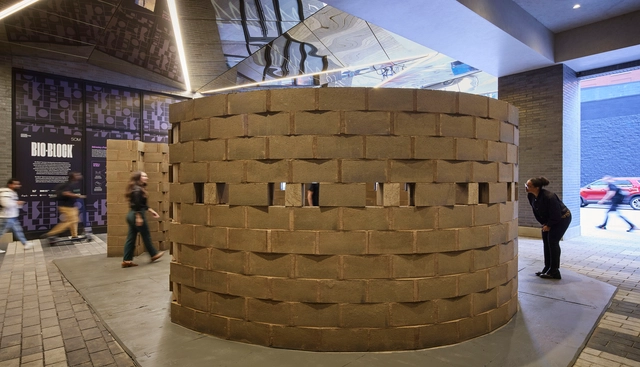
SOM Unveils "Zero-Carbon Bio-Blocks" Installation at the 2023 Chicago Architecture Biennial

For the opening of CAB 5, the 5th edition of the Chicago Architecture Biennial, Skidmore, Owings & Merrill (SOM) presented an eco-friendly alternative to traditional concrete. Named the “Bio-Block Spiral,” the installation is at The Mews in Fulton Market in Chicago. The creation was developed with Prometheus Material, a materials company that provides sustainable building materials for a carbon-negative future.

Architects Must Address the Issue of Toxic Building Materials

This article was originally published on Common Edge.

By the time I was 17 years old, I had moved 11 times. Because of my own experience relocating from one place to another, I’ve spent the better part of the last several decades focused on making sure that everyone has a place to call home, that everyone enjoys the human right to housing. But it was not until my time at Enterprise Community Partners, a nonprofit focused on community development and affordable housing, that I realized the methods and materials we employ to realize that human right matter. 

Embodied Carbon in Real Estate: The Hidden Contributor to Climate Change

Subscriber Access | 

The window for solving climate change is narrowing; any solution must include embodied carbon. The Sixth Assessment Report published by the IPCC (Intergovernmental Panel on Climate Change) concludes that the world can emit just 500 gigatonnes more of carbon dioxide, starting in January 2020, if we want a 50 percent chance of staying below 1.5 degrees. In 2021 alone, the world emitted about 36.3 gigatonnes of carbon, the highest amount ever recorded. We’re on track to blow through our carbon budget in the next several years. To quote the IPCC directly: “The choices and actions implemented in this decade will have impacts now and for thousands of years (high confidence).”

UIA World Congress of Architects 2023: Emerging Technologies with KOMPAS VC and Material Evolution

ArchDaily and VELUX have joined forces to provide you with an exclusive coverage of the highly anticipated UIA World Congress of Architects 2023. Watch Sebastian Peck from KOMPAS VC and Liz Gilligan from Material Evolution explain a revolutionary low-carbon cement produced from industrial waste, and how can it help to decarbonize architecture by reducing a building's carbon footprint by 85%.

2023 Venice Architecture Biennale: 63 National Pavilions and 89 Participants with Significant Representation from Africa

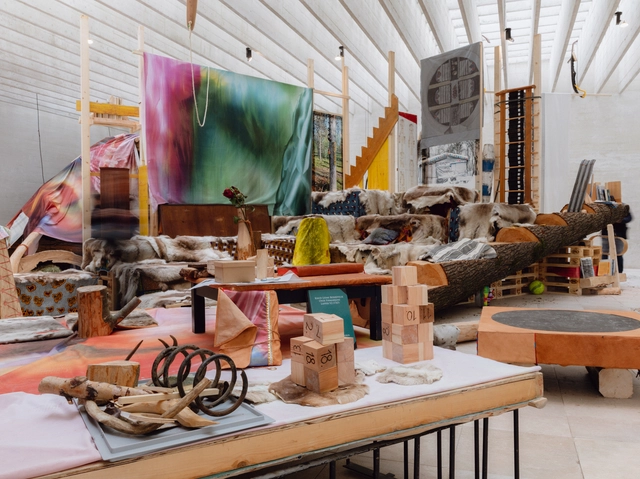
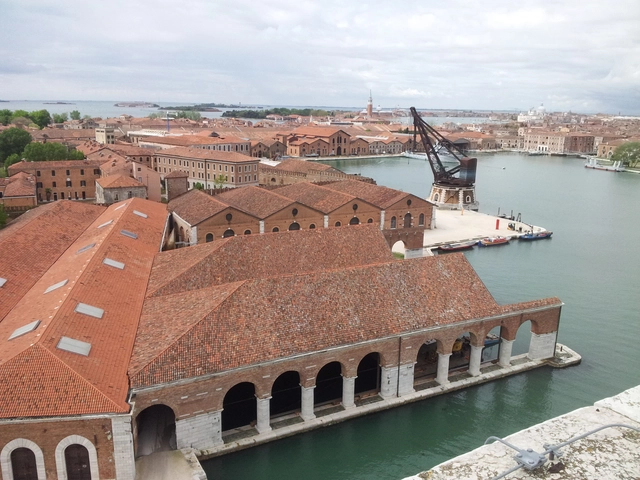
Announced today in a live presentation, the 18th International Architecture Exhibition, titled The Laboratory of the Future, curated by Lesley Lokko, will be open to the public from May 20 to November 26, 2023, in Venice, Italy. This edition will include 63 National Pavilions, 27 of which are at the Giardini, 22 at the Arsenale, and 14 in the city center of Venice. Structured in six parts, the exhibition will include 89 Participants, over half of whom are from Africa or the African Diaspora, with a 50/50 gender balance, and an average age of 43 for participants. Contributors include Adjaye Associates, atelier masōmī, Kéré Architecture, MASS Design Group, Sumayya Vally and Moad Musbahi, Theaster Gates Studio, Andrés Jaque / Office for Political Innovation, Liam Young, Neri&Hu Design and Research Office, to name a few.

2023 Venice Architecture Biennale: 63 National Pavilions and 89 Participants with Significant Representation from Africa - Image 1 of 42023 Venice Architecture Biennale: 63 National Pavilions and 89 Participants with Significant Representation from Africa - Image 2 of 42023 Venice Architecture Biennale: 63 National Pavilions and 89 Participants with Significant Representation from Africa - Image 3 of 42023 Venice Architecture Biennale: 63 National Pavilions and 89 Participants with Significant Representation from Africa - Image 4 of 42023 Venice Architecture Biennale: 63 National Pavilions and 89 Participants with Significant Representation from Africa - More Images+ 8