1. ArchDaily
  2. Cities

Cities: The Latest Architecture and News

The Top 10 Design Cities of 2018, As Revealed by Metropolis Magazine

For this year's annual city listings, Metropolis Magazine took an unusual approach: they took the analysis to the streets, surveying nearly 100 design professionals across the globe to get their opinions. The result? A list that boasts not just the cities you'd expect (Milan, London, Berlin) but the under the radar powerhouses you might not have anticipated.

These Are The Latin American Cities With The Best Quality of Life

Mercer, the multinational consultancy recently announced that Vienna, Austria has been ranked as the city with the best quality of life in the world, for the ninth year in a row. In a ranking that is dominated by European cities in the highest positions, this year Vancouver (5th), Singapore (25th) and Port Louis (83rd) are the highest-ranking cities in North America, Asia, and Africa, respectively.

So, what is happening in Latin America? Montevideo, the capital of Uruguay, once again occupies the top position. "Although they are challenged by economic and political turmoil," experts at the consultancy explain, "cities in emerging markets are catching up with major cities, after decades of investment in infrastructure, recreational facilities, and housing for the purpose of attracting talent and multinational businesses," they add.

In its twentieth edition, the consultancy, which specializes in advising multinational companies in employee transfers, evaluates more than 450 cities around the world, analyzing 39 factors divided into 10 categories, including political and economic environment, socio-cultural status, hygiene, educational institutions, leisure, housing, the market, and natural disasters.

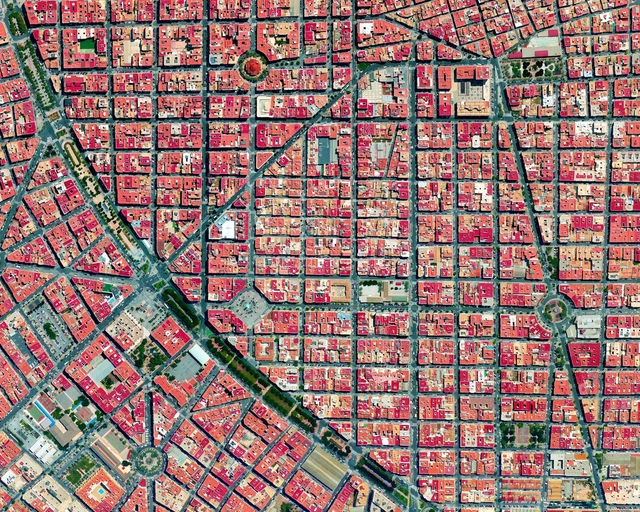
These Are The Latin American Cities With The Best Quality of Life - Image 1 of 4These Are The Latin American Cities With The Best Quality of Life - Image 2 of 4These Are The Latin American Cities With The Best Quality of Life - Image 3 of 4These Are The Latin American Cities With The Best Quality of Life - Image 4 of 4These Are The Latin American Cities With The Best Quality of Life - More Images+ 6

6 Upcoming Projects that Will Improve the Quality of Life in Colombia

Colombia is a country whose architecture continues to surprise us with projects that seek to improve the quality of life of its residents, which in turn tends to attract individuals to learn and contribute to proposals that generate and create much more vibrant cities.

The city's advances in architecture and urbanism in recent years have materialized in a series of programs and projects in other cities, awakening the interest of professionals and academics from architecture and global urbanism.

The development of projects such as the Metro Cable in Medellín, TransmiCable in Bogota, or the series of parks and libraries that have been built throughout the country after the success achieved in the first two cities, makes the idea of betting on much more innovative projects a more attractive prospect, which dares citizens and designers of all kinds to dream, stoking the spirit of entrepreneurship throughout the country and much of Latin America. To reflect this, we have chosen 6 projects that will undoubtedly change and improve the quality of life in Colombia.

6 Upcoming Projects that Will Improve the Quality of Life in Colombia - Image 1 of 46 Upcoming Projects that Will Improve the Quality of Life in Colombia - Image 2 of 46 Upcoming Projects that Will Improve the Quality of Life in Colombia - Image 3 of 46 Upcoming Projects that Will Improve the Quality of Life in Colombia - Image 4 of 46 Upcoming Projects that Will Improve the Quality of Life in Colombia - More Images+ 2

What Makes a City Livable to You?

What Makes a City Livable to You? - Arch Daily Interviews
© Flickr user Hafitz Maulana licensed under CC BY-SA 2.0. ImageA music festival in Singapore

Mercer released their annual list of the Most Livable Cities in the World last month. The list ranks 231 cities based on factors such as crime rates, sanitation, education and health standards, with Vienna at #1 and Baghdad at #231. There’s always some furor over the results, as there ought to be when a city we love does not make the top 20, or when we see a city rank highly but remember that one time we visited and couldn’t wait to leave.

To be clear, Mercer is a global HR consultancy, and their rankings are meant to serve the multinational corporations that are their clients. The list helps with relocation packages and remuneration for their employees. But a company’s first choice on where to send their workers is not always the same place you’d choose to send yourself to.

And these rankings, calculated as they are, also vary depending on who’s calculating. Monocle publishes their own list, as does The Economist, so the editors at ArchDaily decided to throw our hat in as well. Here we discuss what we think makes cities livable, and what we’d hope to see more of in the future.

What It’s Like to Be an Architect Who Doesn’t Design Buildings

There's an old, weary tune that people sing to caution against being an architect: the long years of academic training, the studio work that takes away from sleep, and the small job market in which too many people are vying for the same positions. When you finally get going, the work is trying as well. Many spend months or even years working on the computer and doing models before seeing any of the designs become concrete. If you're talking about the grind, architects know this well enough from their training, and this time of ceaseless endeavor in the workplace only adds to that despair.

Which is why more and more architects are branching out. Better hours, more interesting opportunities, and a chance to do more than just build models. Furthermore, the skills you learn as an architect, such as being sensitive to space, and being able to grasp the cultural and societal demands of a place, can be put to use in rather interesting ways. Here, 3 editors at ArchDaily talk about being an architect, why they stopped designing buildings, and what they do in their work now. 

These Are The 20 Most Livable Cities in the World in 2018

For the ninth consecutive year, Vienna has placed first in Mercer rankings on cities with the best quality of life in the world. Despite the current economic volatility in the European continent, the Austrian capital joins eight other European cities in the top ten.

This is the 20th edition of the Mercer Rankings. The consultancy, which specializes in advising multinational companies in the transfer of employees, evaluated more than 450 cities around the world. Their rankings take into account 39 factors divided into 10 categories, including political and economic environment, socio-cultural status, sanitation, educational and leisure opportunities, housing markets and natural disasters.

At the regional level, Vancouver (5th), Singapore (25th), Montevideo (77th) and Port Louis (83rd) are the highest ranking cities in North America, Asia, Latin America and Africa respectively. According to Mercer, the twenty cities with the best quality of life in the world are:

These Are The 20 Most Livable Cities in the World in 2018 - Image 1 of 4These Are The 20 Most Livable Cities in the World in 2018 - Image 2 of 4These Are The 20 Most Livable Cities in the World in 2018 - Image 3 of 4These Are The 20 Most Livable Cities in the World in 2018 - Image 4 of 4These Are The 20 Most Livable Cities in the World in 2018 - More Images+ 15

UAE Pavilion at the 2018 Venice Biennale to Explore Human-scale Landscapes and Social Spaces

As part of our 2018 Venice Architecture Biennale coverage we present the proposal for the UAE Pavilion. Below, the participants describe their contribution in their own words.

The National Pavilion UAE will present “Lifescapes Beyond Bigness,” an exhibition exploring human-scale architectural landscapes, at the 2018 Venice Biennale. The exhibition aims to highlight the role of architecture and urban design in forming the choreography of people’s daily routines. It particularly investigates the role of ‘quotidian’ (every day) landscapes in accommodating, enhancing, and facilitating social activities across different places in the UAE.

Studies Show Ridesharing Services Like Uber, Lyft Actually Increase Congestion in Cities

Despite being heralded as services that will reduce congestion on our streets, ride-hailing companies like Uber and Lyft actually are making traffic problems worse, a new study from Boston’s Northeastern University has revealed.

Top Global Destinations On The Rise According to TripAdvisor

TripAdvisor announced the World’s Top Destinations “on the rise” according to the 2018 Travelers’ Choice awards. According to TripAdvisor, the winning cities are based on millions of comments posted on the site each year. They also look for cities with an increase in search traffic and user interest to make reservations.

This years list includes ten cities. Keep reading to find out which ten cities were chosen by TripAdvisor world travelers:

Why Do Cities Exist, and What Makes Them Grow? Here’s A Detailed Explanation

Subscriber Access | 

In this video, Wendover Productions asks some simple (if rarely asked) questions about cities: Why do they exist? What causes them to grow exponentially over time in the way they do? In answering these questions, the video suggests that, somewhat paradoxically, the creation and growth of cities is a natural phenomenon, bringing up some interesting implications regarding city planning in the future.

The World's Best Cities 2018

Ranking cities is a risky endeavor. How can one be objective and fair when this great earth and its 7.6 billion inhabitants would never come to anything close to a consensus? And yet global consulting firm Resonance Consultancy has taken on the challenge based on the opinions of the people they claim matter most: "a city's visitors and its residents."

Surveying the inhabitants and tourists about 23 different factors (that are then grouped into six key categories—Place, Product, Programming, People, Prosperity and Promotion), the methodology aims to be comprehensive in the ranking of quality of place and reputation. In the people category, for example, the surveyors looked at things like the immigration rate and diversity of a city, including number of Foreign-born Residents. Also taken into consideration was the amount of "stories" or "mentions" a city generates on web platforms like Facebook, Google and even TripAdvisor. And, most relevant to us architects, cities were scored on their quality of neighborhoods, landmarks and parks.

2017 Bi-City Biennale of Urbanism/Architecture Opens This Week in Shenzhen 

Text from the organizers Bi-City Biennale of Urbanism\Architecture (UABB). The Bi-City Biennale of Urbanism\Architecture (UABB), the only exhibition in the world to explore issues of urbanization and architectural development, will be opening for its 7th edition on December 15th, 2017. UABB will be held at Nantou Old Town in Nanshan district, an urban village that was once the administrative center of the Bao'An County. Hou Hanru, Liu Xiaodu, and Meng Yan (in alphabetic order) make up the curatorial team, all known for notable accomplishments in their respective fields. UABB is thrilled to host more than 200 award-winning exhibitors from 25 countries to share their perspectives on diversity and urban villages at this year’s biennale.

Open call for 24h competition 21th edition - home

Ideasforward wants to give young creative people from around the world the opportunity to express their views on the future of societies through their innovative and visionary proposals.  We are an experimental platform seeking progressive ideas that reflect on emerging themes. The eco-design, sustainable architecture, new materials, concepts, and technologies are compelling issues in the societies of the future and the involvement of the whole community is imperative.

The Science Behind the Next Generation of Wood Buildings

 | Sponsored Content

At a time when engineers, designers, and builders must find solutions for a resource-constrained environment, new wood technology, materials, and science are accelerating efforts to enhance safety and structural performance.

International Building Code requires all building systems, regardless of materials used, to perform to the same level of health and safety standards. These codes have long recognized wood’s performance capabilities and allow its use in a wide range of low- to mid-rise residential and non-residential building types. Moreover, wood often surpasses steel and concrete in terms of strength, durability, fire safety, seismic performance, and sustainability – among other qualities.

Playful Animation Tells the Story of Humankind’s Quest for a Perfect City

Cities are universes in themselves; furiously spawning, spewing, hissing through time and space. They are cudgeled, raked, plastered, worshipped, fought over, set on fire; they are slippery wombs that cradle wars, victories, blood and brilliant storms. The built environment has always been indicative of its inhabitants’ fears, desires, and ideals. As such, it is one of the earliest, most powerful forms of human expression. For World Cities Day 2017, the new BBC Designed section of the BBC Culture website commissioned motion graphics designer Al Boardman to create The Perfect City, an animated video covering a brief history of humankind’s quest for the "ideal" and the "perfect" in urban design. With a voiceover and script by renowned architecture critic and writer Jonathan Glancey, the video is a remarkable 2-minute overview of some prominent examples in city planning, both old and new, successful and unsuccessful.

Giving People Agency in Public Space: The Artwork of Rafael Lozano-Hemmer

Subscriber Access | 

In the past, cities were often constructed in the likeness the public--the built environment reflected citizens and local culture. It is questionable whether this can be said of the modern world. Much construction today is a product of capitalism, generating buildings and areas in which local people have no attachment or sense of agency over. Artist Rafael Lozano-Hemmer believes this to be a fundamental crisis within our cities, and he is committed to reestablishing the relationship and representation of people within urban space. His work is examined in a new short film by PLANE-SITE, titled Public Interruptions.

A building today does not represent a citizen, a building today represents capital.

Livability in the New American City

Cities around the world are growing at an unprecedented rate, and for the first time in recent history represent the preferred place for people to live. Urbanization has historically aided millions in escaping hardship through increased employment opportunities, better education and healthcare, large-scale public investments, and access to improved infrastructure and services. The city has been the ideal for heightened livability for people worldwide.