1. ArchDaily
  2. Biobased Materials

Biobased Materials: The Latest Architecture and News

"Helping the Existing to Reconfigure Itself": In Conversation with Søren Pihlmann, Curator of the Danish Pavilion

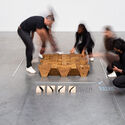
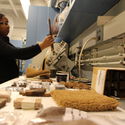
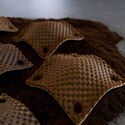
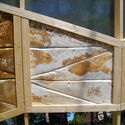
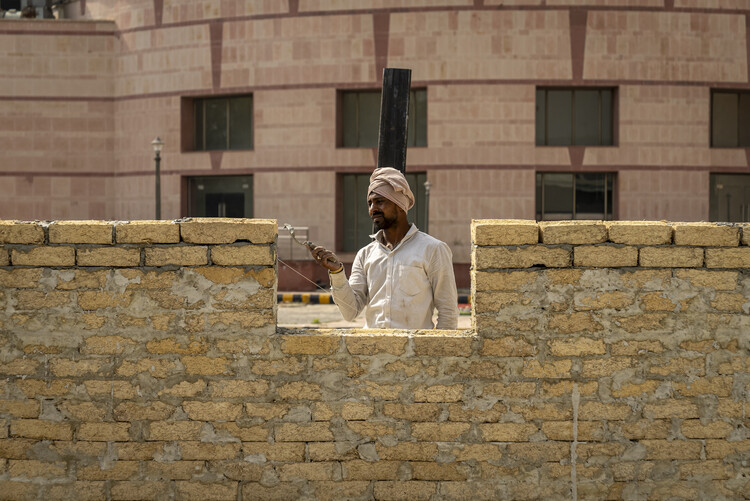
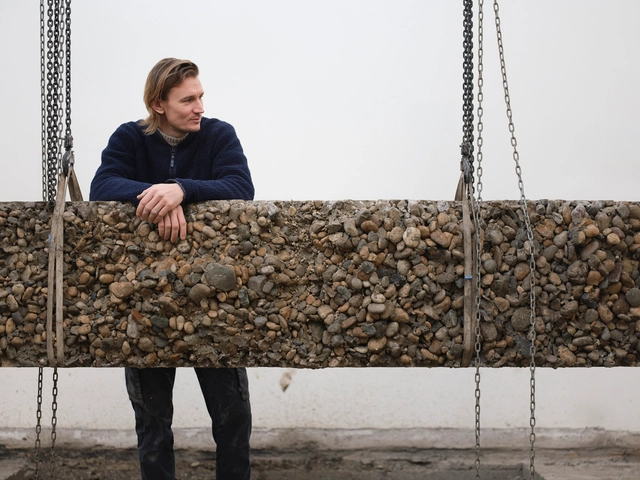
Søren Pihlmann is the curator of the Danish Pavilion at the 2025 Venice Architecture Biennale. The exhibition, commissioned by the Danish Architecture Center, is titled Build of Site, and focuses on exploring sustainable architectural practices through the lens of reuse and resourcefulness. Pihlmann's proposal transforms the existing Danish Pavilion, located within a historic building complex in the Biennale's Giardini, into an active exhibition space for material experimentation. The installation highlights techniques that incorporate recycled and bio-based elements. The Pavilion offers visitors the opportunity to observe ongoing experimental processes, witnessing how building resources are creatively reimagined for new uses. In this on-site interview, ArchDaily editors spoke with the curator about the ideas behind the project and the challenges its execution represents.
"Helping the Existing to Reconfigure Itself":  In Conversation with Søren Pihlmann, Curator of the Danish Pavilion - Image 1 of 4"Helping the Existing to Reconfigure Itself":  In Conversation with Søren Pihlmann, Curator of the Danish Pavilion - Image 2 of 4"Helping the Existing to Reconfigure Itself":  In Conversation with Søren Pihlmann, Curator of the Danish Pavilion - Image 3 of 4"Helping the Existing to Reconfigure Itself":  In Conversation with Søren Pihlmann, Curator of the Danish Pavilion - Image 4 of 4Helping the Existing to Reconfigure Itself:  In Conversation with Søren Pihlmann, Curator of the Danish Pavilion - More Images+ 2

"Architecture as an Interface That Must Adapt:" ecoLogicStudio on Nature-Inspired Urban Design in Louisiana Channel Interview

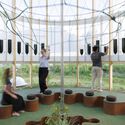
In a recent interview with Louisiana Channel, ecoLogic Studio discusses a new approach to architecture that explores the relationship between nature and urban design. Claudia Pasquero and Marco Poletto, the studio's lead architects, explain that modern architecture should be rethought to adapt to the changing environment and to serve as a connection between urban life and natural systems. The architects compare the current transformation in the field to the period of the Renaissance, when architecture evolved in response to the needs of society. Today, they argue, there is an opportunity for architects to learn from nature and design urban spaces that are both sustainable and functional.

"Architecture as an Interface That Must Adapt:" ecoLogicStudio  on Nature-Inspired Urban Design in Louisiana Channel Interview - Image 1 of 4"Architecture as an Interface That Must Adapt:" ecoLogicStudio  on Nature-Inspired Urban Design in Louisiana Channel Interview - Image 2 of 4"Architecture as an Interface That Must Adapt:" ecoLogicStudio  on Nature-Inspired Urban Design in Louisiana Channel Interview - Image 3 of 4"Architecture as an Interface That Must Adapt:" ecoLogicStudio  on Nature-Inspired Urban Design in Louisiana Channel Interview - Featured ImageArchitecture as an Interface That Must Adapt: ecoLogicStudio  on Nature-Inspired Urban Design in Louisiana Channel Interview - More Images

A Bio-Digital Exploration: ecoLogicStudio Opens Deep Forest Exhibition at the Louisiana Museum in Denmark

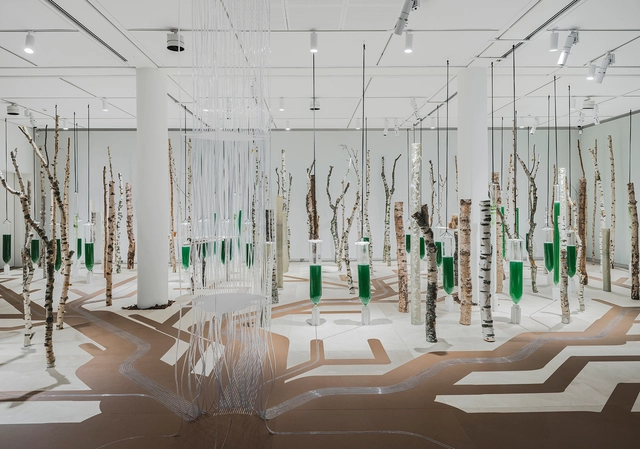
The Louisiana Museum of Modern Art's "Living Structures" exhibition, running from November 8th, 2024, to March 23rd, 2025, features Deep Forest, a new installation by Prof Claudia Pasquero and Dr. Marco Poletto founders of architecture and design innovation firm ecoLogicStudio, together with academic partner Innsbruck University. This immersive work challenges traditional architectural paradigms by embracing the naturalization of architecture and technology, a direct counterpoint to modernist attempts to mechanize nature. The exhibition represents the culmination of twenty years of research in bio-digital design, showcasing the potential of symbiotic relationships between technology and the natural world within built environments.

A Bio-Digital Exploration: ecoLogicStudio Opens Deep Forest Exhibition at the Louisiana Museum in Denmark - Imagen 1 de 4A Bio-Digital Exploration: ecoLogicStudio Opens Deep Forest Exhibition at the Louisiana Museum in Denmark - Imagen 2 de 4A Bio-Digital Exploration: ecoLogicStudio Opens Deep Forest Exhibition at the Louisiana Museum in Denmark - Imagen 3 de 4A Bio-Digital Exploration: ecoLogicStudio Opens Deep Forest Exhibition at the Louisiana Museum in Denmark - Imagen 4 de 4A Bio-Digital Exploration: ecoLogicStudio Opens Deep Forest Exhibition at the Louisiana Museum in Denmark - More Images+ 27

Designing for Two Worlds: How Space Exploration is Shaping the Future of Architecture on Earth

Subscriber Access | 

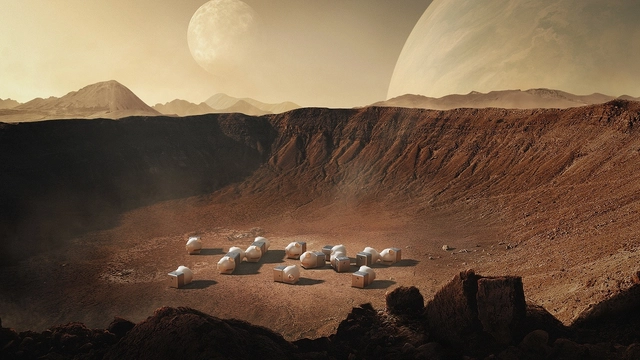
Space exploration isn’t merely a testament to human ambition or a quest for new territories and resources. Our ventures beyond Earth’s atmosphere are driven by a deeper purpose: to understand better our place in the cosmos and to pioneer innovations that can transform life on our home planet.

While venturing beyond our planet captures the imagination, the true impact of space exploration may be felt much closer to home. Public perception often frames space exploration as a distant endeavor with limited relevance to terrestrial challenges. However, this perspective overlooks the substantial contributions of space programs to our world. By driving technological innovation, expanding our scientific knowledge, and inspiring future generations, space exploration has proven to be an invaluable catalyst for addressing global issues.

Designing for Two Worlds: How Space Exploration is Shaping the Future of Architecture on Earth - Image 1 of 4Designing for Two Worlds: How Space Exploration is Shaping the Future of Architecture on Earth - Image 2 of 4Designing for Two Worlds: How Space Exploration is Shaping the Future of Architecture on Earth - Image 3 of 4Designing for Two Worlds: How Space Exploration is Shaping the Future of Architecture on Earth - Image 4 of 4Designing for Two Worlds: How Space Exploration is Shaping the Future of Architecture on Earth - More Images+ 30

Localize: Sourcing and Performance at Fabricate 2024

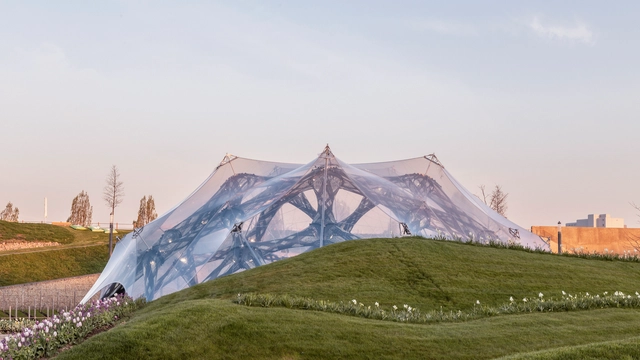
On April 4 – 6, the international conference FABRICATE 2024 will be held at the Royal Danish Academy in Copenhagen. Since its inception in 2011, FABRICATE has established itself as a global forum for new radical possibilities for architecture and welcomed thousands of participants from practice, industry, and research.

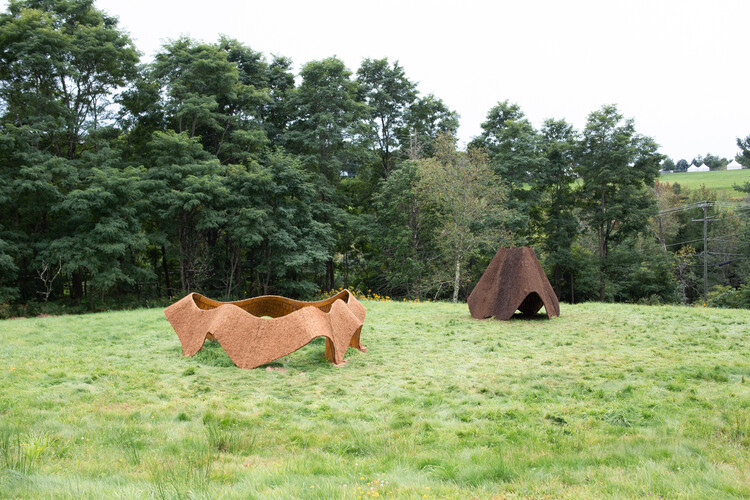
In this second article, we meet architect Indy Johar who is the director of WikiHouse Foundation and CEO and founder of Dark Matters Lab working with institutions around the world, from UNDP, the European Commission on Net Zero Cities, the European Environmental Agency, and various national agencies and cities. The text is an excerpt from the upcoming FABRICATE 2024 book and is based on an interview conversation led by Co-chair Phil Ayres between Indy Johar and Professor Philippe Block, Head of the Institute of Technology in Architecture (ITA), ETH Zürich. The book will be published on the opening night of the FABRICATE 2024 conference.

Localize: Sourcing and Performance at Fabricate 2024 - Image 1 of 4Localize: Sourcing and Performance at Fabricate 2024 - Image 2 of 4Localize: Sourcing and Performance at Fabricate 2024 - Image 3 of 4Localize: Sourcing and Performance at Fabricate 2024 - Image 4 of 4Localize: Sourcing and Performance at Fabricate 2024 - More Images+ 11

Imagining the Future of Construction: From Bio-Based Materials to Innovative Data

 | Sponsored Content

What insulation materials are needed to meet the challenges facing the modern built environment, including how to create a more sustainable future? What if some of them are already available? Kingspan’s dedicated innovation center, IKON, hosted a panel of experts to discuss some of the key issues and explore solutions. Michael Bol, an architect and Concepting Director at Buro Kade, Benjamin Constant, Director of Development and Partnerships at Neo-Eco Partner, and Sandra Del Bove, Kingspan Group Head of Innovation, each brought a different perspective and shared their experiences of these crucial issues.

How Might Buildings and Their Integrated Materials Systems Behave Like Organisms? In Conversation With Jenny E. Sabin

Subscriber Access | 

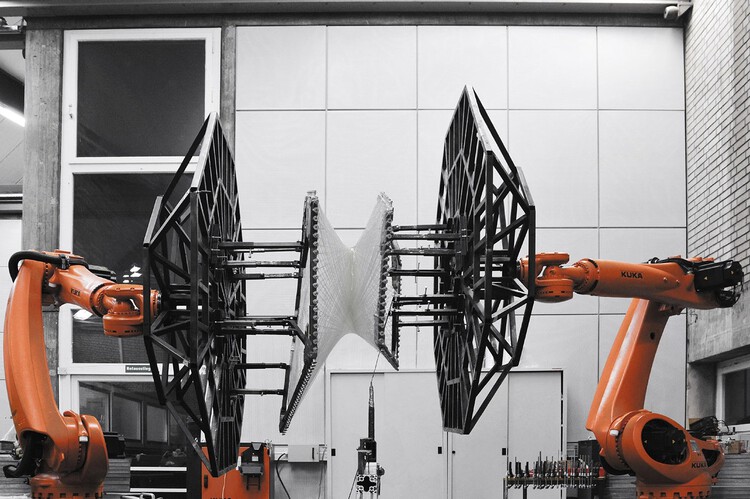
Why research and innovate in architecture? In a conversation with architectural designer Jenny E. Sabin, we delve into the critical link between research and practice in architecture. Seeking the development of a new model, her team incorporates an interdisciplinary approach that introduces connections between these areas, fostering collaboration with both scientists and engineers.

Observing nature’s behavior, the proposed method integrates biological and mathematical discoveries into the design process. After undergoing a systematic testing process, these insights are applied in the project’s generative design phase to create adaptive and responsive material solutions. Analyzing her research and design strategies, we showcase how she translates research into architectural practice.

How Might Buildings and Their Integrated Materials Systems Behave Like Organisms? In Conversation With Jenny E. Sabin - Image 1 of 4How Might Buildings and Their Integrated Materials Systems Behave Like Organisms? In Conversation With Jenny E. Sabin - Image 2 of 4How Might Buildings and Their Integrated Materials Systems Behave Like Organisms? In Conversation With Jenny E. Sabin - Image 3 of 4How Might Buildings and Their Integrated Materials Systems Behave Like Organisms? In Conversation With Jenny E. Sabin - Image 45 of 4How Might Buildings and Their Integrated Materials Systems Behave Like Organisms? In Conversation With Jenny E. Sabin - More Images+ 41

Building for Sustainability: 3 Main Themes Explored at the Time Space Existence Exhibition in Venice

Subscriber Access | 

The European Cultural Centre (ECC), a non-profit organization dedicated to fostering cultural exchanges on an international scale, showcased its sixth edition of the Time Space Existence architecture exhibition alongside this year's Venice Architecture Biennale. The 2023 installment was centered on the theme of sustainability in its various forms, encompassing subjects related to migration, digital building technologies and material research, future urban developments, and housing, bringing together architects, designers, artists, academics, and photographers from 52 different countries.

Through diverse mediums and perspectives, participants have explored the philosophical concepts of Time, Space, and Existence. With a total of 217 projects on display, the exhibition is held at Palazzo Bembo, Palazzo Mora, and the Marinaressa Gardens in Venice, throughout the six-month duration of the 2023 Venice Architecture Biennale, running from May 20th to November 26th, 2023. Focusing also on emerging young architects, designers, and researchers, the 2023 edition of the exhibition is a proactive endeavor to reimagine alternative lifestyles and reconceptualize architecture within the contemporary landscape.

Building for Sustainability: 3 Main Themes Explored at the Time Space Existence Exhibition in Venice - Image 1 of 4Building for Sustainability: 3 Main Themes Explored at the Time Space Existence Exhibition in Venice - Image 2 of 4Building for Sustainability: 3 Main Themes Explored at the Time Space Existence Exhibition in Venice - Image 3 of 4Building for Sustainability: 3 Main Themes Explored at the Time Space Existence Exhibition in Venice - Image 4 of 4Building for Sustainability: 3 Main Themes Explored at the Time Space Existence Exhibition in Venice - More Images+ 22

Circular Economy: Designing for Bioregions

Cities are complex ecologies of intersecting natural systems and urban infrastructure. Environmental degradation has brought attention to the asymbiotic relationship between man-made and natural systems. A new economy is emerging where interdependence and environmental stewardship are valued. Designing for a circular economy requires consideration of human habitats not as towns or cities, but as bioregions. 

Circular Economy: Designing for Bioregions - Image 1 of 4Circular Economy: Designing for Bioregions - Image 2 of 4Circular Economy: Designing for Bioregions - Image 3 of 4Circular Economy: Designing for Bioregions - Image 4 of 4Circular Economy: Designing for Bioregions - More Images+ 1

OMA / David Gianotten and Circlewood Develop a Modular Wood System to Create Flexible Schools for the City of Amsterdam

As part of the Circlewood consortium, OMA’s David Gianotten and Michel den Otter have developed a modular system to build schools that can adapt and transform throughout their lifecycle. The system was selected by the City of Amsterdam to be employed to build multiple schools in the coming ten years, as part of the Innovation Partnership School Buildings program. The citywide initiative aims to build nine to thirty “high-quality, flexible, and sustainable” schools as a way to contribute to the city’s goal of becoming fully circular by 2050.

OMA / David Gianotten and Circlewood Develop a Modular Wood System to Create Flexible Schools for the City of Amsterdam - Image 1 of 4OMA / David Gianotten and Circlewood Develop a Modular Wood System to Create Flexible Schools for the City of Amsterdam - Image 2 of 4OMA / David Gianotten and Circlewood Develop a Modular Wood System to Create Flexible Schools for the City of Amsterdam - Image 3 of 4OMA / David Gianotten and Circlewood Develop a Modular Wood System to Create Flexible Schools for the City of Amsterdam - Image 4 of 4OMA / David Gianotten and Circlewood Develop a Modular Wood System to Create Flexible Schools for the City of Amsterdam - More Images+ 1