-
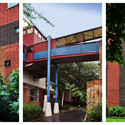
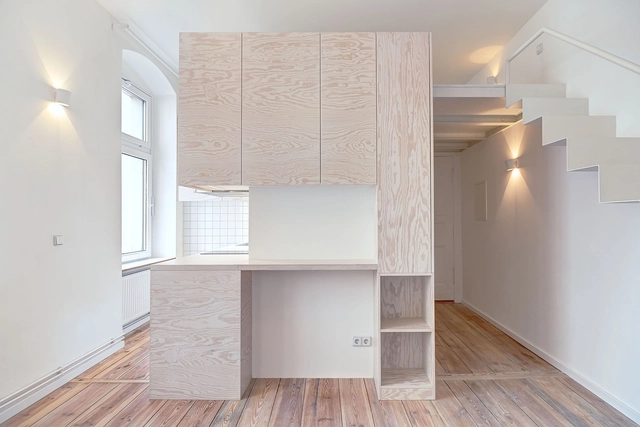
Architects: Atelier LOIDL
- Year: 2013
-
Professionals: Ingenieurbüro I. Acker


One of three runners-up in the 2014 Audi Urban Future Award, the Berlin Team of Max Schwitalla, Paul Friedli and Arndt Pechstein proposed a futuristic and innovative concept for an entirely new type of personal transport. Drawing inspiration from sources as diverse as elevator technology and biomimicry, their designs offer a thought-provoking alternative to our existing transportation systems that could revolutionize the city as we know it.
Though their proposal ultimately lost out to Jose Castillo's Team Mexico City, the work of the Berlin team correlates closely with the aims of Audi's Urban Future Initiative, offering a compromise between the convenience and status of personal transport and the civic benefits of public transport. Read on to find out how this was achieved.


Despite being born in the same era, Expressionism embodies an entirely different architectural sensibility to other proto-modernist movements like the Bauhaus. Its complex forms marked the creation of what we know as the modern metropolis and became one of the iconic architectural styles of the Roaring Twenties. Throughout Europe, over 1,000 expressionist buildings remain standing, yet many are forgotten and not properly preserved.
For the past four years, Niels Lehmann and Christoph Rauhut have been working to document these surviving expressionist landmarks, following their previous book “Modernism London Style.” Their new book, “Fragments of Metropolis – Berlin” presents 135 remaining expressionist buildings in Berlin and the surrounding area, and with your help this incredible collection documenting the landmarks of expressionism will be published, with colorful photography and detailed maps revealing their exact locations. Follow this link to become a supporter and learn more, or continue after the break to see a selection of images from the book.

Speaking to The Guardian, David Chipperfield has stated that he regards the hold of private investment over new architecture in London as an "absolutely terrible" means of building a city. He argues that Berlin - where he spends considerable amounts of time and runs a large office - "is a much more reflective society than ours" because the UK has sunk into "a success-based culture."
If buildings could talk, what would they say about us? Cathedrals of Culture, a six part collection of films recently premiered at this year's Berlin International Film Festival, "offers six startling responses to this question". The project, filmed entirely in 3D, allows "six iconic and very different buildings to speak for themselves, examining human life from the unblinking perspective of a manmade structure".

Bauhaus, the school of design established by Walter Gropius in Weimar in 1919, has arguably been the most influential of any institution in shaping the trajectory of modern architecture. Out of this single school came an entire movement that would have lasting effects on architectural pedagogy and the design of everything from buildings to road signs. Born out of a larger cultural movement following Germany’s defeat in World War I which left the country ripe for regrowth without the previous constraints imposed by censorship, the core of Bauhaus philosophy were the principles of craftsmanship and mass production, which allowed for the movement’s rapid proliferation and a production model that would later inform contemporary design companies such as Ikea. Check out the infographic from Aram below to learn more about the movement, tracking the school from its origins in Weimar, via its canonical Gropius-designed home in Dessau, to its continuing legacy today.
25 years ago on November 9, East German protesters torn down the Berlin Wall. To commemorate this moment, the German capital plans to line the wall’s original 9-mile stretch with 8,000 illuminated, white balloons. The installation, named lichtgrenze or “light frontier,” will be open November 7. On the 9th, the balloons will be simultaneously released into the air to music provided by the Staatskapelle Berlin orchestra.

In an interview with Shaunacy Ferro for FastCo Design, Daniel Libeskind looks back over his built works and discusses the significant 'emotional weight' imbued in many of his projects, from the Jewish Museum in Berlin to his masterplan for Ground Zero in New York City. When asked why he continually returns to projects such as Holocaust memorials - with the Canadian National Holocaust Memorial currently underway in Ottawa - Libeskind stated: "It’s not something that I choose very lightly, because it’s very difficult, but I believe that it’s very important." For him, creating these monuments is part of the act of doing "something that moves us beyond just the darkness and gives us something positive. [...] Even when it comes to the memory, you can’t just dwell on the irreversibility of the tragedy. You have to have something hopeful."


In Berlin, Mies van der Rohe’s Neue Nationalgalerie has begun a new phase today with the opening of David Chipperfield’s intervention, a prologue to the imminent restoration which the famed British architect is about to undertake. Completed in 1968, the gallery was Mies’ last project and his final masterpiece; for nearly fifty years, nobody dared to touch it - until now. Marking this event is a large, site-specific installation, created by Chipperfield as an attempt to engage Mies in a spatial experiment (or perhaps a last, apologetic tribute to the 20th-century master) moments before he is about to embark on a mission which will, inevitably, transform Mies’ ultimate legacy.

On Thursday, the Aedes Network Campus Berlin (ANCB) Metropolitan Laboratory hosted a symposium to mark the opening of the exhibition "Seoul: Towards a New City," in collaboration with the City of Seoul. The city has identified three key objectives to help them strike a balance between restoration and change when moving forward with future development: revival of history, restoration of nature, and renewal of people's lives. Seven projects that reflect these goals are on display at the exhibition. For more details, continue reading after the break.


If you are in Berlin in August, make sure to check out the exhibition “Lina Bo Bardi: Together” at The Deutsche Architecture Zentrum, dedicated to the legacy of the famed Italian-born Brazilian architect, and focusing on her “capacity to engage with every facet of culture and to see the potential in all manner of people.” More on the exhibition after the break.