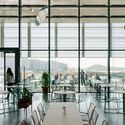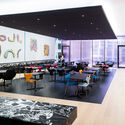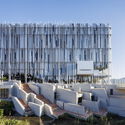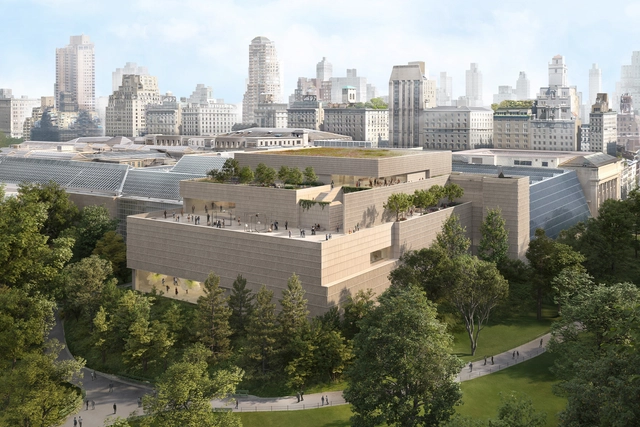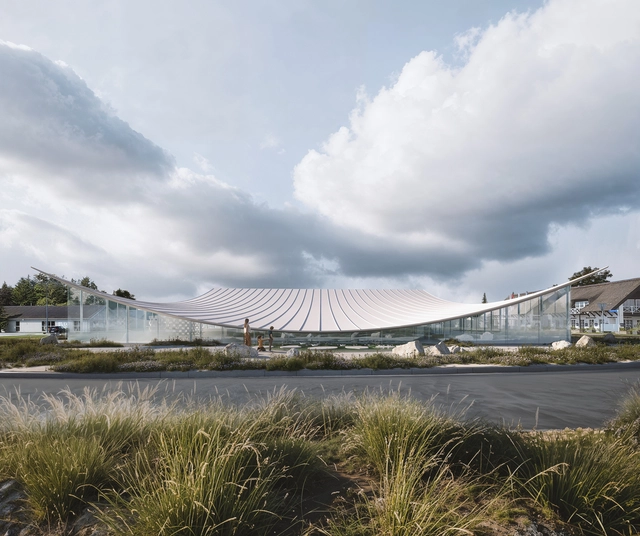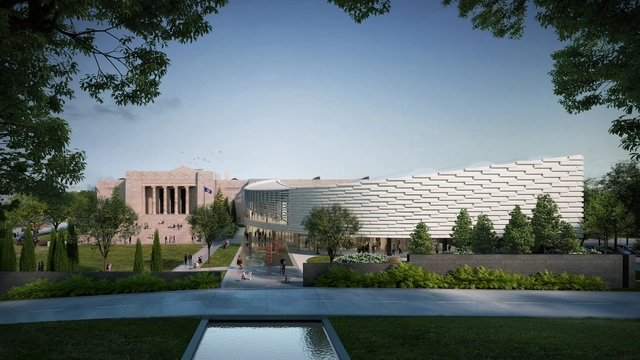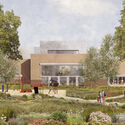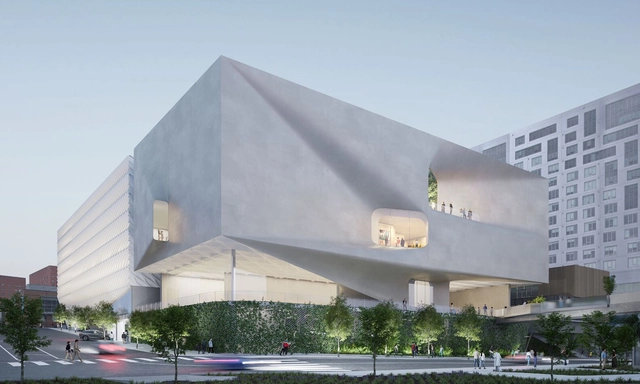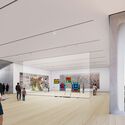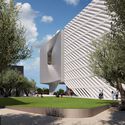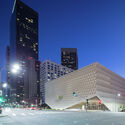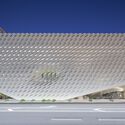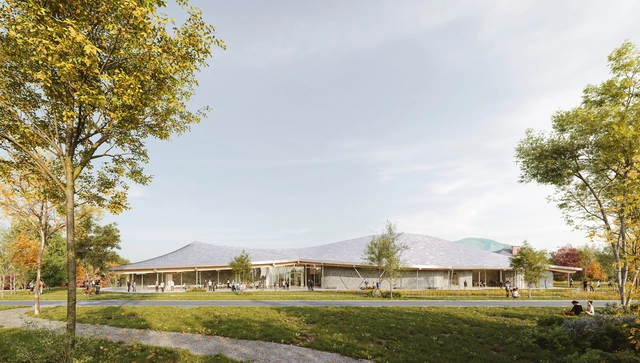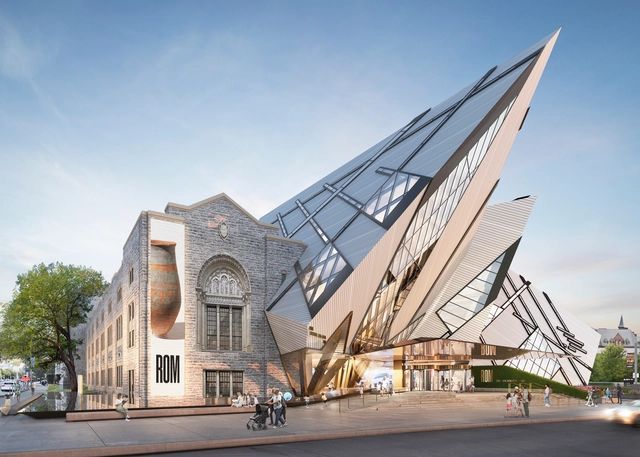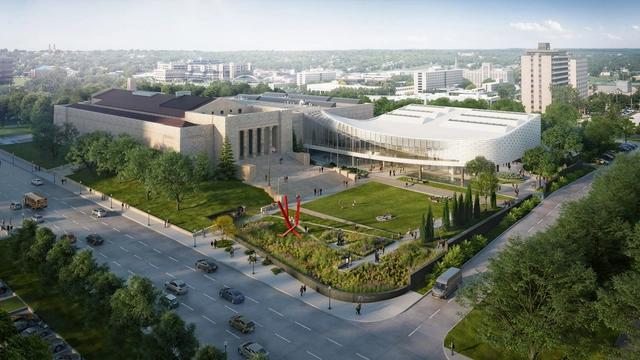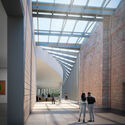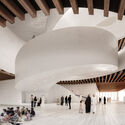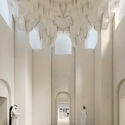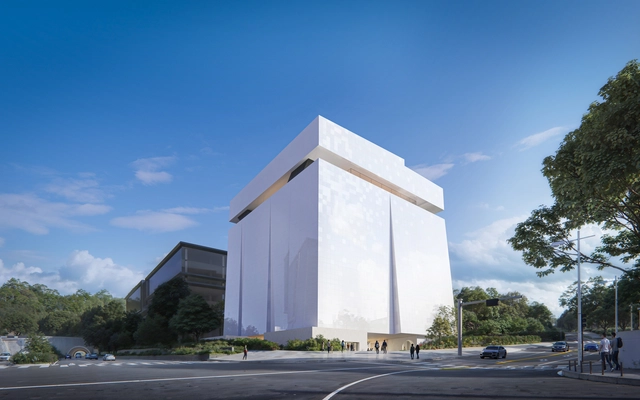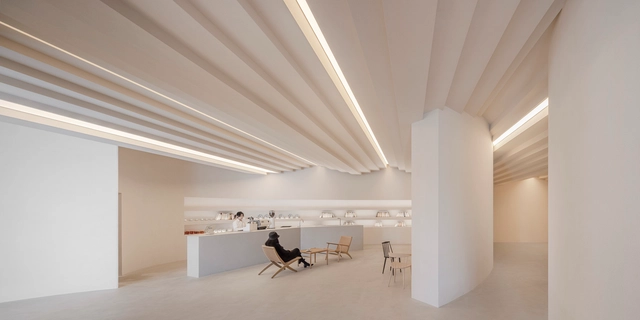
The Joslyn Art Museum in Nebraska announced that the restoration and expiation works led by Snøhetta and Alley Poyner Macchietto Architecture (APMA) are nearing completion, as the transformed institution is scheduled to reopen on September 10, 2024. The new 42,000-square-foot Rhonda & Howard Hawks Pavilion, designed by Snøhetta and APMA will add new gallery spaces to Nebraska’s largest art museum, becoming the centerpiece of the large-scale project for reimagining the visitor experience.
Many buildings often fall into disuse due to our cities' constant economic, social, and technological changes. The programmatic inconsistency of current times demands great versatility and adaptability from our infrastructures, increasingly leading projects to become uninhabited, and left to abandonment and decay.
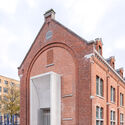
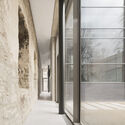
Next, we present a series of 20 Latin American projects in which old warehouses, homes, prisons, mills, and markets were recovered and transformed into Cultural Centers, Museums, and Galleries.
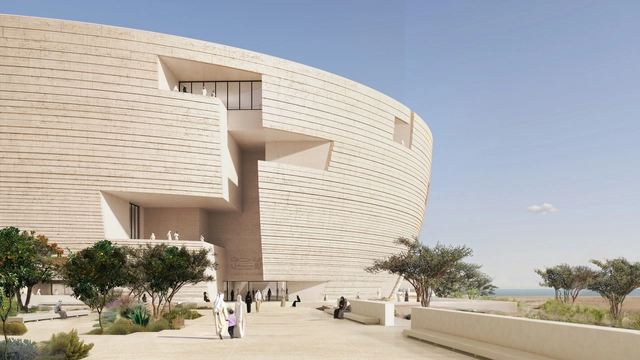
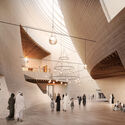
Qatar Museums has released renderings showcasing the future Lusail Museum, designed by Swiss architecture office Herzog & de Meuron. The museum will house one of the largest collections of Orientalist art, exploring the movement of people and ideas across the globe and over the centuries. The new institution also strives to provide opportunities for high-level study for scholars, academics, policymakers, and curators. Consequently, the building is conceived as “a vertically layered souk, or miniature city contained within a single building,” aiming to encourage conversations, debates, and meditation on global issues.
Herzog & de Meuron has revealed the design for the Seoripul Open Art Storage, a collective archive space that will serve three museums in Seoul: the Seoul Museum of Art, the Seoul Museum of Craft Art, and the Seoul Museum of History. Going beyond the archive program, the proposal aims to open up the building to visitors, transforming the art storage into a dynamic civic space. Located on the Eastern Border of Seoripul Park, the building is characterized by a pyramidal glass structure set in a garden that functions as a secluded outdoor space for Archive/Museum visitors.
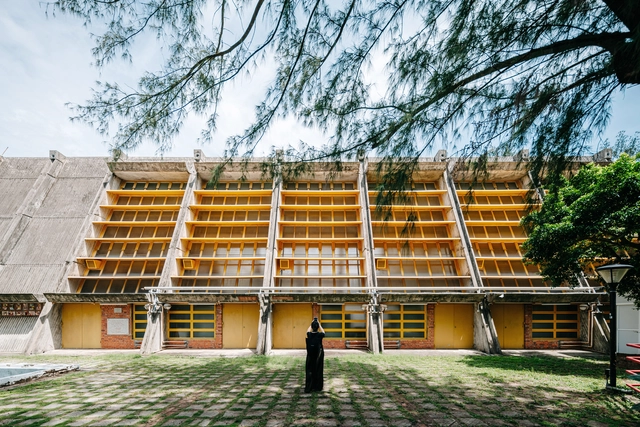
Science Forest / ADAT Studio. Image Courtesy of ADAT Studio
In the contemporary context, museums face contradictory sets of ideas: becoming attractions on and of themselves but presenting an understated image that shifts the attention to the exhibits, creating a safe and protected environment for the artifacts, yet opening them up to the public, becoming repositories of history yet catalysts for innovation. Searching for the balance between all of these constraints has resulted in the flourishing of diverse types of museums and cultural institutions, from those dedicated to the remembrance of a single event or persona to temporary homes for cultural events or spaces that expand their cultural offering beyond exhibition areas.
This curated selection of Best Unbuilt Architecture highlights projects submitted by the ArchDaily community that demonstrate the fusion of art, technology, and innovation within the realm of museums and cultural centers. Among the featured designs are works from renowned architectural offices, including CAA architects, NextOffice – Alireza Taghaboni, and Fentress Architects, along with several emerging firms. Ranging from a sculptural art museum in Dubai to a local cultural and recreational complex in Senegal, or an immersive science museum in Rome, Italy, this diverse compilation strives to showcase the spectrum of scales and purposes of cultural institutions.
Estonian studio OÜ Kolm Pluss Üks won the international architecture competition for the Tartu Cultural Center. Selected out of a total of 107 proposals, the winning project titled “Paabel” is set to become the cultural heart of the city center, capturing the competition's main goal and developing an outdoor space solution. Kadarik Tüür Arhitektid OÜ took the second position for their design of “Tarte Tatin”, while the third place went to Denmark-based architectural studio Atelier Lorentzen Langkilde Aps.
Architectural model of the new KNMA New Delhi. Image Courtesy of Adjaye Associates and KNMA
The Kiran Nadar Museum of Art (KNMA) has revealed an architectural model of its new building during the 18th International Architecture Exhibition - La Biennale di Venezia, as part of the Curator’s Special Projects, titled Mnemonic, presented at the Arsenale - Artiglierie in Venice. The building, designed by Ghanian-British architect Sir David Adjaye in collaboration with S. Ghosh & Associates as the local architect of record, is set to become India’s largest cultural center. The project is scheduled to open in Delhi in 2026.
As repositories of knowledge and catalysts for innovation, museums represent an architectural typology filled with opportunities. They act as an intermediary between the general public and artists, historians, and researchers, creating the medium for the display of cultures and creativity while also striving to make knowledge accessible to all. Through careful curation and exhibition design, they provide a platform for education and research, fostering an understanding and appreciation of diverse cultures, histories, and ideas. For architects, they also present an opportunity to conceive spaces aligned with the exhibits on display to create an immersive experience for the visitors.
This week's curated selection of Best Unbuilt Architecture highlights projects submitted by the ArchDaily community that showcase art, technology, and innovation through the program of museums and cultural centers. Featuring projects from emerging and established architectural offices such as Hariri Pontarini Architects, Beyer Blinder Belle, Studio Saheb, RAMSA, and Ho Khue Architects, the selection includes a variety of scales and programs, from a museum dedicated to the commemoration of the Holocaust to a private sportscar museum in Austria or an intricately-shaped art gallery in Vietnam.
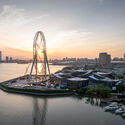
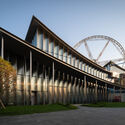
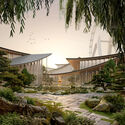
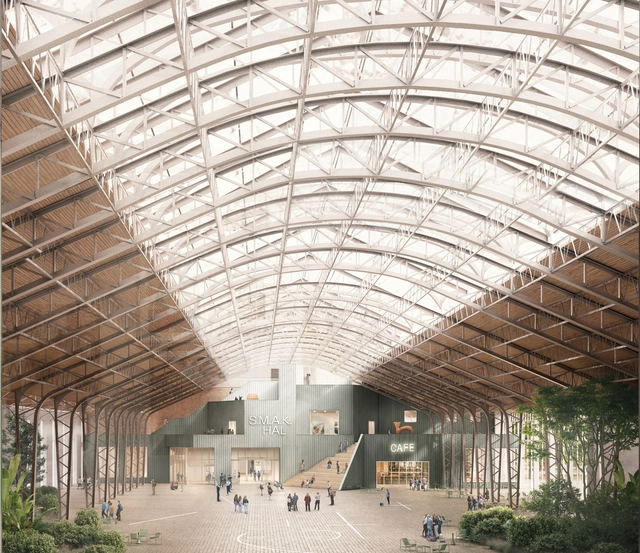
Following an international competition, MVRDV has been selected to lead the design of the Hangzhou Oil Refinery Factory Park, an extensive project aiming to transform the former industrial district into a cultural center set in a green environment. Complete with a new art and science museum, offices, retail, and a wide variety of cultural offerings, the redevelopment demonstrates a way forward from an oil-based infrastructure to more sustainable alternatives, while retaining the memory of the past technologies. The park sits alongside the southern end of China’s Grand Canal, the world’s longest and one of the oldest man-made waterways created to strengthen economic connections between the south and the north of the country.
AlUla Oasis. Image Courtesy of Royal Commission of AlUla
The Centre Pompidou is an arts and culture institution that has been present in Paris since the late 1970s. It houses the Public Information Library, the largest museum for modern art in Europe, and a center for musical research. This month, the institution signed a partnership agreement to create a museum of contemporary art in Saudi Arabia with the Royal Commission of AlUla (RCU). Additionally, the establishment signed a similar partnership agreement to develop a modern and contemporary museum in Seoul, South Korea, with the Hanwha Culture Foundation.
LEVER Architecture has been selected to lead the design team for the campus expansion of the Portland Museum of Art. The project aims to not only expand the existing campus but also to create a unified identity for the institution, one that ties together all the architecturally significant buildings on site. The winning proposal is primarily a mass timber structure inspired by Maine’s communities, history, and culture.
The Buffalo AKG Art Museum (formerly known as the Albright-Knox Art Gallery) has announced that it will welcome its first visitors on the 25th of May, 2023. Revamped and expanded, the new campus designed by OMA/Shohei Shigematsu in collaboration with Cooper Robertson features “new work of signature architecture, the Jeffrey E. Gundlach building, and extensive renovation to existing buildings”.
Hirshhorn Museum. Image Courtesy of Hirshhorn Museum
The Smithsonian’s Hirshhorn Museum and Sculpture Garden has selected Skidmore, Owings & Merrill and Selldorf Architects to jointly develop the modernization plan for the Hirshhorn Museum’s interior and plaza. As the first renovation in the last fifty years, the museum plans to upgrade its galleries and public spaces in order to fit the contemporary requirements of a public museum of modern art. It also represents a response to the increased attendance during the past five years. The federal contract was awarded following a competitive process by Smithsonian Facilities in consultation with the Hirshhorn. The concept design, to be submitted in 2023, will be subject to a public consultation process.
The Bronx Museum Renovation. Image Courtesy of Marvel Architects
New York-based firm Marvel revealed schematic designs for The Bronx Museum's new multi-story entrance and lobby, as part of the museum's revamp for its 50th anniversary. With a budget of USD $26 million and slated for completion in 2025, the renovation will relocate the access on the Grand Concourse Street, one of the most iconic The Bronx boulevards, and focus on the cohesion of the multiple sections for a fully accessible route through all of the galleries. Coinciding with this announcement, the Museum reinvented its brand identity and website for the first time in over two decades to reflect its ethos as a vital space at the intersection of art and social justice in New York City.
Ennead Architects has revealed the design for the Wuxi Art Museum in the historic port city of Wuxi, China. The competition-winning design proposes a new center for art and culture that builds upon the tradition of the Chinese gardens, a practice with a long legacy in the region. The complex is located in the Shangxianhe Wetland Park, a natural environment that informs and influences the museum experience. According to the designers, the architecture behind the Wuzi Art Museum is conceived as a Taihu Scholar Stone, a contemplative spatial structure sitting quietly in the broader natural context and inviting visitors to pause.
Museums play a critical role in preserving local cultures, promoting a better understanding of our collective heritage, and fostering dialogue, curiosity and self-reflection. In recent years –and largely driven by the Covid-19 pandemic– technological advances have enabled users from all over the world to visit exhibitions virtually, at any time and from the comfort of their own home. However, although online tours are a good way of increasing accessibility, there is something about the in-person museum experience that will never get old: the ability to witness, embrace and closely admire artefacts, paintings and sculptures in their true form, as well as the chance to experience the unique ambiance and essence of a traditional museum setting. Viewing the Mona Lisa virtually will never live up to appreciating it face-to-face at The Louvre, for instance.
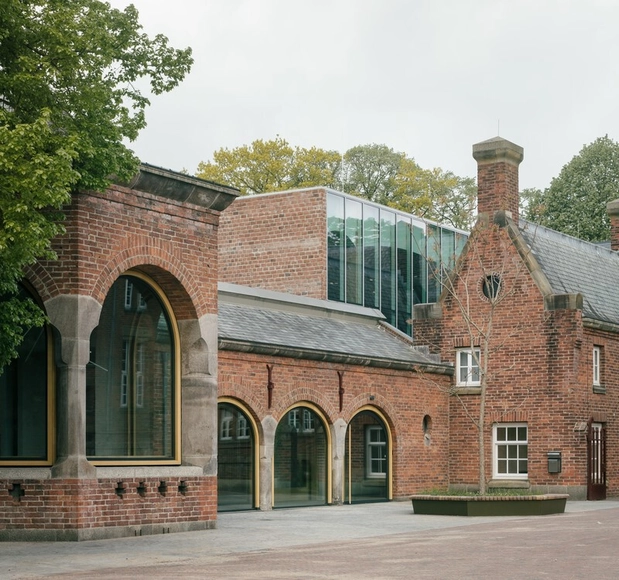
The Natural History Museum Of Lille in France will undertake a significant architectural transformation for its 200th anniversary. Snøhetta, selected to restore and modernize the complex, with a transdisciplinary team featuring the scenographer Adeline Rispal and the landscape architects of Taktyk, imagines a renovation that will support the city's ambition to combine urban renewal with the preservation of the city's historic architecture. Planned for completion in 2025 and with a total of 7,500 m², the restoration will accommodate flexible exhibition areas, more extensive storage, and gardens.