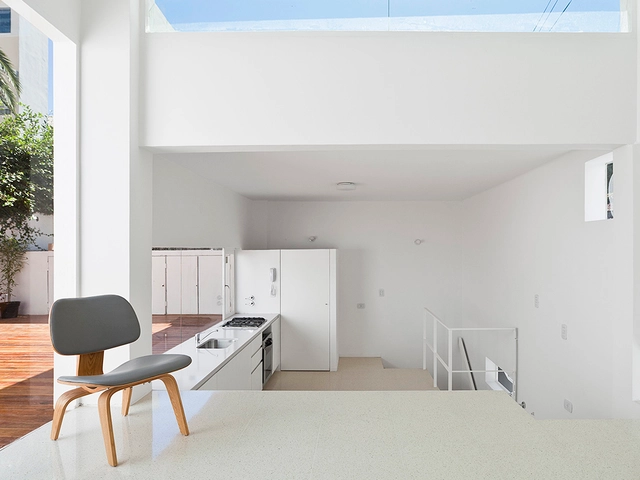
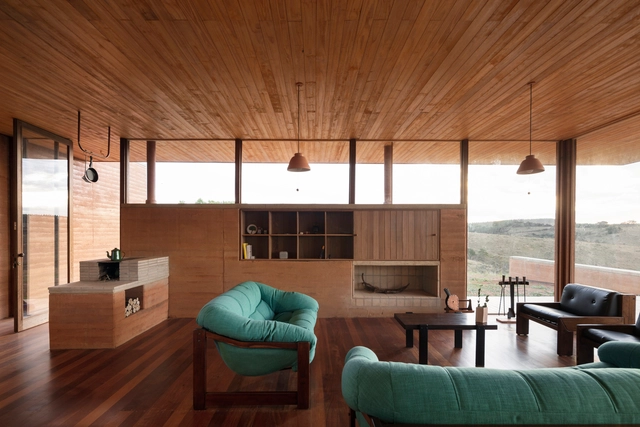
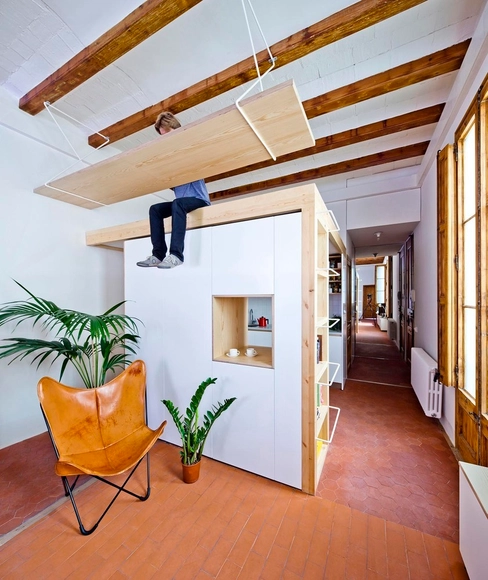
The height of the ceiling of a space heavily influences our perception of it. Generally, local building codes regulate the minimum dimensions for ceiling height, which are calculated to ensure adequate quality of life in the environment. But the exact height of the ceilings is often defined by the dimensions of other materials that make up the building, the height of the constitutive slabs, or even by rounding the dimensions of the stair steps. It is common, with the densification of cities aimed at increasing profitability, for entrepreneurs to design with minimum ceiling heights in houses and offices, reducing construction costs. On the other hand, in older structures, more generous ceilings can be observed, which generally enable a greater degree of design freedom. But how can architects make the most of these spaces?
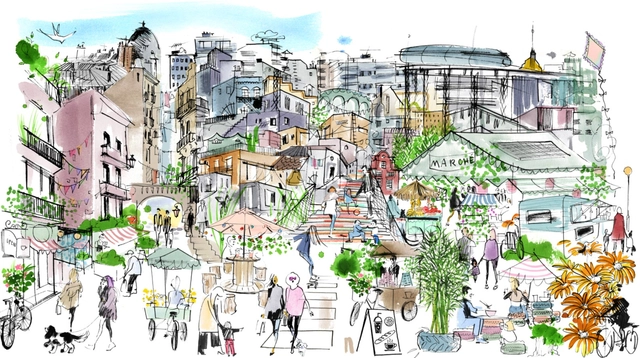
HerCity is a platform that involves women in urban development, in order to make better cities for everyone. Turning the tables and putting girls in the expert position, the digital toolbox aims to create more inclusive, equal, and sustainable cities and communities. The initiative makes methods and tools available to urban actors globally, in order to support cities in integrating girls’ participation in their long-term strategies.
Launched on Women’s day 2021, the guide for urban planning and design is a collaborative effort between UN-Habitat and Global Utmaning, the Swedish independent think tank. ArchDaily had the chance to talk with the team behind this digital toolbox, discussing the narratives, the process, and inclusive planning on a worldwide level.
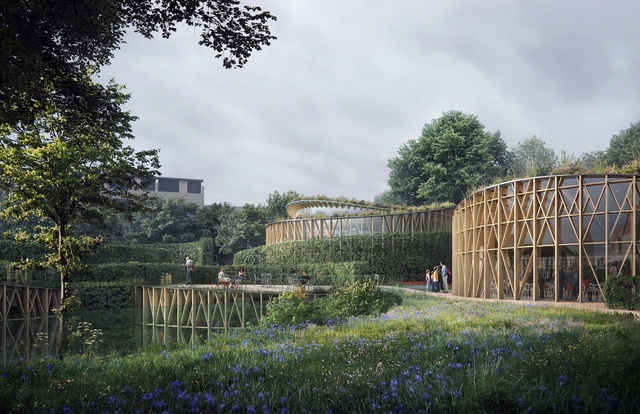
Scheduled to open in the summer of 2021, the H.C. Andersen’s House is a new museum, designed by Kengo Kuma & Associates in Odense, Denmark. Reinterpreting the story of the Danish author’s life and work, the project “will provide a unique artistic experience, which combines landscape, architecture and modern exhibition design”.
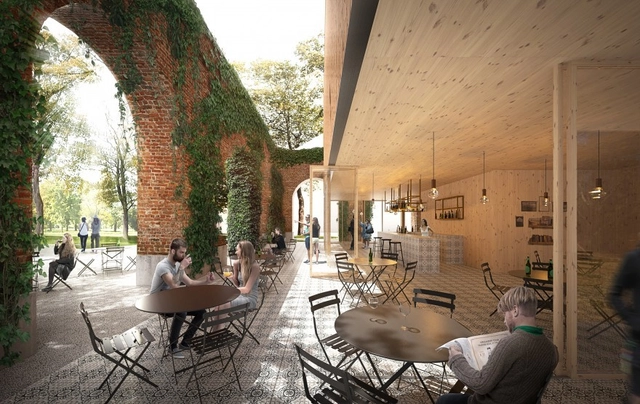
AllesWirdGut has won the competition to redesign the historic Gösserhallen in Vienna's 10th district. The new approach aims to handle the existing structure with care, a concept that revives the industrial property with contemporary elements. Preserving the outer walls while introducing interiors for different uses, the team designed an "in-between" space that creates a new environment within the project.
Many architects and designers have highlighted the importance of taking into account all five senses during the design process, in order to create a successful user experience. Fortunately, many strategies have been implemented to facilitate the experience of those who are physically impaired, however, little is being done to aid those who feel helpless and restricted due to mental illnesses and traumatic experiences.
Healing from these experiences is a journey that requires a lot of effort from both the individual and everything and everyone around him/her. Oftentimes, victims of trauma are advised to spend more time in the outdoors, embracing the restorative qualities of nature. But what about interiors? Since people are now spending almost 90% of their time indoors, it is only natural that these spaces contribute to the healing process as well. And while these spaces can look beautiful with an abundance of natural light and neutral color palettes, are they truly beneficial to their mental health?
Skene Catling de la Peña and Factum Foundation are transforming Alvar Aalto’s iconic wood chip Silo into a research Centre promoting architectural preservation and re-use. The AALTOSIILO, a cathedral-like concrete structure “will become a point of focus for digitizing and communicating the importance of the industrial architecture of the north and – in turn - the impact industry has had on the environment”.
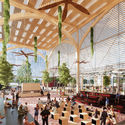
The City of Chicago has selected Skidmore, Owings & Merrill (SOM) and TnS Studio to create an incubator for small businesses and entrepreneurs in the city’s Englewood neighborhood. Called Englewood Connect, the project is part of Mayor Lightfoot’s INVEST South/West initiative, and it aims to foster local commerce and greater connectivity, as well as create new, flexible public spaces.
In architecture, split-level houses are typically in response to a plot's uneven or sloping topography. In the case of the houses featured here, their split level interiors are a matter of function, allowing spaces to be virtually separated by dividing them between raised and semi-subterranean floor layouts. For example, adjoining two spaces with a 50cm step up or drop off allows for separation without the use of walls or other physical barriers.
Another year and another International Women’s Day. Although recently, the gender debate has taken considerable attention, the battle for equality is far from over. Even in the 21st century, architecture can still be a challenging profession for women. Progress is happening though, and in 2020, Yvonne Farrell and Shelley McNamara became the 4th and 5th women to receive the Pritzker prize, ever since its inception in 1979.
Not limiting our coverage to the 8th of March, ArchDaily recognizes every day the female force that is shaping the built environment around the world. In fact, Women in Architecture is one of the main pillars of our content strategy. This year, for International Women’s Day, ArchDaily has decided to feature a week of curated content, with exclusive interviews and thought-provoking editorials. Join us as we highlight women that deserve a seat at the table, and share tools to achieve an inclusive world.
CAMBRIDGE, USA - December 01, 2016: Massachusetts Institute of Technology (MIT) Dome - Cambridge, Massachusetts, USA. Image via Shutterstock/ By Diego Grandi
Every year in March, the QS World University Rankings reveal the top universities to study each profession, covering 51 different subjects. Grading schools based on academic reputation, employer reputation, and research impact, the annual QS- Quacquarelli Symonds has unveiled that for the second year in a row, in the 2021 Architecture/ Built Environment division, the Massachusetts Institute of Technology (MIT) is still in the first position.
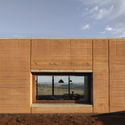
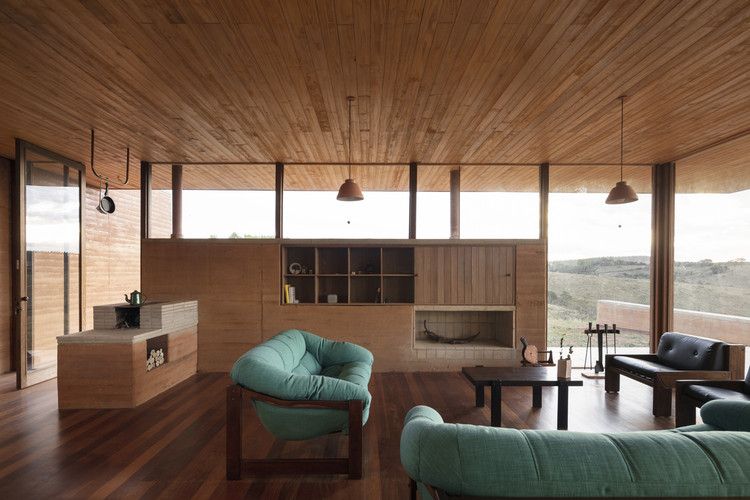
Ancestral, but overshadowed by other technologies that have emerged over time, the rammed-earth walls are again gaining prominence in Brazil for being a low-impact, sustainable and economical solution. Known in Portuguese as taipa, it is a rudimentary construction system that compresses the earth into wooden boxes until it reaches an ideal density that allows a resistant and long-lasting structure.
https://www.archdaily.com/957907/the-benefits-of-rammed-earth-in-brazilian-housesEquipe ArchDaily Brasil
Last year, as the pandemic kept many housebound, artist and architectural historian Esther Choi found herself fielding a lot of requests from BIPOC students and young professionals looking for advice. She noticed several of the same concerns cropping up, specifically those having to do with the stresses of studying or working in environments that were overwhelmingly white. So, as one will do these days, Choi took to social media, where she announced virtual information sessions in which she would talk about her professional experience in an attempt to help others. The success of these initial, informal get-togethers led Choi to plan a series of events where BIPOC design students and young professionals could pick the brains of established BIPOC architects, designers, and writers about their careers and ways to navigate often unsupportive fields. The conversations would be casual, frank, and encouraging. Choi named the initiative Office Hours.
In a recent interview with Louisiana Channel, Copenhagen-based architects Søren Johansen and Sebastian Skovsted share insights into their design process - stating the importance of creating architecture that seamlessly blends into the landscape yet stands out on its own right. Discussing the minimalist nature of their projects, the architects are careful not to put themselves in a box, saying, "When you ask about minimalism in our work, or any other ism, we are not interested in simplicity for simplicity’s sake.”
Liminal spaces are everywhere, both literally, and as a popular topic of intrigue on Reddit and other image-sharing platforms. Posting photographs of empty dilapidated spaces followed by collective reminiscing of childhood experiences is proving to be a popular activity these days. At one time or another, the spaces depicted in these eerie photos seemed like a good idea, a useful solution to the problem of providing shelter for crowds in the act of movement or commerce. Architecture had specific terms for these spaces too and defined them through theories that explained their role in our culture. In this video, architectural professor Stewart Hicks presents how architects think about liminal spaces, what goes into them, why they exist, and why some architects and artists still work to produce their effect.
The Hyatt Foundation has revealed the announcement date of the Pritzker Prize 2021 Winner(s). The most relevant recognition in architecture will be announced on Tuesday, March 16th, 10:00 am EDT.
https://www.archdaily.com/957998/pritzker-prize-2021-winner-to-be-announced-in-early-marchArchDaily Team
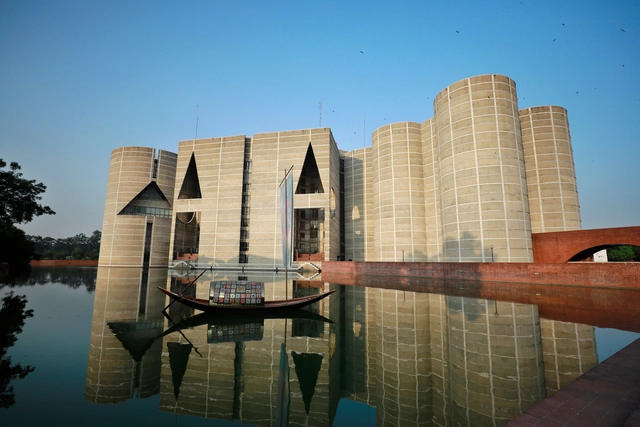
Nathaniel Kahn’s 2003 documentary, My Architect, was at its beating heart a son’s search for his father. The film, which was nominated for an Academy Award and will be re-released later this year, explored the complicated domestic life of Louis Kahn: three children, by three different partners, all of whom were kept largely in the dark about the existence of each other. But the film was as much about the work of Louis Kahn as it was about his personal life. And, as a result, it ignited a renewed interest in his buildings, both in the mainstream culture and across architectural academia.
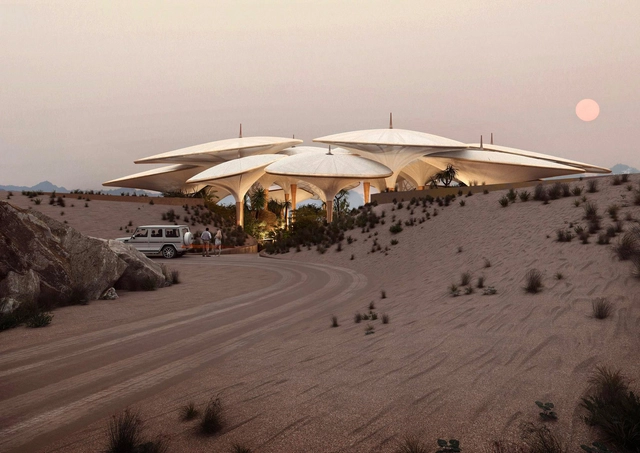
Foster + Partners has shared a new design for a hotel in Saudi Arabia set within sand dunes. Dubbed Southern Dunes, the project is part of The Red Sea Project tourist development. The hotel will include 40 villas that are constructed from timber and arranged to take advantage of surrounding views. Designed as part of the first phase of The Red Sea Project, it aims to be part of the world's "most ambitious" tourism development.
Chicago, United States. Created by @overview. Source imagery: @nearmap
Because of the decrease in the availability of land area and the ever-increasing price per square meter, cities often tend to grow vertically. When we picture large metropolitan areas, we almost always imagine high-rise buildings, and the recognizable skyline becomes an icon that immediately evokes the places in which they are located.











.jpg?1615322008&format=webp&width=640&height=580)

.jpg?1615264644&format=webp&width=640&height=580)
.jpg?1615264657 "Courtesy of Skidmore, Owings & Merrill (SOM)")
.jpg?1615264645 "Courtesy of Skidmore, Owings & Merrill (SOM)")
_jpg.jpg?1615310606 "Courtesy of Skidmore, Owings & Merrill (SOM)")
.jpg?1615264644)