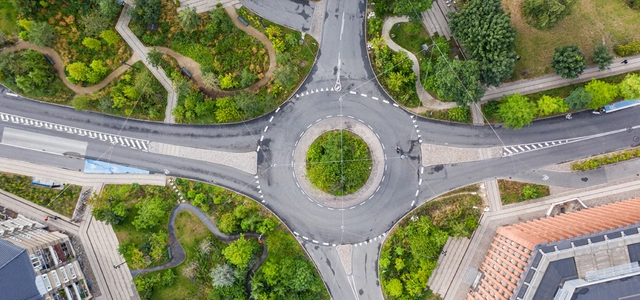
For this month, The Dirt and author Jared Green share with us a study about urban heat islands, exploring new approaches that have been designed to both reduce urban temperatures and help communities adapt to a hotter world, In three cities: New York City, Copenhagen, and Abu Dhabi.
https://www.archdaily.com/962913/urban-heat-islands-are-increasingly-dangerous-but-planners-and-designers-have-solutionsJared Green
A circular economy is an economic system aimed at eliminating waste and the continual use of resources. Looking beyond the current take-make-waste extractive industrial model, a circular economy aims to redefine growth, focusing on positive society-wide benefits. It entails gradually decoupling economic activity from the consumption of finite resources and designing waste out of the system. Underpinned by a transition to renewable energy sources, the circular model builds economic, natural, and social capital.
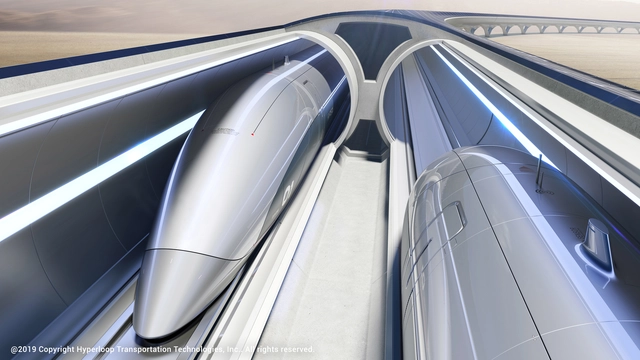
Zaha Hadid Architects is collaborating with Hyperloop Italia to co-design the next phase of works of the transport vehicles, marking a turning point for the future of transportation. The collaboration aims to merge transformative architecture, engineering, and urban planning with the most efficient and sustainable transport network to improve accessibility, connectivity, and well-being in cities.
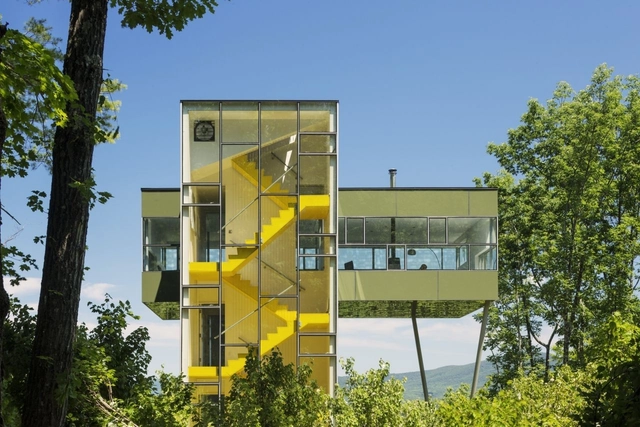
Tower House, Photo credit: Paul Warchol. Image Courtesy of GLUCK+
Architecture is inherently tied to building and construction. When these processes are aligned, great structures take shape. For architecture, construction and development firm GLUCK+, design and building go hand-in-hand. From designer and builder to owner and developer, the practice has taken on diverse roles to bring innovative projects to life. Looking to the future, Principal Thomas Gluck explores how the firm is creating work in New York City and across the United States.
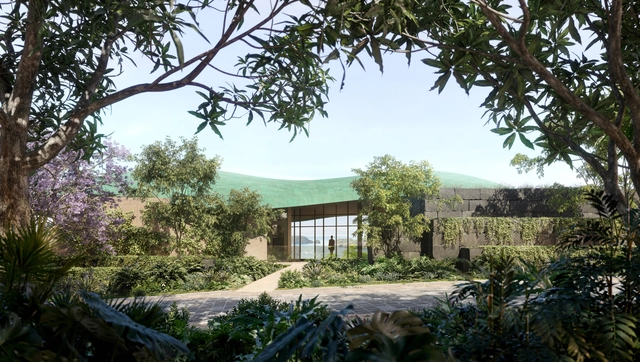
Vladimir Belogolovsky speaks with Antoine Predock about the soon-to-be-built Bahías, a community of 13 houses in Costa Rica, inspired by a vision of manmade foliage.
Architecture and automation are two concepts that in the modern era of design and technological advancements go hand in hand- or do they? On one end, there’s a slight fear that “robots will replace designers”, making the profession more automated, and less creative. On the other, technology has made the practice of architecture more efficient in terms of process and cost. How far will technology take us, and will your job ever be lost to technology? The short answer is, probably not.
To answer the Biennale's question of "How Will We Live Together", curators of the national pavilions explored what the future would look like in an architectural, cultural, and environmental context. Many saw the future as an entirely virtual environment whereas other highlighted the cruciality of physical coexistence with neighbors. ArchDaily met with Ippolito Pestellini Laparelli, curator of the Russian Pavilion, to discuss how the idea of the pavilion came together throughout the year as a virtual platform for interdisciplinary creative thinkers, the role of cultural institutions across physical and digital spaces, and how digitalization is always part of the conversation.
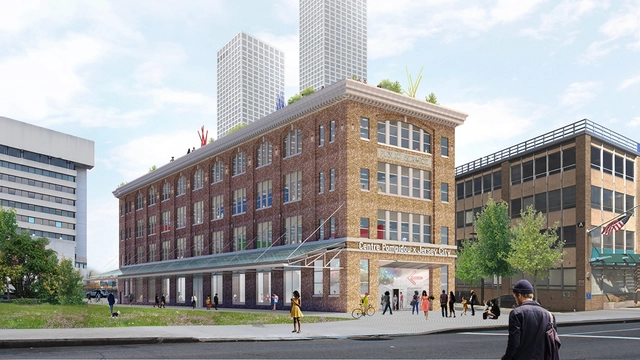
Three years after OMA was selected by the Jersey City Redevelopment Agency (JCRA) to design a new museum in Journal Square, the city’s downtown hub, it was revealed this morning that the building would be home to none other than the Pompidou Center’s first North American satellite: The Centre Pompidou × Jersey City.
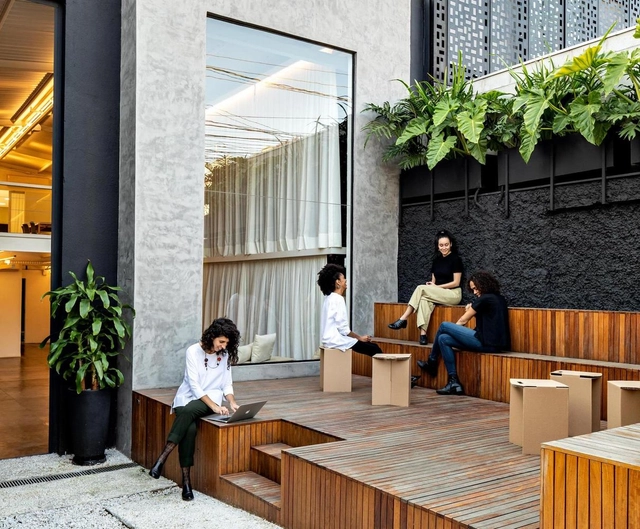
The Coronavirus pandemic demanded new needs and significant changes in our lives: in relationships, at work, in consumption habits, in increasing inequality. Indeed, the theme of workspaces came up in a historical moment when people saw their own freedoms limited for the first time in the postmodern era.
Most people were forced to work from home, and since the beginning of quarantine, reflection on the future of workspaces has become inevitable. Some interesting data show that the Coronavirus only boosted a practice that had been consolidating for years in some countries. According to the Global Workplace Analytics e FlexJobs, between 2005 and 2015, the number of professionals in the United States who do at least 50% of their work from home or elsewhere outside their offices grew by 115%, and today that number reaches 4.7 million, 3.4% of the strength of the job.
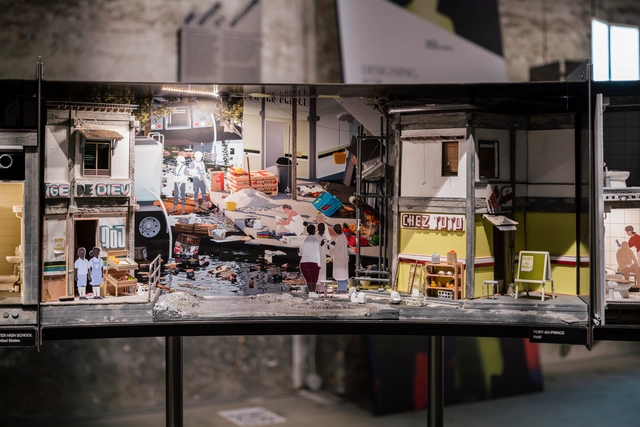
"When we enter the restroom, we are never alone. Instead, we are entangled in a network of bodies, infrastructures, ecosystems, cultural norms, and regulations". Although restrooms are often overlooked facilities that cater to the needs of individuals, they are, however, spaces where gender, religion, race, hygiene, health, and the economy are defined and expressed. For the 17th International Architecture Exhibition at La Biennale di Venezia, Matilde Cassani, Ignacio G. Galán, Iván L. Munuera, and Joel Sanders designed two pavilions that exhibit how restrooms are political architectures, serving as battlegrounds for the world's disputes.
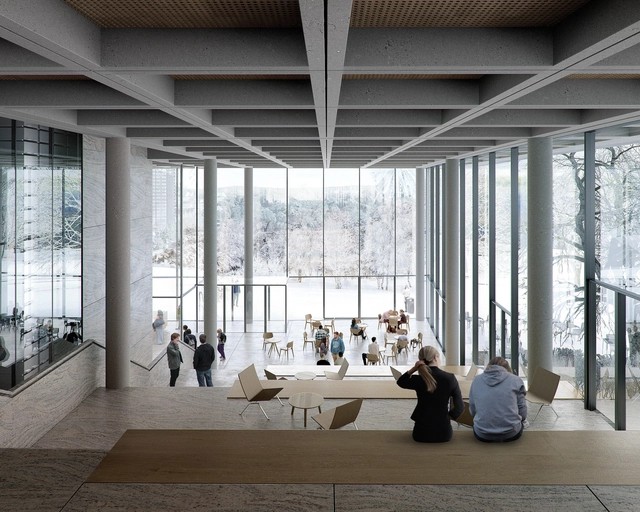
Cobe’s winning design for the new library of the University of Gothenburg proposes a light, clean volume, whose slightly curved facades are a nod to the pages of an open book. The Danish architecture studio translates the concept of knowledge as the heart of a library into the interior spatial configuration of the project, while the architectural image evokes the idea of a lighthouse. Featuring a transparent and open ground floor, the new repository of knowledge creates a strong connection with the surrounding park, becoming a mediator between the city and the university.
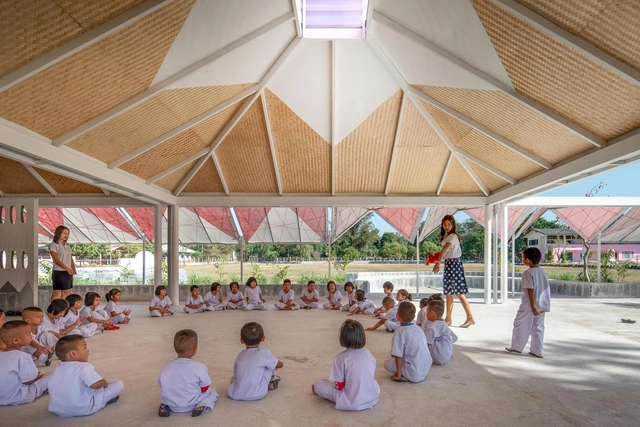
When designing community spaces, the architectural concept can easily clash with the user's experience. Therefore, engaging the community and future users in the project development and design process is a way of adding different perspectives to the architect's vision towards a more intelligent architecture.
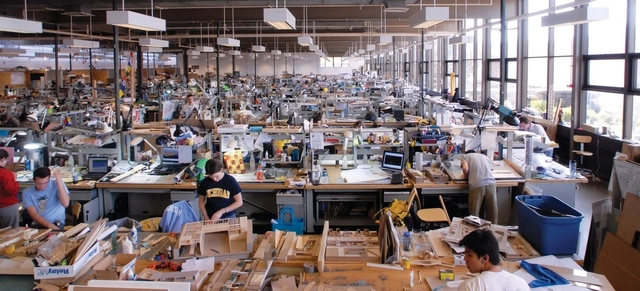
In this week's Common Edge piece, Duo Dickinson explores his personal journey from teaching to practice to teaching again, and the differences he perceived. Stating that "no one today believes that school can fully prepare students for what architecture will become in 10 years", the author explains how architectural education has been evolving and questions what could be the best ways to ensure that education remains relevant.
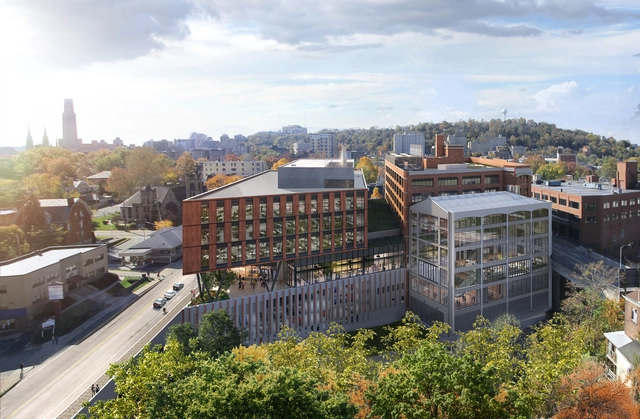
Courtesy of ZGF Architects, Wexford Science & Technology
ZGF Architects, Wexford Science & Technology, and The University of Pittsburgh have revealed new details of the Ford Motor Assembly Plant adaptive reuse in Pittsburgh. Called The Assembly, the project aspires to become a hub of university research, entrepreneurial activity, and innovation programming. The six-story crane shed was used to hoist parts unloaded from the Pennsylvania Railroad tracks for assembly.
After several postponements and numerous challenges, the 17th Venice Architecture Biennale is finally taking place, bringing into focus a diverse array of answers to the question “How will we live together”. The theme gained even more relevance in the context of the pandemic and this year’s edition restates the importance of the Biennale as a platform for inquiry and collective exploration. Archdaily had the opportunity to meet in Venice with the curator of the French Pavilion, architect Christophe Hutin to discuss the thinking behind “Communities at Work” and the immersive experience of the exhibition.
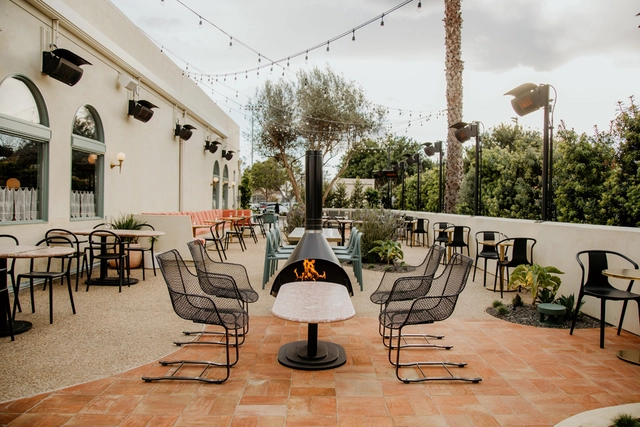
"The explosion of outdoor dining is both a survival tool for restaurants and a welcome cultural shift that may be here to stay", states Jessica Ritz, in her article originally published on Metropolis. In fact, the author explores hospitality trends that have emerged during the pandemic in California, mainly outdoor dining, and that are likely to last or be present for a long time.
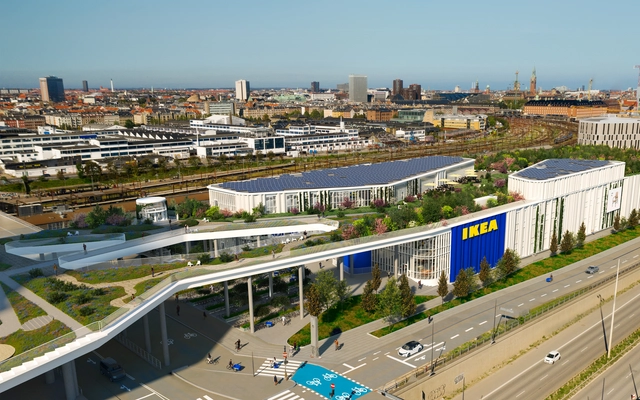
Catering to the Danish capital's aspirations regarding infrastructure and green space, the new IKEA store in Copenhagen designed by architecture studio Dorte Mandrup features a richly plated rooftop park that doubles as a new pedestrian route stretching one kilometre within Vesterbro neighbourhood. Located in one of the city's busiest area, neighbouring the central station, the historic Meatpacking District, and the inner-city harbour, the project's elevated public space offers a respite from the bustling streets, providing the area with a much needed green space.
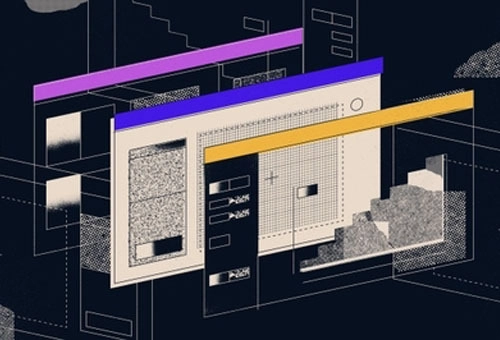
Providing digital solutions to basically “simplify” the work of architects, Monograph is a management software company that helps professionals of the AEC industry (architecture, engineering, and construction) oversee their projects in an integrated and user-friendly way. Founded and designed “by architects, for architects”, the San Francisco practice operations platform is an evolving building digital toolkit for projects of all scales.
Created by architects, who had previously faced the challenges and limitations of the field, Monograph is a solution tailored to the needs of architectural businesses. Named one of last year’s ArchDaily’s Best Young Practices, it is a clear example of how architects can expand the reach of their activity. In fact, the technology company was founded in 2019 by Robert Yuen, Alex Dixon, and Moe Amaya, three architectural designers who took the leap and ventured into the digital realm. This week, Monograph has introduced its new official web address, Monograph.com.



.jpg?1620086762&format=webp&width=640&height=580)