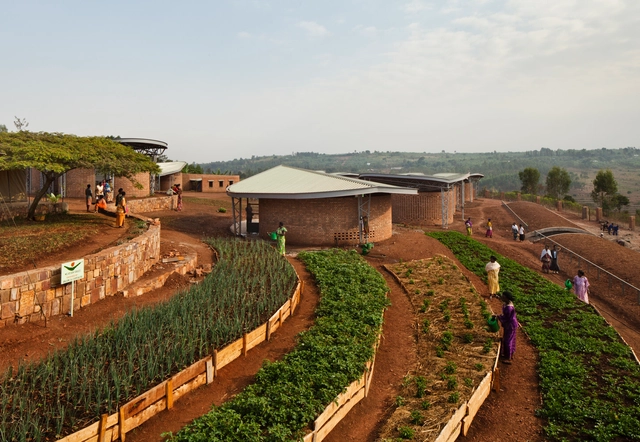
Participatory design is a democratic process that aims to offer equal input for all stakeholders, with a particular focus on the users, not usually involved directly in the traditional method of spatial creation. The idea is based on the argument that engaging the user in the process of designing spaces can have a positive impact on the reception of those spaces. It eases the process of appropriation, helps create representative and valuable spaces, and thus creates resiliency within the urban and rural environment.
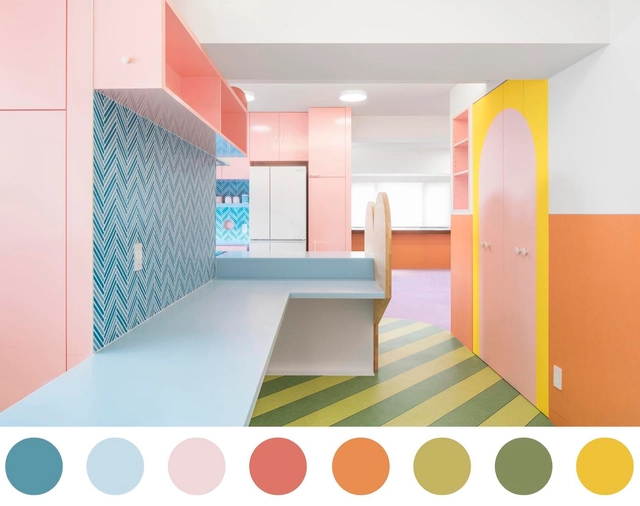
Besides thermal, acoustic and luminous comfort, colors are factors that influence the sensation we feel when in an environment and become a strong device to influence the user's behavior.
Far beyond aesthetic preferences, the use of certain colors can bring different meanings that cover other fields such as psychology or symbology. Therefore, it is known that a color does not depend only on light and environment, but also on the perception we have of it. The German Johann Wolfgang Von Goethe, who has deepened his study of the Theory of Colors, points out that the identification of tones is subjective, but the effects are universal. As an example, the warm colors (red, yellow and orange) are more dynamic and cause feelings of comfort and stimulus in people, while the cold colors (green, purple and blue) have a softer, soothing and static effect. Therefore, creating a color palette is a possibility to generate different sensations in the perception of space.
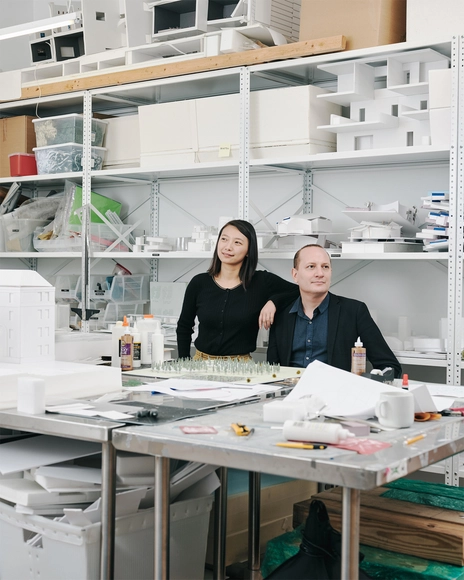
The Second Studio (formerly The Midnight Charette) is an explicit podcast about design, architecture, and the everyday. Hosted by Architects David Lee and Marina Bourderonnet, it features different creative professionals in unscripted conversations that allow for thoughtful takes and personal discussions.
A variety of subjects are covered with honesty and humor: some episodes are interviews, while others are tips for fellow designers, reviews of buildings and other projects, or casual explorations of everyday life and design. The Second Studio is also available on iTunes, Spotify, and YouTube.
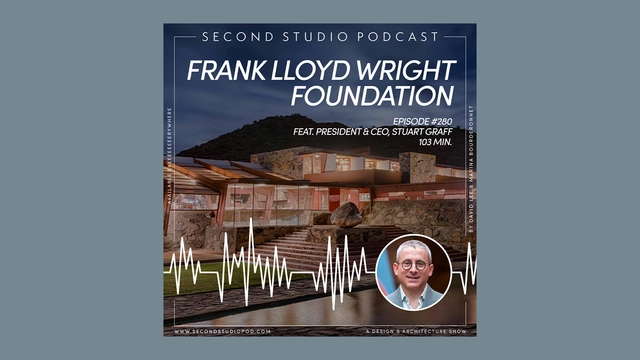
This week David and Marina are joined by Stuart Graff, President and CEO of the Frank Lloyd Wright Foundation to discuss the foundation’s mission; the role cultural institutions play in supporting creative professions; preserving and furthering Wright’s legacy through programs and collaborations; intellectual property; Stewart becoming CEO of the foundation; running a successful non-profit; Frank Lloyd Wright’s principles; and more.
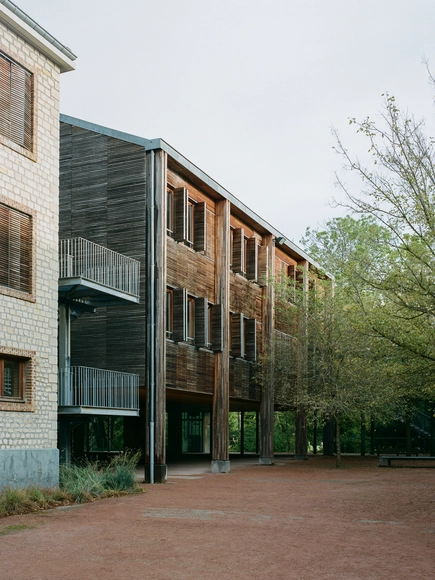
To wholly document a survey on the state of French forests, the wood industry, and forestry R&D, François Leclercq and Paul Laigle, from the architecture and urban planning practice Leclercq Associés, are in collaboration with architecture editor Michèle Leloup and photographer Cyrille Weiner.
The Wood That Makes Our Cities explores the environmental, economic, industrial, and technical challenges involved in the use of wood for large structures and urban architecture and assesses the future of wood construction. The book retraces the practice’s twenty years of experience with wood construction through five of its projects, featuring contributions by historians, researchers, manufacturers, timber producers, and forestry specialists.
Architecture, with all its practitioners, academics, and theorists, have long been exploring utopic ideas with hopes of turning them into something concrete for the sake of a better world. But as the world heads towards an even greater polarization than it currently has, the architecture practice found itself having to adapt to the current systems of the planet, constrained by its ever-growing conditions. Slowly, practitioners realized that utopia can not truly be seen as the ideal solution, and needed to be readapted or morphed with other concepts for it to actually work. DETAIL's latest monograph BIG. Architecture and Construction Details / BIG. Architektur und Baudetails, a rapport between BIG’s imaginative, unbuilt utopias and functional, built architecture, explores 20 projects from the firm's workshop.
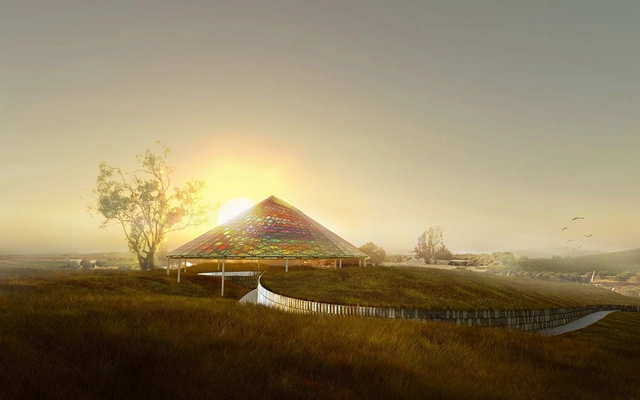
Studio Other Spaces, founded by artist Olafur Eliasson and architect Sebastian Behmann, has unveiled its wine tasting pavilion for California wine producer The Donum Estate. The design weaves together various elements of the site in what the designers describe as a vertical panorama, and essentializes a vertical cut through the landscape and the conditions that make for a thriving vineyard, proposing a holistic experience addressing all senses. The roof’s colored glass tiles represent an abstract calendar depicting the yearly averages of parameters such as wind intensity, temperature and humidity.
“Since I remember myself, I have wanted to be an architect… I could see the way that neighborhoods were organized. I could see the separation. I could see the frontier areas between the Palestinian community and the Jewish majority,” expresses Eyal Weizmanin conversation with Louisiana Channel, in regards to understanding the ‘political significance’ of architecture and the potential of the occupation as a critical tool for understanding the world.
Eyal Weizman was interviewed by Marc-Christoph Wagner at Forensic Architecture’s studio in London, in April 2022. As the head of Forensic Architecture, he is renowned for his part within the multidisciplinary research group, using a combination of architectural technologies and techniques to investigate instances of state violence and violations of human rights across the globe. Growing up in Haifa, Israel he developed an understanding of the political connotations within architecture from an early stage.
Western aesthetics is based on the mathematical analysis of an object's formal structure, using classical beauty laws such as balance, symmetry, and the golden mean. Eastern aesthetics differ in that, as it emphasizes intuitive experience, such as "white space" in traditional Chinese painting, through emotional communication with the "imagery" to produce a certain "Conception." The contrast between reality and emptiness allows the viewer's imagination and feelings to flourish, allowing them to realize "showing the breadth of heaven and earth even in a square inch place."
America’s housing crisis is a longstanding problem. But recent reports of private hedge funds buying up detached houses and townhouses is likely to make an already difficult situation even worse. When hedge funds purchase such properties, those homes are not likely to come back on the real estate market. They are gone for now—and probably for the long term.
https://www.archdaily.com/983096/how-private-equity-is-making-the-housing-crisis-even-worseR. John Anderson
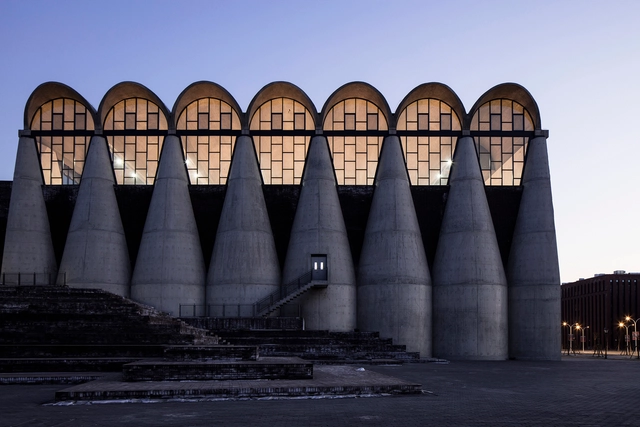
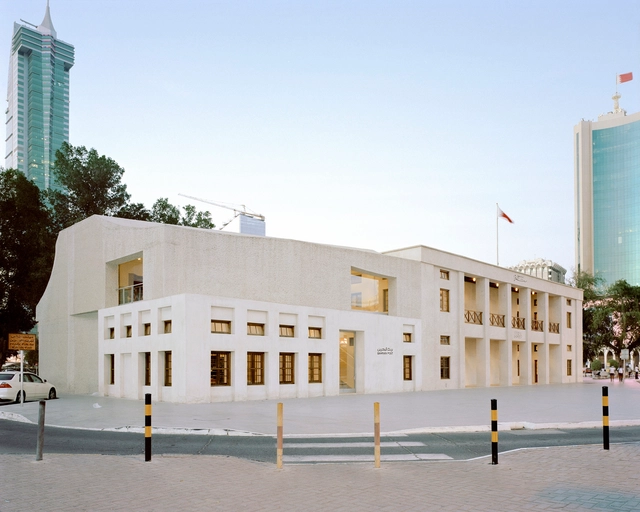
The Aga Khan Award for Architecture (AKAA) has announced its 20 shortlisted projects for the 2022 award cycle. Competing for the US$ 1 million prize, one of the largest rewards in architecture, the 20 architectural developments located in 16 different countries, were selected by a Master Jury from a pool of 463 projects nominated for the 15th Award Cycle (2020-2022). The jury, among which are Anne Lacaton, Francis Kéré, Nader Tehrani, and Amale Andraos, will meet again this summer to examine the on-site reviews and determine the final recipients of the Award.
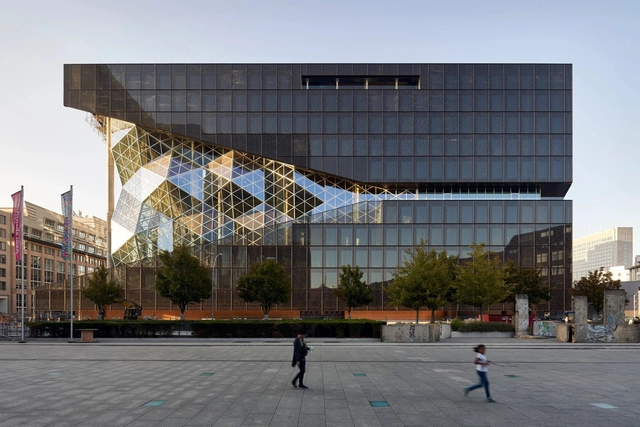
Berlin is a city defined by an eclectic mix of style and a rich history. It's built environment has been dramatically shaped by a series of municipal construction programs, and in turn, a past of extensive demolition, planned residential areas, and diverse new cultural projects. Combined with influences across Europe, Berlin's contemporary architecture showcases new ideas on building concepts, forms and facades.
SO-IL Architects has been chosen to develop the conceptual design for a new building for the Williams College Museum of Art (WCMA) in Williamstown, Massachusetts. The project is set to provide the first stand-alone facility for WCMA, and will feature teaching spaces, collections, exhibitions and programs that will transform the museum’s engagement with the campus, as well as the Williamstown community and the Berkshires cultural region. The architecture firm was commended for its "inventive and enthusiastic approach to the museum’s teaching mission", putting art at the center of academia, student life, the campus, and community.
Cities across the Northern Hemisphere are preparing for the upcoming summer months, which are expected to be warmer and drier than average. The European Center for Medium-Range Weather Forecasts warns about temperatures rising above the norm in central and southern Europe this summer. Similarly, the forecast for the Unites States predicts hotter weather and below-average rainfall likely to fuel a megadrought. This poses threats for citizens, especially in larger cities, where heat-absorbing asphalt and waste heat generated by energy use create a “heat-island” effect. It translates to temperatures being up to 10°F (5.6°C) warmer in cities compared to the surrounding natural areas.
In the history of architecture the concept of beauty has always been linked to different factors that represent, mainly, the values of society in a given period. The zeitgeist is certainly crucial to these definitions, so something that was once considered beautiful in the past is likely to be given another connotation nowadays. In this sense, aesthetic preferences in architecture seem to be linked to symbolic references implicit in the construction itself and in its relation with the world. They are preferences that express convictions, ideologies and positions, as well as moral, religious, political feelings and, of course, class status symbols.
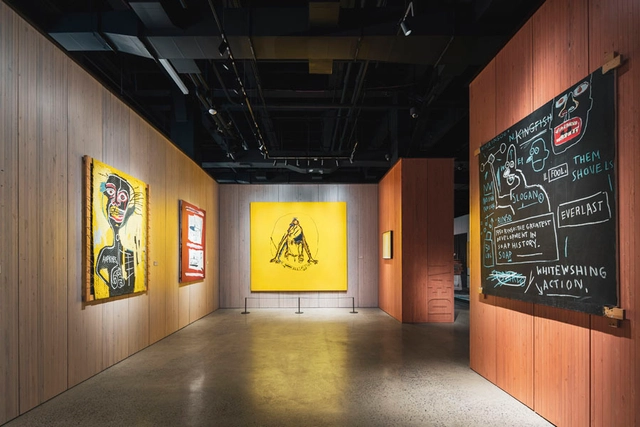
Immense fame, especially when left behind by a deceased artist, may lead to a hierarchal understanding of their legacy—leading one aspect to overshadow other crucial dimensions of their life and oeuvre. Brooklyn-born Jean-Michel Basquiat’s meteoric recognition as an artist and a cultural influence throughout the 1980s led to his energetic mind-map-like paintings being acquired widely by museums and private collections alike, in addition to being mass-marketed in a variety of products, such as fast-fashion clothing and New York-related souvenir items. Basquiat: King Pleasure, a new exhibition organized by Jean-Michel’s sisters, Lisane Basquiat and Jeanine Heriveaux, breaks down the myth surrounding the late artist’s legendary rise from the gritty streets of 1980s New York to a rarely-achieved artistic success.
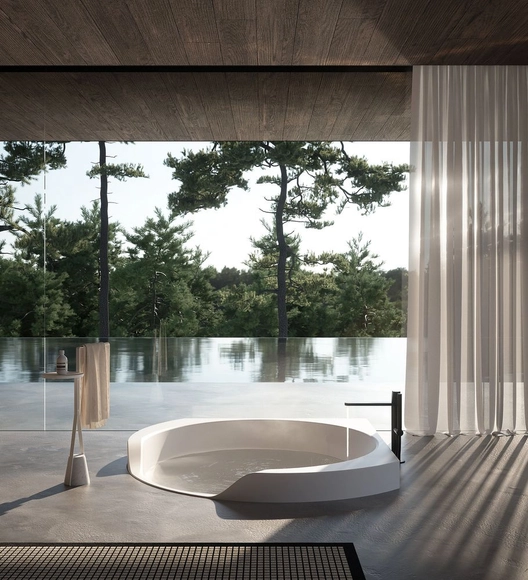
Throughout the years, bathrooms have been viewed as purely functional spaces strictly programmed for hygiene and privacy. Becoming smaller and more practical, the utilitarian, space-saving shower stall has often been considered the norm, pushing the bathtub into obsolescence or as an additional luxury for those with extra space (and money). Recently, however, as lifestyle changes driven by the pandemic have placed wellness as a top priority, the notion of the bathroom as a sanctuary has really taken hold. Contemporary bathrooms have thus been reimagined, shifting towards open spaces of relaxation, comfort and recuperation. And tubs – with their inherent meditative nature – have returned to the spotlight.
Only a few days left until the annual inauguration of Milan Design Week 2022, one of the biggest international design events which features the Fuorisalone and Salone del Mobile. From the 7th till the 12th of June 2022, the streets of Milan will be hosting an array of architectural interventions and exhibitions curated by local and international designers as part of the Fuorisalone. And at the Fiera Milano | Rho, Salone del Mobile 2022, the awaited furniture and interior design event of the year, will be celebrating its 60th anniversary with themes and projects that reflect on “inclusive” design, fostering "autonomy, comfort, movement, usability, interaction and safety for all".
French architect Renée Gailhoustet has been awarded the 2022 Royal Academy Architecture Award for her pioneering work designing public housing and neighborhoods in and around Paris. The award is given annually by London's Royal Academy to individuals or practices whose idea or body of work has positively contributed to the public.


.jpg?1654436110 "Sanjaynagar Slum Redevelopment Project - Technical team holding a meeting with members of the Slum Committee. Image Courtesy of Community Design Agency")





























.jpg?1654151626 "© Ivane Katamashvili")






.jpg?1654020023&format=webp&width=640&height=580)
.jpg?1654020013 "Aubervilliers by Renée Gailhoustet . Image © Marc Pataut")
.jpg?1654020163 "Le Liegat Ivry sur Seine by Renée Gailhoustet. Image © Valerie Sadoun")
.jpg?1654020006 "Aubervilliers by Renée Gailhoustet . Image © Marc Pataut")

.jpg?1654020023)


