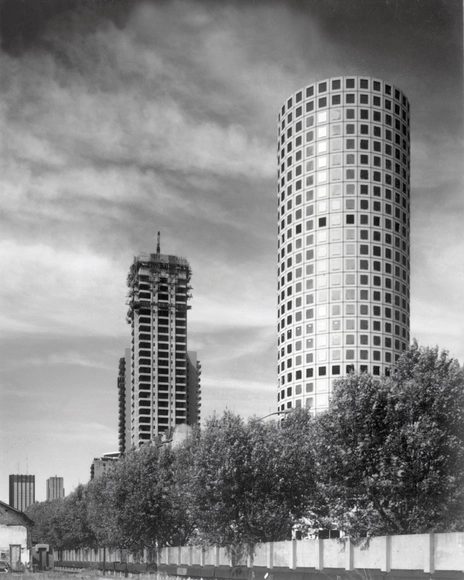
Towards the end of the 1970s, the architectural office of Flora Manteola, Javier Sánchez Gómez, Josefina Santos, Justo Solsona and Rafael Viñoly (MSGSSV) together with Carlos Sallaberry began to devise the project for the Prourban Building, which would become one of the most emblematic buildings in the city of Buenos Aires and would be popularly nicknamed "El Rulero".
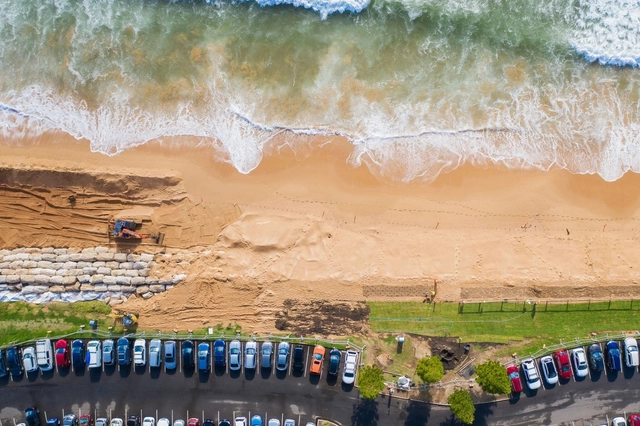
At the onset of the coronavirus pandemic in March 2020, affluent Parisians flocked to second homes on France’s Atlantic coast as a nationwide lockdown came down on the country. In June 2020, as the lockdown was eased in England, residents headed to seaside towns like Bournemouth to soak in sunny weather. The former scenario reflects the widening gap between France’s wealthy and the poor, whilst the latter is a reflection of the democratizing power of public-access beaches.
In both situations, what is sought out is the ecological calmness usually found on beaches. Globally, however, there’s an unsettling phenomenon, where intertwined with climate change and policy decisions, beaches are increasingly becoming private, inaccessible spaces.
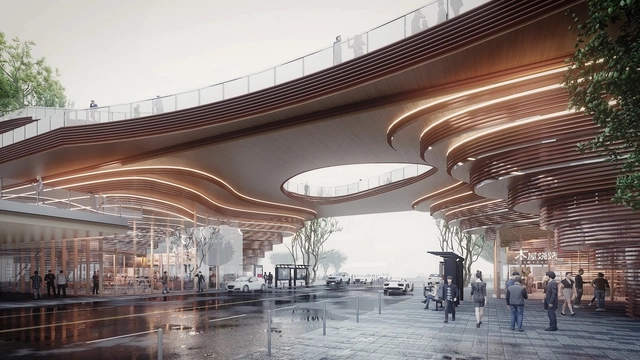
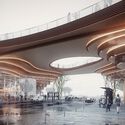
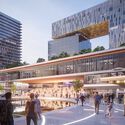
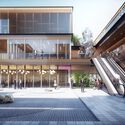
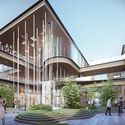
Aedas has unveiled the design of the Hangzhou Yun He Wan International Tourism and Leisure Complex in Hangzhou, China. Located in the southern area of the Grand Canal New Town in the Gongshu District of Hangzhou, the site is the first phase of a larger project, starting off as a vibrant international tourism and leisure complex that highlights the waterfront of Yun He Wan and the historical remains of the nearby industrial pier.
In Mexico, until recently, unknown to many, an architectural project has been slowly revealing itself to society. The Environmental Sciences Museum (MCA for its Spanish acronym) of the University of Guadalajara in the state of Jalisco is one of the most ambitious architectural projects in Western Mexico. Not only because of its unusual architecture but also because of how it seeks to communicate the mission of a natural history museum, one that can hardly be called traditional.
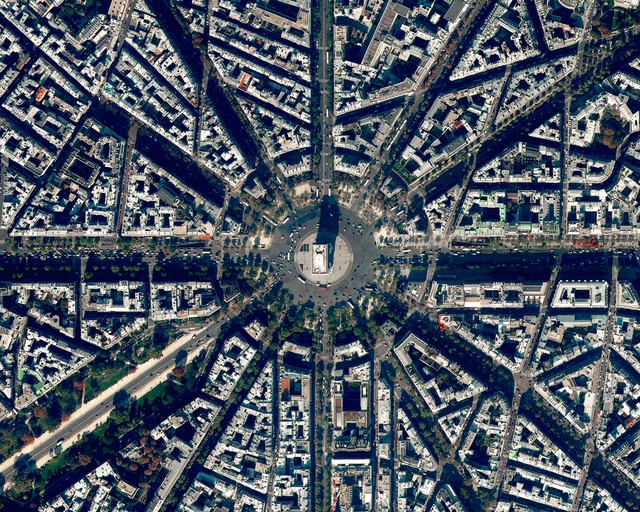
Arch of Triumph. Created by @benjaminrgrant, source imagery: @digitalglobe
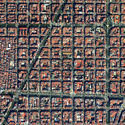
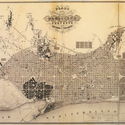
In theory, urban planning is a process of elaborating solutions that aim both to improve or requalify an existing urban area, as well as to create a new urbanization in a given region. As a discipline and as a method of action, urban planning deals with the processes of production, structuring and appropriation of urban space. In this sense, its main objective is to point out what measures should be taken to improve the quality of life of the inhabitants, including matters such as transport, security, access opportunities and even interaction with the natural environment.
If you’re reading this right now, or have read an article on ArchDaily, it’s because you were in a place that enabled you to connect to the internet. Think about a time when you found yourself in a dead zone, where the internet was lagging and you were unable to connect your computer to WiFi to finish an assignment or even without the ability to connect your phone to quickly Google something. You likely dashed to the nearest coffee shop, or place where WiFi was more reliable, just to have the feeling of being online again. The internet, in an ideal world, is equally open to all providing access to knowledge and the ability to easily connect with others. But what happens when you don’t have internet? How is your life impacted if you’re on the wrong side of the digital divide and live in an area without broadband access?
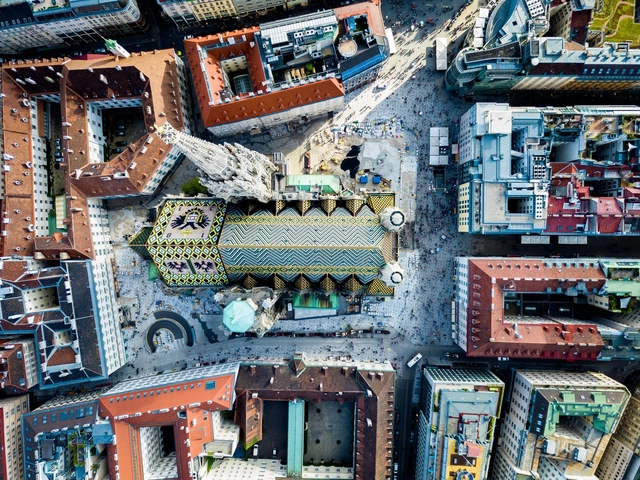
Vienna in Austria has topped the rankings of The Economist Intelligence Unit (EIU) 2022 Global Liveability Index, gaining back its previous position from 2019 and 2018, mostly for its stability and good infrastructure, supported by good healthcare and plenty of opportunities for culture and entertainment. Western European and Canadian cities dominated the top positions with Copenhagen, Denmark in second place and Zurich, Switzerland, and Calgary, Canada in third place. Adding 33 new cities to the survey, one-third of which are in China, bringing the total up to 172 cities, the classification excluded this year the city of Kyiv, due to Russia’s invasion of Ukraine.
Classified across 5 categories, stability, healthcare, education, culture and the environment, and infrastructure, the index was largely driven by the covid-19 pandemic. While covid-19 restrictions have eased in big parts of the world, liveability rankings started resembling “those seen before the pandemic”, however, the global average score remained below the pre-pandemic time. Although covid-19 has receded, a new threat to liveability emerged when Russia invaded Ukraine this year.
Lviv Regional Sports School for Children and Youth in Stryi Park. Image Courtesy of Drozdov & Partners
One of the most urgent problems faced by Ukrainians today is the unsettled situation faced by displaced citizens, along with the challenge of returning to the cities they were forced to abandon earlier this year. Ukrainian president Volodymyr Zelenskiy has shared that efforts to rebuild Ukraine will require ‘colossal investments’, and as leaders gather to work out ‘Marshall plan’ to rebuild the country, local architects have already begun developing emergency housing, healthcare, and educational facilities in cities further away from the Russian border.
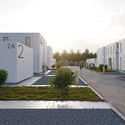
As a temporary solution to the displacement of north-eastern and eastern Ukrainians, Drozdov&Partners, together with Replus Bureau and Ponomarenko Bureau, have begun refurbishing shelters for internally displaced persons (IDPs) in Lviv and its region, using school campuses and other large-scale facilities as temporary housing.
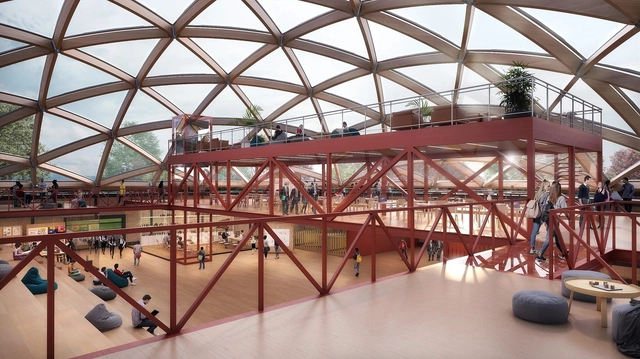
Architecture practice Grimshaw has revealed designs for the Futures Institute at Dollar Academy (FIDA) in Scotland, UK, an open-access learning platform developed by the Dollar Academy, one of Scotland’s leading independent schools. The Institute’s new building will receive the country’s first Living Building certification.
FIDA was launched in May 2021 to tackle fundamental challenges in education: providing equitable access and closing the poverty-related attainment gap; finding compelling alternatives to traditional teaching and exam systems; and addressing sustainability. The initiative invites young people across Scotland to participate in innovative projects rooted in the United Nations Sustainable Development Goals. These challenges include workshops, skills-based courses, design challenges, and competitions, all offered in-person and via an online platform to enable the broadest possible participation.
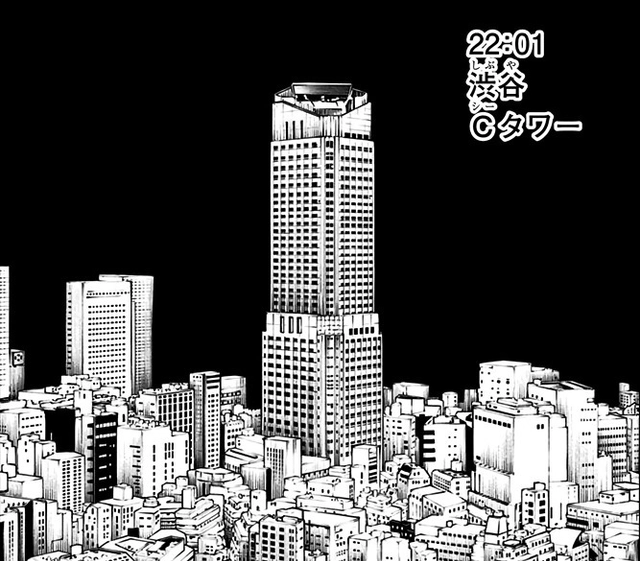
Manga is an umbrella term for a wide variety of comic books and graphic novels originally produced and published in Japan, and unlike western comic books that we may be more familiar with seeing printed in full color, are primarily published in black and white. Manga is the Japanese word for comics published in Japan, with the word itself comprising of two kanji characters: man (漫) meaning 'whimsical' and ga (画) meaning 'pictures'.
Not to be confused with the popular Japanese medium of anime, manga is print media whilst anime stands as visual media that is either hand-drawn or computer-produced, combining graphic art, characterization, cinematography, and other forms of creative and individualistic techniques. It is most notable that a lot of anime is developed as a result of a successful franchise that began as mere manga novels, but what continually unites the medium of manga and anime is the use of diverse art styles throughout various narratives that have been constructed for us consumers to follow.
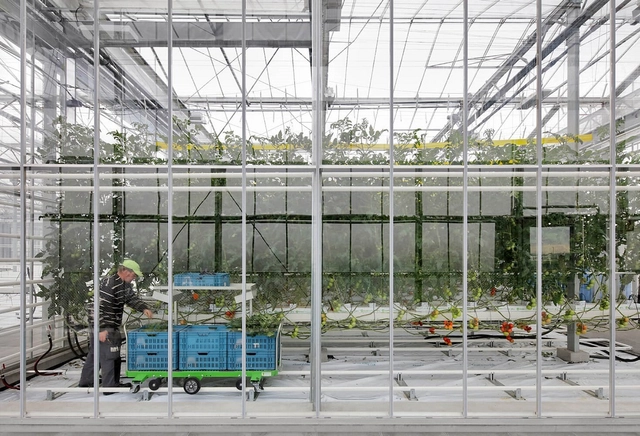
Do you know what urban farms are? Have you ever thought about growing your own food at home in your garden or in specialized freezers? Transporting food for consumption in cities is one of the major environmental (and financial) pollution problems in the world today.
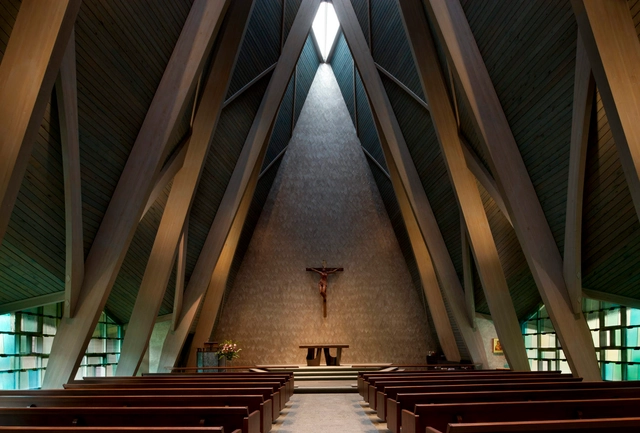
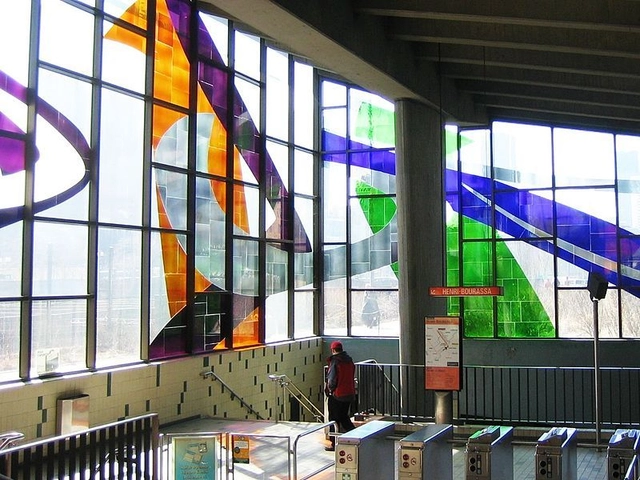
In terms of architectural enhancement, stained glass is often pieced together in order to produce depictions of decorative art, allowing light to filter and penetrate a particular structure or building. As a component it is both decorative and a variety of window, allowing a substantial and sufficient amount of light into a space, for atmospheric and beneficial effect.
Arteries of hope by Partner-z Architects. Image Courtesy of Partner-z Architects
This week’s curated selection of Best Unbuilt Architecture highlights educational facilities submitted by the ArchDaily community. From a contextual Earth school in Senegal, to a borderless, collaborative school in Vietnam, this round up of unbuilt projects showcases how architects infused nature with architecture, offering students the chance to engage with the landscape and learn more about their surroundings from their academic institutes. The article also features projects from Lebanon, Switzerland, Armenia, Ukraine, and Greece.
The EPFL Innovation Park (EIP) has selected 3XN | GXN and IB (Itten+Brechbühl SA) to design and build a new "ecotope", expanding the university's Science Park and Innovation Square to a new site, west of the main EPFL campus in Ecublens, Switzerland. The Ecotope is set to be a vibrant and innovative marketplace for ideas, serving as an "ecosystem in which policymakers, researchers, investors, executives, students, and citizens can come together for open dialogue or debate.” The concept of the project not only brings together leaders in business, science, and technology, but also puts a high priority on access to green spaces and biophilic principles.
First Place - Federico Fiorino. Image Courtesy of The Outsider magazine and the City Municipality of Maribor
The Outsider magazine and the City Municipality of Maribor have announced the winners of the international competition “Floating Pavilion on the Drava River.” The purpose of the competition was to obtain an innovative design for a floating pavilion that would have two main functions: a space for smaller events during the Lent Festival and a space for contemplation by the river. The City Municipality of Maribor will invite the winning candidate to participate in the implementation of the project.
Clearly, graphic designers are not architects, but collaborative projects between these two fields of knowledge, which intersect in their details, can work well.
Creative industry as a sector has evolved, and many people are now in new fields. If you're collaborating, you can move quickly and we've covered that here. The trend is to be collaborative, and very different from 25 years ago, when you should be a graphic designer alone doing layout and paper weights or an architect isolated in an office running autocad.
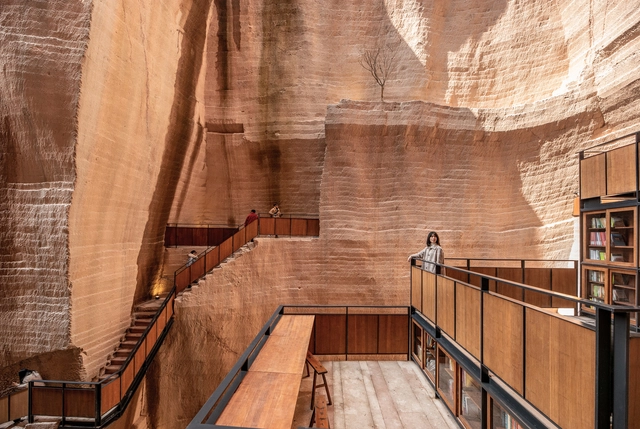
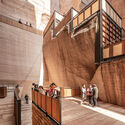
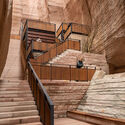
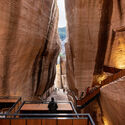
Today, reusing and adapting existing spatial resources is regarded around the world as an important contribution to sustainable development, and new challenges are thus also emerging at the margins of classic building tasks due to the changing assessments regarding whether to preserve or demolish. Xu Tiantian’s projects in the quarries of Jinyun combine aspects of landscape planning, interior design, artistic installations, and social planning with an economic revitalization of the rural area. In this way, a ruined and exploited landscape becomes a sign of departure with which a new sustainable coexistence can be linked to a narrative about the history of the location.
There are extraordinary connections between the natural world and the capacity for creativity in human beings. In his book Last Child in the Woods, journalist and author Richard Louv observes: “Nature inspires creativity in a child by demanding visualization and the full use of the senses. Given a chance, a child will bring the confusion of the world to the woods, wash it in a creek, turn it over to see what lives on the unseen side of that confusion.” He concludes that in nature, “a child finds freedom, fantasy, and privacy: a place distant from the adult world, a separate peace.” The architect Frank Harmon likewise wrote touchingly about the outdoors, woods, and water as perfect settings for cultivating a thirst for learning and discovery: “Children raised by creeks are never bored. Creek children don’t know about learning by rote, neither are they conditioned to working nine to five. Berries are their first discoveries, and birds’ nests, and watching the stars come out. Later they discover books. To creek children, learning is discovery, not instruction.”
https://www.archdaily.com/984628/an-architectural-journey-through-the-woodsMichael J. Crosbie & Suzanne Bott












.jpg?1656927557&format=webp&width=640&height=580)
.jpg?1656927557 "Lviv Regional Sports School for Children and Youth in Stryi Park. Image Courtesy of Drozdov & Partners")
.jpg?1656927412 "Lviv Regional Sports School for Children and Youth in Stryi Park. Image Courtesy of Drozdov & Partners")
_(1).jpg?1656927415 "Lviv Regional Sports School for Children and Youth in Stryi Park. Image Courtesy of Drozdov & Partners")
.jpg?1656927557)








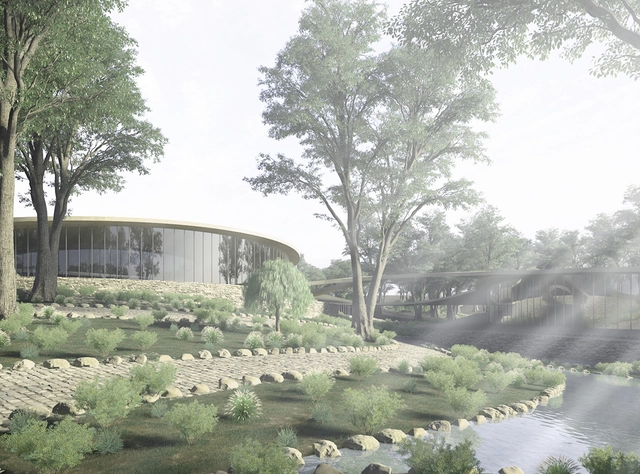

.jpg?1656583509 "The Creeper – COAF Smart Campus Armavir by TarberAK Architectural Studio; TL Bureau. Image Courtesy of TarberAK Architectural Studio; TL Bureau")


.jpg?1656608047&format=webp&width=640&height=580)
.jpg?1656609084 "© 3XN")
.jpg?1656609092 "© 3XN")
.jpg?1656608128 "© 3XN")
.jpg?1656608414 "© 3XN")
.jpg?1656608047)