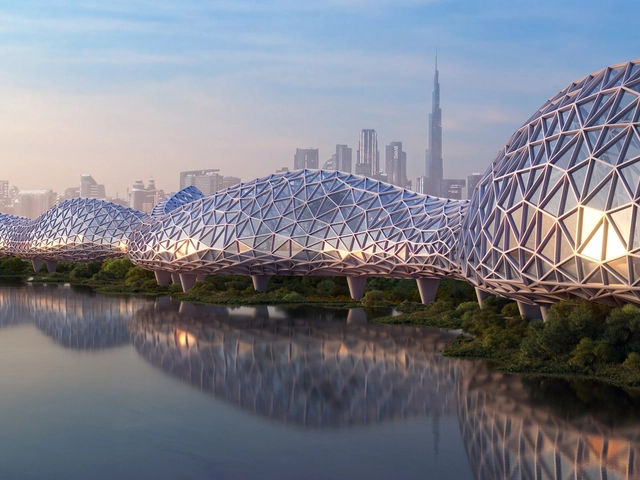
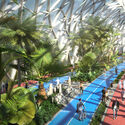
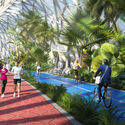
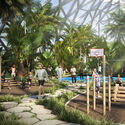
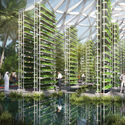
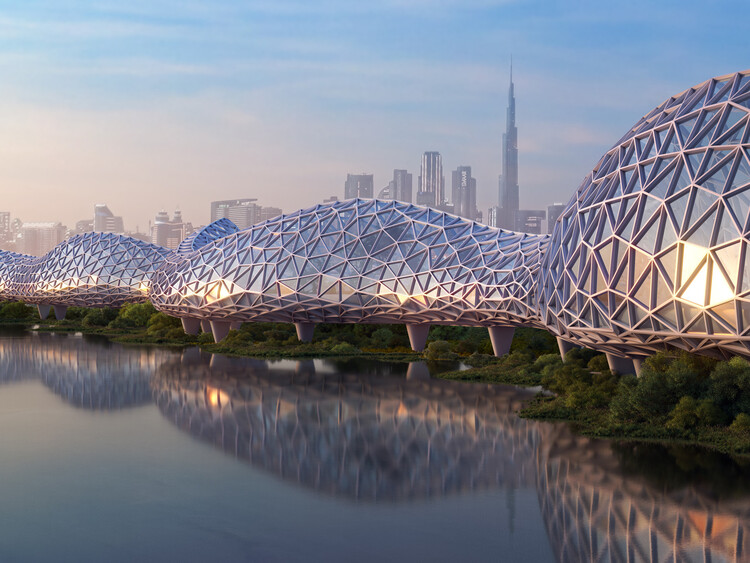
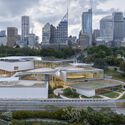
Designed by URB, The LOOP is a 93-kilometer-long sustainable highway that aims to encourage Dubai’s residents to opt for a healthy mode of transportation. The structure provides a climate-controlled all-year environment to make walking and cycling the preferred type of transportation in the city. The initiative aligns with Dubai’s 20-minute city initiative, which hopes to see 80% of Dubai’s residents commute to work by walking or cycling. The project is currently in the research and development phase.
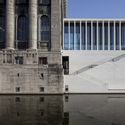
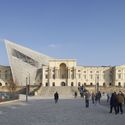
Museums reveal local and shared heritage. As cultural institutions embedded in the fabric of modern life, each museum serves as a window into history and human exchange. Made to promote understanding and provoke new ideas, these monumental buildings are inspired by spatial exploration. With some of the most influential museum projects in the world, Germany is home to a range of diverse institutions showcasing unique approaches to curating, taxonomy and spatial organization.
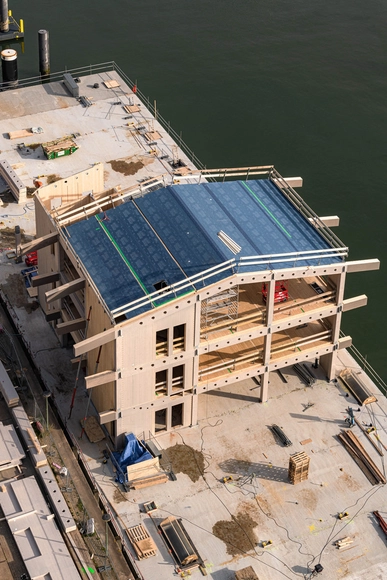
Everyone who has ever built anything—a model, a birdhouse, or small pieces of furniture—has a clear sense of the amount of things that can go wrong during the construction process. A screw that is impossible to tighten fully, a warped wooden board, an inattention or a miscalculation that can frustrate plans instantly. When we transport these small inconveniences to a building scale, with countless processes and many different people involved, we know how complex a work can become and how many things can get out of control, taking more and more time and requiring more and more resources to finish. And when we talk about a building that needs to float, be completely self-sufficient, and, after fulfilling its useful life, be completely reused—could you imagine the technical challenges of building something like this?
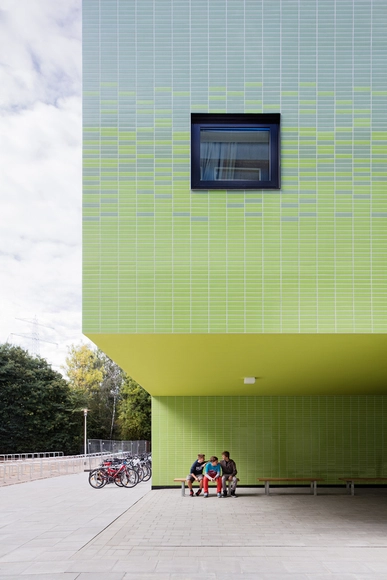
“Color is life; for a world without color appears to us dead.” Distinguished painter Johannes Itten described with these words the exceptional power of color in our perception of the world. As a sensory event, color not only defines what we see, but also how we feel and think; it has been shown to alter productivity, inspire decision-making, shape our perspective, and influence our well-being. Especially in architecture, these effects materialize and reach their maximum splendor. Design is, after all, a visual form of communication, and color palettes –coupled with light, shadow, texture and sheen– play a critical role in conveying a building’s message. They create the ambiance that supports the function of a space, completely transforming user experience. Even the greats have recognized this power: “Polychromy is as powerful an architectural tool as the plan and section,” Le Corbusier once said.
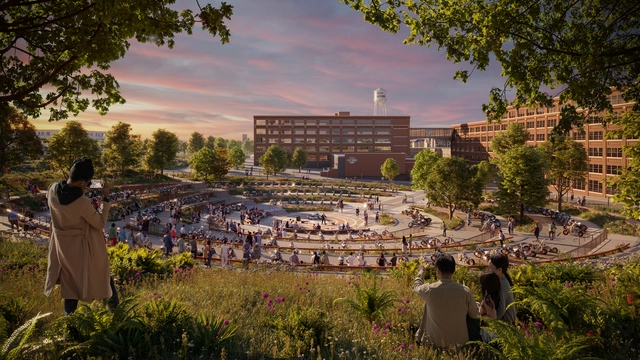
Heatherwick Studio has been commissioned to redesign and transform a central element of Harley-Davidson’s Headquarters in Milwaukee, US, the Juneau Avenue campus. The location is set to become a public park and green gathering space for the employees of the motorcycle company, as well as for the local community. In its center, the park features a large-scale amphitheater and sunken multi-use events space designed to be accessible to motorcycle riders. The project is set to break ground in 2023, with the park becoming available for use by the summer of 2024.
If the last pandemic year was a perfect occasion to reflect and debate on wellness and digitalization, this 2022 was a tremendous opportunity to deepen and comment on some other of the most pressing issues in architecture: from carbon neutral construction to the democratization of design. Along this line, with each of the different topics that ArchDaily develops each month, we asked an open question for you -our dear readers- to actively join in with the contribution of your experiences and knowledge.
After reading and compiling a huge number of messages received, from construction professionals, students, and architecture enthusiasts, it is time to present a summary of the main positions on each topic. Thank you very much for your opinions and we look forward to your comments for 2023!
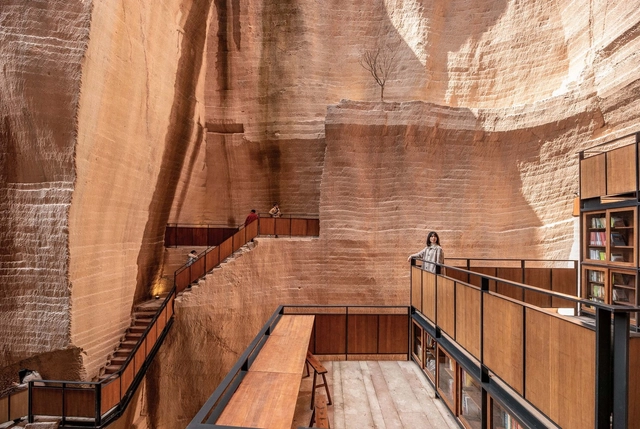
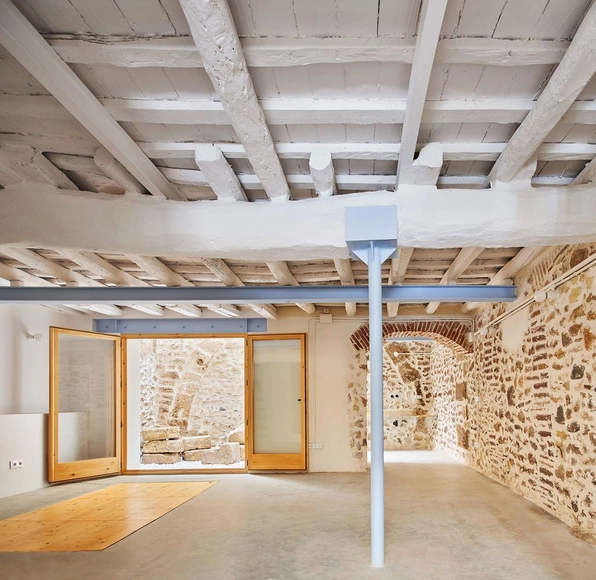
A widely discussed topic lately, the circular economy encompasses a whole production and consumption system which pursues the reuse of existing materials as long as possible. However, how does this ongoing concept involve architecture, design and its aesthetics? Joining the shift towards a circular future, architecture is discovering how circular operations and the reuse of materials can result in new aesthetics, as well as in an overall improvement of its environmental impact.
Learning how circularity (and material reuse) creates distinctive aesthetics, the following article analyzes the way projects are reinterpreting their design process throughout three strategies: detachable, rustic and malleable architecture.
SANAA co-founder Kazuyo Sejima and influential Canadian architect Phyllis Lambert have been awarded the Jane Drew and Ada Louise Huxtable prizes, respectively, as a recognition of their work and commitment to design excellence and for raising the profile of women in architecture. The Jane Drew Prize for Architecture commends Kazuyo Sejima for her achievements as an architect, while the Ada Louise Huxtable Prize recognizes Phyllis Lamber’s contribution to the wider architectural industry. The two awards are presented by UK-based publications Architects’ Journal and The Architectural Review.
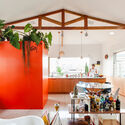
One plant makes all the difference with its color, texture, movements, and the celebration of its flowering. The green inside the homes offers several benefits. However, besides knowing which species are easier to grow, looking for more effective ways to blend the plants with the room can enhance the spatial experience. That is why we've selected some tips for placing the vases and planters around the house (or not).
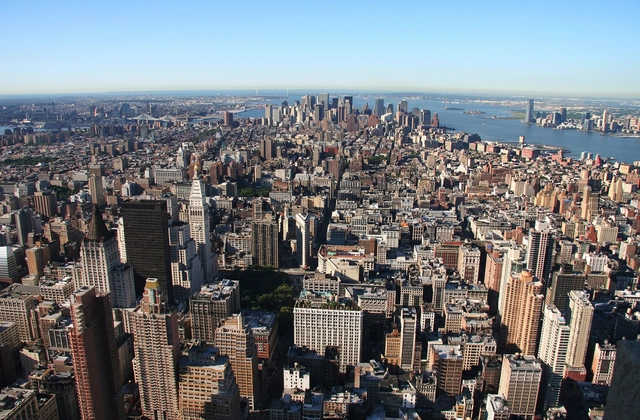
New York City is one of the most exciting places in the world. As an epicenter for the arts, media, and culture, New York has a rich history and a promising future, told mainly through its architecture. Perhaps more known for iconic buildings like the Empire State Building and the Chrysler Building, or even mega-tall residential towers like 432 Park Avenue that have been on the rise, New York also has an abundance of buildings that tell a different story about the history of the Big Apple.
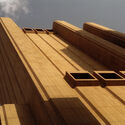
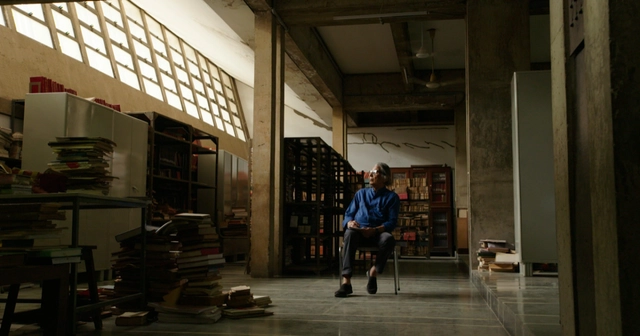
“I am not an architect,” he says with a sparkle in his eyes, “I am merely a person seeking out their destiny.” To the late pioneer of Indian modernism, Balkrishna Vithaldas Doshi, architecture was a practice of self-discovery. The veteran’s stellar works of poetic functionality resulted from a humanist philosophy bearing the influence of modernist principles, Mahatma Gandhi, and Indian spiritual texts. Doshi believed that architecture was synonymous with life - a vehicle for constant celebration; a medium for heightened experiences. His greatest contribution to the architecture community was his powerful words of wisdom that echo the timelessness of his structures.
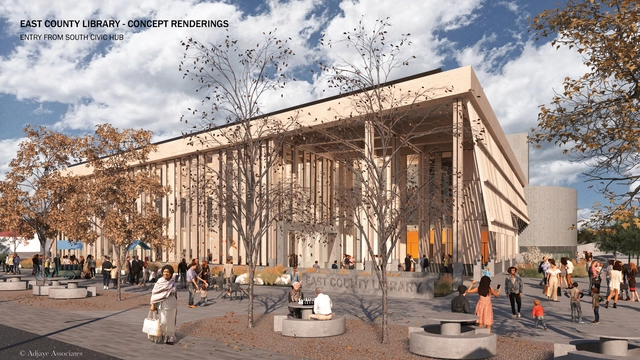
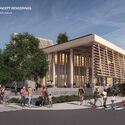
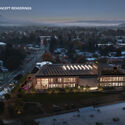
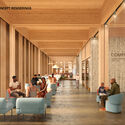
Adjaye Associates, in collaboration with Holst Architecture, the prime architect of record, have unveiled the first renderings for the new East County Library in Portland, Oregon, a new facility that will provide a diverse range of services and programming. The design of the 95,000-square-foot building is informed through extensive community engagement and feedback. Several local organizations aid these efforts by organizing public community events, focus groups, teen outreach, and surveys. As the project is currently in the schematic design phase, the images presented are early drafts, likely to change to reflect the input received.
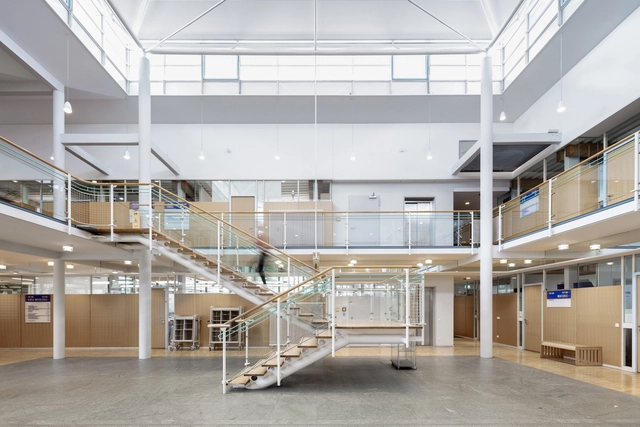
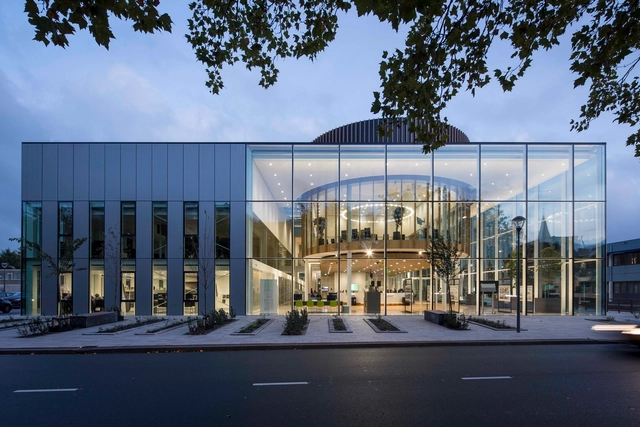
The DAM Preis for Architecture in Germany 2023 has been awarded to Auer Weber for the Extension of the Starnberg District Office. Honoring yearly outstanding buildings in Germany since 2007, the DAM Prize has been bestowed by Deutsches Architekturmuseum (DAM) for the seventh time, in close cooperation with JUNG as a cooperation partner. Fritz Auer and Dominik Fahr from Auer Weber as well as Stefan Frey from Starnberg District Office as the client's representatives received the award, during a ceremony held on January 27, 2023. This year's finalist projects included works by Allmann Sattler Wappner, ELEMENT·A Architekten and Hiendl Schineis Architektenpartnerschaft, Hütten & Paläste Architekten, and LRO Lederer Ragnarsdóttir Oei.
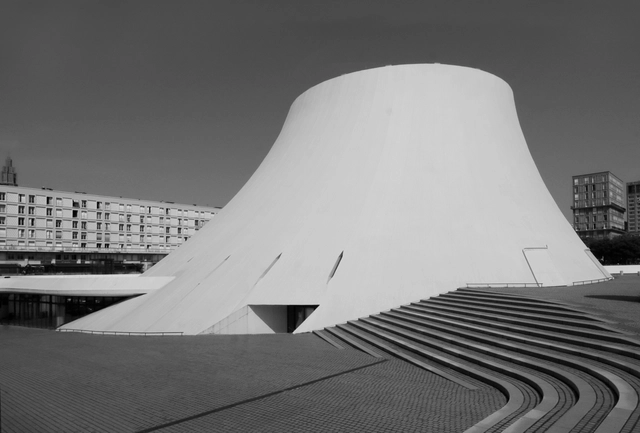
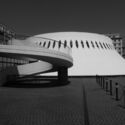
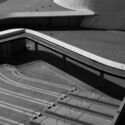
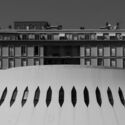
Espace Oscar Niemeyer is a cultural center designed by Oscar Niemeyer in the port city of Le Havre, France. The project’s location is inside the urban reconstruction area conceived by the rationalist architect Auguste Perret after the destruction of the city’s downtown area in World War II.
Somewhere between 1914 and 1915, Le Corbusier designed the Maison Dom-Ino, a groundbreaking modular structure that replaced the heavy load-bearing walls with reinforced concrete columns and slabs. The open floor plan with minimal thin elements, coupled with large glass facades, would ensure healthy natural daylight for the interior spaces as well as desirable architectural transparency that could blur the boundaries between interior and exterior —at least metaphorically.
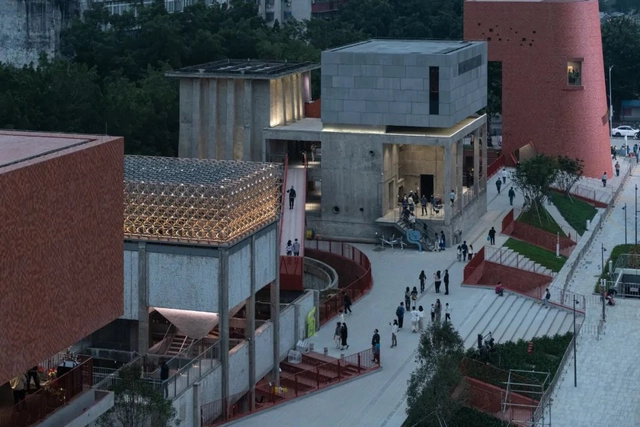
The 9th edition of the Urbanism\Architecture Bi-City Biennale (UABB) of Shenzhen and Hong Kong opened on December 10, 2022. Curated by Lu Andong, Prince Gong, and Aric Chen, the exhibition features hundreds of artists, designers, and architects from fifteen countries. The exhibition will last for three months.
The Biennale's theme, "Urban Cosmologies," encompasses both spatial symbiosis and the temporal rhythms of life. It is a source of ancient Chinese wisdom as well as a cosmology that looks to the future. The "Cosmology of the City" is a field of symbiosis, a part of the "community of life between man and nature".
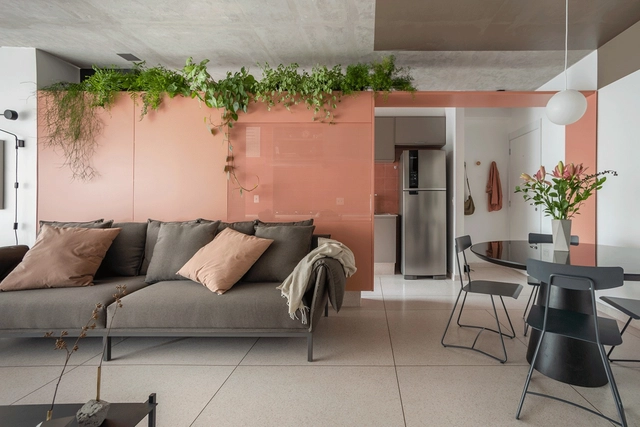
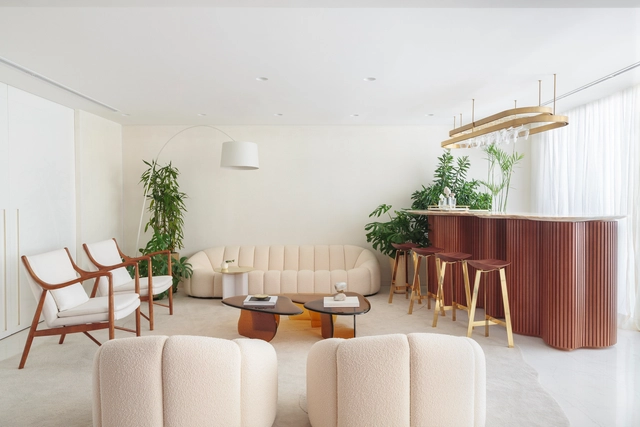
The rationality of orthogonal shapes dominates architecture, despite grand gestures that have sought to oppose themselves throughout history. In large-scale production, the right angles, repetition and modularity of the block or grid of pillars help in the efficiency of construction, despite reproducing the same spatial solutions. Unlike buildings, interior architecture can propose alternatives to break this rationality, whether from partitions or decorative objects.
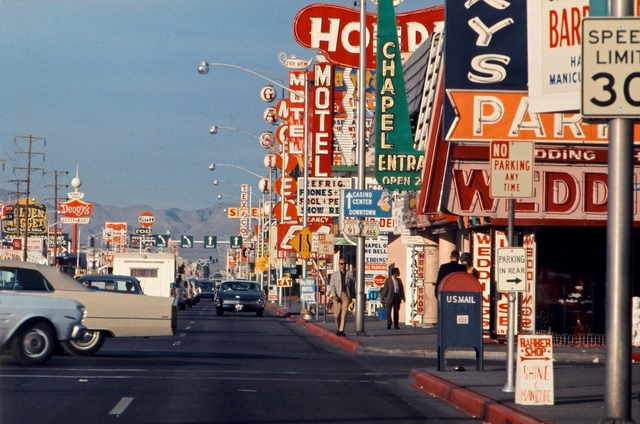
Las Vegas, sometimes known as Sin City, is perhaps the most famous desert metropolis where people gamble, and indulge in entertainment, and other vices. Each year, the city is visited by hundreds of millions of tourists who come to see its flashing lights and round-the-clock nightlife. Las Vegas has garnered so much attention that even Robert Venturi and Denise Scott Brownsought to study its urbanism, concluding with their theories on duck and decorated shed buildings in the early 1970s. But 50 years later, Vegas is still a city that constantly reinvents its architectural identity.