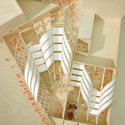
Produced by the Canadian Centre for Architecture and Lars Müller Publishers, the book, in French and English editions, bears the same title as the exhibition and is available from March 2012. Edited by exhibition curators Giovanna Borasi (Curator of Contemporary Architecture, CCA), and Mirko Zardini (Chief Curator and Director, CCA), the book extends the research produced for the exhibition and includes essays by leading academics Margaret Campbell, Nan Ellin, David Gissen, Carla C. Keirns, Linda Pollak, Hilary Sample, Sarah Schrank, and Deane Simpson.
The book investigates the historical connections between health, design and the environment, bringing to light uncertainties and contradictions in cultures informed by Western medicine. Within this framework, the essays it contains reflect on themes related to the exhibition such as the relationship between the built environment and human health; pollution; modernism and hygiene; planning strategies for dealing with urban disease; the challenges of the urban environment on health; the relationship between physical health and the built environment; urban design in an ageing society; and the impact of sun on health.
More about the book, the microsite and the exhibition after the break.
Our favorite sketchbook has gone digital! Moleskine presents The Hand of the Architect – an iPadapp featuring 378 sketches and drawings from 110 internationally renowned architects, such as Assadi, Botta, Fuksas, Graves, Gregotti, Hadid, Foster and Piano, “showing that every project always begins by hand”. All the works were collected by FAI (Italian National Trust) with the aim of raising funds to restore Piero Portaluppi’s Villa Necchi, known as a 1930s masterpiece of Italian rationalism in Milan. Sketches and drawings are accompanied by essays, captions and the biographies of the architects. You can purchase the app for $18.99 here on iTunes.
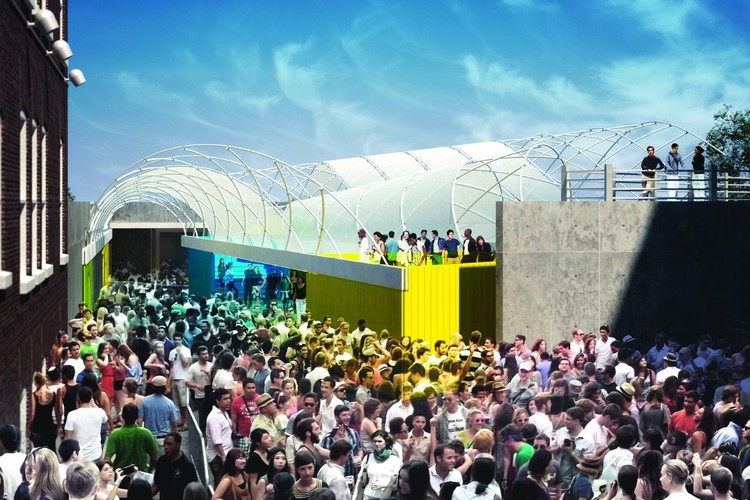
One of the greatest Mediterranean Ports is about to be transformed. Work has begun on the Old Port of Marseille as part of a series of regeneration projects to be completed in time for the city’s inauguration as European Capital of Culture in 2013. Based on French landscape architect Michel Desvigne’s and London-based architects Foster + Partners’ competition-winning master plan, the project will reclaim the quaysides as a civic space, creating new informal venues for performances and events, while traffic is relocating traffic to a safe, semi-pedestrianised public realm.
Lord Foster stated, “I know the harbor at Marseille well and it is a truly grand space. This project is a great opportunity to enhance it using very simple means, to improve it with small, discreet pavilions for events, for markets, for special occasions. Our approach has been to work with the climate, to create shade, but at the same time to respect the space of the harbor – just making it better.”
Vishaan Chakrabarti, Director of Columbia Center for Urban Real Estate, will join SHoP Architects as its seventh partner – and only the second partner not related to the firm’s founders by blood or marriage. Chakrabarti’s expertise with large scale urban development projects will allow the firm to expand their urban reach, invigorating their “think-tank” approach to confront larger architectural problems that respond to global issues. “We are thrilled to have Vishaan join the firm. His background and depth of experience allow SHoP to add expertise to our bench while continuing our firm-wide focus on both planning and building,” said William Sharples, SHoP Partner. “Our interests extend beyond building beautiful skyscrapers, museums, university buildings and airport terminals. We want to build in such a way that our buildings give back to our cities and to our clients through use of public space, density, sustainability, and innovative construction methods.”
Planned for completion in 2014, the iconic United Nations Headquarters (UNHQ) is in the middle of a $1.876 billion refurbishment project, known as the Capital Master Plan, which seeks to update the aging building with a more safe, modern and sustainable work environment. Located on the 18-acre site that was donated by John D. Rockefeller in the 1950s, the Manhattan UNHQ was designed by an international team of eleven architects who worked together in a post-World War II world to create an landmark building through collaboration rather than competition.
Continue reading for more details on the Capital Master Plan.
The Department of State’s Bureau of Overseas Buildings Operations (OBO) has shortlisted nine design teams for the New Embassy Compound in Mexico City. The design/bid/build project, scheduled for construction in fiscal year 2015, is the first solicited under OBO’s new Design Excellence program. This holistic approach to project development and delivery seeks to utilize the best methods, technologies, and staff abilities to produce facilities that are outstanding in all respects. The overall strategy focuses on the integration of purpose, function, flexibility, art, safety, security, sustainability, and maintainability.
Continue reading for more information and to review the well-known shortlisted architects.
We have been following the rising popularity of CLOG, beginning with their inaugural thematic issue on BIG and, their second issue on Apple which highlighted Jobs’ Apple Campus 2 in Cupertino by Foster + Partners. This latest architectural publication seeks to slow the pace at which architectural information is distributed, allowing people to pause and absorb the projects and ideas presented and discuss the topics at hand.
For CLOG’s Apple issue, the publication included over 50 international multidisciplinary contributors and discussed topics from ranging an interview with one of Apple Computer’s original three founders, Ronald Wayne, to articles about the innovative glass engineering, and design critique of the project. After the large success of both issues, CLOG is gearing up for their next issue and calling for submissions about renderings. For this addition, the team will address the persuasive power of renderings and their important, and perhaps dominant, role in project presentations.
Thousands gathered Saturday to celebrate the grand opening of Santiago Calatrava‘s Margaret Hunt Hill Bridge that connects east and west Dallas seamlessly over the Trinity River. A parade of builders, including everyone from those to poured the concrete to Calatrava himself, were the first to march across the new Dallas icon, followed by nearly 16,000 other people. Although the bridge is still not quite ready for vehicular traffic, the city celebrated its commencement with an impressive display of fireworks. Continue reading for more.
Today, one of the leading exemplars of classic Modern architecture reopens after a two year hiatus. The freshly renovated Villa Tugendhat underwent a monumental restoration and rehabilitation, starting in January 2010, with the aim of preserving and conserving the original building substance and layout, including the construction details, materials and technical system. Renewal work also included the lavish interiors and lush garden. Continue after for the break to learn more about Mies van der Rohe’s renewed masterpiece.
eVolo is pleased to announce the winners of the 2012 Skyscraper Competition. Established in 2006, the annual competition recognizes outstanding ideas that redefine skyscraper design through the use of new technologies, materials, programs, aesthetics, and spatial organizations, along with studies on globalization, flexibility, adaptability, and the digital revolution. This is also an investigation on the public and private space and the role of the individual and the collective in the creation of a dynamic and adaptive vertical community. The award seeks to discover young talent, whose ideas will change the way we understand architecture and its relationship with the natural and built environments.
Continue reading to view the 2012 winners and honorable mentions!
Space Group, based out of Oslo, Norway, recently completed the master plan for Lexington, Kentucky’s new Arena, Arts and Entertainment District. Beating out 13 other architectural firms, the 46 acre development will incorporate a basketball arena, convention center, performing arts center, school of the arts, offices, retail shops and housing. A unique aspect that was incorporated was the distinctive compactness of the existing downtown area and its proximity to residential neighborhoods. In order to accommodate predicted future growth, Space Group conceived a strategy that mirrors the footprint of the existing downtown district and projects it along an axis in line with the Rupp Arena. More info after the break.
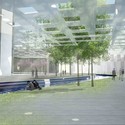
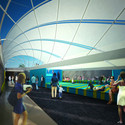
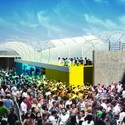
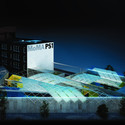
ArchDaily announced the winning proposal for the 2012 MoMA PS1 Young Architects Program (YAP) in February. In order to bring you full coverage of the annual competition, we are featuring the other four creative designs that competed against HWKN’s Wendy.Cameron Wu(Cambridge, MA) proposed Coney Inland, an architectural strategy which formally unifies and spatially modulates the challenging MoMA PS1 courtyard site. A series of developable surfaces (cones and cylinders) and their base structures normalize the contingencies of scale and shape of the three courtyard spaces, while their legible transformations register the idiosyncratic nature of the overall site geometry.
For generations of New Yorkers, Coney Island has served as the quintessential local retreat from the city. Unfettered access to sky, land, and sea makes it a clear contrast to the urban metropolis, drawing crowds in search of spatial and social release. Through the architectural translation of qualities inherent to this ocean-side precedent, Coney Inland imports the culture of casual beach leisure into the courtyard at MoMA PS1.
According to the national weather service, 30 tornadoes struck 6 Midwest states hit by a string a tornadoes. In many places there was a severe weather warning but no tornado alert. Harrisburg, a town in southern Illinois of 9000, was hit the hardest with 300 homes, 25 businesses and 6 lives lost. Illinois and Missouri declared state emergencies and are being assisted by relief organizations.
2011 was the worst tornado season since 1936 and the events of this week mark an early start to the Midwest’s storm season. More tornadoes touched down in Alabama Friday morning, destroying several homes and damaging a prison. More continue to touch down as this message is going out. Harrisburg was spared further damage this week, but storm season has just begun.
Currently, community members and the Red Cross are teaming to repair roofs, clear debris and provide emergency relief services in Harrisburg. Branson, MO, launched a similar cleanup. As lightly-damaged homes and households recover, attention will turn to long-term recovery. That’s where we come in.
Yesterday brought an impressive appeal for volunteer and fundraisings support, and Architecture for Humanity has launched the Midwest Tornadoes Recovery campaign with a fundraiser goal of $100,000.
Architecture for Humanity is calling all architects for help! If you are in the area, please consider volunteering. If you are not in the area but would like to help, just go to this link at Architecture for Humanity to donate and support architects volunteering in the Midwest.
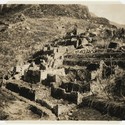
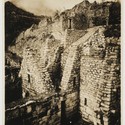
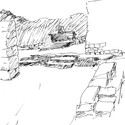
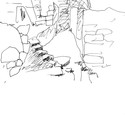
In 1995, Portuguese architect Álvaro Siza packed a few changes of clothes, some poetry books and a single sketchbook as he set forth to Peru. These few items were all he needed to record and interpret his voyage, allowing him to integrate his investigations into his architecture. More than a half a century earlier, Peruvian photographer Martín Chambi ventured into the peaks of Macchu Picchu were he captured a famous series of portraits of the ancient Inca ruins. His project was more political, it acted as a re-appropriation of the site by its locals, but the tools of Chambi and Siza are the same: the production of images to define a reality.
The Canadian Center for Architecture (CCA) presents Alturas de Macchu Picchu: Martín Chambi – Álvaro Siza at work – an exhibit featuring thirty-five original sketches by Álvaro Siza alongside the historic 1920s photographs by Martín Chambi, now on view at in the CCA’s Octagonal Gallery until April 22, 2012. Continue reading for more information.
DS+R plans to redevelop the nineteenth-century Union Terrace Gardens with a Granite Web that intends to “fuse nature and culture into a vital social network at the heart of the city” with an “elastic web of three-dimensional interconnections” that spans across the six-hectare site. Continue reading for more information.
Tonight in Brooklyn, New York – Architect, alumnus and longtime Pratt Architecture Professor Theoharis David, FAIA, will deliver a lecture which will be introduced by visionary architect Lebbeus Woods reflecting on David’s 43 years as a teacher through the work of his former students, many of whom have gone on to become accomplished architects and teachers. The lecture will be followed by an opening reception for “Built Ideas: A Life of Teaching, Learning, and Action,” an exhibition of models, photos, and concept drawings by David that will be on view at The School of Architecture through March 30. The Pratt’s Department of Exhibitions are also presenting “An Architect Drawing,” an exhibition of drawings and texts from David’s architectural experiences through September 28.
Tonight’s lecture is open to the public; however please note that seating priority is reserved for members of the Pratt community at 5:30PM and members of the public will be admitted at 5:50PM. Continue reading for more information.
After Mayor Bloomberg, Cornell President Skorton and Technion President Lavie announced Cornell’s victory over Stanford to build an eleven acre state-of-the-art tech campus on Roosevelt Island in New York City, the team has now tackled their next step in choosing six high-profile architecture firms competing to design the schools first academic facility.
After winning the RIBA Norman Foster Travelling Scholarship in 2011, Sahil Despande of the Rizvi College of Architecture in Mumbai has focused his research on understanding an urban planning scheme that would look beyond the typical architectural desires of constructing houses and public spaces, to the broader problem of providing proper sanitation. Proper sanitation is not a necessity most can afford; in fact, over 2.5 billion people have poor access to proper sanitation and for 1.5 billion, access is seemingly impossible. Without such a basic amenity, a city or settlement’s economic and health structure are often jeopardized. Despande feels the issue of providing proper sanitation is one in which architects often shy away from, as master plans focus on spatial aspects of the formation of a city rather than trying to install the proper infrastructure necessary for its citizens. In his research, Despande traveled to thirteen vastly different cities – ranging from the poorest informal settlement, Kibera, in Nairobi, Kenya to places such as Zurich, Beijing and Delhi – in an effort to study the existing sanitation systems and understand the cultural context in which they reside. Despande’s research is bringing sanitation to the forefront to generate awareness about its inherent linkage with public health, and urge architects to tackle the issue to improve the conditions for billions of people. Check out his presentation and let us know what you think of his research findings.