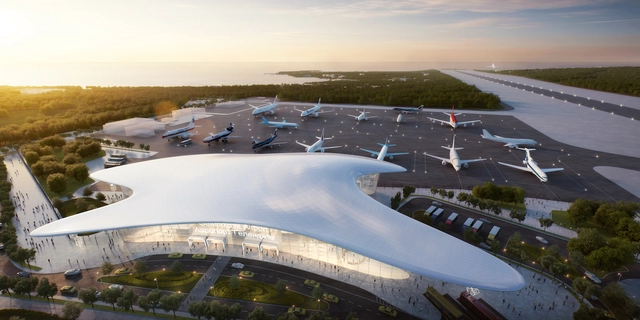
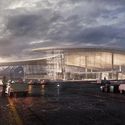
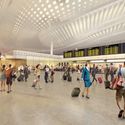
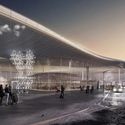
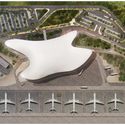
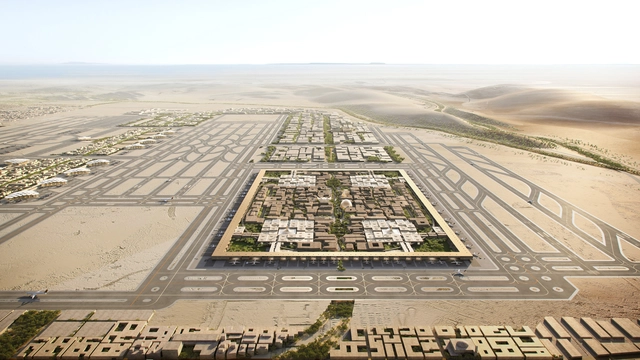
Foster + Partners has been announced as the winner of the competition to design the new King Salman International Airport in Riyadh. Saudi culture and identity drive the airport's architectural design to ensure a unique travel experience for visitors and transit travelers. The master plan will boost Saudi Arabia's capital as a global logistics hub, stimulate transport, trade, and tourism, and act as a bridge connecting 180 million passengers from East to West.
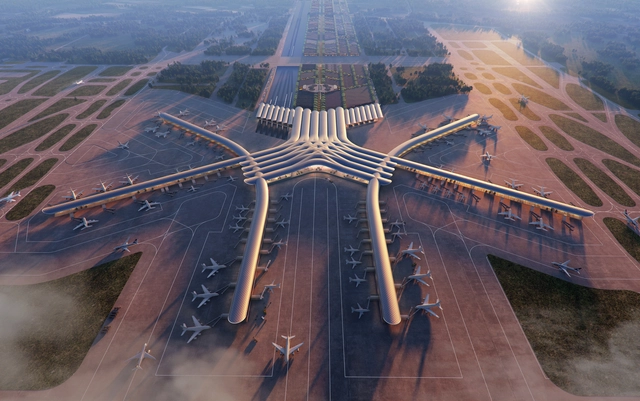
A Foster + Partners and Buro Happold consortium has been announced as the winners of the competition to design the new CPK airport, situated between Warsaw and Łódź, in Poland. The project is envisioned as a 21st-century transport interchange, bringing together air, rail, and road. The design seeks to strike a balance between operational efficiency, environmental responsibility, and a symbolic expression that reflects the country’s national identity. Initially, the airport will serve up to 40 million passengers but is planned to easily expand to meet the 65 million passengers target in 2060.
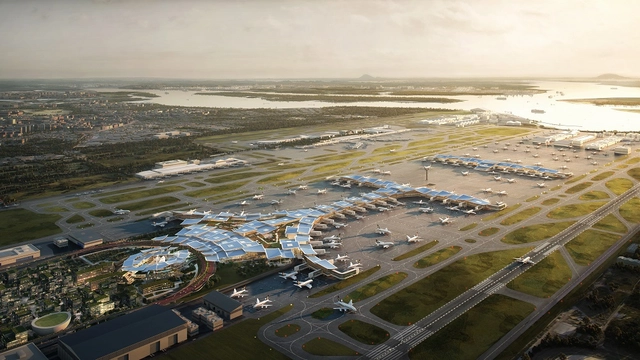
KPF and Heatherwick Studio have revealed the design for the fifth terminal of Changi Airport in Singapore. The concept behind it revolves around the concept of “airport as a city”, presenting itself as a social extension of the namesake district of Changi, at the eastern end of Singapore. The terminal is planned to add a capacity of 50 million passengers per year. Instead of a single monotonous structure, the terminal is comprised of a series of human-centered social spaces, offering different qualities of light, atmosphere, and experience to both visitors and residents of Singapore.
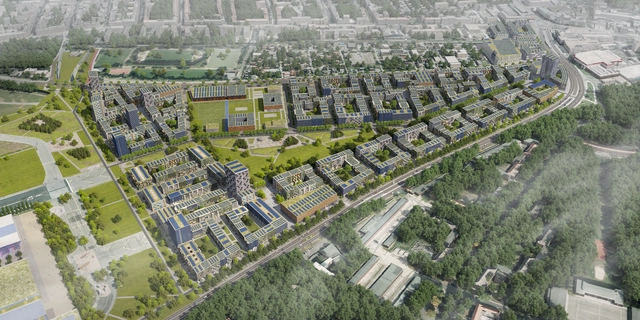
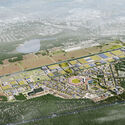
The former Berlin-Tegel Airport is set to be redeveloped. The master plan includes the Schumacher Quartier, a new residential district with 200 hectares of landscaped area, and a research and industrial park for urban technologies, Berlin TXL – the Urban Tech Republic. Besides creating a space for industry, business, and science, the innovation park aims to research and test urban technologies. The park will focus on major themes in the development of cities: the efficient use of energy, sustainable construction, eco-friendly mobility, recycling, networked control of systems, clean water, and the application of new materials.
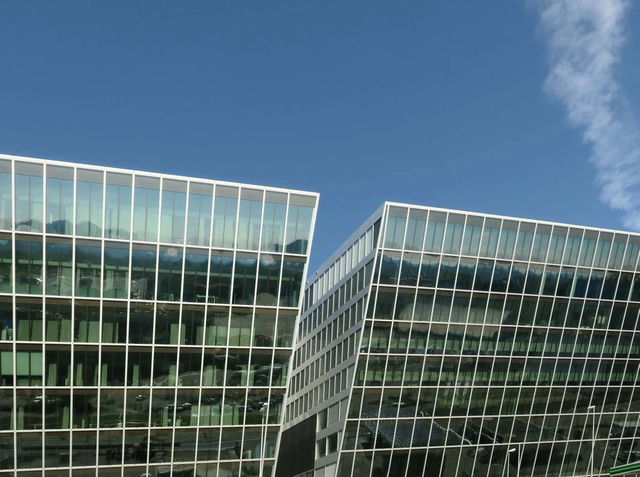
Architectural photographer Paul Clemence has released a new photoseries of Riken Yamamoto's The Circle project, a mixed use development at the Zurich Airport. The design was a competition entry that asked architects to create a program that offers visitors: Swissness, Surprise, and Connections to the World. Yamamoto's winning design, with its inclined facade and combination of linear and curved outlines, linked the airport to the park physically and visually, creating an architecture that highlights the Swiss identity.
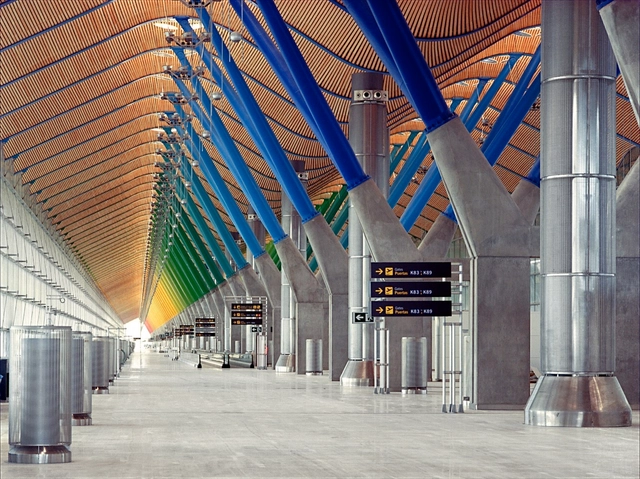
Airports require architectural solutions that not only respond to the efficiency of their spaces and circulations - both operational and passenger - but also to their connection with other transport systems and terminals.
Take a look at 10 airports/terminals and their plans and section below.
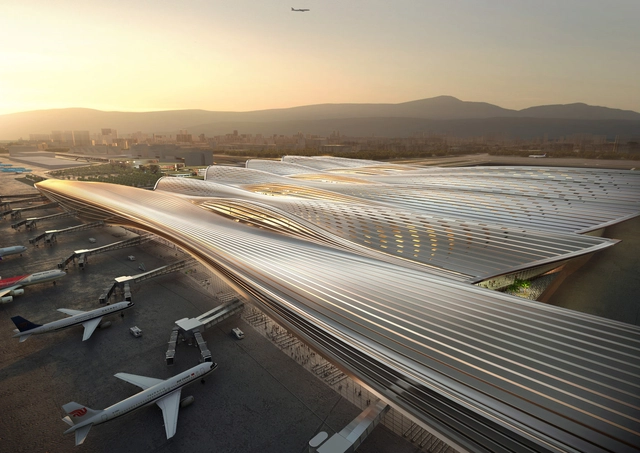
In a competition organized by Shenzhen Airport, Rogers Stirk Harbour + Partners (RSHP) and China Northeast Architectural Design & Research Institute (CNADRI) have won a competition to design the Terminal 4 Bao’an International Airport in Shenzhen, China. The winning design offers a new 400,000 sqm building with connections to existing and new transport infrastructure, as well as a space that promotes passenger interaction and wellbeing, all while maintaining a safe post-pandemic environment.
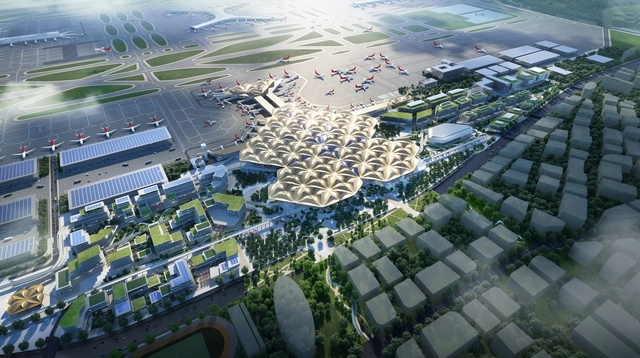
A multidisciplinary design team led by global architecture firm Grimshaw was selected as the winner of an international competition to design the Shenzhen Airport East Integrated Transport Hub. The winning design, which was inspired by the Mangrove tree, will provide travelers effortless transfers between high speed rail and other public transportation means in a new green and interactive way.
Snøhetta has revealed its first built project in Hong Kong, Airside, a 176,000 square meters mixed-use building. Located in the center of the former Kai Tak airport, the project commissioned by Nan Fung Group comprises a 200-meter tower merged seamlessly with its base.
This week’s curated selection of Best Unbuilt Architecture encompasses conceptual proposals submitted by our readers. It features diverse functions and tackles different scales, from a spiraling bridge in China to a transportation hub dedicated primarily to space travel in Japan.
Comprising uncommon design approaches, this article introduces a humanitarian architectural response to the needs of the residents in an informal Egyptian settlement. In the master plan category, a Green city proposal highlights how we should develop our cities and neighborhoods in the future, and the first net-zero energy airport in Mexico reinterprets holistic design approaches. Moreover, the roundup presents different cultural interventions, from a museum in Botswana, an installation at the Burning Man festival by AI Studio, and an observatory in Vietnam.
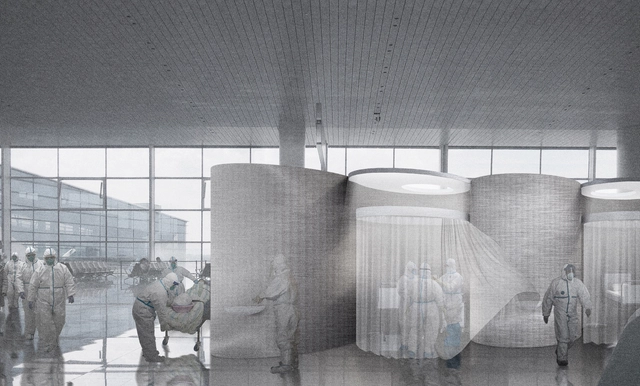
Opposite Office has proposed to transform the new Berlin airport, under construction since 2006, into a “Superhospital” for coronavirus patients. In an attempt to prepare the healthcare system and increase its capabilities, Opposite Office presented an adaptive reuse alternative, drawing contextual solutions to fight the pandemic.
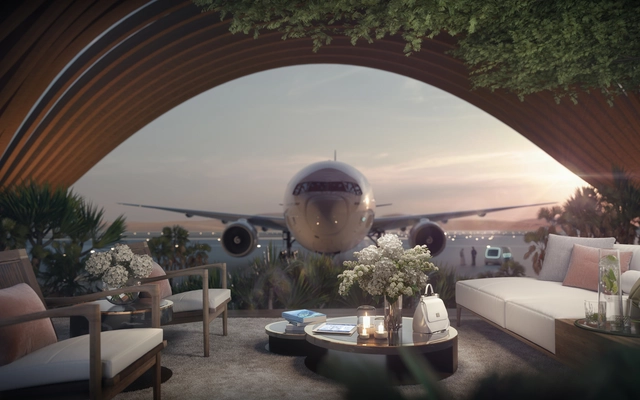
Foster + Partners have released their design for the new Red Sea Airport, expected to welcome one million visitors by 2030. Inspired by the forms of the desert, the green oasis and the sea, the terminal building aims to provide a new type of experience, diverging from the common hassles of airports.
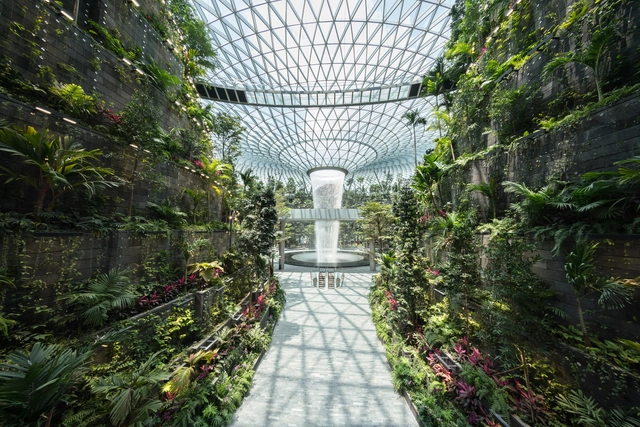
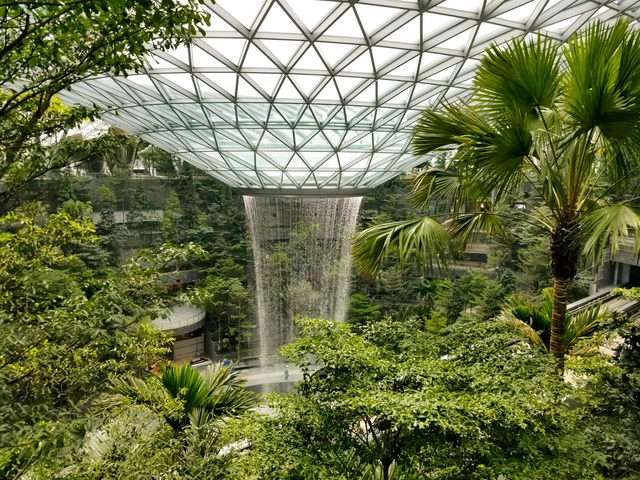
Jewel Changi Airport. Image Courtesy of Changi Airport Devt.
Safdie Architects has completed construction of the world's tallest indoor waterfall in Singapore's Jewel Changi Airport. Featuring a lush indoor forest and a green trail of airport amenities, the Jewel Changi Airport was designed to reinvent the concourse as a public attraction. The project was built with a torus-shaped glass dome the includes an oculus at its center. Dubbed the Rain Vortex, the oculus allows water to cascade into the airport.
Safdie Architects have published an update of their iconic Jewel Changi Airport, as construction continues in Singapore. Featuring the world’s tallest indoor waterfall, a lush indoor forest, and a green trail of airport amenities, the scheme is set to open on April 17th of this year.
Jewel Changi Airport seeks to reinvent the public concourse not just as an in-between space for travelers, but as a major public attraction. Public transit form the city passes through the city and the large garden and shopping space within the central dome establishes it as a node for public gathering. In the future, an event space on the north side of the park will host public events for up to 1000 people.
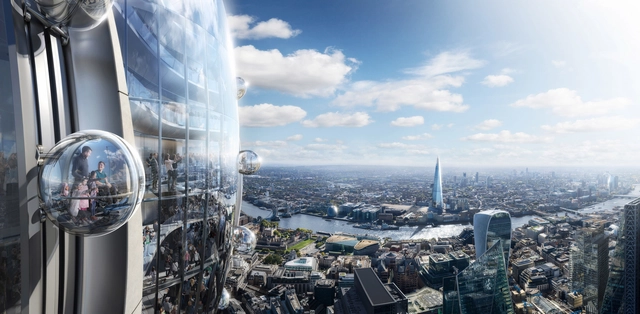
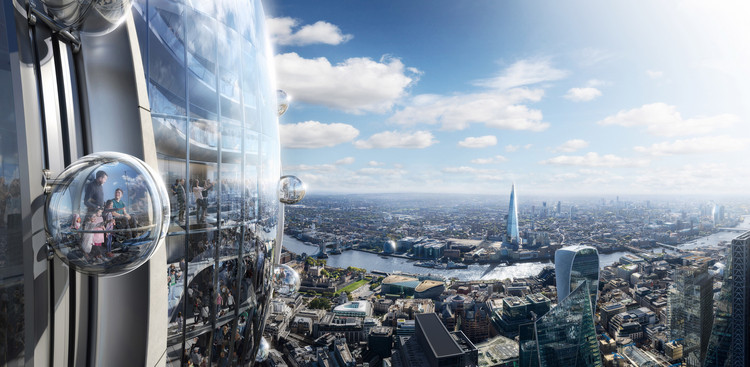
Blossoming alongside the iconic Gherkin building, Foster + Partners' Tulip Tower has been planning to join London's skyline since they released their proposal earlier in November. However, construction of the1,000-foot tower has been halted until officials can determine its impact on aircraft radar systems at London City airport, six miles away. Featuring mobile gondolas in the form of three-meter wide glass spheres intended for visitor rides on an elliptical journey around the tower, the proposed viewing platform is potentially highly problematic.
Gelendzhik Airport. Image Courtesy of Studio Fuksas
Studio Fuksas has won the competition to design the new Gelendzhik Airport in Gelendzhik, Russia. Gelendzhik is considered the third most popular resort city on the Black Sea coast. Prioritizing the landscape and an interior garden of local pine trees, the project is set to become the new gateway into the city. Inspired by the flight of birds when they change direction, the airport was made to be a new landmark for Gelendzhik.










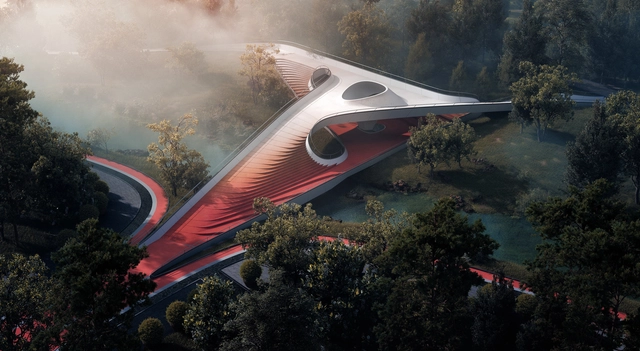
2020_canaria__dentsu__noiz__Space_Port_Japan_Association.jpg?1597222708 "SPACEPORT CITY. Image Courtesy of Noiz Architects")