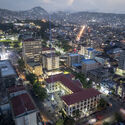
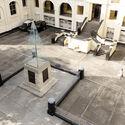
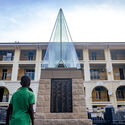
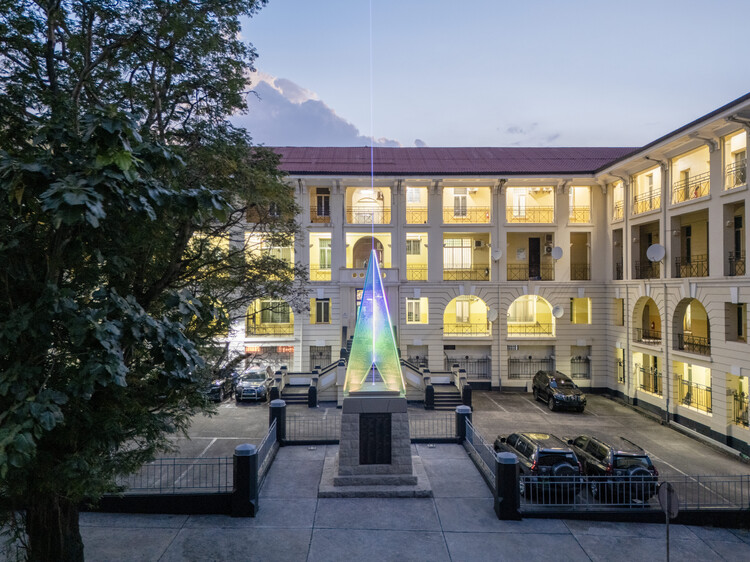
The Commonwealth War Graves Commission (CWGC) has unveiled a new memorial in Freetown, Sierra Leone, honoring more than 900 members of the Sierra Leone Carrier Corps who died in the First and Second World Wars. Designed by Lagos-based Oshinówò Studio, the intervention was unveiled on November 7 and commemorates the Carrier Corps individually by name for the first time. The design was first revealed in May 2025.
What happens to a building after the architecture is finished? For buildings intended to serve the public, their continued life depends on more than the physical conditions of their construction. It involves the activities that take place within them, the relationships they allow to develop, the people who occupy and shape them, and the institutional structures responsible for their upkeep. Yet these conditions are not always secured through the act of building itself. They are continually negotiated, often through forms of work that remain outside the conventional understanding of architectural practice.
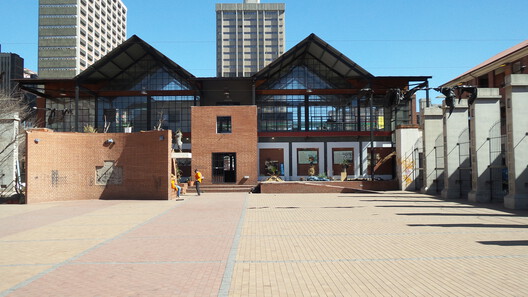
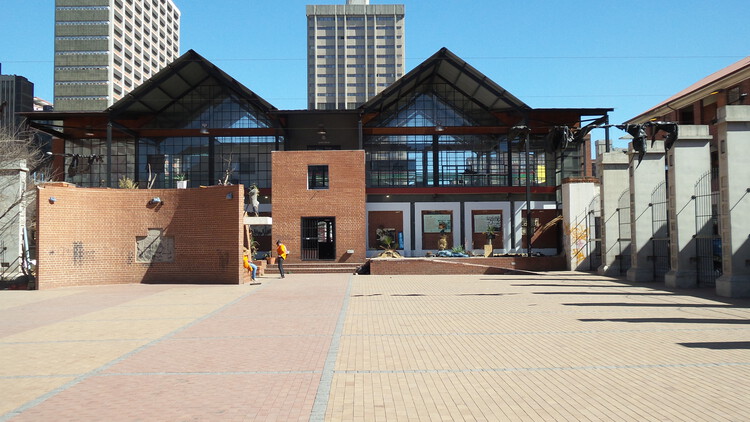
The Drill Hall in central Johannesburg offers a way of examining this unfinished work. Its history is marked by changes in use, occupation and institutional responsibility, but also by repeated attempts to imagine what the building could offer the city.
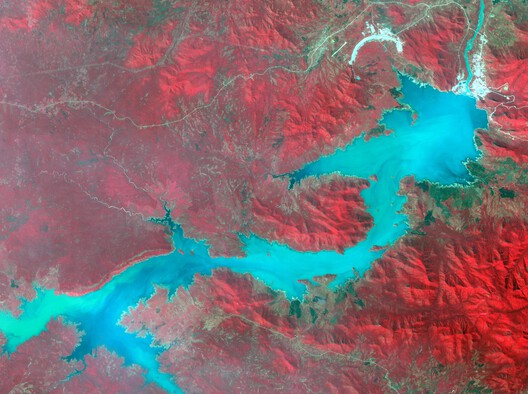
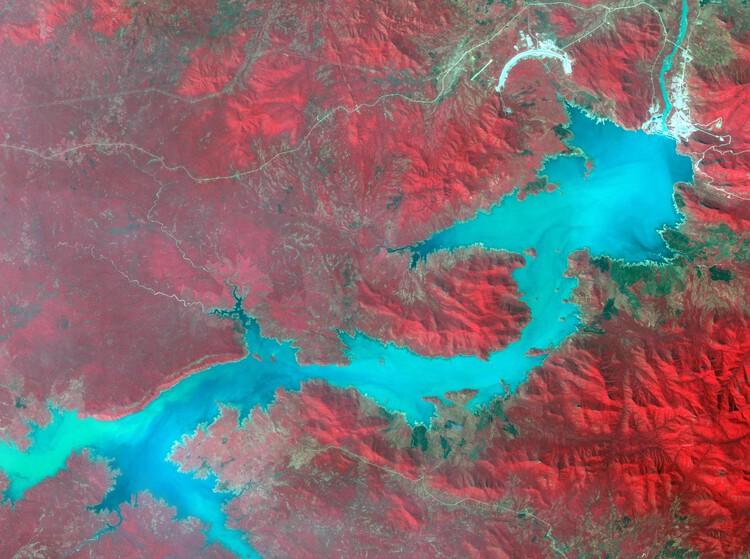
NASA/METI/AIST/Japan Space Systems, and U.S./Japan ASTER Science Team. Image via Wikipedia under Public Domain
When the Ostrogoths besieged Rome in 537 AD, their first military act was to cut the aqueducts. Eleven gravity-fed channels supplied the city with up to a million cubic meters of water per day, more than enough to sustain a population of over a million, fill the public baths, and scour the sewers. Without the aqueducts, Rome became a fortified enclosure around a contaminated river, proving that water was essential to the city's existence.
Unlike land, which can be fenced off, or oil, which can be stored, water is a resource that nobody can fully own, yet everyone depends on. It moves through aquifers, across borders, and down rivers. The Romans were cognizant of this fact; as the aqueducts constituted public infrastructure, the water flowing into fountains was accessible to all. Frontinus, the administrator who oversaw Rome's water system in the first century AD, documented every allocation, every illegal connection, and every abuse of the system with the rigor of someone who understood that water management was a civic act. Architecture, in this sense, has always had the capacity to make water a common good, and equally, by the same means, a privilege.
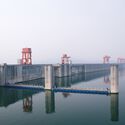
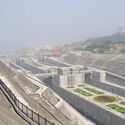
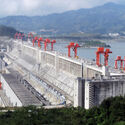
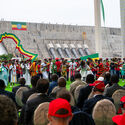
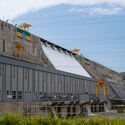
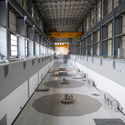
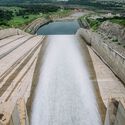
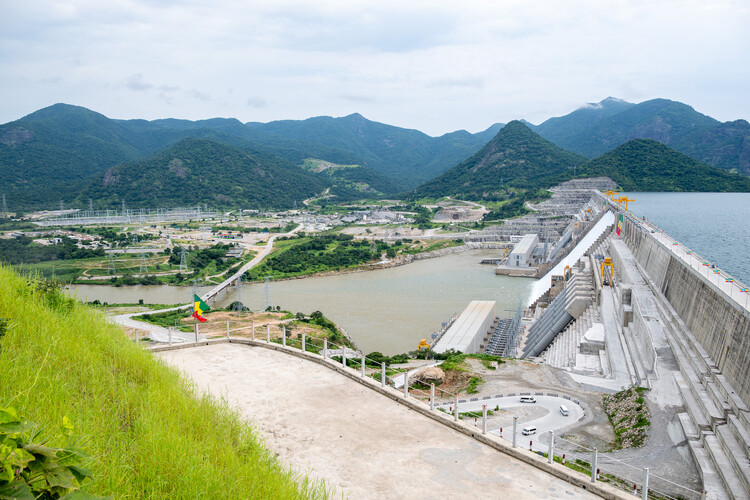
Inaugurated in September 2025, the Grand Ethiopian Renaissance Dam, or GERD, is a grand concrete structure on the Blue Nile, Abay, in western Ethiopia within the Benishangul-Gumuz region, just 30 kilometers upstream along the river and east of the border with Sudan. It is built as a major source of hydroelectric power, generating an estimated 51.5% of total national output in 2025/26, and symbolizes Ethiopia's national sovereignty, rise to exponential economic development, and technological self-determination. So, why has it become the center of a protracted dispute over regional water security and international law between Ethiopia, Sudan, and Egypt?
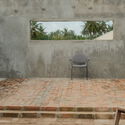
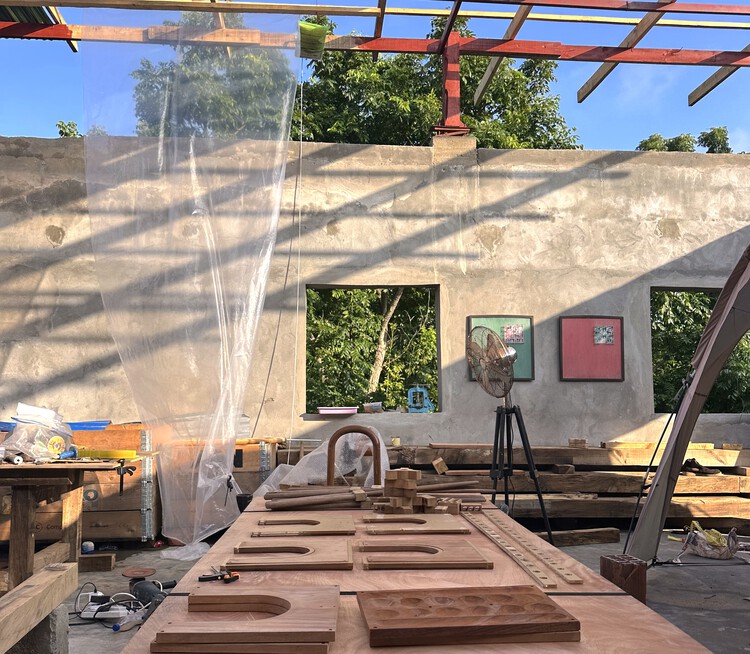
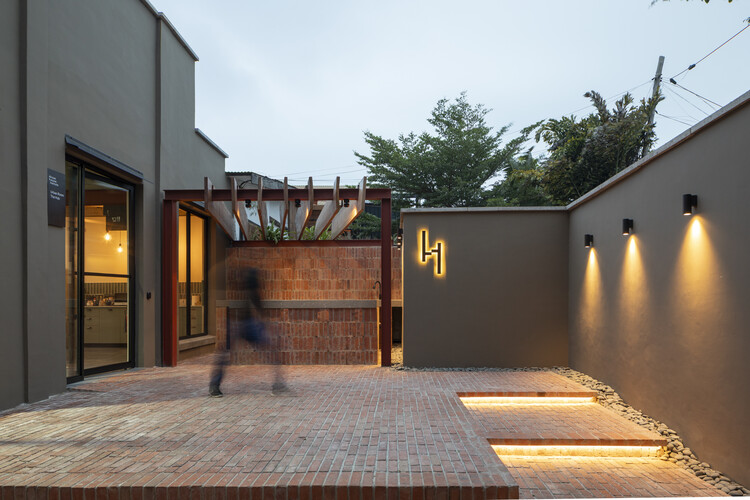
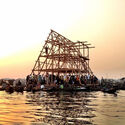
On Tarkwa Bay, off the coast of Lagos, the transformation of an abandoned building offers a way to consider how architecture might emerge from the materials, relationships and conditions already present in a place.
Architecture is often encountered at the end, when the uncertainties of making have been resolved into a building, a surface, a space. Less visible are the conditions that allow these outcomes to exist, the movement of materials, the availability of labour, the knowledge held by people and places, and the negotiations through which an idea becomes possible. On Tarkwa Bay, an island off the coast of Lagos accessible only by boat, these conditions are difficult to separate from the act of building itself.
The crossing from the Lagos mainland introduces a different relationship to access. People, tools and materials move across water; some resources are readily available, others less so. Materials move across water; reclaimed elements carry histories from elsewhere; salt and sun alter the behaviour of surfaces; and the availability of local artisans influences how work unfolds. These are not necessarily prohibitions; rather, they make visible the dependencies that building elsewhere can allow us to overlook.
What do architects do? This age-old question reveals the perennial dichotomy between two aspects of building–how to construct, and why to build. Despite its ancient origins and its name deriving from Ancient Greek, the profession is one that has transformed over the centuries. Its present-day form, usually dated to the Italian Renaissance, makes a distinction between the act of building and the intellectual and aesthetic decision-making behind it. However, we may be in the midst of another nascent transformation. The commissioning of architecture has historically remained separate from the practice, but as can be seen in the work of MASS and projects like the Moving Windmills Innovation Center, this distinction is beginning to blur.
UN-Habitat has announced the five recipients of the 2026 Scroll of Honour Award, recognizing contributions to adequate housing and sustainable urban development in Brazil, Myanmar, Pakistan, Tunisia, and the United Kingdom. This year's winners include a housing organization working with communities affected by conflict and displacement, a researcher developing building materials from local and mining residues, an Indigenous village in Brazil, a public housing agency in Pakistan, and London Mayor Sadiq Khan. Selected from 101 nominations submitted across Africa, Asia, Europe, and the Americas, the recipients represent a range of approaches to addressing housing and urban development challenges.
Videos
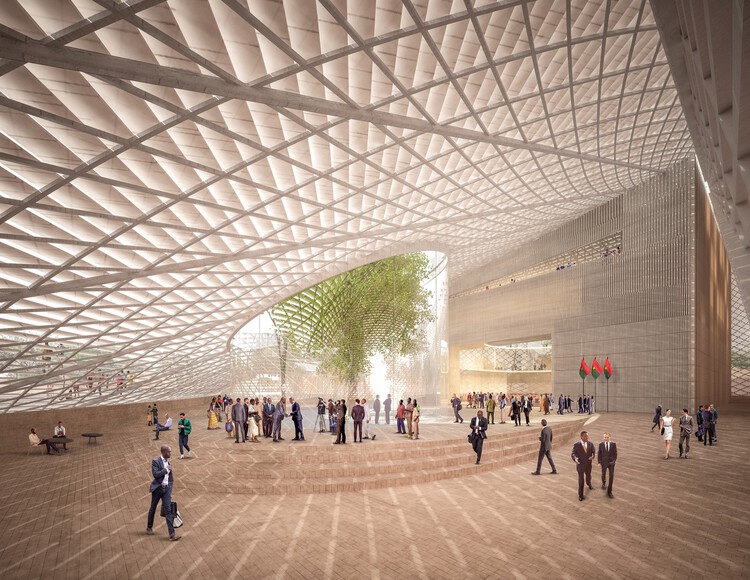
Interior of Burkina Faso National Assembly. Image Courtesy of Kéré Architecture.
"Take your dream suppressants." The opening line in Wanuri Kahiū's Pumzi, directed at our protagonist Asha, enforces the order of severing ties with hopeful futures and ancestral memories in pasts shared to compel her focus on the perpetual present in the Maitu Community's heterotopia of an enclave. The bird's-eye view shot of the Maitu reveals a sterile, drone-like structure with a panoptic sphere at its center where normal human behavior is medicalized. The layout is built around closed-loop recycling systems as apt as a self-sufficient organism, designed to escape the toxic environment of a sickly Earth, where every pipe and corridor is engineered to harvest human excretion for water generation, thereby absorbing the roles of nature and state both. The community's architecture perfectly translates the film's message with its physicality.
Across folklore, film, and art, the same move recurs: architecture translates an elsewhere, whether ancestral, spiritual, or speculative, into form that can be seen or entered. The sections below follow that translation from the Kasubi Tombs to Kizazi Moto, and show that the elsewhere is a way of reading the present.
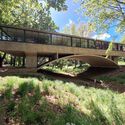
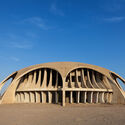
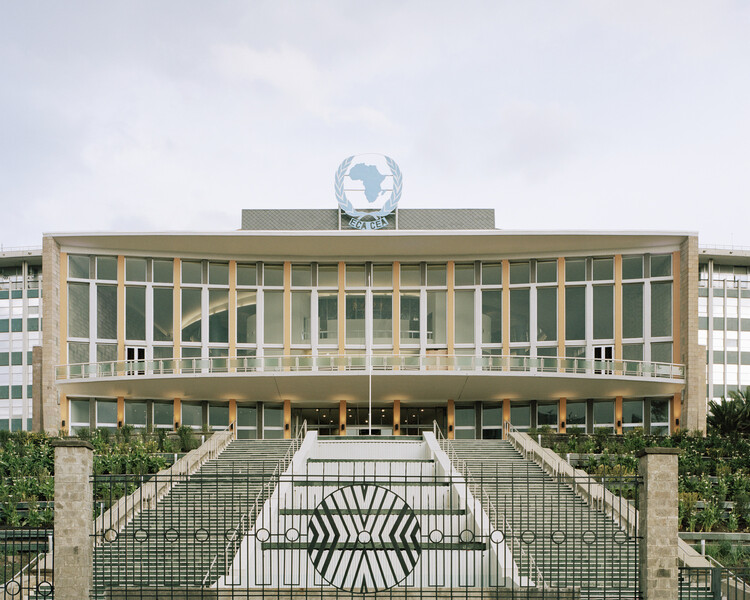
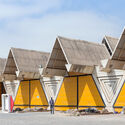
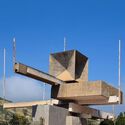
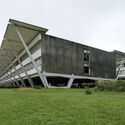
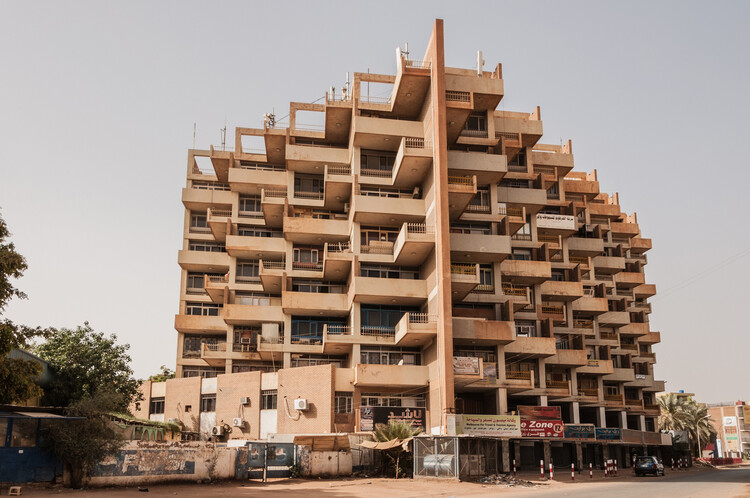
What makes a building worth preserving? Age is the most common answer, but not always the best one. A building from the 1950s or 70s may carry as much historical significance as a medieval cathedral; it simply demands a different framework, one that weighs political context, cultural meaning, and architectural innovation over the mere passage of time. This is especially true for modernist architecture across the so-called Global South, where the movement took on unique forms of expression.
It is precisely this conversation that ArchDaily and World Monuments Fund are now opening together. WMF brings on-the-ground conservation expertise across the world, and ArchDaily brings the editorial capacity to contextualize that work and connect it to a global audience. The goal is to do both at once: preserve places and tell their stories, shaping how modernist heritage is understood far beyond the field of preservation itself.
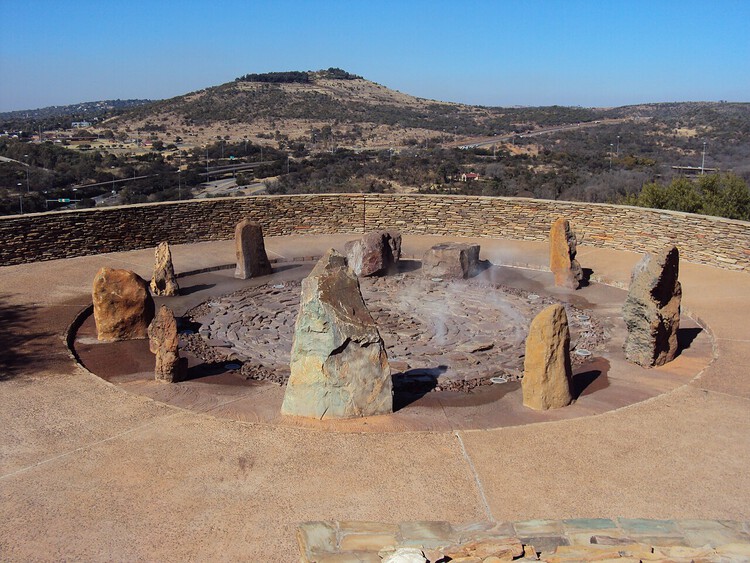
Isivivane - Freedom Park, Pretoria, South Africa. Image by Shosholoza
Liberation does not always begin with a monument. It may begin in a garden, a yard, a clearing, a field; in the occupation of land and the possibility of gathering there. Across histories shaped by colonialism and dispossession, space has been more than the setting in which liberation takes place. It has been one of its practices: cultivated, occupied, hidden within, moved through and collectively remade.
Wolff Architects' researchLiberation Gardensoffers the garden as one way of reading these spatial practices, not simply as planted ground, but as a space through which survival, nourishment and emancipatory imagination can be sustained. The garden in this sense is not defined by landscape design so much as by relationships between people and land, cultivation and knowledge, occupation and autonomy. It can hold cultural production alongside subsistence, and forms of collective life that emerge under conditions of violence and dispossession. Liberation, understood spatially, becomes as much about the possibility of inhabiting differently as it is about arriving at a final condition of freedom.
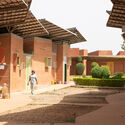
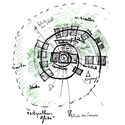
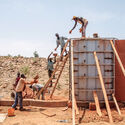
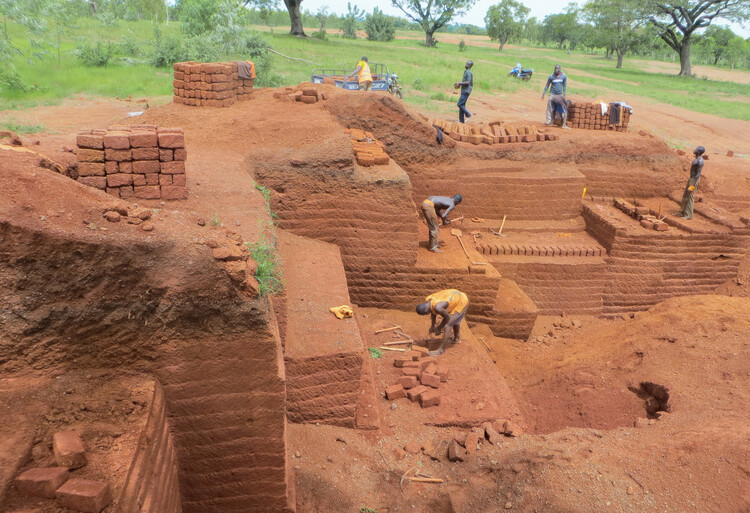
"After all, time is a key ingredient of my profession," states Francis Kéré in his book Francis Kéré: Building Stories. Architecture is constantly evolving and transforming over time. Bricks, doors, windows, walls, stairs, and other elements become the protagonists of a process that begins with a sketch and eventually takes shape as a built work.
Considering that architecture begins when its inhabitants start to make a space their own, Francis Kéré develops his projects progressively, continuing to work on the design even during the construction phase. As his architecture grows over time, integrates with its surroundings, adapts to the needs of its users, and responds to change in flexible and experimental ways, it seeks to become part of the lives of those who inhabit it.
The African Futures Institute (AFI) has completed its new headquarters in Accra, Ghana, transforming a former tile warehouse in the city's Osu neighbourhood into a centre for architectural education, research, exhibitions, and public programmes. The project retains the existing industrial structure while introducing spaces for teaching, workshops, performances, screenings, and gatherings. Its completion gives the Institute a permanent base in Accra after several years of operating through programmes, partnerships, and temporary spaces across Africa and beyond.
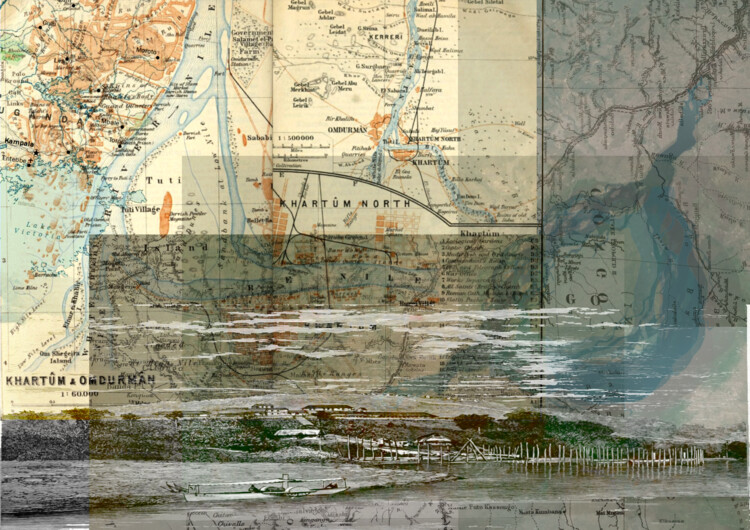
Conceptual map collage of Kampala, Khartoum and Kinshasa. Illustration by Maisa Elamein via Wikimedia Commons and Public Domain sources.
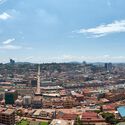
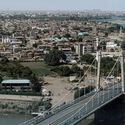
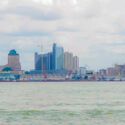
Colonial violence in African cities bled through the political dimensions into the spatial realm. It is infused into street grids, land tenure systems, drainage infrastructure and residential zones that continue to organize inequality and displacement today. Kinshasa, Khartoum, and Kampala each carry this afterlife in their urban morphology, at once historical artifacts and an active structure; shaping who has access to services, who occupies flood-prone land, and catalyzing a deepening climate instability that forces this apparatus into entirely new dimensions - including geological ones.
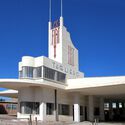
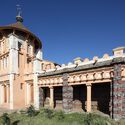
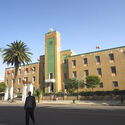
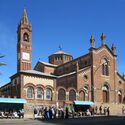
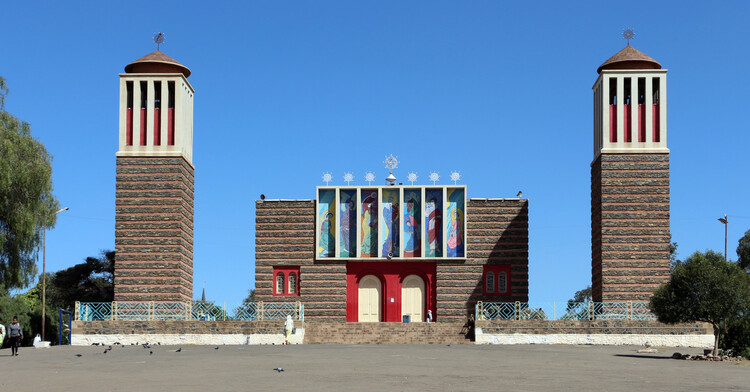
Asmara, the capital of Eritrea, sits at over 2,300 meters above sea level on a plateau at the edge of the Great Rift Valley escarpment. Although situated in a country not known for large visitor numbers, the city has gained fame for its unique architecture. In July 2017, it became a UNESCO World Heritage Site, inscribed as "Asmara: A Modernist African City," the first modernist urban site anywhere to be listed in its entirety, and Africa's first explicitly modernist World Heritage Site. Its heritage value came about as a result of a complex convergence of two aspects of Eritrea's history: an intense period of colonial construction as Italy pursued its imperial ambitions in Africa, and a long period of relative isolation that insulated the city from redevelopment.
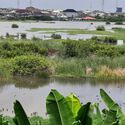
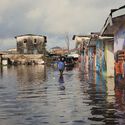
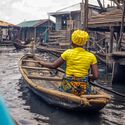
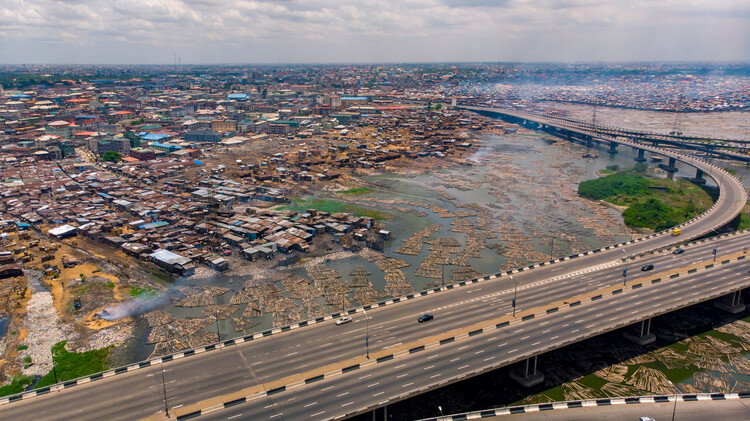
Lagos is a city shaped by time, human interaction, the forces of nature, and its evolving, sometimes uneasy relationship with all three. Nowhere is this more visible than when the rain comes.
Eko sits on a floodplain. Its geographical condition predates the city itself, reaching back to a time before the first road was laid, the first boundary drawn. The drainage systems, the developments that have gradually become privatised waterfronts, are all built on a landscape that has always been, at its foundation, in continuous conversation with water. The flood is not an anomaly; it is the land insisting on a dialogue that was always going to return.
This article is part of our new Opinion section, a format for argument-driven essays on critical questions shaping our field.
For centuries, most of the world has looked at itself through a 16th-century instrument of spatial representation. On September 4, the United Nations General Assembly voted to change that, adopting a resolution that asks governments, schools, media organizations, and technology companies to retire the Mercator projection wherever the relative size of countries actually matters, in favor of equal-area alternatives like the 2018 Equal Earth projection. The vote passed 164 to 1. The United States was the sole vote against.
This article is part of "Thresholds", a special edition printed newspaper by Cobe Notes x ArchDaily.
Launched in September 2024, the Rediscovering Modernism in Africa series joined a growing worldwide interest in this topic. Previously underrepresented in architectural discussions, the work of architects and researchers on the continent and abroad has continued to tell the story of these high-quality modern works of architecture. These buildings represent designers striving to create locally suited architecture using global concepts and technologies, coinciding with huge political changes as most African countries gained their independence.