
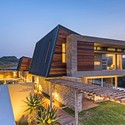


-
Architects: Metropole Architects
- Area: 1000 m²
- Year: 2013
-
Professionals: East Coast Construction, Union 3, Young & Satharia



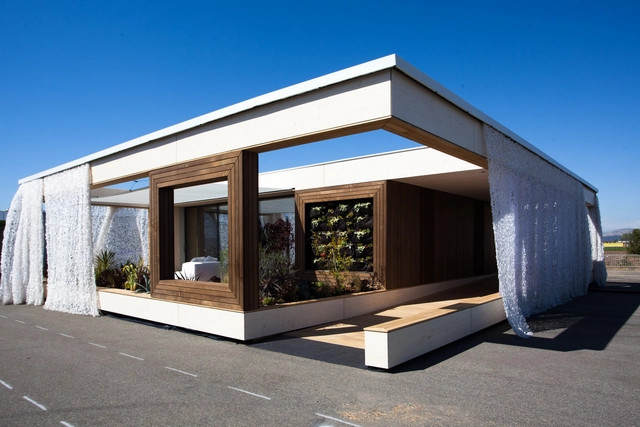
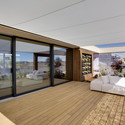
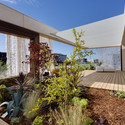
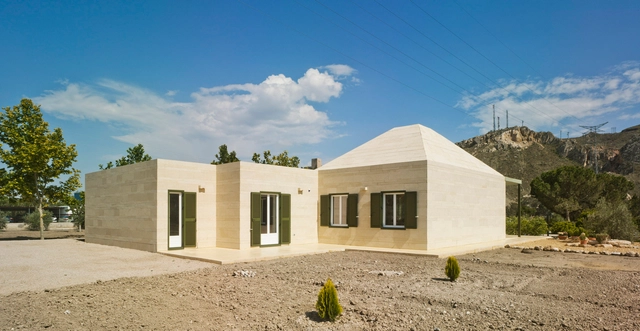
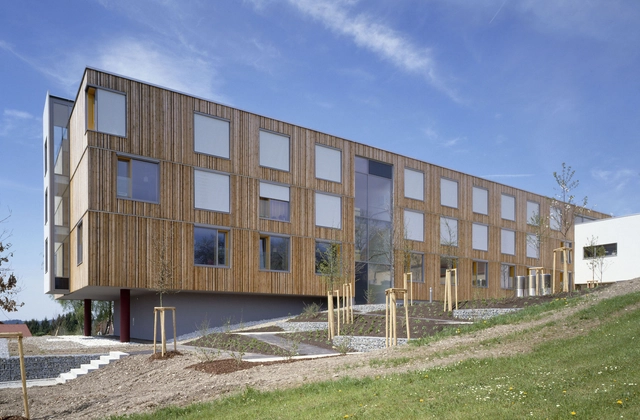
A team of Austrian students from Vienna University of Technology (Team Austria) has won top honors for “designing, building, and operating the most cost-effective, energy-efficient and attractive solar-powered house” at the 2013 U.S. Department of Energy (DOE) Solar Decathlon. The net-positive home, known as “LISI – Living inspired by sustainable innovation,” prides itself for being a simple, smart house that is capable of adapting to a variety of lifestyles and climate zones.
Prior to being crowned as winner, LISI competed against eighteen other student-built, solar-powered homes over the course of ten days in Irvine, California. This was the first time an Austrian university has participated in the U.S. Solar Decathlon. Learn more about the winning design by reading the team’s project description after the break.


In response to a growing company's request for office space, Kevin Roche John Dinkeloo and Associates developed a master plan that would allow the incremental addition of floor space over time. The initial design included nine identical buildings arranged in a parallelogram, totaling 1.2 million square feet. Only three of the buildings were constructed in the initial phase, and the expansion plan was never fulfilled. The trio is known as "The Pyramids" for their simple geometry and slanting glass facades.


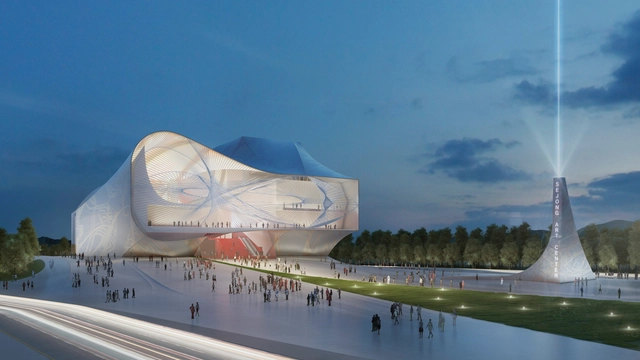
New York based Asymptote Architecture have unveiled designs for a new Centre of Performing Arts in Sejong, South Korea. Described as celebrating "the cities emergence and growth as a place of stature and culture," the arts centre is designed to "seamlessly connect to the city fabric." Containing two theaters, the program of the building has been designed to create a unified experience, allowing for a "powerful and 'episodic' interiority and experience."
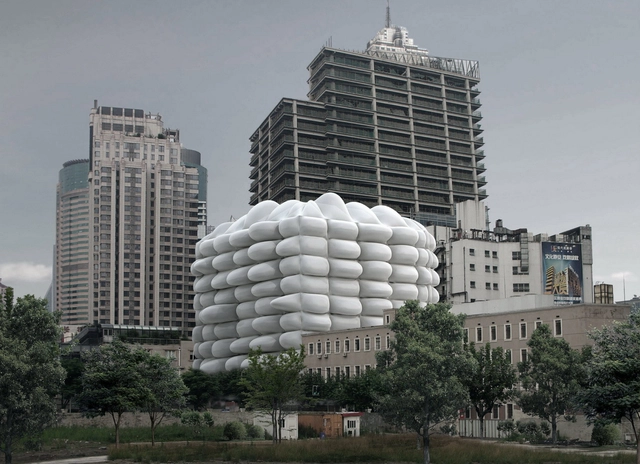
The Bubble Building, a "renovation of a common, old and unattractive building" in the centre of Shanghai, is a simple design containing complex environmental qualities. Unlike a conventional retrofit or renovation, 3GATTI's proposal places inflatables made of white antibacterial technical outdoor nylon, in front of the windows on the existing building. Their concept was to "create an icon-building, a kind of landmark very easy to recognize, a kind of sculpture with a strong character able to detach itself from the boring cityscape" with the ultimate aim to attract customers to rent both the office and commercial spaces.
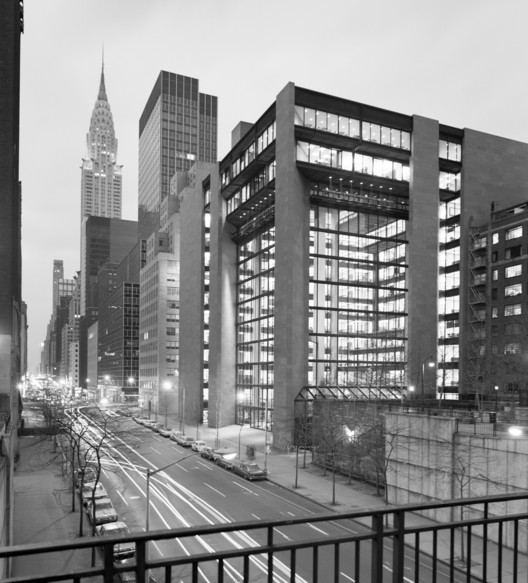
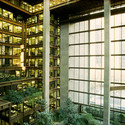
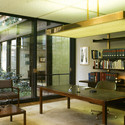
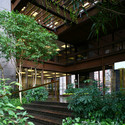
Kevin Roche and John Dinkeloo established their own practice in 1966, after heading the firm of Eero Saarinen for several years. The Ford Foundation Headquarters is regarded as the pair's first major success, a combination of Roche's unique ideals and Dinkeloo's innovative structural solutions. They introduced an office typology in which employee interaction extended beyond departments and levels, reaching even to the public.

But you can browse the last one: 417