On March 5, 2026, Skidmore, Owings & Merrill (SOM) revealed images of a new landmark project in Kazakhstan, in Central Asia. The project consists of two towers, the "Iconic Complex," and a master plan for the area, the "Gateway District." The complex is located in Alatau, a new city along the Almaty–Qonaev highway planned to become an international investment hub. A strategic project for the country, the city's master plan extends through 2050, with the first phase of major infrastructure projects scheduled for completion by 2030. Within this context, SOM's design is expected to serve as the city's economic and administrative nucleus, establishing the central business district of Alatau City and setting a benchmark for future investment projects in the area.
Humanity has become obsessed with breaking its limits, creating new records only to break them again and again. In fact, our cities’ skylines have always been defined by those in power during every period in history. At one point churches left their mark, followed by public institutions and in the last few decades, it's commercial skyscrapers that continue to stretch taller and taller.
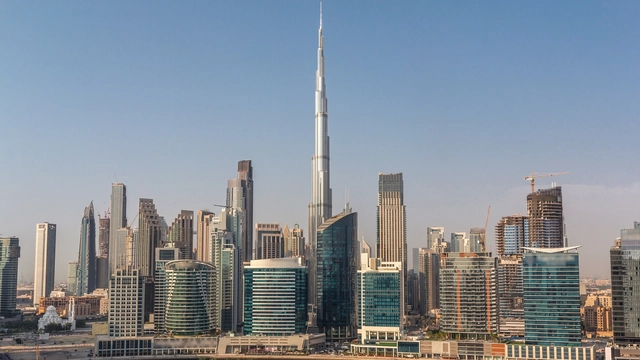
The Council on Tall Buildings and Urban Habitat (CTBUH) has developed its own system for classifying tall buildings, stating that the Burj Khalifa (828 m.) is the world’s tallest building right now. Read on for the 25 tallest buildings in the world today.
On January 21, 1958, three women sat down as contestants for an episode of the popular television show "To Tell the Truth", a quiz game in which a panel tries to guess which of the three contestants is who they say they are by asking them a series of questions. The announcer reveals the true identity of the person is a registered architect, has so far designed a Hilton hotel, and is a married mother of four. Each of the women, dressed formally in pencil skirts and blouses, introduces themselves as Natalie De Blois. As the panelists reveal their lack of knowledge about architecture, only firing off questions about Frank Lloyd Wright, one asks "What is the name of the building that was torn down to build Union Carbide?" The real Natalie De Blois, at the time a senior designer at SOM, firmly answers, "Hotel Margery."
Architecture is one of the oldest recorded professions, dating back to ancient eras when builders designed historic huts and constructed some of the great wonders of the world. When we think about women who have been known as trailblazers of the industry, it's astonishing that we often talk about women who we may interact with in the workplace day to day, or who our mentors may have learned from. Natalie De Blois was a modern-day pioneer of women in the design workforce, and although her legacy began only seventy years ago, it has significantly changed the way that women can participate in the profession today.
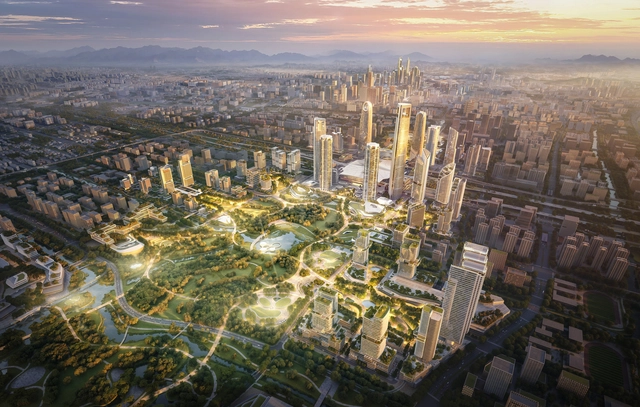
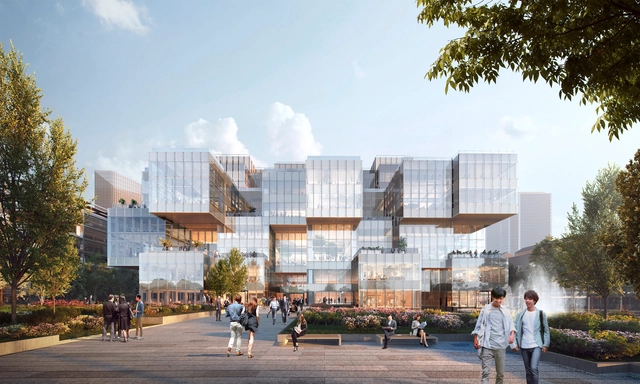
Skidmore, Owings & Merrill (SOM) and GAD have been chosen to design the Hangzhou Science and Technology Innovation Central Business District (CBD) in Hangzhou, the capital of Zhejiang province, China. Their proposal outlines a versatile regional hub that merges advanced transit systems with the traditional Jiangnan landscape, establishing a framework that promotes creativity and the growth of the tech sector.
Delving into the realm of unbuilt architectural projects by renowned offices offers a peak into the design principles and ethos of the studios. The curated list of unbuilt projects submitted by established architecture practices has the potential to reveal new perspectives on the socio-cultural and environmental factors shaping contemporary architecture. These designs often respond to complex challenges such as sustainability, urbanization, and cultural preservation, reflecting architects' efforts to navigate and contribute meaningfully to the built environment.
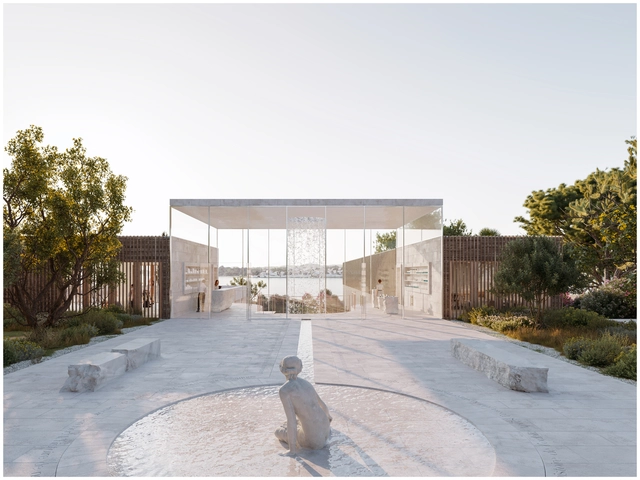
Within this curated selection, one standout project is Rafael Viñoly Architects' Médano El Pinar, marking the late architect's last contribution to the architectural landscape. Other projects such as Aedas' Ellinikon Commercial Hub explore the opportunities of new developments, such as the disused airport transformed into Europe's largest coastal park in the periphery of Athens, while others are highlighting natural landscapes or offering spaces for creative and innovative programs. Featuring internationally recognized offices like SOM, Kohn Pedersen Fox, Gensler, or GAD Architecture, the selection showcases the unrealized concepts and architectural experimentations of renowned offices.
The relocation of a capital city is a complex urban decision with various dimensions and consequences for both the old and new capital. It can be driven by political, economic, societal, and other factors, and has urban and architectural implications for residents. These include factors such as location, planning, building design, the purpose of the old capital, climatic conditions, and separating the political/administrative hubs from cultural and economic cities.
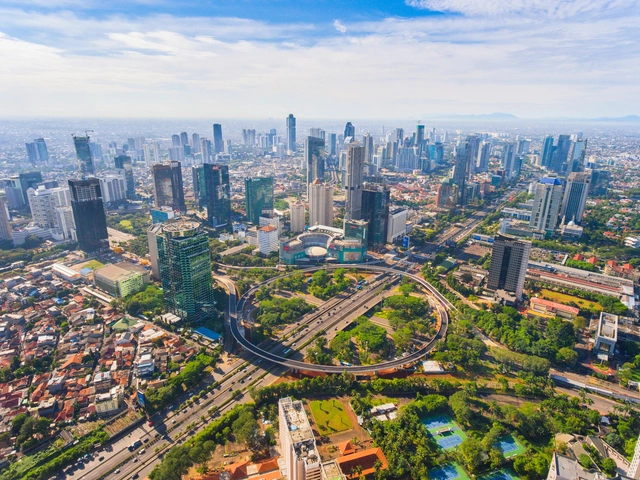
In light of the ongoing urban discourse, countries like Egypt are constructing a new capital city to alleviate population and urban stress on Cairo. Similarly, Indonesia is planning a new capital in response to challenges faced by Jakarta, such as pollution, traffic congestion, and rising sea levels. It is valuable to examine other countries in the global south that have relocated their capital cities, noting the architectural and urban lessons learned from their experiences.
With a total of 95 new projects recognized by Prix Versailles, the 24 global winners of this 2023 edition have recently been announced. They stand as evidence of the aesthetic vitality of each of their respective regions, paying homage to the work of numerous pioneering and/or internationally renowned firms.
The growth of the world's population has led to an increase in housing and building construction around the globe. Considering that today the construction industry is responsible for 40% of the planet's CO2 emissions, and according to the Chilean Chamber of Construction, by 2035, Chile will need housing for 2.6 million people, it is necessary to guide this sector toward an environmentally friendly alternative. The answer to this challenge can be found in nature itself, where there are various efficient and sustainable construction solutions. Such is the case with wood: a noble and renewable material capable of capturing CO2 and contributing to a better environmental future.
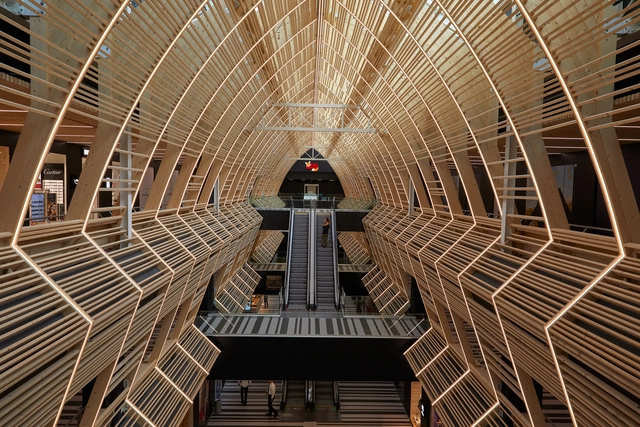
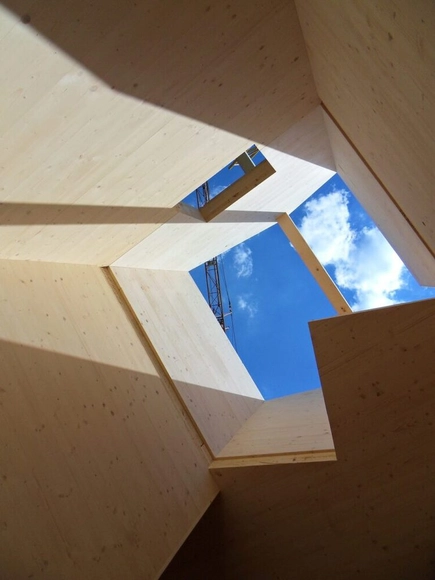
Today, thanks to technological advances, engineered wood or laminated wood, composed of layers of structural wood oriented perpendicularly to each other, has positioned itself as a trending construction material worldwide, and Chile should not be the exception.
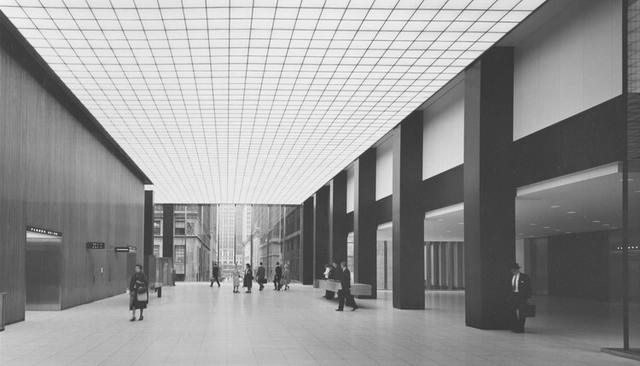
When people describe the modernist movement as a whole, they broadly reference the steel and glass skyscrapers which dot many of our cities’ skylines, or more specifically, the International Style that once emerged from Europe after World War I. The International Style represented technological and industrial progress and a renaissance of social constructs that would forever influence the way that we think about the use of space across all scales. Often designed as politically charged buildings seeking to make a statement towards totalitarian governments, many architects who influenced the style moved to the United States after World War II, paving the way for some of the most iconic buildings and skyscrapers to be built in the 20th century.
Almost a century ago, the world was introduced to a new architectural typology that changed the entire construction industry. Starting off with the Home Insurance Building in 1885, leading to the Empire State and Chrysler Buildings in Manhattan, skyscrapers became a symbol of power and financial abundance. Soon enough, they were being constructed in almost every city across the world with state-of-the-art designs that defy engineering norms. But with all the changes taking place in the architecture practice, what does the future hold for these heavily criticized yet constantly developed buildings?
Skidmore, Owings & Merrill (SOM) has unveiled a dynamic, user-controlled headquarters for Chinese multinational technology company Alibaba's Xuhui District campus in Shanghai. Located in one of the city's premiere arts and innovation districts, the new workplace transforms the typical headquarters building “inside out”, highlighting the company’s "collaboration and creativity". The building's architecture is designed to resemble a cloud, symbolizing the company's digital presence in the Cloud, as well as the technology industry’s shifting skies of innovation.
Tsz Yan Ng is a Michigan-based firm principal, professor, researcher, and artist whose interdisciplinary and collaborative work seeks to challenge and improve upon modern fabrication and manufacturing practices. “We haven’t changed the way we build in so long,” Ng said. “We need to think of it more productively—not just economically—but as a collection of different voices. Architecture is a global ecosystem of people, where the sum is greater than the parts.”
#Anodized Aluminum Panels In recent years, anodized aluminum panels have emerged as a prominent material, utilized across numerous interior and exterior architectural projects in China. Anodized aluminum features six key characteristics: 1. Metallic Appearance, protected by a transparent anodic oxide film, the natural, soft metallic texture of aluminum is fully preserved; 2. Workability, anodized aluminum features exceptional workability, as well as outstanding forming and bending capabilities; 3. Surface Consistency, across diverse architectural forms, anodized aluminum panels maintain a highly uniform color; 4. Corrosion Resistance, the anodization process generates a dense oxide film on the metal surface, providing superior corrosion resistance and enhancing structural hardness and strength; 5. Weatherability, the static-free surface does not attract dust, making it easy to clean and maintain its pristine, like-new appearance even after repeated washing. This ensures the building facade stands the test of time; projects completed with anodized aluminum 40 years ago still look as good as new today; 6. Sustainability, functioning as an environmentally friendly material classified as Class A non-combustible.
#Almeco Anodized Aluminum Panels Almeco is a global expert in pre-treated aluminum surfaces, offering a range of innovative anodized aluminum products for interior and exterior curtain walls and decoration. Their unparalleled metallic texture, rich colors, and excellent workability bring new vitality and artistic form to interior and exterior architecture, turning every building into a unique work of art. Consequently, Almeco has become the material of choice for renowned architects such as Jean Nouvel, Thom Mayne, MAD, and UNStudio.
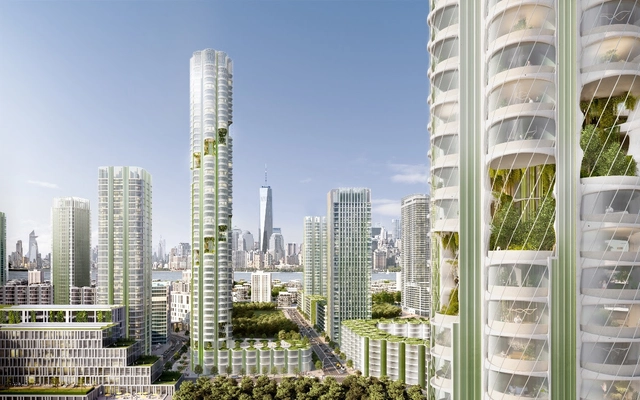
"What if the built environment could be a solution to the climate crisis, rather than part of the problem? What if buildings could act like trees – capturing carbon, purifying the air, and regenerating the environment?" Responding to these questions, Skidmore, Owings & Merrill (SOM) has proposed Urban Sequoia, an architectural concept inspired by the ecosystem at the 2021 UN Climate Change Conference in Glasgow - COP26. The design features “forests of buildings" that isolate carbon and produce biomaterials that create a new ecological and resilient urban environment.
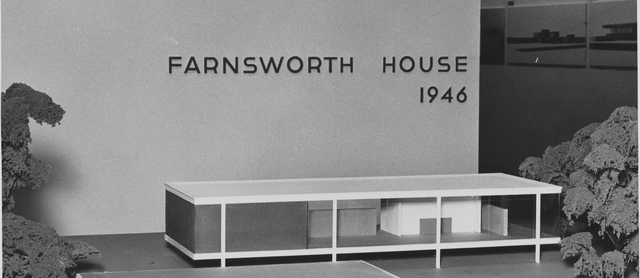
In this week's reprint, author Mark Alan Hewitt talks about models and their importance. "For those of us lucky enough to have grown up during the 1950s and ’60s, models were hot stuff—and not just the kind that statement may bring to mind", he states. Going back to the realistic models of the 70s, similar to today's virtual renderings, this essay retraces their history and the artists that produced them.
https://www.archdaily.com/969074/the-allure-and-importance-of-architectural-modelsMark Alan Hewitt
















_Nick_Merrick_for_Hedrich_Blessing_(10).jpg?1637696683&format=webp&width=230&height=230&crop=true)






.jpg?1646040749&format=webp&width=230&height=230&crop=true)
.jpg?1646040755&format=webp&width=230&height=230&crop=true)




.jpg?1636652992 "© SOM | Miysis")
.jpg?1636652975 "© SOM")
.jpg?1636652975 "© SOM")
.jpg?1636653008 "© SOM")