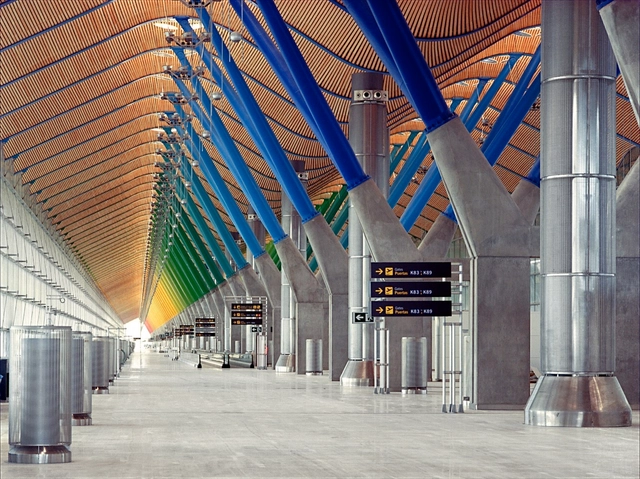
Airports require architectural solutions that not only respond to the efficiency of their spaces and circulations - both operational and passenger - but also to their connection with other transport systems and terminals.
Take a look at 10 airports/terminals and their plans and section below.
Archdaily had the chance to speak to SOM regarding the Transit-oriented development (TOD) projects. SOM has extensive engagement in planning, design and engineering on various means of conveyance, and TOD is definitely one of the speciality the SOM team has to offer. Through the interview, we will walk through the design strategies and their changes over the years of TOD Development, the challenges and new area of focus of TOD development, and most importantly, the interview will focus on the design strategy in developing TOD in China, where SOM has participated in many TOD projects, including the South Gateway of Guangzhou Central Axis, Guangzhou Nansha Pearl Bay and Xiong'an District Planing.
https://www.archdaily.com/965142/transform-the-city-into-a-highly-complex-block-system-som-on-tod-projects韩爽 - HAN Shuang
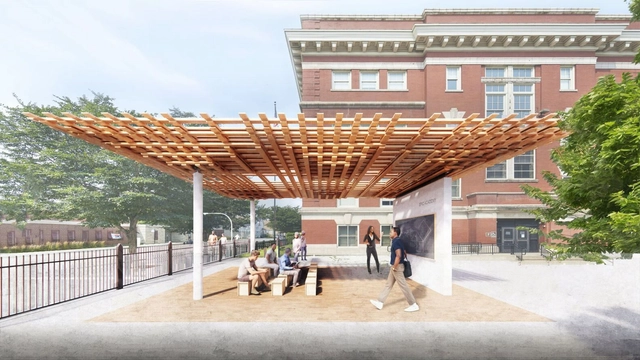
The Chicago Architecture Biennial has announced the cultural partners, which will be presenting programming in the form of lectures, panels, workshops or performances within this year's edition. SOM, Studio Gang, the Museum Of Contemporary Art are some of the over 100 museums, architecture studios and community organizations involved in the event. The 2021 edition of the Chicago Architecture Biennial will take place from September 17 until December 18 across various sites throughout the city. The Available City intends to highlight the potential of vacant urban areas as collective spaces through interventions developed in close collaboration with the local community.
Skidmore, Owings & Merrill was selected to design the Olympic Village for the 2026 Milan-Cortina Olympics following an international competition of 71 architecture studios from nine different countries. The project is part of the updated Porta Romana Railway Yard Master Plan, and will create a new center of activity in Porta Romana with minimal environmental impact. The self-sufficient project will feature residential, commercial, and public spaces, that change configurations based on the Olympics event.
Recent years have seen an increased acknowledgement of the collective endeavour that is architecture and a better valuing of the different professions that participate in the design process. Within every extraordinary building, structural engineering plays an essential role in delivering the architectural vision. The article highlights the past and present contributions of engineering to the built environment, personalities that have stood in the shadow of architects delivering their design intent, and the collaboration between engineers and architects today.
It would be an understatement to say that architecture is a profession that closely mirrors economic conditions. In this practice, we’ve all heard the stories or felt the experiences of recessions that were quickly followed by projects put on hold, a decreased pipeline of new business, and the unfortunate impact of layoffs and furloughs. The cyclical nature of the design field, paired with the pressure to meet the spatial needs for a growing global population in a time where the value of land has continued to sky-rocket means that architecture is naturally subjected to economic impacts in a significant way. But some economic theories predict that instead of the economy dictating the ebbs and flows of the design profession, architecture might be one of the influences causing economic downturns.
In the modern era of design where advancements in technology and construction have enabled architects to build better, faster, and taller, the sky’s the limit. Every few months, another headline boasts the tallest residential tower or the newly constructed office building that breaks yet another record for its impressive height. But as time goes on and new projects are completed, trends show that the United States is falling out of the spotlight in terms of being able to claim the title of world’s tallest building, and the drawing boards show that no American city will be reclaiming this title any time soon.
In the wake of the pandemic, designers and architects are rethinking and inventing innovative solutions for nearly every sector of design from hospitality, restaurants, workplace experience, and landscape architecture. According to the World Health Organization, 19 percent of factors that affect our health and well-being are directly related to the built environment, making architects and designers key to protecting public health.
https://www.archdaily.com/946945/architects-and-designers-urge-action-on-healthier-policy-prioritiesLeilah Stone
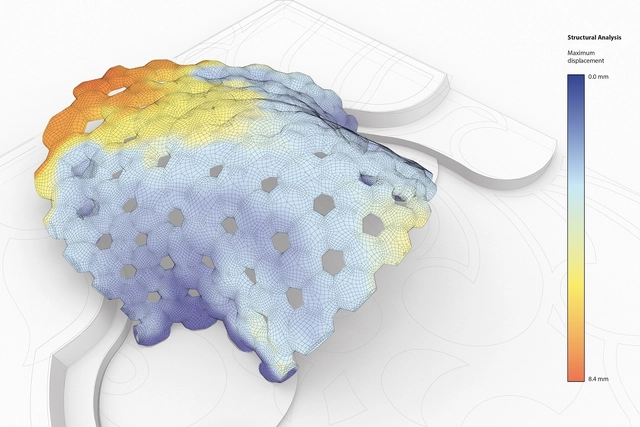
Structural analysis. Image Courtesy of Oliver Krieg
When we think of architectural visualization, sketches, drawings, and 3D renderings usually come to mind. This association is natural, as "visualization" is typically equated with imagining a project before it is built—whether to validate aesthetic and functional decisions or to communicate concepts to clients unfamiliar with technical drawings. However, beyond superficial elements like materials, layouts, textures, and colors, architects must also address highly technical, invisible factors that directly impact a building's performance.
Videos
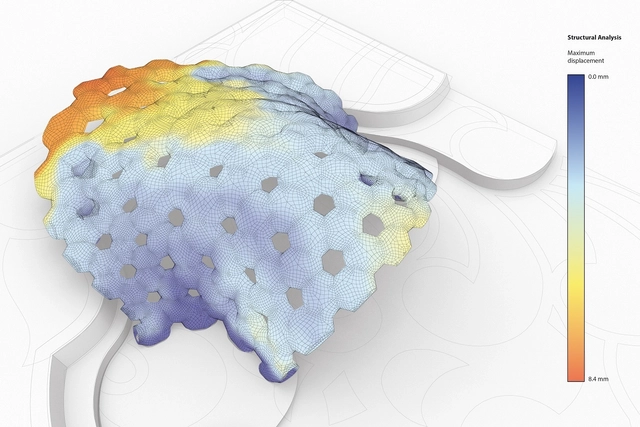
Análises estruturais. Image Cortesia de Oliver Krieg
When someone mentions architecture visualization, most immediately think of sketches, computational renderings, and drawings. This connection occurs because we almost always associate visualization with picturing a project that is not yet built, either for the validation of aesthetic and functional decisions or to represent the idea to a client, who is often unfamiliar with technical drawings. Yet in addition to considering superficial elements such as materials, plans, textures, and colors, when carrying out a project, the architect needs to be aware of technical issues that are invisible to the naked eye, which may directly influence the project.
Skidmore, Owings & Merrill (SOM) has signed a Memorandum of Collaboration with the European Space Agency (ESA) in order to further develop their existing research for Moon Village. Signed in Paris, by Colin Koop, Design Partner at SOM, and Johann-Dietrich Wörner, Director General of ESA, the announcement was made earlier this month.
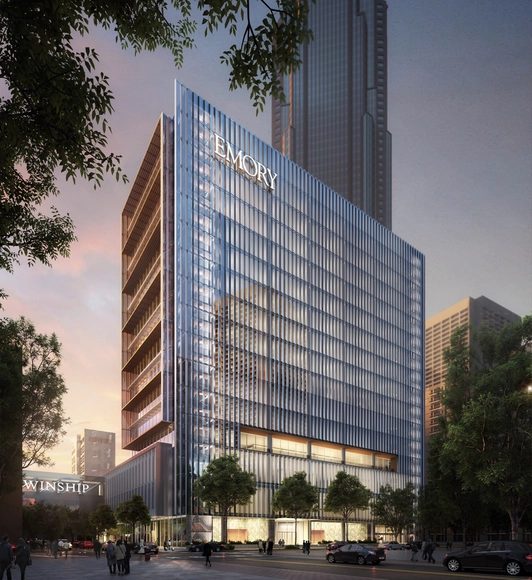
Designed by Skidmore, Owings & Merrill LLP (SOM) with local architecture partner May Architecture, the new Winship at Midtown facility for cancer care is an addition to the Emory University Hospital Midtown (EUHM) campus and the existing Winship Cancer Institute.
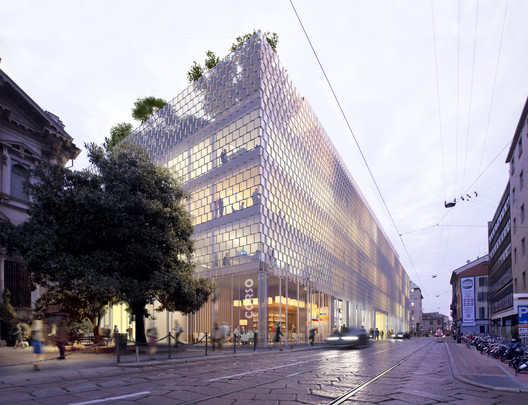
Skidmore, Owings & Merrill’s first venture in Milan is an adaptive reuse of an early 60’s building, originally designed by architects Gio Ponti, Piero Portaluppi and Antonio Fornaroli. The firm imagined a scheme that renovates the former Allianz Milanese headquarters while transforming the Corso Italia Complex into a modern office space.
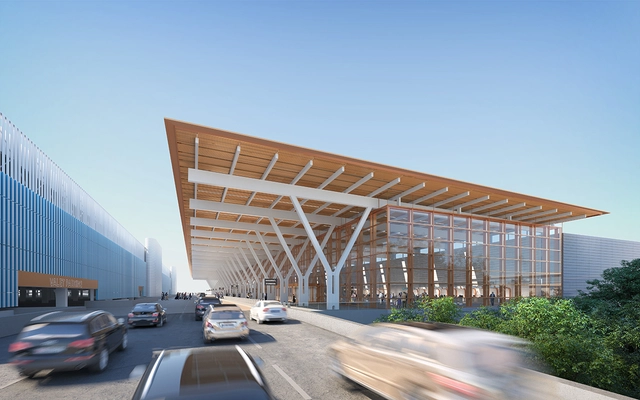
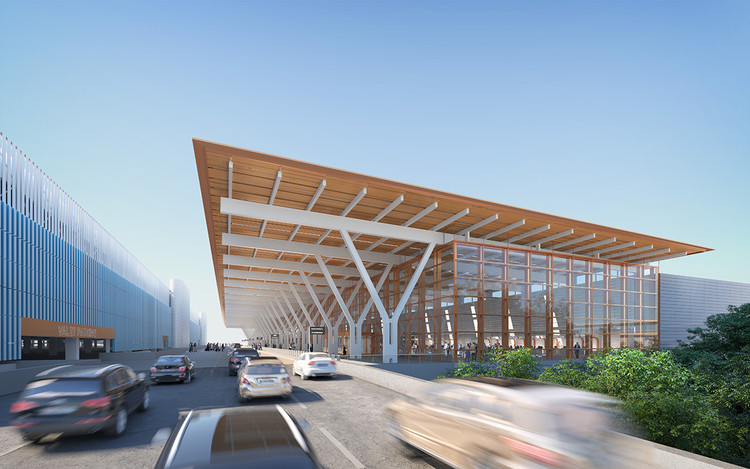
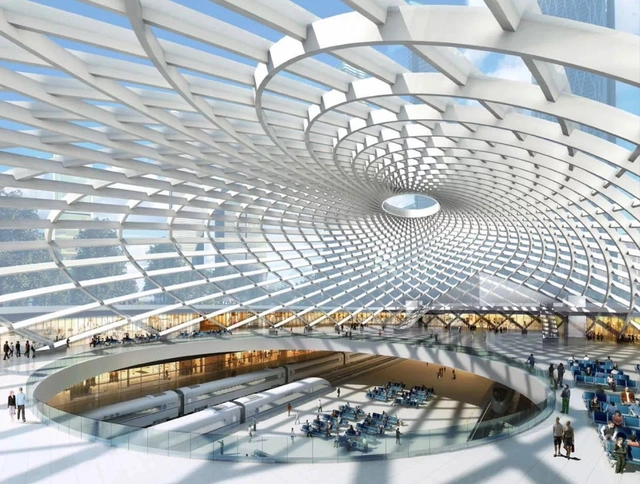
Skidmore, Owings & Merrill (SOM) have unveiled the latest design for Kansas City's new airport terminal. Working with the Kansas City Aviation Department, the City of Kansas City, Missouri and major airlines, the project is coming together with developer Edgemoor. The air travel hub that will be the largest single infrastructure project in Kansas City’s history.
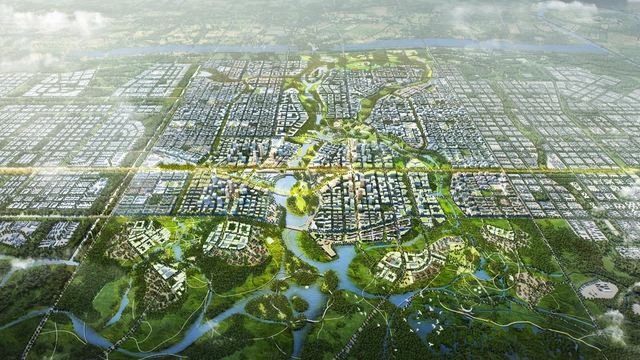
Skidmore, Owings & Merrill have been selected along with Tom Leader Studio to design the urban core for the Xiong’an New Area, China’s model city of the future. The winning scheme was selected from 12 finalists representing 10 countries, resulting from an international competition of 200 entries. The SOM and TLS scheme ultimately prevailed for its “global vision, world-class standards, sensitivity to Chinese heritage and culture, and innovative approach to urban design.”
https://www.archdaily.com/919230/som-and-tls-design-chinas-model-city-of-the-futureNiall Patrick Walsh


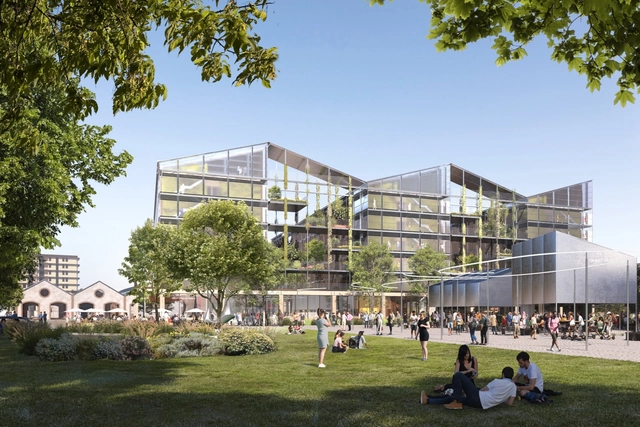
.jpg?1626424112 "© SOM | Pixelflakes")
.jpg?1626424111 "© SOM | Pixelflakes")
.jpg?1626424138 "© SOM | Pixelflakes")
.jpg?1626424121 "© SOM")











.jpg?1580136024&format=webp&width=230&height=230&crop=true)