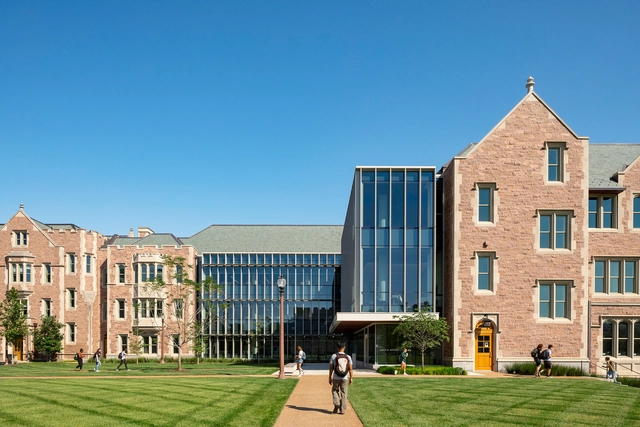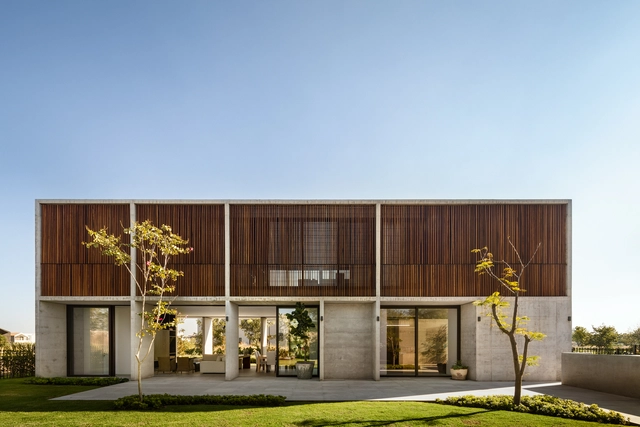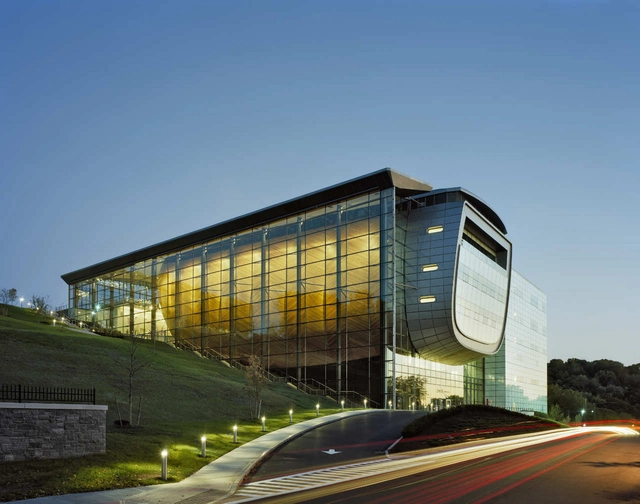
San Diego is a city tied to the ocean. In turn, its architecture responds to a variety of cultural influences and natural conditions. Home to diverse and distinct architectural styles, San Diego has everything from Queen Anne Victorian homes and craftsman bungalows to Spanish colonial revival structures. Besides monumental works like the Salk Institute and Geisel Library, San Diego is also home to a range of contemporary cultural and residential projects.
Broadly speaking, the performing arts are all those disciplines that take place on a stage, although the main ones are dance, theatre and music. However, parades, religious processions, holiday celebrations and carnivals also have a clear scenic quality. That is why the stage space is so important not only for the presentations of these disciplines but also for carrying out a whole bodily and spatial process that is supported by the architecture.
There are several reasons why Quintana Roo —a state located in the southeastern region of Mexico— has an important cultural wealth. One of them is because of world-class tourism which has led it to have one of the eight international airports in Mexico in addition to being praised by the World Tourism Organization.
There are several reasons why the Estado de Mexico (a state, not the country) is important not only at the national level but also because of its intrinsic relationship with Mexico City since 59 of its municipalities are considered part of the Metropolitan Area of the Valley of Mexico. In this area, there are a large number of industrial plants. In addition, it houses some of the most visited archaeological sites such as Teotihuacán, Tetzuco, Azcapotzalco, Chalco, and Amaquemecan.
In a Design and the City episode - a podcast by reSITE on how to make cities more liveable – Mexican architect Michel Rojkind talks about running, coming from a musical background, and the responsibility of architects to create buildings that can “give something relevant” back to the community. The interview delves into Rojkind’s philosophy of making sure that architectural conversations are not insular, but instead conversations that take place within a multi-disciplinary context.
Mexican architect Michel Rojkind has been named the senior vice president of architecture at WeWork. A native of Mexico City, Rojkind founded the Rojkind Arquitectos office in 2002 focusing on design, tactical and experiential innovation, maintaining an architectural vision that will shape integral experiences, connecting the complexities of each project to a deeper level to positively impact society and the environment. This vision was what led him to connect perfectly with the WeWork approach.
The dramatic improvement in recent decades in our understanding of sustainable design has shown that designing sustainably doesn't have to be a compromise—it can instead be a benefit. When done correctly, sustainable design results in higher-performing, healthier buildings which contribute to their inhabitants' physical and mental well-being.
The benefits of incorporating vegetation in façades and in roofs, as well as materials and construction systems that take energy use and pollution into account, demonstrate that sustainable design has the potential to create buildings that improve living conditions and respect the natural environment.
Below we have compiled 30 plans, sections and construction details of projects that stand out for their approach to sustainability.
Seeing the space of an auditorium in section is a key tool in allowing us to approach a design's of acoustics, accessibility, and lighting. These components are what make the design of an auditorium a complex task, requiring detailed and specific studies.
There are a number of ways to design an auditorium that offers multiple responses to these challenges. For this reason, we have selected a number of sections from different auditoriums that can help you understand how other architects have solved the challenge.
Check out the 30 auditorium sections below, they are sure to inspire you!
Richard Meier & Partners has completed 3 new mixed-use buildings as part of their “Teachers Village” master plan in downtown Newark, New Jersey. The development, led by RBH Group, centers around two Charter Schools completed by Meier & Partners in 2013, to provide a variety of retail spaces and 123 residential units marketed specifically at teachers.