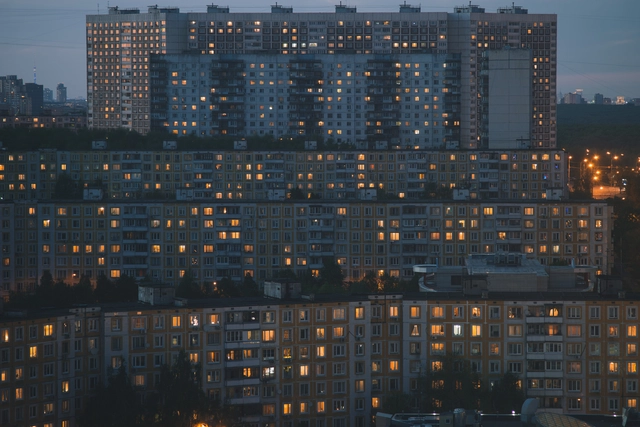
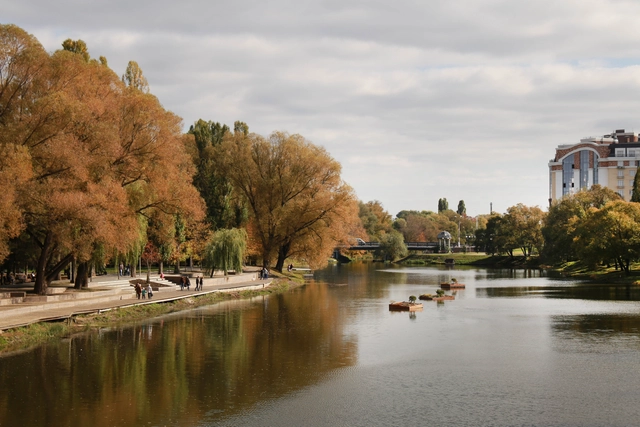
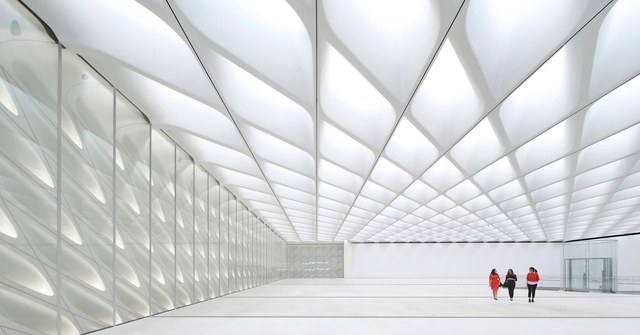
Since the end of World War II, Russia’s cities have grown in a Modern Soviet style. This prolonged use and application of the principles of architecture’s modern movement heavily affected the country’s development and urban expansion. But now, the new generations of architecture professionals are seeking to make a change.
During our past trips to Russia - in cities such as Moscow, Kaliningrad, Belgorod and even Grozny, the capital of the Chechen Republic - we documented the subtle pastel exteriors found in several cities around the world’s largest country. From neoclassical, to modernist and brutalist buildings, to public spaces and urban intra-structures such as metros, bridges and squares, pastel colors stand out as an essential, cohesive part of Russian identity. See a small selection of pastel-colored urban images below.
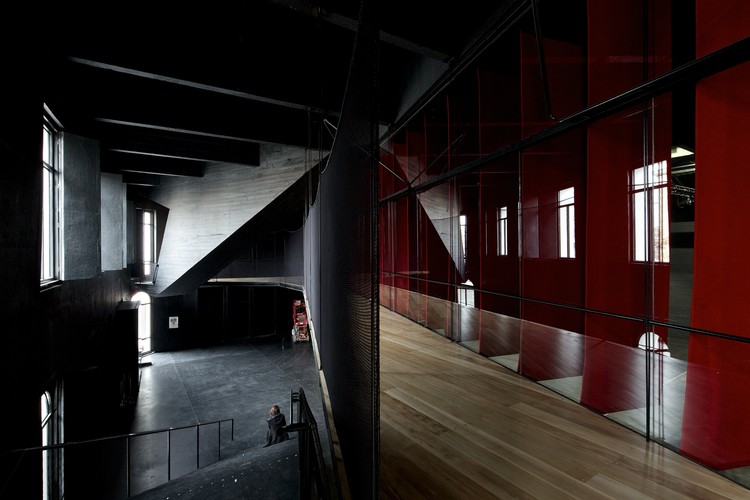
It is so refreshing to hear the words: “We do everything differently. We think differently. We are still not a part of any system or any group.” In the following excerpt of my recent conversation with Liz Diller and Ric Scofidio at their busy New York studio we discussed conventions that so many architects accept and embrace, and how to tear them apart in order to reinvent architecture yet again. In New York the founding partners of Diller, Scofidio + Renfro have shown us exactly that with their popular High Line park, original redevelopment of the Lincoln Center, sculpture-like Columbia University Medical Center in Washington Heights, and The Shed with its movable “turtle shell” that’s taking shape in the Hudson Yards to address the evolving needs of artists because what art will look like in the future is an open question.
Time Magazine’s list of the World’s Greatest Places 2018 celebrates 100 destinations to visit, stay, eat, and drink from around the world. Chosen by Time’s global team of editors and correspondents, the contenders have been evaluated on quality, originality, innovation, sustainability, and influence.
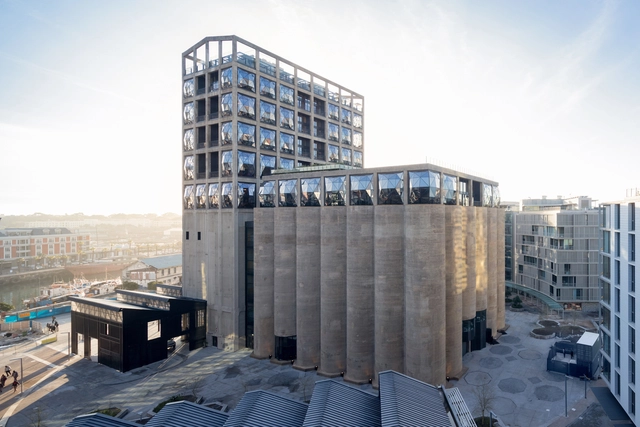
The list features many architectural delights young and old, designed by famous architects past and present. Ranging from a treehouse in Sweden to a soaring art museum in South Africa, the projects are united by their architectural excellence, worthy of exploration by both architects and the general public.
https://www.archdaily.com/901009/22-of-the-worlds-greatest-architecture-projects-selected-by-time-magazineNiall Patrick Walsh
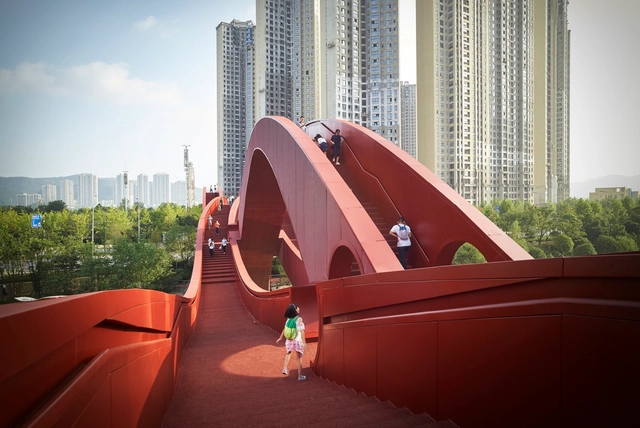
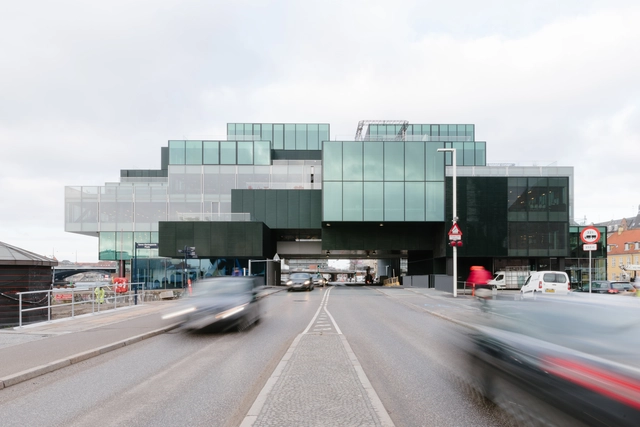
This week, colorful projects are here to steal the show. Few architects have dared to use color in their works, however, when done so the results can be incredible. Here is a selection of 15 images from prominent photographers such as Gregori Civera, Julien Lanoo and Subliminal Image that show us the huge potential of color.
The House of Soviets is a Russian brutalist building designed by architect Yulian L. Shvartsbreim. Located in the center of Kaliningrad, the building has been abandoned since mid-construction. However, its inhabitants recognize it as the most important urban landmark in their city. They usually refer to the structure as "the face of the robot," since its strange shape conjures images of a robot buried up to its neck, only showing its face.
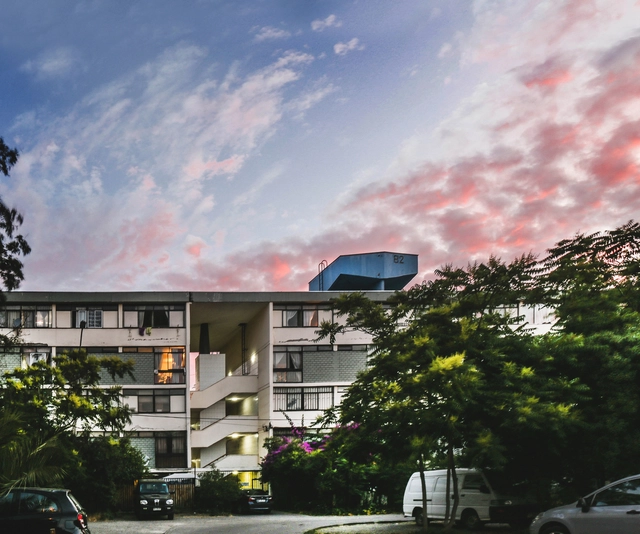
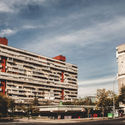
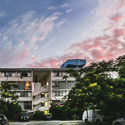
The modern movement was a key player in the cultural construction of Chile in the 20th century. Although the first projects came from the private sector, their urban and landscape principles were adopted by the modernizing project of the welfare state that began to be built after the social conflicts that exploded in the 1920s.
During chile's industrialization process, the State's housing construction incorporated concepts such as liveability, and universal access to housing and sanitation, which were put to the test early on in the reconstruction of cities such as Chillán after the 1939 earthquake. As Chile is a country that is familiar with earthquakes, it was necessary to readjust the concepts of the modern movement to national structural requirements, that is, resizing the reinforced concrete sections, which gave them a heavier visual expression than in Brazil or Argentina.
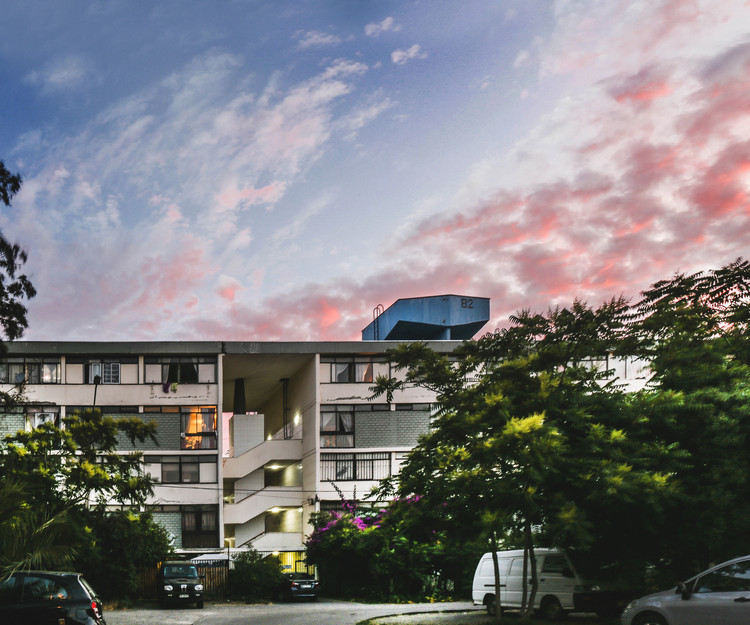
From the daring vision of Sergio Larraín García-Moreno and Jorge Arteaga in the Oberpaur building - the first of the modern movement - to the urban visions of BVCH in the Villa Portales, or the first exercises in height in the upper middle class sectors, the modern movement has left its mark on our society and in our cities. However, only one of the projects presented here is declared a historical monument.
In this edition of the architectural guides, we present you twenty chronologically ordered projects that reflect the evolution of the modern movement in Santiago, Chile.
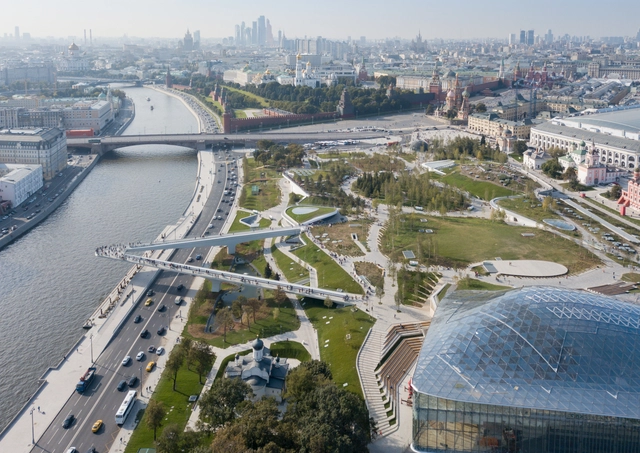
A UNESCO designated World Heritage site, Red Square is the historic center of not only Moscow but Russia’s cultural life. In the 1400’s, this city center was a poor, blighted area until Ivan the Great called on Italian architects to help him build the Kremlin, or fortress. This outdoor urban space is now home to St. Basil’s Cathedral, the State Historical Museum, the GUM Department Store and Vladimir Lenin’s mausoleum. St. Basil’s is one of the most recognizable buildings in Russia due to it’s unique domes, towers, cupolas, spires and arches. Some of the best Russian history and art lives behind the distinctive red brick walls of the State Historical Museum. The GUM Department Store makes Red Square a luxuriant shopping destination. In it’s lifetime, the Square has hosted innumerable speeches, parades, rock concerts and festivals.