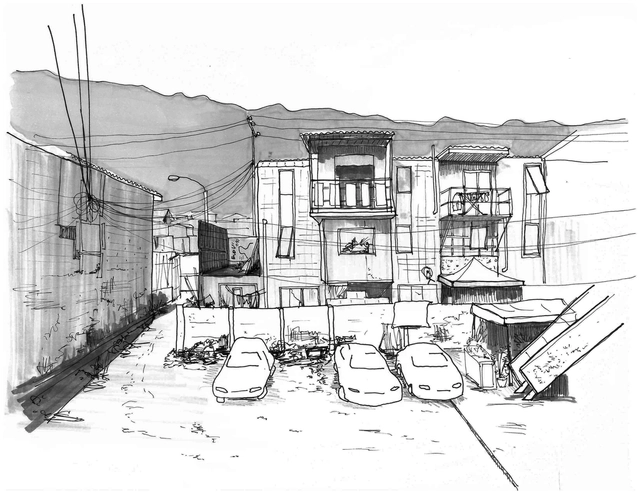
Vista de un espacio colectivo en la actualidad. Image Cortesía de Ninoska Nazor
Here, the ARKRIT Collective presents three hypotheses that stabilize and support the potential liberal logic behind the Quinta Monroy project by the firm ELEMENTAL, in light of the current reality of this social housing complex fifteen years after its construction—a reality that begs the question: did this project succeed in addressing inequality in Chile?
https://www.archdaily.com/1113963/inequality-is-elemental-ideological-conjectures-for-a-critique-of-quinta-monroyFabián B. Di Giammarino
The close relationship between architecture and landscape in Latin America is undeniable. This is due not only to the region's geographical, climatic, and ecological diversity, but also to how these countries have built and shaped their cities amidst progress and setbacks. Among these ongoing achievements is a growing respect for the landscape, an architectural language tailored to its context, and solutions designed for its diverse climates.
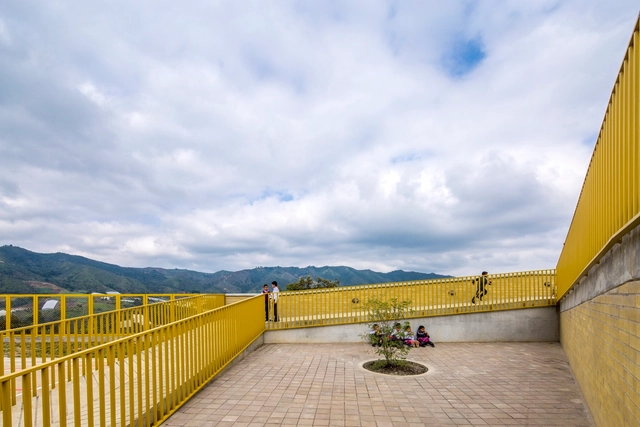
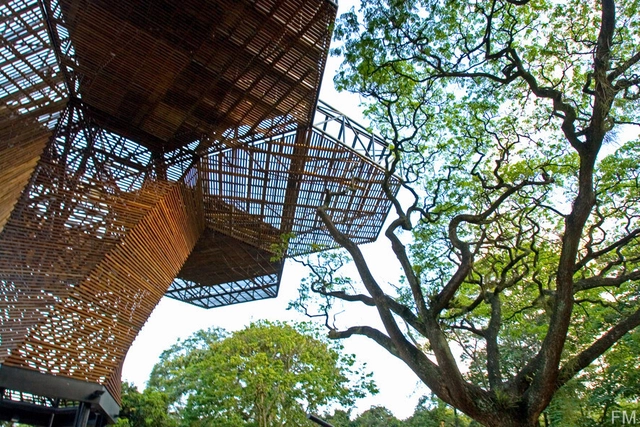
For this selection, we have chosen 10 projects in Colombia that have successfully adapted to their landscape, both in form and construction, across both urban and rural contexts.
Can we discuss architecture through the lens of memory and reconciliation? "How do we create spaces of memory? What is living memory?"
This event stems from the conviction that it is possible to debate memory and reconciliation through architecture and urbanism. As we mark the 15th anniversary of the Truth and Reconciliation Commission's final report, it is essential to create a space where these topics can be presented and discussed.
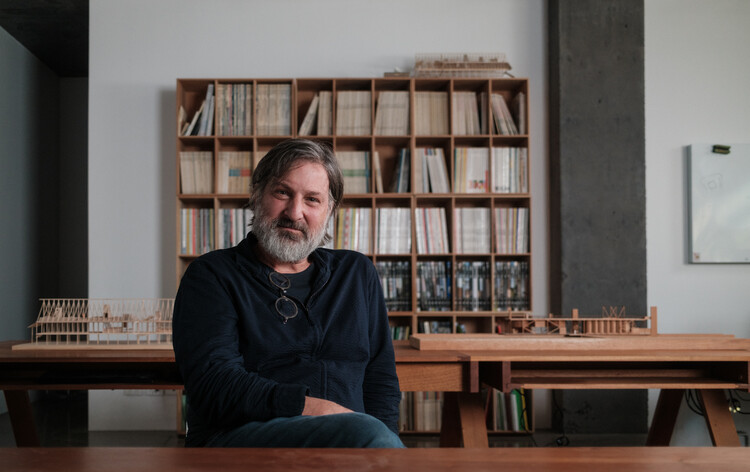
Smiljan Radić's architecture often begins elsewhere: in a memory, a journey, a material, a stone, a half-seen structure, or a situation not yet organized as an architectural idea. In "Architecture: Distraction and Knowledge," his 2026 Pritzker Architecture Prize Laureate Lecture, distraction does not appear as a lack of focus, but as a way of receiving the world. It is through these peripheral encounters — travel, ruins, cities, stories, industries, and materials — that architectural knowledge slowly accumulates.
When Radić was announced as the 2026 Pritzker Architecture Prize laureate, the recognition did not simply confirm a body of work already known for its material strangeness. It also clarified an architectural position that has long resisted easy translation into theory, or style, or spectacle. Radić's work is often described through oppositions: heavy and light, primitive and industrial, fragile and monumental, shelter and object, ruin and apparition. Yet these terms only partially account for the force of his architecture. What makes the work difficult, and increasingly necessary, is its refusal to become fully legible as a claim of certainty.
On March 12, the Chilean architect of Croatian descent, Smiljan Radić Clarke, was awarded the 2026 Pritzker Architecture Prize. The jury highlighted his "unorthodox approach to design," which "may initially appear unusual, unexpected, even rebellious; yet, far from producing alienation or estrangement, his anti-canonical stance feels fresh and unprecedented. It conveys the unmistakable sensation of encountering something new." This recognition will be celebrated with the annual Pritzker Architecture Prize Laureate Lecture and Panel Discussion, to be held in Mexico City at the Universidad Nacional Autónoma de México (UNAM), at the Faculty of Architecture's Teatro Estefanía Chávez, on May 12, 2026.
The 2026 Pritzker Price Award has been awarded this year to the Chilean architect of Croatian descent, Smiljan Radić Clarke. Born in Santiago, Chile, in 1965, his practice evokes a geography of extremes, shaped by the tectonic tension between the staggering weight of the Andes and the seismic instability of the territory. After graduating from the Pontifical Catholic University of Chile and pursuing further studies in aesthetics in Venice, Smiljan Radić Clarke established his base in Santiago. From there, he has developed one of the most singular visions in contemporary architecture. His work privileges the intensity of the moment through a fragile architecture. Within it, the building operates as a temporary and tactile refuge that places the spectator in a state of aesthetic uncertainty, oscillating between ancestral ruin and avant-garde artefact.
Across South America, architecture endures through the materials it uses, those that persist over time. Bamboo, brick, wood, and concrete appear across regions, connecting climate, labor, and culture in ways that ensure their persistence through generations. Their continuity does not depend solely on preservation or heritage. It depends on use.
In this context, cultural memory does not reside primarily in monuments or images, but in practice. It survives in repeated gestures: laying bricks, tying guadua joints, assembling wood frames, casting slabs that anticipate another floor. These actions are transmitted less through manuals than through participation. Over time, they form systems of knowledge embedded in habit and necessity. Materials endure not because they symbolize the past, but because they continue to work.
Founded by architect Marina Canhadas in 2018, the practice [entre escalas] emerged from the intersection of professional practice, academic research, and international experience. With a career shaped by competitions, collaborations, and tenures at firms in Brazil and Mexico, Marina has consolidated an approach that values context and building history, particularly in projects dealing with pre-existing structures—one of the firm's primary areas of focus.
[entre escalas]' work stands out for its sensitivity to time and building memory. Renovations of historic townhouses, such as Casa Saracura and Casa Apiacás, reveal a kind of architectural archaeology that seeks to recover original techniques, materials, and even natural flows, reinterpreting these elements to foster new possibilities of use and connection with the surroundings. The act of removing layers—both physical and symbolic—is seen as a way to reveal hidden histories, connecting past and future.
The 19th edition of the Venice Architecture Biennale officially opened to the public on May 10, becoming a significant international platform for exploring the current state of global architecture and sparking conversations about the challenges the discipline faces today—both shared and specific to each territory. This year’s theme, "Intelligens. Natural. Artificial. Collective," proposed by general curator and Italian architect Carlo Ratti, invites reflection on architecture’s interconnection with other fields—such as art, artificial intelligence, and technology—while also emphasizing the importance of territories, landscapes, and, above all, the people who collectively shape our built environment.
2025 promises to be a landmark in architecture, heralding a vibrant renaissance of creativity and exploration. As societies confront challenges such as climate change, rapid urbanization, and technological evolution, architecture is both a mirror to these dynamics and a compass pointing toward a sustainable and inclusive future. This year's architectural calendar offers abundant opportunities to celebrate the discipline's transformative power — from boundary-pushing festivals to thought-provoking exhibitions that explore pressing cultural and environmental narratives.
From well-established biennials to inaugural gatherings, including the World Architecture Festival 2025, Desert X Al Ula, and the COP Climate Conference, the 2025 calendar highlights themes such as sustainability, heritage, and community. These events underscore architecture's unique ability to shape a better future, addressing global challenges while honoring cultural diversity and design ingenuity.
Architecture has long been understood as a powerful tool for shaping the physical environment and social dynamics within it. However, its potential to foster social equity is often overlooked. Empathy-driven design invites architects to approach their work not only as creators of space but as facilitators of human connection and community well-being. This approach centers on understanding people's lived experiences, struggles, and aspirations — particularly marginalized communities — and responding to their needs through thoughtful, inclusive architecture. It goes beyond aesthetics and functionality, instead focusing on creating spaces fostering dignity, accessibility, and social equity. By prioritizing empathy, architects can design environments that uplift communities, address disparities, and create inclusive spaces that promote positive societal change in a tangible, human-centered way.
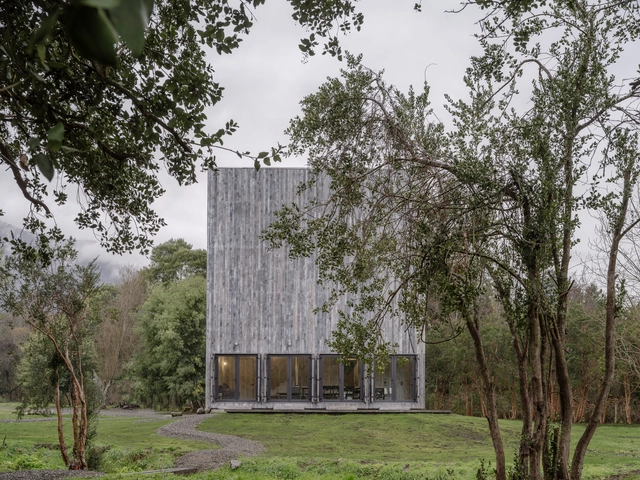
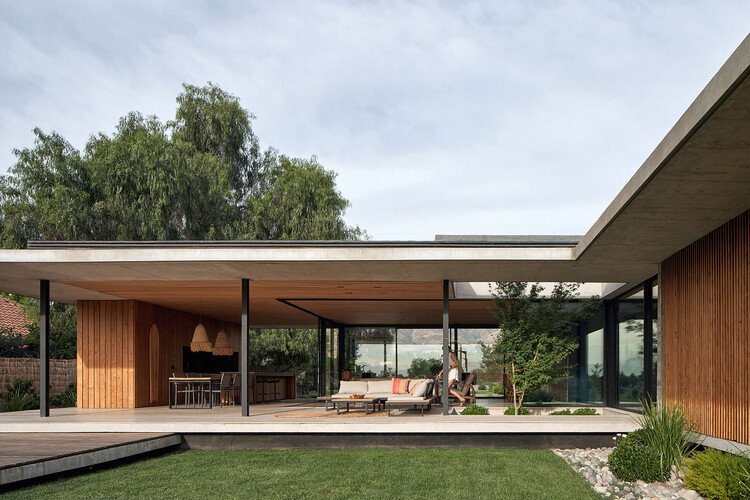
The use of wood in Chilean house construction reflects the utilization of a renewable resource available in the country. Moreover, it can be an extremely sustainable material when produced and processed under certain conditions, as it can have a very low carbon footprint. It is characterized by its warmth, resistance, and durability as a construction system.
Founded by architects Felipe Mesa and Federico Mesa, the Plan:b arquitectos studio is located in the city of Medellín, Colombia, bringing together building design, participation in academic activities, and the construction of concepts capable of connecting architecture with the urgent realities of everyday life. Understanding the architectural project as a provisional pact, permeable configuration, and positive expression of eco-social constraints, they have constructed a large number of buildings of various scales and programs since 2000, ranging from public, educational, and sports spaces to housing, offices, hotels, and installations.
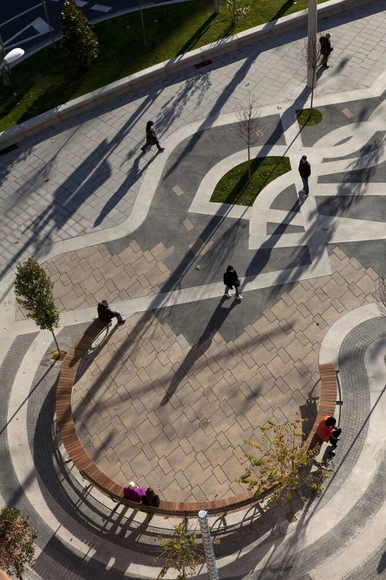
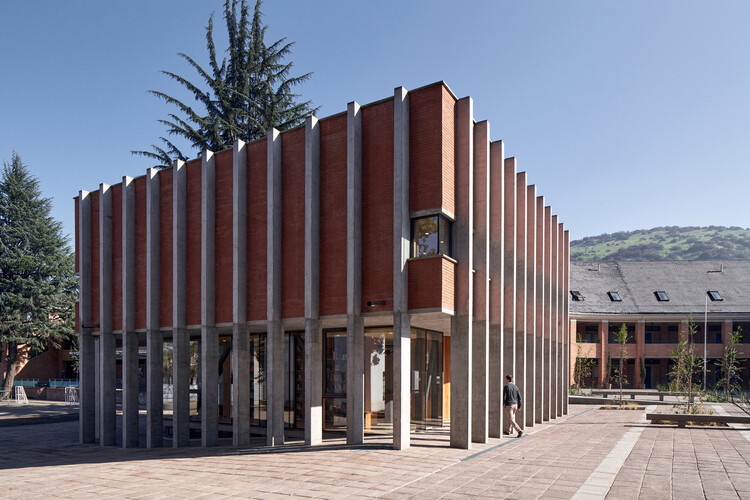
Concrete, in its various facets, exhibits an interesting duality thanks to its aesthetic and technical qualities, which have been explored by architects and designers in different typologies and contexts. On the one hand, reinforced concrete displays the strength and durability required for large-scale construction, efficiently withstanding adverse weather conditions. On the other hand, the malleability of stamped concrete allows it to elegantly adapt to complex shapes and imprint patterns on the surface, utilizing texture and pattern to cultivate a distinct atmosphere within the built environment.
Stamped concrete has gained prominence due to its durability and versatility, offering options and designs that adapt to different architectural styles. However, while we are familiar with its use and applications, specifying it requires a meticulous approach to ensure optimal results. Below is a practical guide covering the essential considerations from Melón Hormigones for specifying this innovative material, from pattern selection to proper care and maintenance.
https://www.archdaily.com/1078784/practical-guide-and-essential-considerations-for-specifying-stamped-concreteEnrique Tovar












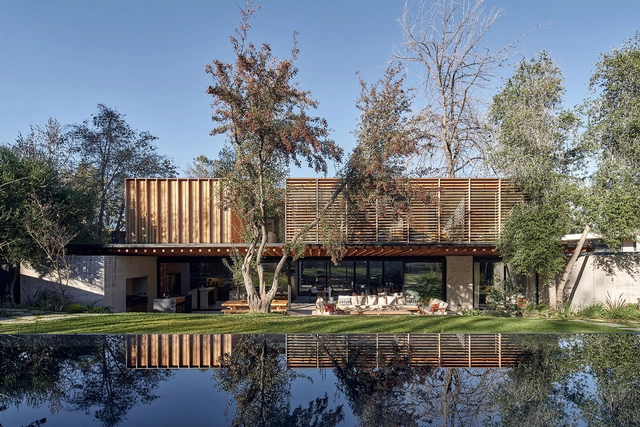


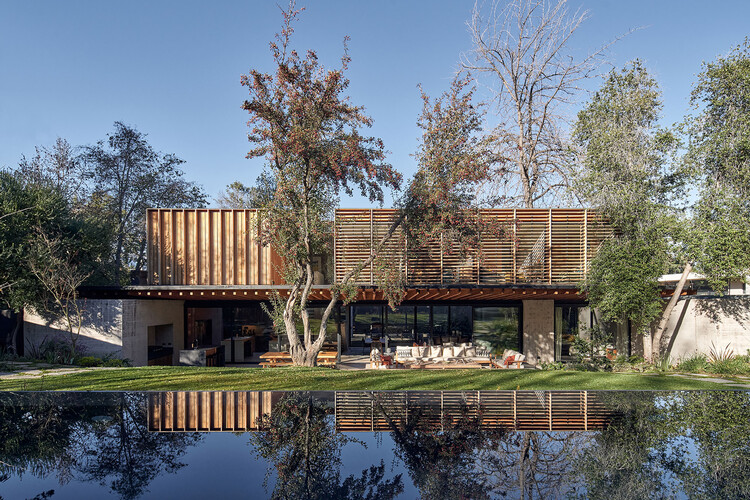
![From the object to the city, in search of possible poetics: interview with [entre escalas] - Featured Image](https://snoopy.archdaily.com/images/archdaily/media/images/686d/58dd/c677/407c/837f/55e8/slideshow/do-objeto-a-cidade-em-busca-de-poeticas-possiveis-entrevista-com-entre-escalas_1.jpg?1751996647&format=webp&width=640&height=580)


![From the object to the city, in search of possible poetics: interview with [entre escalas] - More Images](https://images.adsttc.com/media/images/686d/58dd/c677/407c/837f/55e8/newsletter/do-objeto-a-cidade-em-busca-de-poeticas-possiveis-entrevista-com-entre-escalas_1.jpg?1751996647)