Architects assume a significant amount of responsibility when it comes to considering designs that will be successful for not just their clients, but any person who inhabits or is impacted by their spaces. Topics of sustainability, social inclusion, economic opportunities, and overall urban equity, have consistently been top of mind in recent years, ultimately creating a new holistic approach to designing for a better future, that many people are referring to as Environmental, Social, and Governance metrics, more commonly known as ESG.
MVRDV has won a competition to design a mixed-use residential and commercial complex on the edge of Jiangbei New Area’s Financial District in Nanjing, China. Dubbed "Oasis Towers", the two 150-metre-tall towers are surrounded by lush landscapes, and will provide residents a green haven within a dense and rapidly developing part of the city.
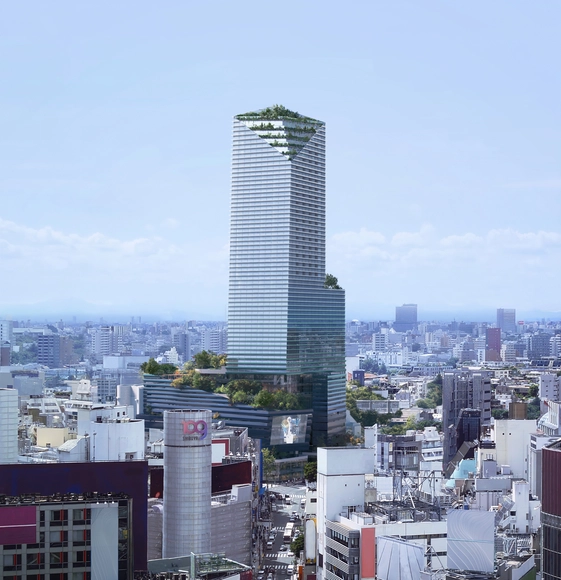
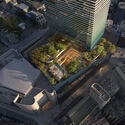
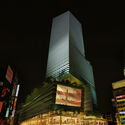
Snøhetta has unveiled the design of its largest project in Japan to date, the Shibuya Upper West Project for Tokyu Corporation, L Catterton Real Estate, and Tokyu Department Store. The project aims to offer cultural experiences in tune with the vibrant Shibuya district of Tokyo, known for its bustling crowds, big screens, and the crossing in front of the Shibuya Station Hachikō. The 36-story tower will include a cultural complex, retail spaces, a contemporary hotel, and rental residencies.
In addition to their primary function, roofs are one of the most fundamental elements in the aesthetics of a building, taking different shapes, being composed of different structures and sealed by different materials. But, in addition to aesthetics, roofs need to meet the climatic conditions of where they are located, considering the periodic changes related to rain, sun and winds.
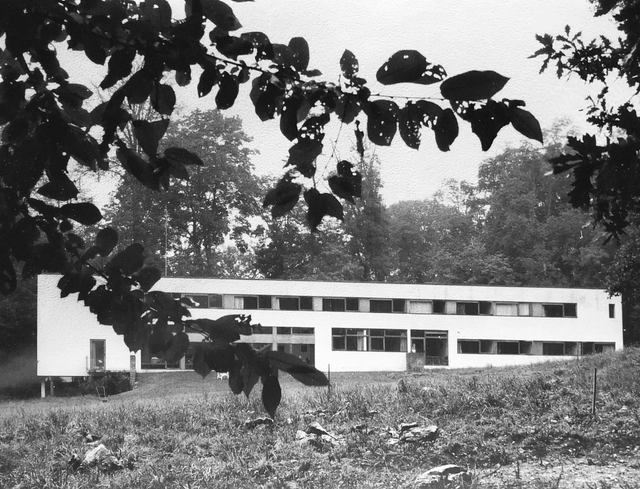
Exterior view of l’Eau Vive hospital, Soisy-sur-Seine, France, 1960s. Image Courtesy of Archives of Nicole Sonolet, collection of Christine de Bremond d’Ars
What would it mean to design buildings that exceed the economic accountings of liberal biopolitics, that instead offer an entirely different rationale for supporting health? In the years that Michel Foucault conceptualized the term biopolitics, he was part of a constellation of researchers and architects who developed care praxes that defined the value of life and its maintenance through a desire-based calculus. The welfare state institutions of architect Nicole Sonolet in particular—mental hospitals, public housing complexes, and new village typologies built mainly in postwar France and postcolonialAlgeria from the 1950s to the 1980s—were designed not only to support but to center the needs of people often excluded from design processes. Sonolet’s mental health centers for residents of Paris’s 13th arrondissement, in particular, were key projects for discovering a design practice tied to the provision of care for its own sake.
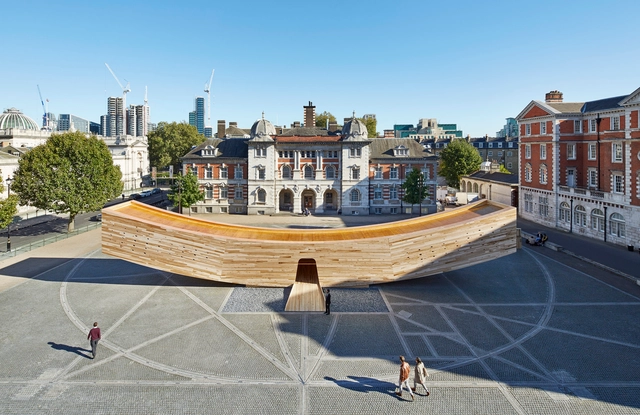
The Smile. Image Courtesy of Alison Brooks Architects.
London-based architect Alison Brooks was born and grew up in Canada and studied architecture at the University of Waterloo in Waterloo, Ontario. Upon graduation in 1988, she left for London where after working with designer Ron Arad for seven years she started Alison Brooks Architects in 1996. Her most representative works include the Stirling Prize-winning Accordia Brass Building in Cambridge, Exeter College Cohen Quad in Oxford, the Smile Pavilion for the 2016 London Design Festival, and several expressive single-family residences in London: VXO House, Fold House, Lens House, Mesh House, and Windward House.
Among the studio’s current projects are The Passages in Surrey, Canada; Homerton College in Cambridge, and other residential and cultural projects throughout Britain and in North America. This month the architects’ design was shortlisted for the LSE Firoz Lalji Global Hub and Institute for Africa in London. Together with Nigerian practice Studio Contra, the ABA-led team was one of six finalists chosen from 190 international submissions.


_Adolf_Bereuter.jpg?1621381914&format=webp&width=640&height=580)
_Adolf_Bereuter.jpg?1621380490 "© Adolf Bereuter")
_Adolf_Bereuter.jpg?1621381381 "© Adolf Bereuter")
_Adolf_Bereuter.jpg?1621380521 "© Adolf Bereuter")
_Adolf_Bereuter.jpg?1621375907 "© Adolf Bereuter")
_Adolf_Bereuter.jpg?1621381914)