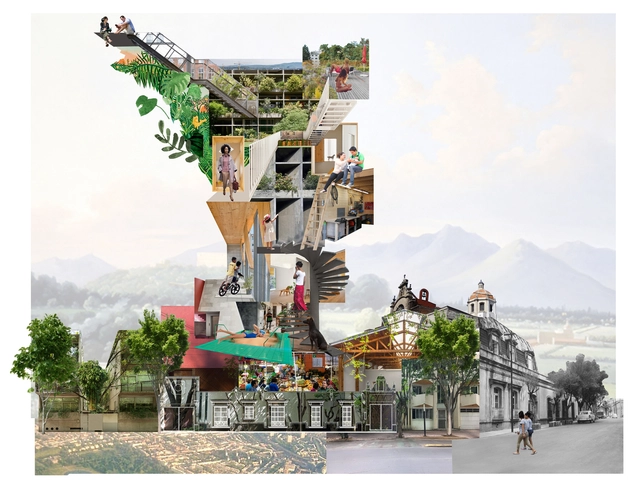
These days, it is common to hear multiple voices addressing the diverse issues of contemporary architecture. The topics are numerous, ranging from sustainability and inclusion to social justice and the crisis in land use. At first glance, there is no common ground where all these concepts can coexist transversally. However, if we look back, we can see that beyond the formal architectural concepts, the true purpose of architecture (probably) lies in the people and the lives that develop within it.
Thus, many would argue that life is likely more important than architecture, which could open up a broad debate. What is certain is that currently, narratives and voices are emerging and consolidating, aimed at renewing architectural tools and languages. This transformation seeks to turn the built environment into a space that promotes a more equitable and optimistic future for all. One of these voices is that of Tatiana Bilbao, recognized for her process-centered approach where life and human interactions play a crucial role in defining habitats.
https://www.archdaily.com/1018888/life-changes-in-seconds-but-architecture-never-changes-in-conversation-with-tatiana-bilbaoEnrique Tovar
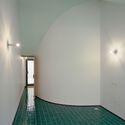
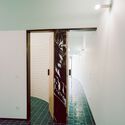
Personalization of architectural and design elements has become an important global trend in the creation ofexceptional and individualized spaces. These days, anything that can be personalized is fair game, with both clients and architects eager to stand out and create designs that are a true reflection of their personal tastes and lifestyles. In the realm of porcelain tiles, personalization is a key way to infuse design with personality, which the brand Kaolin has been focusing on through its Customization Program.
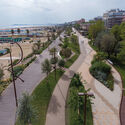
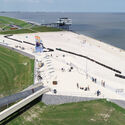
The Centre de Cultura Contemporània de Barcelona (CCCB) has announced the finalists for the European Prize for Urban Public Space 2024. Selected from a total of 297 projects corresponding to 35 European countries, the 2024 edition nominates 5 finalists in the General category, promoting quality public spaces throughout the European territory, and 5 in the Seafronts category, addressing coastal cities' climate vulnerabilities. The European Prize for Urban Public Space is an honorary biennial competition aiming to highlight best practices and innovations in the creation, transformation, and recovery of public spaces in European cities.
As the first edition to include a dedicated category for Seafronts, this year’s awards recognize the importance and particular challenges faced by coastal cities. This is aligned with the Cultural Regatta, a schedule of activities running parallel to the America's Cup sailing competition in Barcelona. For this edition, the International Jury was presided over by the urbanist architect, landscape, and industrial designer Beth Galí, and made up of Sonia Curnier, Fabrizio Gallanti, Žaklina Gligorijević, Beate Hølmebakk, Manon Mollard, Francesco Musco, and Lluís Ortega. The winners of the 12th European Prize for Urban Public Space will be announced during a ceremony at CCCB on October 29, 2024.
Courtesy of Foster + Partners | Larnaka Masterplan
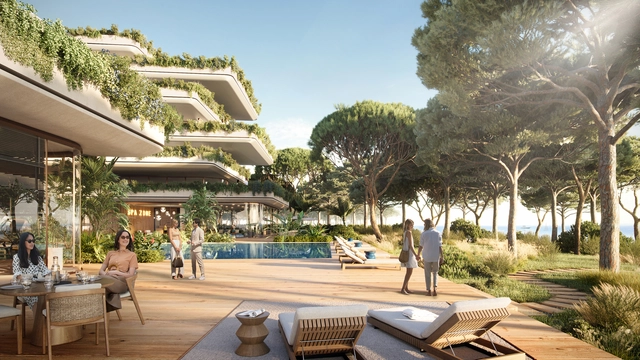
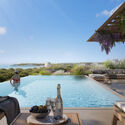
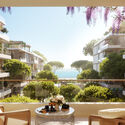
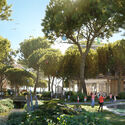
Foster + Partners has started the design work for the initial phase of the “Land of Tomorrow” master plan in Larnaka, Cyprus. Aiming to transform Larnaka’s seafront into a vibrant, sustainable community, the first phase focuses on residential developments. Featuring commercial shops, including shops, offices, and restaurants, the master plan focuses on seamless integration with the seafront and emphasizes connections to natural surroundings.
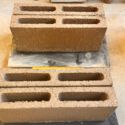
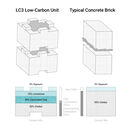
It’s now clear that approximately 80% of emissions from landscape architecture projects come from materials. This includes the extraction of natural resources, and their manufacturing, transportation, and construction in parks, plazas, streets, campuses, and neighborhoods. A significant portion of emissions in the built environment can be traced back to two materials: concrete and metal, which includes steel and aluminum.
The challenge lies in the fact that we use a large amount of both materials, they are difficult to replace due to their strength and utility, and improving their environmental impact is a complex process. But progress is being made.
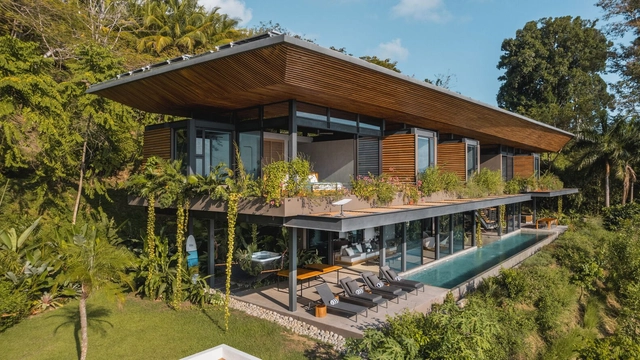
Discover the latest issue of Sky-Frame's 'My Point of View' with architect David Montalba.
David Montalba was born in Switzerland but grew up in California. He became a passionate surfer, bobbing in the waves of the Pacific, staring at the land, yet always feeling and hearing the ocean around him; profoundly connected to nature.
“I was surfing by the time I was 12 or 13, and it was my driving force probably all the way up to 18 or 19,” he notes. “It brought a kind of spirituality to my life. That was when I felt most connected to nature and I was truly with myself… It’s still a really special thing for me. It’s one of those things that can both ground you and connect you with nature in a unique way.”
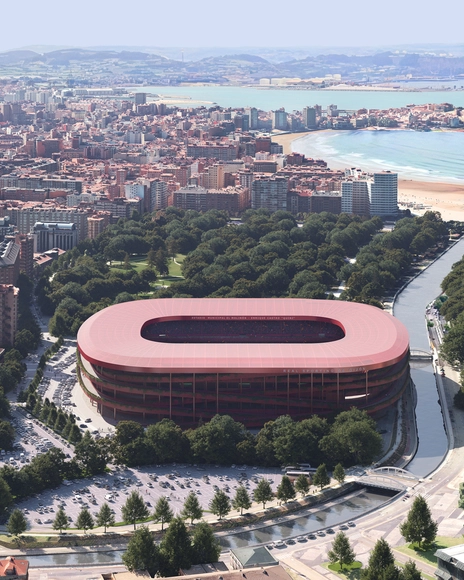
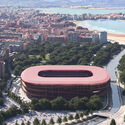
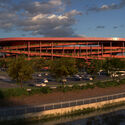
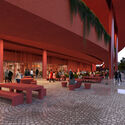
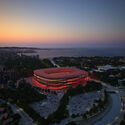
In preparation for the city of Asturias, Spain, to become one of the hosts of the FIFA World Cup in 2030, the El Molinón stadium is proposed to undergo a major remodeling process. Home Real Sporting de Gijón, the stadium is reimagined by the architecture office Sordo Madaleno together with Orlegi Sports. The proposal aims to increase the stadium’s capacity to accommodate 9,000 additional visitors to the 33,650 fixed seats during the World Cup. It also strives to reconnect the venue to its surroundings and the city of Gijón, Asturias.