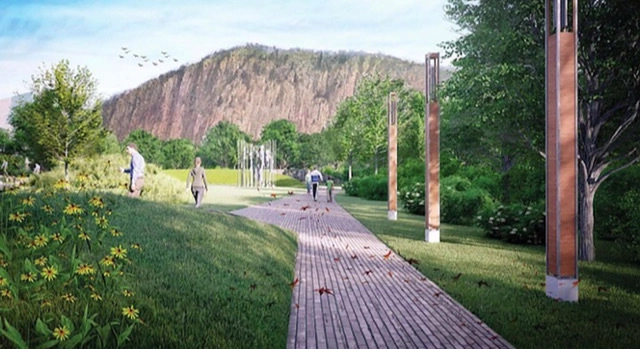
Svigals + Partners has designed a Memorial Garden in honor of victims of gun violence in New Haven, Connecticut. Developed in collaboration with a partnership of concerned mothers, the scheme emerged from efforts by New Haven school teacher Marlene Miller Pratt, whose 18-year-old son was killed in 1988.
Working pro bono since April 2018, Svigals + Partners have designed the garden to be flanked by engraved stone pavers and lamppost wind chimes. Before culminating in a serene, protected, circular plaza, the scheme leads visitors past an original sculpture titled “The Lost Generation.” As visitors walk past, the sculpture depicts abstract human figures and are revealed and concealed depending on the visitor standpoint.
https://www.archdaily.com/911089/svigals-plus-partners-design-memorial-to-gun-violence-victims-in-connecticutNiall Patrick Walsh
The Royal Academy has revealed the shortlist for their annual prize recognizing young talent in architecture, the Dorfman Award. The award is given to those "...reimagining the future of architecture and whose work demonstrates a high degree of sensitivity to local and global context." The 2019 shortlist comprises four emerging architects practicing across the globe.
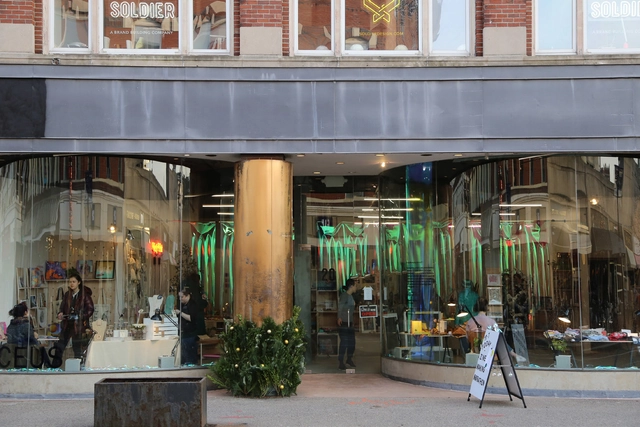
As retail moves evermore online, vacant storefronts have become ubiquitous sights in American cities and towns. Often located in formerly prime downtown real estate, the darkened windows have a knock-on effect, sapping urban vibrancy and sometimes falling into disrepair. Discourse surrounding the predicament of dead malls and traditional retail space is ongoing, but a one-size fits-all solution clearly isn't the answer here.
Liz Diller and Ricardo Scofidio; image via the Architects' Journal
Diller Scofidio + Renfro has been announced the winner of the 2019 Royal Academy Architecture Prize, an award given annually by the British arts body to recognize firms or individuals who have been "instrumental in shaping the discussion, collection, or production of architecture in the broadest sense."
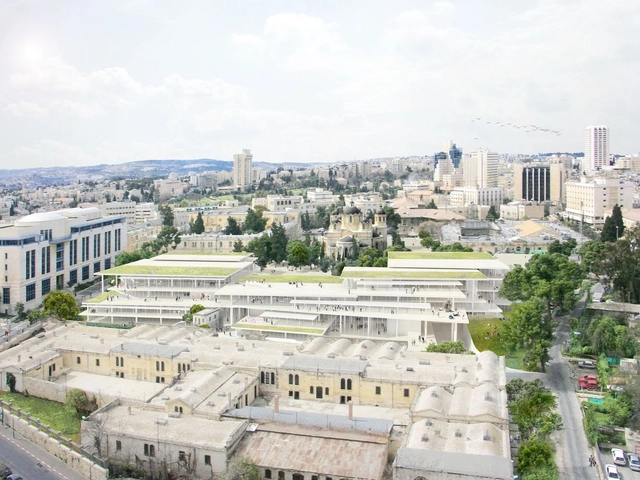
Bezalel Academy of Art and Design. Image Courtesy of SANAA
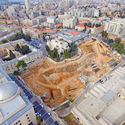
SANAA's new campus for the Bezalel Academy of Arts and Design in Jerusalem is now set for a 2022 opening. Initially proposed in 2013, the new project for Israel’s national school of art broke ground back in 2015. The campus is being built in the Russian Compound in Jerusalem’s City Center. The design will bring together 2,500 students and 500 faculty members as the school moves from the current Mount Scopus Campus. The new campus aims to revitalize the city center and connect to the urban fabric of Jerusalem.
The Architectural League of New York has announced the winners of it's 2019 Emerging Voices, an award given annually to eight individuals/practices based in the US, Canada, or Mexico. The Emerging Voices program, which is now in its 37th year, seeks to spotlight the distinctive design voices with the potential to influence the field of architecture.
The Emerging Voices award program has long been considered one of the most prestigious in North American architecture; a large portion of the 250 awarded practices are now well-known internationally.
https://www.archdaily.com/910879/architectural-league-of-new-york-announce-winners-of-the-2019-emerging-voices-programKatherine Allen






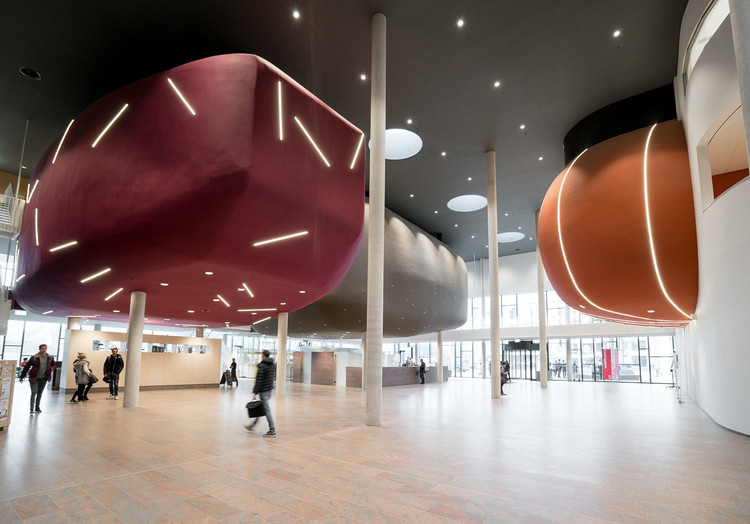























Trilux_highres_16_.jpg?1549494233&format=webp&width=640&height=580)
Trilux_highres_21_.jpg?1549494317 "© Trilux")
Trilux_highres_18_.jpg?1549494275 "© Trilux")
Trilux_highres_23_.jpg?1549493977 "© Trilux")
Trilux_highres_19_.jpg?1549494296 "© Trilux")
Trilux_highres_16_.jpg?1549494233)