Many references to historic architecture are still being used in contemporary projects. Whether it is ancient building techniques, use of material, or the relationship between architecture and nature, the past remains prominent.
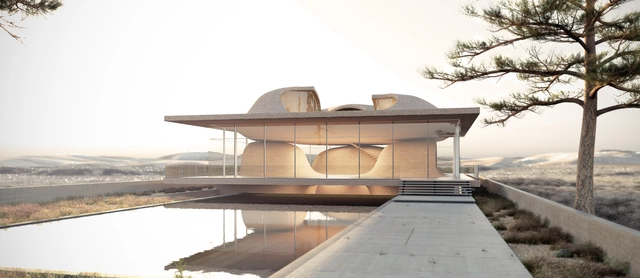
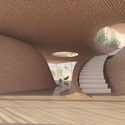
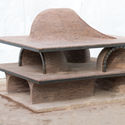
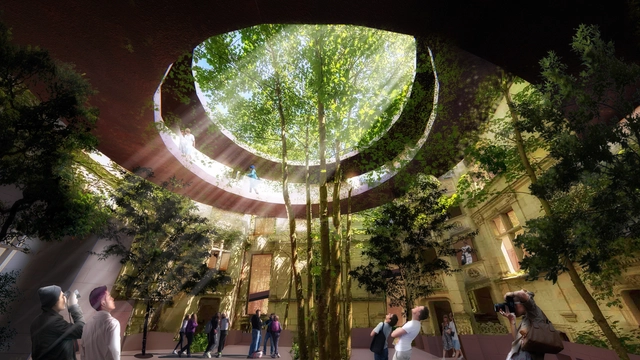
Iranian architecture firm NextOffice blurred the boundaries between indoors and outdoors, and used historic Iranian architecture elements to create the contemporary Guyim Vault House.
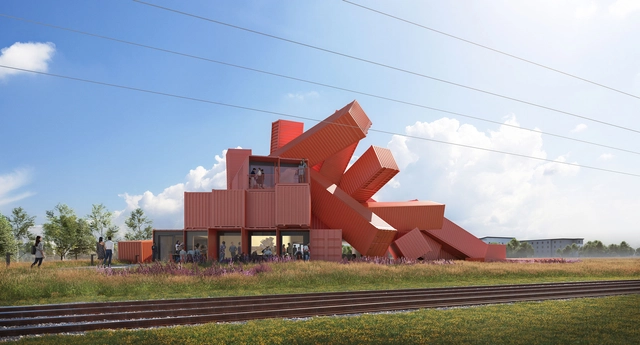
The showpiece of a planned new development at Edinburgh Park will be UK-artist David Mach’s first-ever building, named “Mach 1” by the project’s developers and investors, Parabola. Working with Stirling Prize-nominated architects Dixon Jones, Mach’s building will be created from over 30 shipping containers - but not in the modular, linear method to which shipping container buildings typically lend themselves. Instead its sculptural shape is meant to draw attention to the new quarter and catch the public’s eye, especially those traveling by on the nearby tram.
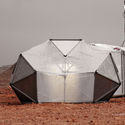
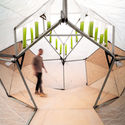
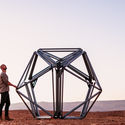
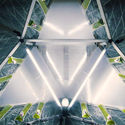
In the Negev Desert of Israel, SAGA Space Architects are collaborating with D-MARS to build a Mars Lab Habitat that will simulate the conditions of living in a confined space on the hazardous surface of the red planet. The laboratory structure they’ve designed is an addition to D-MARS' existing Mars simulation habitat and will be part of a larger experiment. This habitat will serve as a prototype for a longer mission scheduled for 2020.
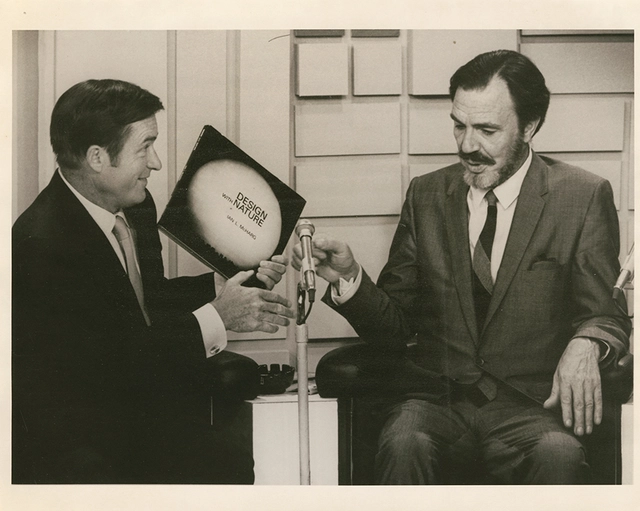
McHarg promoting his book in 1969. Image Courtesy of the Architectural Archives, University of Pennsylvania
Fifty years have passed since the publication of influential landscape architect Ian McHarg’s book, Design With Nature in 1969. Throughout the United States, an environmental movement was taking place, into the center of which McHarg’s book was thrust. The 1970s and ‘80s were a time of much landmark legislation surrounding ecological concerns, and McHarg argued that landscape architecture alone was able to integrate all the disparate fields involved.
Nikoloz Lekveishvili (b. 1986), originally from Tbilisi, Georgia, has left his country in 2004 for his bachelor studies to Istanbul Mimar Sinan Fine Arts University and to get Master of Architecture at Politecnico Di Milano. He then practiced architecture in Italy, Germany, Turkey, and India until 2017, when he was attracted back to his home country by emerging economic opportunities and bustling creative scene in this former Soviet republic in the Caucasus. Nikoloz has started his practice, TIMM Architecture the same year together with his younger sister, Natia Lekveishvili (b. 1989) who has graduated from Georgian Technical University in 2012 and worked in local architectural and design-build firms.
The partners’ studio is located in the heart of old Tbilisi in the same building where their parents, architecture professors and practitioners, lead their own research-based office known for documenting historical monuments in the region. We met with Nikoloz and Natia at their studio which also serves as an architectural salon where young architects and students are welcome. In the following conversation, the architects spoke about a journey of emotions, transitioning from light to darkness, being interested in Kintsugi, traces of time, treating buildings like human beings, and of the importance of being selfish in order to create architecture that’s unique and personal.
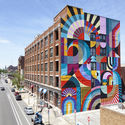
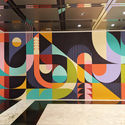
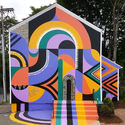
If a painting can trigger its viewers' emotions with just one observation, imagine the impact of a building-sized mural on an entire city.
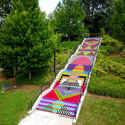
Baltimore-based artists Jessie Unterhalter and Katey Truhn found a way to enhance people’s lives through art by adding visual playfulness to public spaces. Since 2012, they have been working on sculptures and large-scale murals, curving around building corners and spilling them onto the ground. The artistic duo explored themes of movement and symmetry by experimenting with bold color combinations, patterns in nature, and woven textiles.
Take a look at some of the lively murals created by Jessie and Katey that transform public spaces into colorful experiences.








-0009.jpg?1561650554)
-0015.jpg?1561650871 "© Edmund Sumner")
-0011.jpg?1561650920 "© Edmund Sumner")
-0009.jpg?1561650554)
.jpg?1561645831)
.jpg?1561645855 "© Åke E:son Lindman")
.jpg?1561646024 "© Åke E:son Lindman")
.jpg?1561646218 "© Åke E:son Lindman")
.jpg?1561645941 "© Åke E:son Lindman")
.jpg?1561645831)




.jpg?1413947919&format=webp&width=640&height=580)
.jpg?1413947921 "© Relja Ivanić")
.jpg?1413947930 "© Relja Ivanić")
.jpg?1413947937 "© Relja Ivanić")
.jpg.jpg?1413947946 "© Relja Ivanić")
.jpg?1413947919)






.jpg?1556831250)
.jpg?1556831307 "© Andrius Stepankevičius")
.jpg?1556831196 "© Andrius Stepankevičius")
.jpg?1556831250 "© Andrius Stepankevičius")
.jpg?1556830997 "© Andrius Stepankevičius")
.jpg?1556831250)



.jpg?1560911173)
.jpg?1560911598 "© Lenny Codd")
.jpg?1560911241 "© Lenny Codd")
.jpg?1560911519 "© Lenny Codd")
.jpg?1560911139 "© Lenny Codd")
.jpg?1560911173)