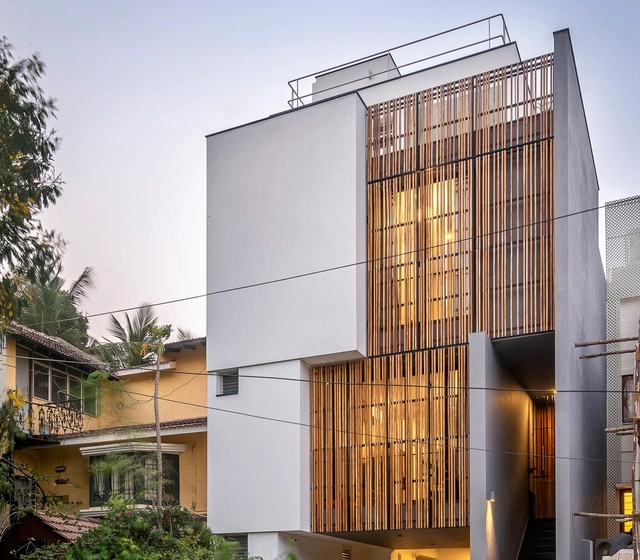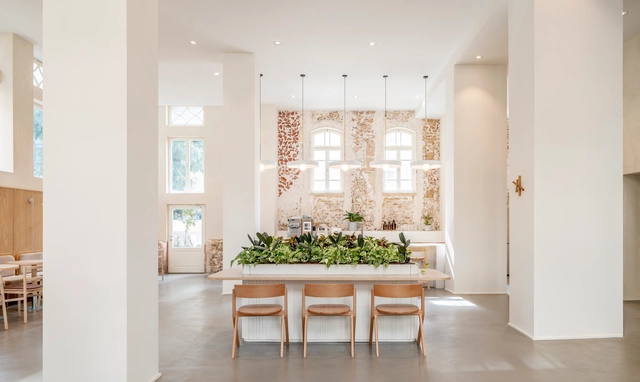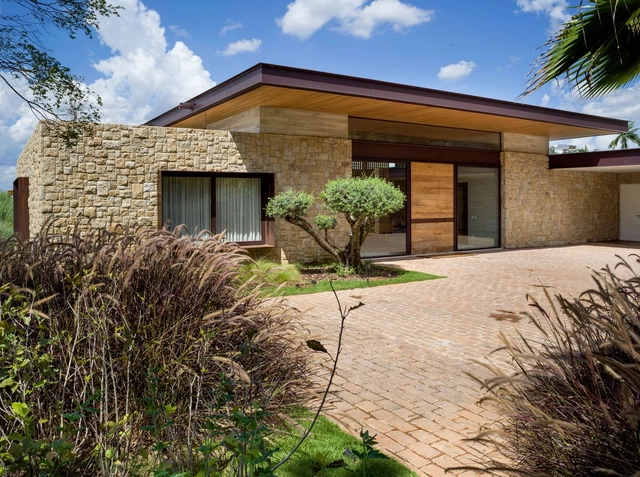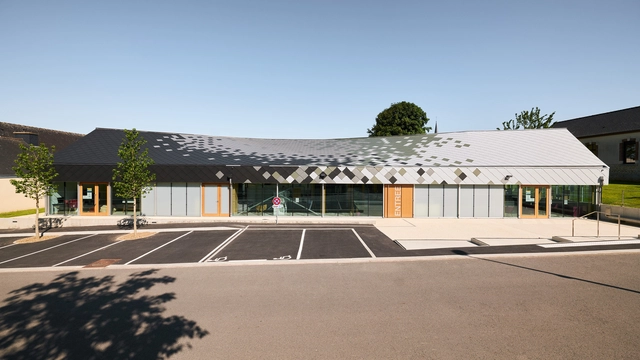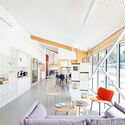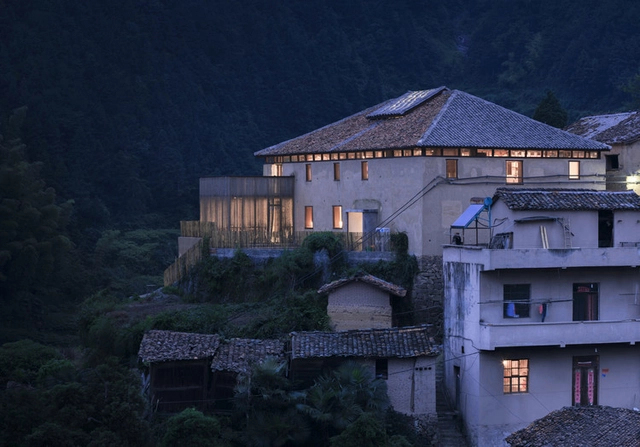
Casa Collage / S+PS Architects. Image Cortesia de S+PS Architects
Reform and adaptation of spaces represent a significant parcel of projects ordered to architecture firms, and reuse of preexisting structures is not newness. Functions and needs change over time, therefore adaptations are required to meet new demands. However, no matter how much the maintenance of a building is, in most cases, preferred in economic and ecological sense to its demolition and a new construction from the beginning, the logic of the reuse of a space does not usually extend to its parts that become, thus, rubble.
The climate crisis has been one of the focal points of 2021, both within political discourse and the architectural field, accompanied by a newfound acknowledgement of the issue's severity. Over the past year, the IPCC report revealed the severe consequences of inaction, while COP26 and G7 summit resulted in an insufficient commitment to immediate and palpable measures. The AEC sector, responsible for a staggering 39% of global greenhouse gases, can bring a significant contribution to curbing climate change and the following looks at the decarbonization efforts of 2021 that target this industry.
Snøhetta+Hassell were announced as the winners of an international competition to transform Sydney's Harbourside in Darling Harbour into a new mixed-use destination. The design was selected by the jury for how it envisioned a place that brings people together, featuring an all-inclusive shopping, hospitality, and entertainment center, an exclusive 42-storey residential tower, as well as a redesign of the public spaces on the waterfront.
Ronald Lu & Partners designed a new transit-oriented development (TOD) in Shenzhen, reshaping a former industrial zone near Chiwan Port. The project builds on the firm's extensive experience with green architecture and TODs, proposing a biophilic development that restores nature in the area. Featuring a mixture of residential, business, commercial, and educational facilities, the design is set to become a key urban environment within the Greater Bay Area connecting Guangdong Province, Hong Kong and Macau.
Valuing formal simplicity and delicate attention to details and finishing, Studio MK27 was founded in the late 1970s by Marcio Kogan and currently has more than 30 members based in São Paulo and other collaborators around the world. Its work, as described on its website, seeks to fulfill the task of rethinking and continuing Brazilian modernism.