This guide outlines how to implement structured templates effectively, maintain design quality, and support firm-wide governance.


This guide outlines how to implement structured templates effectively, maintain design quality, and support firm-wide governance.
.jpg?1452893796&format=webp&width=640&height=580)
As an idea that was developed fairly early on in the movement for sustainability, and picked up significant traction a few years into the new millennium, "Design for Deconstruction" has been around for some years. Yet still, considered on the scale of building lifespans, the idea is still in its infancy, with few opportunities to test its principles. In this post originally published on Autodesk's Redshift publication as "Recycled Buildings or Bridges? Designing for Deconstruction Beyond Adaptive Reuse," Timothy A Schuler looks at the advances that have been made, and the challenges that still face, the design for deconstruction movement.
This summer, the Oakland Museum of California announced a new public arts grant program. Except instead of money, selected artists would receive steel. Tons of it.
The Bay Bridge Steel Program emerged out of a desire to salvage and repurpose the metal that once made up the eastern span of San Francisco’s Bay Bridge, originally constructed in 1933 (it was replaced in 2013). The steel in question, sourced from “spans referred to as ‘504s’ and ‘288s’ (in reference to their length in feet),” according to the application material, would be available for civic and public art projects within the state of California.
The program represents a unique opportunity to adaptively reuse infrastructure, upcycling what might have been waste. And yet any instance of adaptive reuse is inherently reactive because the design process is dictated by an existing condition.


Architect, illustrator and cofounder of the Miniatura project, Bruna Canepa has shared with us a stunning collection of her illustrations and collages, which offer a fresh gaze onto one of architecture’s most common tools: the drawing. Beyond depicting examples of unreal architecture, her works present architecture that replaces firmitas, utilitas and venustas for complexity, wonder and irony.
From extrusions and explosions of familiar typologies to surreal and sterile atmospheres of empty spaces, we suggest three subcategories to frame Bruna’s illustrations as shown below: Houses, Cubics, and Displacements.

The Monterey Bay Aquarium in Monterey, California, has been selected for the 2016 American Institute of Architects' (AIA) Twenty-five Year Award. Designed by EHDD of San Francisco, and completed in 1984, the Monterey Bay Aquarium is a "light-filled ensemble of diverse spaces, unique among aquariums in its interweaving of indoors and out," says the AIA. The award is presented yearly to a project that has "stood the test of time by embodying architectural excellence for 25 to 35 years."

A boathouse by Studio Gang, the Smithsonian's BIG plan, and a new Baltimore school by Rogers Partners' are some of 18 projects selected for the 2016 American Institute of Architects (AIA) Honor Awards. The awarded projects were chosen from 500 submissions as the US' best new architecture, interiors and urban design projects. Each recipient will be honored at the AIA 2016 National Convention in Philadelphia.
The 2016 Institute Honor Awards for Architecture are...
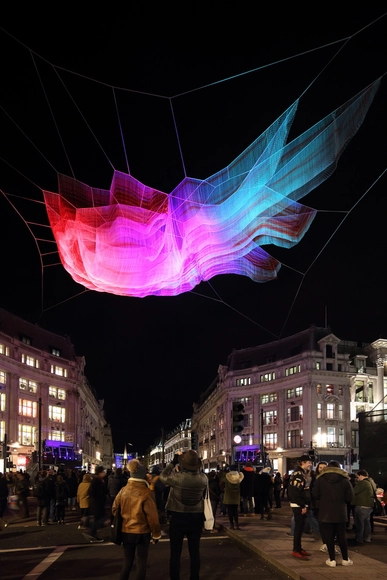
London is the latest city to host one of Janet Echelman's stunning net sculptures. Suspended 180 feet above Oxford Circus, the city's busiest intersections, the colorful floating form was inspired by 1.8 - "the length of time in microseconds that the earth’s day was shortened" as a result of Japan's devastating 2011 earthquake and tsunami.
"The sculpture’s form was inspired by data sets of the tsunami’s wave heights rippling across the entire Pacific Ocean," says the studio. "The artwork delves into content related to our complex interdependencies with larger cycles of time and our physical world. The sculpture’s net structure is a physical manifestation of interconnectedness – when any one element moves, every other element is affected."
Museums, restaurants, shops, theaters. These are the types of spaces the public interact with on a regular basis in a city. But these spaces alone do not make a city - in fact, the vast majority of buildings house spaces that 99 percent of the population will never see. Yet a true city experience cannot exist without these buildings. What is the true value of private buildings to the tourist or the passer-by on the street? Is it simply a matter of aesthetic and identity? Could the same result be achieved with a streetwall made up of only facades? These are the implicit questions embedded in “Apparences,” the new video from Claire and Max of Menilmonde. The duo uses video editing and CGI to alter iconic Paris views, making the city of romance appear to be little more than the world’s largest movie set.
A city with the history and imagery of Paris cannot be mistaken for a Potemkin Village - the city functions still as one of the preeminent economic centers in the world. Yet its status as one of the world’s most visited cities and tales of its beauty and luxury often plant false visions of grandeur in visitors’ minds.
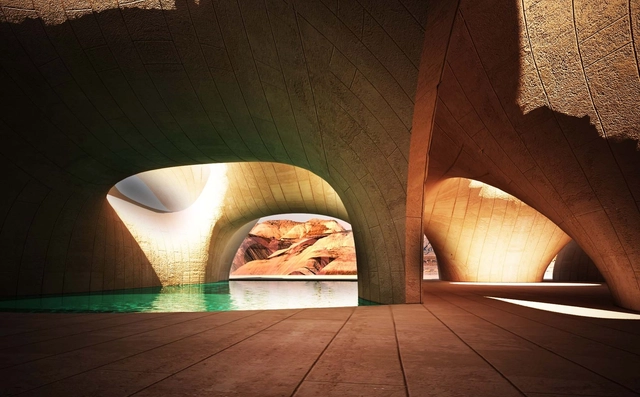
Aysu Aysoy and Roman Hajtmanek have been announced as the winners of the ArchDaily + IIDEXCanada Virtual Spaces Competition, which sought proposals for un-built, fantastical spaces. The designs were then developed into virtual spaces by Invent Dev as a part of a virtual reality exhibition at IIDEXCanada.
Learn more about both of the winners, after the break.

Based on the concept of listening to the sounds of the ocean inside a shell, STUDIOKCA, commissioned by NASA, has created the NASA Orbit Pavilion to immerse visitors in the sounds of satellites orbiting in outer space.
The traveling, nautilus-shaped pavilion provides a space in which to experience the trajectories of 19 satellites orbiting Earth. Made with 3,500 square feet of water-jet cut aluminum panels, the pavilion is "scribed with over 100 'orbital paths' fitted together and bolted to a curved framework of aluminum tubes."
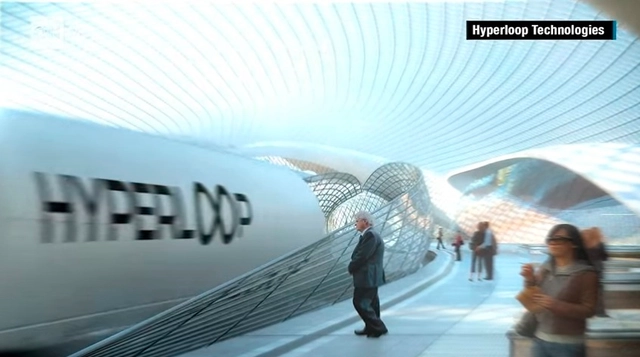
Hyperloop Technologies is starting to realize its high-speed transit system. As Tech.Mic reports, pipes for the project's first test tube are showing up in Nevada. Hyperloop was first outlined by Elon Musk in 2013 as a response to California's pricey bullet train plan that aim to connect Los Angeles to San Francisco. The ultra-fast, energy efficient Hyperloop proposes to send pods of people through a depressurized tube at speeds up to 700 miles-per-hour. It is believed that the new system could be running as soon as 2020.
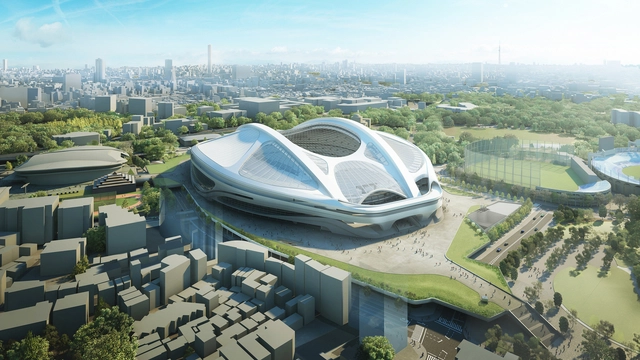
Zaha Hadid is facing new hurdles regarding her scrapped Tokyo National Stadium design; according to the architect, the Japan Sport Council (JSC) is withholding an overdue payment until ZHA agrees to relinquish ownership of their original designs.
After working on the design for more than two years, the British practice was decommissioned from the project over cost objections last summer. Since, Japanese architect Kengo Kuma has been reassigned the project, offering a design that ZHA says is suspiciously similar to their original proposal "in the structure, layout and numerous elements."
Now, the JSC has requested ZHA agrees to new "Compliance Rules" that would allow the stadium's new architect to "use any product of work ... regardless of its copyright."
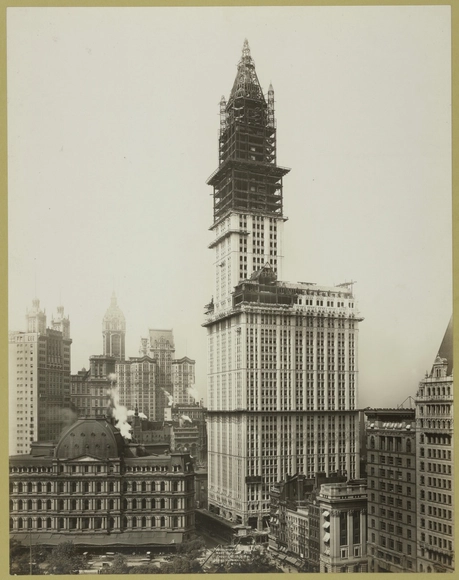
Last week the New York Public Library made over 180,000 images from their digital archives available in the public domain, and free for high-resolution download. Not only are the images available for download, but since they are in the public domain and free of any copyright restrictions, users have the freedom to get creative and alter, modify, and reuse the images in any manner they see fit. Featuring a wide variety of images including drawings, engravings, photographs, maps, postcards, and in some cases, digitized copies of entire books, the collection has been noted for fascinating historical artifacts such as a set of color drawings of Egyptian gods and goddesses, and a digitized book from the 18th century containing over 400 color plates depicting various current and historical fashion trends.
Of course, the archive also includes a significant assortment of captivating architectural images that range from everyday scenes to historic treasures. We've trawled the database to find some of the most unusual and insightful examples - read on to see a selection of the most interesting architectural images from NYPL’s digital archives.
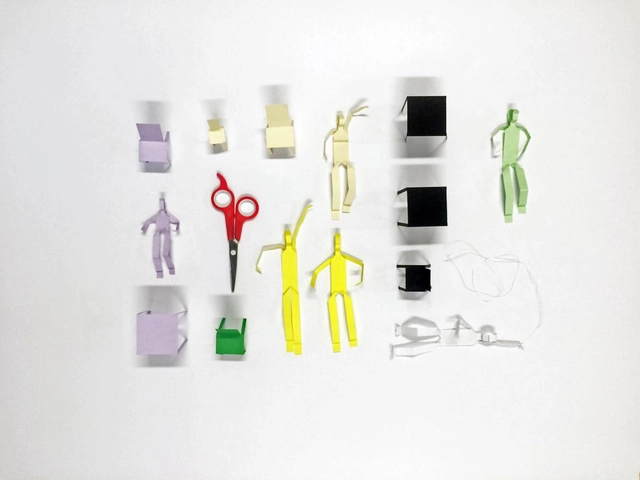
In response to the question posed by the curators of the Chicago Architecture Biennial – what is The State of the Art of Architecture today? -- Colombian firm El Equipo de Mazzanti (Giancarlo Mazzanti) developed their exhibition “Speaking Architecture,” which looks at architecture as “a living process rather than a finished and static object.”
The installation puts the visitor in control, breaking with the typical conception of an exhibition as something controlled, static, limited and unidirectional, and creating “a place to play.”
Learn more about the exhibition after the break.
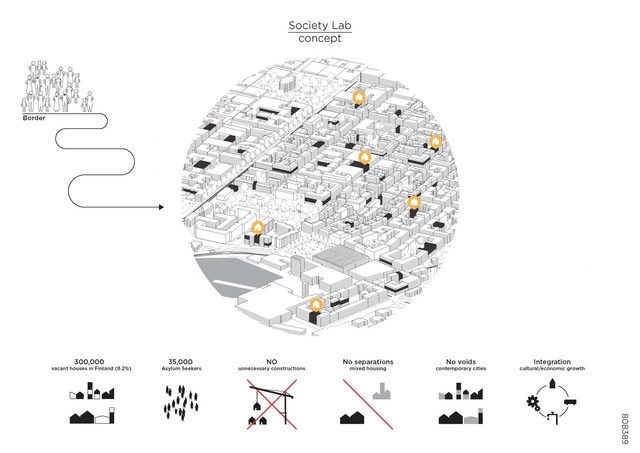
The Museum of Finnish Architecture, in collaboration with the Finnish Association of Architects (SAFA), has announced the winners of its “From Border to Home” competition, which sought solutions for temporary housing seekers who are awaiting a decision on their refugee status, prior to finding more permanent housing in Finland. Ninety-three entries were submitted from countries around the world including Finland, Sweden, Norway, China, Belarus, the United States, and Brazil, among others. Submitted proposals included solutions that would provide a positive social impact, and also support future ideas about long-term living arrangements.
The jury, comprised of architects, members from the Ministry of the Interior, the Finnish Red Cross, and the Finnish Refugee Council, shortlisted seven entries in the first round of judging. They praised the overall quality of the submissions, stating that they ranged in strategies from tackling national issues to creating new buildings, repurposing old sites, and even transforming housing solutions to digital platforms.
From those, three winners tied for first place, chosen due do their “logical coherence and compelling social impact,” according to the jurors. These entries will be showcased in the Finnish Pavilion at the Venice Architecture Biennale this upcoming summer.
Referencing architecture's intimate past with the arts, Steven Holl argues the importance of collaborating with other artists for the benefit of the profession alongside choreographer and dancer Jessica Lang. "If we don't intermix the arts and collaborate, we are going to close... The arts are going to fade out individually. We are stronger together."
Watch the Spirit of Space video above to learn more about Holl and Lang's collaboration - Dance with Architecture - that uses dance to explore the four types of architecture: "under the ground, in the ground, on the ground, and over the ground."
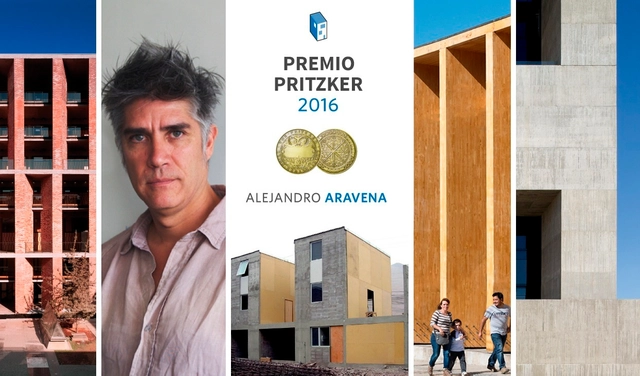
Alejandro Aravena has been named as the winner of the 2016 Pritzker Prize. Highlighting his dedication to improve urban environments and to address the global housing crisis, the Pritzker Prize jury praised the way in which the Chilean architect has "risen to the demands of practicing architecture as an artful endeavor, as well as meeting today's social and economic challenges." Aravena is the 41st Pritzker Prize laureate and the first Chilean to receive the award.
At 48 years of age, Aravena has a large portfolio of private, public and educational projects in Chile, the USA, Mexico, China and Switzerland. But perhaps more notably, through his “Do Tank” firm ELEMENTAL he has managed to build 2,500 units of social housing, engaging in the public housing policies of governments where he works and taking an opportunistic approach to market forces to generate a powerful impact on lower-income communities.
"Alejandro Aravena epitomizes the revival of a more socially engaged architect, especially in his long-term commitment to tackling the global housing crisis and fighting for a better urban environment for all,” explained the Jury in their citation. “He has a deep understanding of both architecture and civil society, as is reflected in his writing, his activism and his designs. The role of the architect is now being challenged to serve greater social and humanitarian needs, and Alejandro Aravena has clearly, generously and fully responded to this challenge."
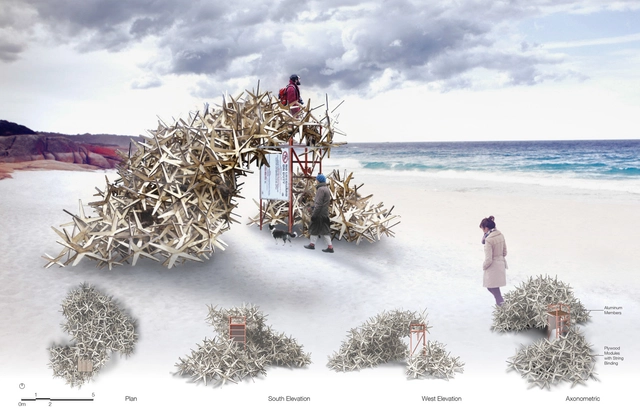
Now in its second year, Toronto’s annual Winter Stations design competition has revealed its four winning designs, and three student designs that will add art to Toronto’s beaches. Receiving almost 400 submissions from local and international designers, this year’s theme “Freeze/Thaw” challenged participants to respond to the changing climate of winter. Founded by RAW Design, Ferris + Associates, and Curio, the Winter Stations Design Competition uses design to inspire Torontonians back outside.
“The public participation in Winter's Station's inaugural year proves that even the most overlooked winterscapes can be injected with vibrancy and life," says Ted Merrick, lead designer at landscape architecture firm Ferris + Associates. "Our ultimate goal for year two remains the same - to encourage the community out of hibernation and back to the beach."
The winning designs will be built along different beaches in Toronto, adding to existing lifeguard towers. See the winners after the break.
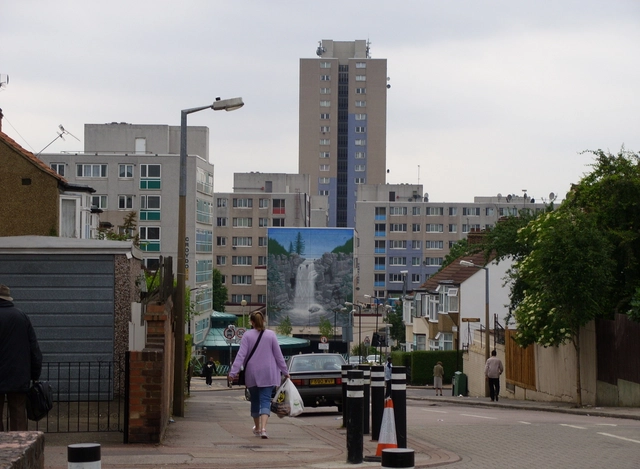
David Cameron has written an article for the Sunday Times denouncing "brutal" post-war housing estates as part of "an all-out assault on poverty and disadvantage" in the United Kingdom. Recalling time spent campaigning in "bleak, high-rise buildings, where some voters lived behind padlocked and chained-up doors" during the 1980s and since, he declares that "not enough has changed." "Some of them, especially those built just after the war," he writes, "are actually entrenching poverty in Britain – isolating and entrapping many of our families and communities."
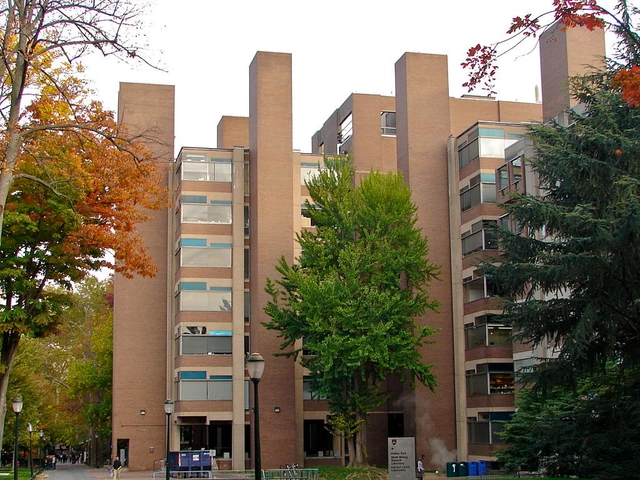
Louis Kahn's Richards Medical Research Laboratory at the University of Pennsylvania, once deemed "the most consequential building constructed in the United States" since World War II by MoMA, has been notoriously hated by its users; scientists claim the building lacks privacy, has too much exposure to sunlight and is not suitable for lab experiments. Thus, the University's architect has just completed a full renovation of Richards' four brick towers, converting them into offices and computer labs for researchers, while, as Philly.com reports, restoring the structure to its original essence.
"The renovation has pared Kahn's spaces down to their essence, restoring a Zenlike calm, and revealing the muscular concrete structure that made the design such a revelation in the early 1960s, when International Style glass towers were all the rage," says Philly.com. Read the complete article here.
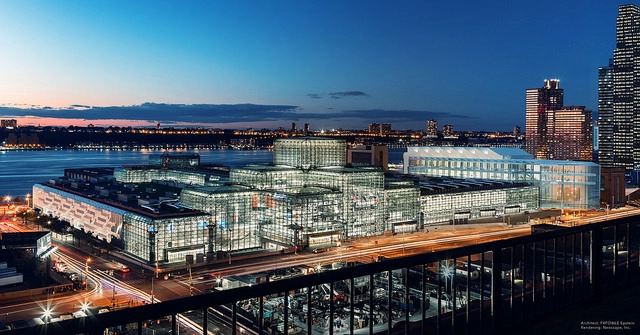
Alongside a series of 2016 proposals, including the plans to transform Penn Station, Governor Andrew Cuomo has announced that New York will be expanding its Jacob K. Javits Convention Center - the busiest convention center in the US. Originally designed by James Ingo Freed of Pei Cobb Freed & Partners in 1986, the structure has undergone a number of renovations since; this time, it will be expanded by 1.2 million-square-feet, totaling 3.3 million-square-feet, with the addition of "the largest ballroom in the Northeast," new exhibition space, a four-level truck garage, and a 34,000-square-foot solar array.
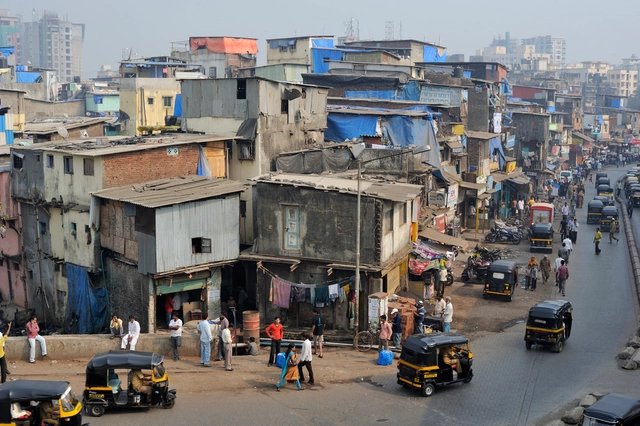
Mumbai, home of 1.5 million person Dharavi slum known to be one of Asia's largest, will soon be host the world's first slum museum. As Smithsonian Magazine reports, the Design Museum Dharavi is being envisioned by Spanish artist Jorge Mañes Rubio to showcase works that “reimagines and revives [forgotten] sites as attention-worthy destinations.”
“Despite the tough conditions [the people of Dharavi] live in, they are capable of creating, designing, manufacturing and commercializing all kinds of goods,” said the museum’s founders. “We believe that the objects made in Dharavi could be as valuable as those collected by design museums.”

In early April 2015, the New York Times reported on Leonardo DiCaprio’s recent purchase of Blackadore Caye, a small island off the coast of Belize that has faced significant environmental degradation and erosion. A patron of several environmental projects, DiCaprio is partnering with Paul Scialla, CEO of the Delos real estate and wellness platform, to create an eco-resort intended to serve as the latest model of cutting-edge, environmentally-responsible tourism development. The development plans include a row of floating guest suites built over the water, 48 private villas (ringing in at $5-15 million), human health and anti-aging wellness programs, and a conservation area. The project is advertised as meeting the ambitious green building standards of the Living Building Challenge and the WELL Building Standard®.
Many Times readers in the comments section sardonically noted that the private jets and the shipment of building materials and daily resources for island development come with large environmental and social price tags that far outweigh the conservation efforts associated with the resort. On the other hand, a few commentators pointed out that the development will employ local labor and save the island from complete degradation. The discussion surrounding the pros and cons of “eco-tourism” development is not a new one, and not one that is easily settled.
But beyond the (important) discussion of the impacts of eco-tourism, the development raises questions about the emergence of alternative green building market standards, which ostensibly aim to transform the building industry by setting measurable targets for the environmental and social effects of the places we live and work.
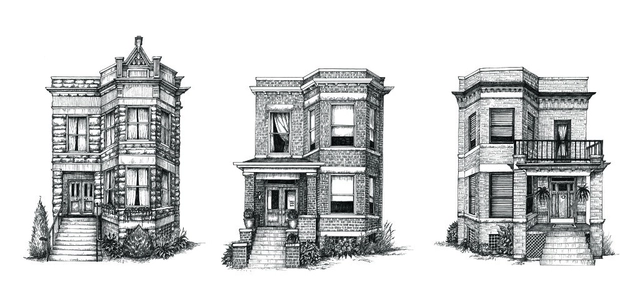
For the past two years, artist Phil Thompson of Cape Horn Illustration has been creating pen and ink drawings of Chicago's homes and residential buildings.
Inspired by the patterns and themes of the streets and neighborhoods and a love for art and architecture, Thompson began drawing two-flat styled homes, which are "long and narrow to fit on standard city lots, able to accommodate two-generation immigrant families, and have distinctive large bay windows, elements of Arts and Crafts style, exteriors heavy on masonry, and terracotta, but wood-framed interiors with built-ins," Thompson told us. "I love them."

Check out this beautifully crafted 13-piece block set designed by Kengo Kuma - the (legendary) Japanese architect recently tapped to design Tokyo's controversial National Stadium. Light, wooden and soft to the touch, each four by four inch component is made of cedar from Japan's Miyazaki Prefecture and notched at the tips for easy stacking. You can order your own set for $70.
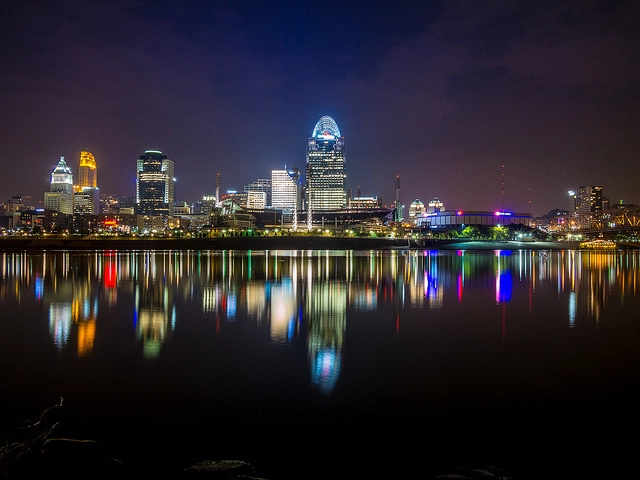
Henning Larsen Architects has been selected to design the new Lindner College of Business for the University of Cincinnati - the Danish firm's first project in the US. Though renderings have yet to be released, the building is expected to "reflects Scandinavian design traditions of putting people, space, and daylight first."
“Physical surroundings and educational achievements are not separate—they're interdependent. A successful educational building also enriches its users, fosters community and improves the daily lives of students and teachers. Our design will give shape to Lindner College of Business’ strong identity and be the catalyst to further its reputation and academic achievements,” said Louis Becker, Principal Partner, Design Director of Henning Larsen Architects and Professor (Adj.) at Aalborg University. Research suggests that students attain 5-14% higher scores on tests taken in rooms with good daylight conditions.
But you can browse the last one: 417



.jpg?1452893796)



_Hedrich_Blessing_(3).jpg?1452884759 "WMS Boathouse at Clark Park / Studio Gang Architects. Image © Hedrich Blessing")