In response to a conservative and sometimes fragmented building industry, some architects believe that improving and automating the construction process calls for a two-front war: first, using experimental materials and components, and second, assembling them in experimental ways. Extra-innovative examples include self-directed insect-like robots that huddle together to form the shape of a building and materials that snap into place in response to temperature or kinetic energy.
The automation battle has already been fought (and won) in other industries. With whirring gears and hissing pneumatics, rows and rows of Ford-ist mechanical robot arms make cars, aircraft, and submarines in a cascade of soldering sparks. So why shouldn’t robotic construction become commonplace for buildings, too?
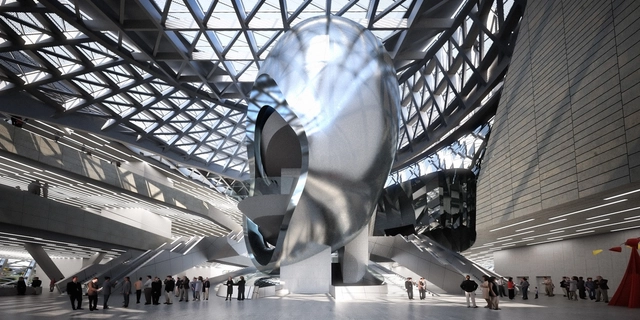
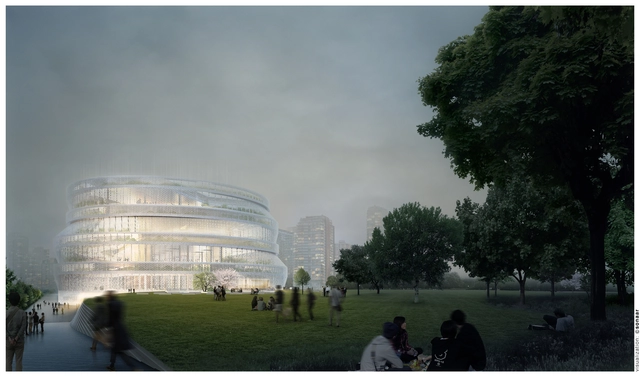
nArchitects’Library as Home has won first place in the 2016 International Young Architects Design Competition for the 110,000 square meter Shanghai Library East Hall in China. Hosted by the Shanghai Pudong New Area People’s Government, the competition sought out designs that enhance Shanghai’s distinct cultural influence and promote community life.
Library as Home reflects these goals in its design as “a large house for all, with a rich variety of environments that Shanghai’s citizens could appropriate as their own.”
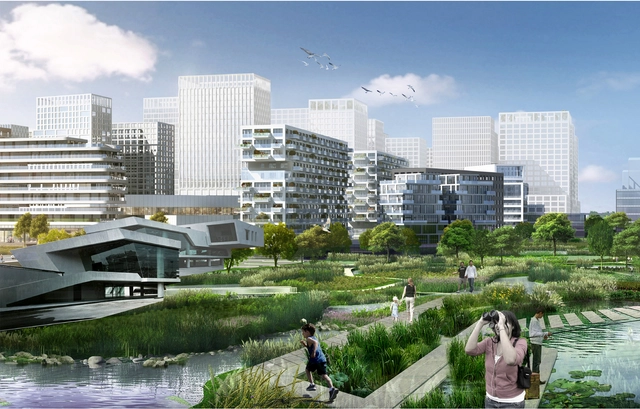
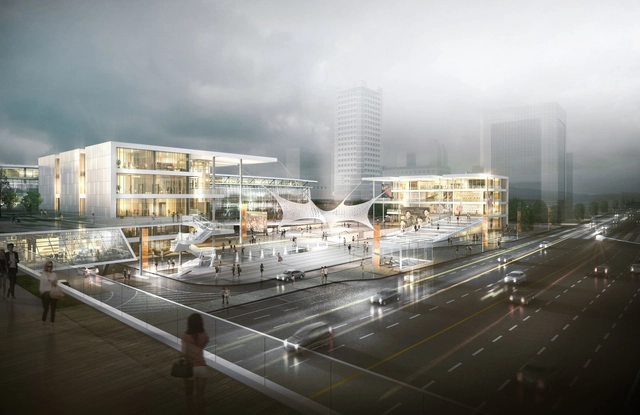
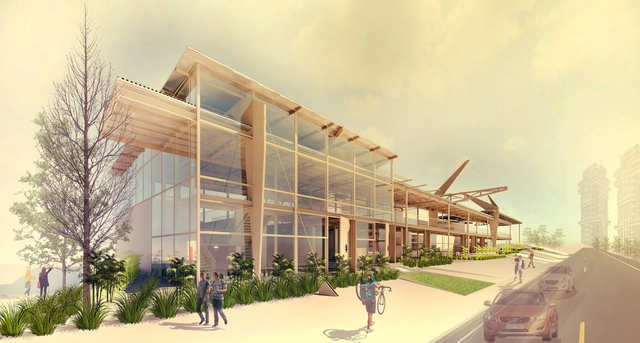
Foreign leading firm MLA+ and local leading firm the China Academy of Urban Planning and Design, in collaboration with Felixx Landscape Architects & Planners and the Shenzhen Municipal Design & Research Institute, have won first prize in the urban design competition for the regeneration of an area along the G107 highway in the Bao’an district of Shenzhen, China.
Located on both aspects of the G107, the one- to two-kilometer piece of land forms a 53-square-kilometer area for the new plan, which will redevelop a fragmented industrial landscape created by the highway and Shenzhen’s identity as a former “Factory of the World” city.
Courtesy of New York Architecture and Design Film Festival
Following the burgeoning success of the 7th New York Architecture and Design Film Festival (ADFF), this year's incarnation—which will run September 28 through October 2 2016 at Cinépolis Chelsea—appears set to maintain its position as the nation's and most popular largest subject-focused film event. Over 30 feature-length and short films, curated by Festival Director Kyle Bergman, will be presented, including Eero Saarinen: The Architect Who Saw the Future, a film that examines the life of the eponymous modernist architect.
https://www.archdaily.com/793396/8th-new-york-architecture-and-design-film-festival-line-up-announcedAD Editorial Team
In this interview, presented in collaboration with PLANE—SITE, Ali Karimi and Hamed Bukhamseen, curators of the Kuwait Pavilion at the 2016 Venice Biennale, discuss the architectural identity and potential of Kuwait and the Middle East region as a whole. The duo explain how they approached the pavilion design by asking themselves the question: “How do we imagine a conversation between the different countries of the Gulf?”
In the late 20th century, restricted by an a small landmass and extreme terrain, the Hong Kong urban area grew to become one of the densest and most vertical places on the planet, with more buildings taller than 500 feet than any other city in the world. But instead of the steel or aluminum structures used as scaffolding in Europe and the Western Hemisphere, the majority of skyscrapers built in Hong Kong and much of Asia used scaffolding systems constructed out of bamboo.
To create the structures, the high strength, lightweight material is strapped together with plastic ties by construction crews, who also use the structure as a ladder for scaling the building. Despite using few safety restraints, crews are able to construct up to 1,000 square feet of bamboo scaffolding in just one day. To protect the structure, nylon gauze is sometimes draped along the outside.
Check out a series of GIFs and images showing how it works after the break. And if you're interested in learning more about bamboo construction materials, check out our Materials catalog.
Last week, the latest craze to hit the Twittersphere was #FirstSevenJobs. An interesting mix of nostalgia and self-congratulatory posturing, the hashtag had seemingly everybody on the social media site sharing how they took their first seven steps to where they are now. For architects though, whose path to their ideal job is often long and torturous, the hashtag may have offered a little solace: with notable and successful architects, educators and critics sharing how they took their first tentative steps into the profession, those still working towards their goals can be reassured that, no matter where they are now, success could be on the horizon.
With that in mind, we wanted to extend the hashtag to our users: what were your first seven jobs, and what did you learn while doing them? What was your experience like in getting to where you are now? And do the jobs that many architects have in their early years reveal anything about the architecture profession?
LEGO® has unveiled the newest kit in their Architecture series: The U.S. Capitol Building in Washington, D.C. Originally designed by architect William Thornton in 1793, the building has gone through several iterations, including the addition of its iconic white, cast-iron, neoclassical dome in 1866. The 1,032 piece LEGO® set portrays the building in its current form, with its “striking white, columned façade with its famous steps and lawns.” The kit also features a removable dome, which, when lifted off, reveals “a detailed interior depicting the famous National Statuary Hall, complete with columns, statues and tiled floor.”
A portion of working in architecture includes having to market yourself and your skills. "One minute networking" is a skill that many architects learn in order to be successful in the creative field, but having the gift of gab requires you to put your money where your mouth is. If you have an online portfolio which is accessible with just an internet internet connection and a digital device capable of viewing it, your work is always conveniently available during your networking conversations. It's also helpful for sharing your work in online conversations: while a pdf of your print portfolio can really only be sent by email, practically every messaging app or direct messaging service built into social networks will allow you to send a link, allowing you to take advantage of an opportunity even when you weren't expecting one to arise. Finally, if you make it right your website can even do some of the advertising and networking for you.
The most important thing to remember is that like your resume or print portfolio, an online portfolio is a tool to help you advance your career, so it must be useful towards your goals. Therefore instead of asking yourself why you should have an online portfolio, you should ask yourself what those goals are, and how your online portfolio can be optimized to help you achieve them.
Now that we've gotten that question out of the way, here are 8 other questions to ask yourself:
This October, reThink Wood is heading to Los Angeles for Greenbuild – the world's largest conference and expo dedicated to green building. If you haven’t registered already, this is your chance to win a free pass to the conference and hear from dozens of inspiring speakers about the latest advancements in the green building movement.
To celebrate, reThink Wood is offering a full pre-paid conference pass ($1,050+ value) to one lucky ArchDaily reader. The winner will be invited to learn more about why building with wood is sustainable and to meet with experts onsite who are passionate about sustainable design with wood in a variety of structure types.
Enter to win by answering the following question in the comments section before August 26 at 12:00PM ET.:
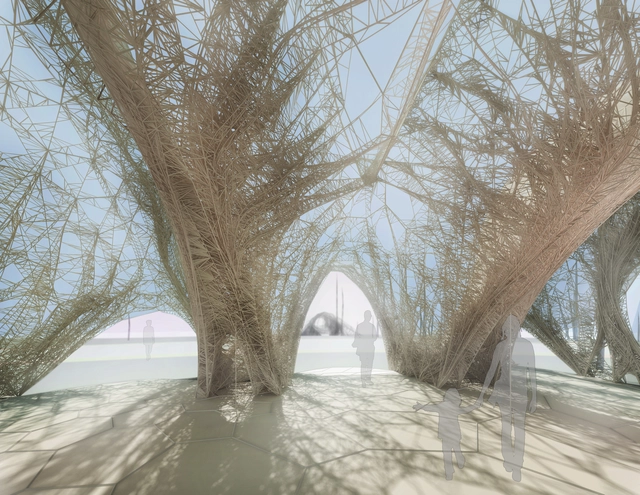
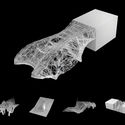
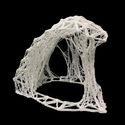
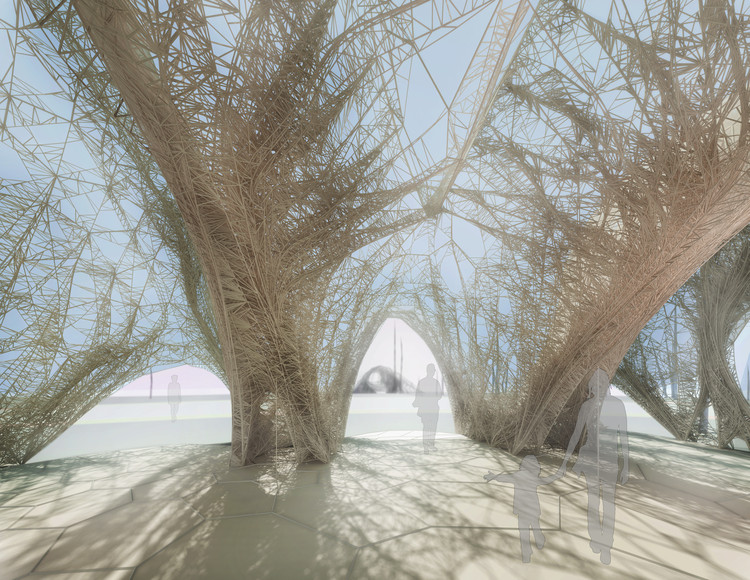
The AA School of Architecture’sDRL Masters Program has developed a thesis project, entitled Growing Systems, which explores adaptable building systems using methods of robotic fabrication and generative special printing within the context of housing.
Centered on a new method of structural 3D vertical extrusion, the project combines the precision of prefabricated elements with the adaptability of on-site fabrication, in response to the flux and dynamism of cities. The method becomes a system of elasticity that can accommodate site parameters, as well as future adjustments.
Courtesy of Selyong Kim, Yongwon Kwon, Seongyen Hwang, and Wonyang Architecture
The collaboration of Seiyong Kim, Yongwon Kwon, Sungyeon Hwang and Wonyang Architecture has won second place in the International Ideas Competition for Establishing Busan Station as The Cub of Creative Economy in Busan, Korea. The competition sought out proposals to revitalize the original downtown area, Busan Station is the starting point for a larger Busan North Port redevelopment project.
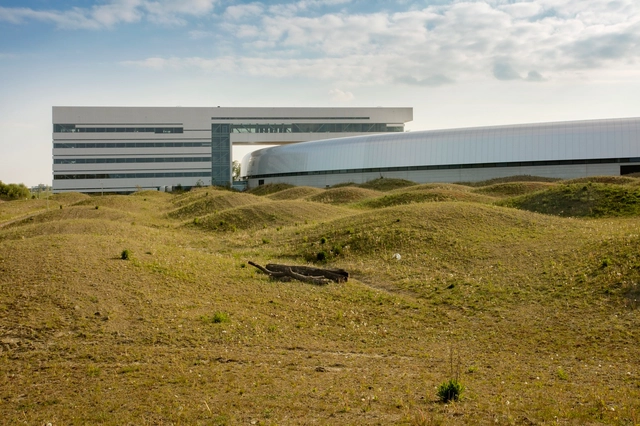
Snøhetta has released new images of their MAX IV Laboratory Landscape Design as it opens in Lund, Sweden. Winning the commission for the project in 2011, Snøhetta’s design transformed 47-acres (19 hectares) of formerly agricultural lands northeast of the city into an undulating earthwork aimed at “creating a functional landscape solution for the high-performance synchrotron radiation laboratory MAX IV.”
Thinking about investing in some new technology? Creativeboom has compiled a list of 20 dream gadgets for designers that will either make your workflow more efficient or just be a whole lot of fun to play around with.
As a final project at Shenkar College under academic advisor Arch. Yaron Golani, Rotem Guy Workshop has completed Urban Club for Soldiers, a project in Tel Aviv, Israel.
Based on the duality of order and movement, the project centers on a large multi-purpose building with its programs spread throughout “like a measuring stick.”
The design is generally modeled after historic “Tel Pach” temporary housing, specifically “Nissen huts,” which were cabins built with steel and rounded tin pegs. The project utilizes simple materials, like steel and tin, as well as mineral plaster and wet masonry.
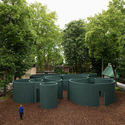
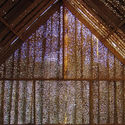
For Mauricio Pezo and Sofía Von Ellrichshausen, the architect's job is about much more than dealing with functional issues, as well as social issues, sustainability, and safety. “Of course architecture from its very essence is solving problems, and the problems constantly change,” says von Ellrichshausen in this interview with The Architectural Reviewoutside their Vara Pavilion at the 2016 Venice Biennale. “But probably the life span of architecture is many times larger than the problem that it addresses initially. Therefore we think of architecture more in terms of this larger span and hopefully it might embody a set of values and not necessarily propose a solution.”
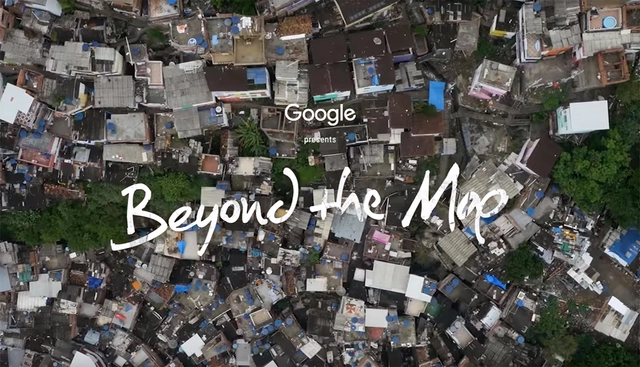
Google recently launched a new platform "Rio: Beyond the Map," showing Rio's favelas using 360º videos. The tool also includes panoramas more than three thousand images and historical exhibitions of Rio de Janeiro. The project integrates Google Arts & Culture, which brings art collections from around the world.
North façade of the Moody Center for the Arts at Rice University, Houston, TX. Image Courtesy of Michael Maltzan Architecture, Inc.
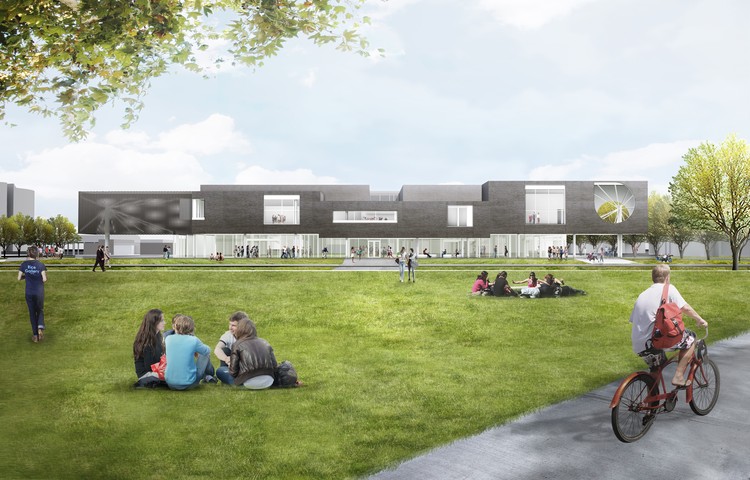
Michael Maltzan Architecture has released new images of their design for the Moody Center for the Arts at Rice University in Houston, Texas, coinciding with the announcement that the building will open to the public on February 24, 2017. The building is conceived as a multi-disciplinary lab for creativity, which will contain “an experimental platform for creating and presenting works in all disciplines” as well as a flexible teaching space and a forum to host partnerships with visiting national and international artists.
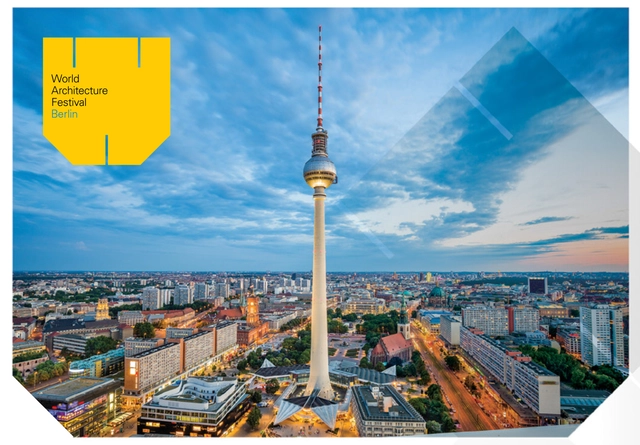
The program for the 2016 edition of the World Architecture Festival (WAF) has been announced. Being held from November 16-18 at the Arena Berlin, Germany, the festival will feature 3 days and 4 nights of events including conferences, lectures and seminars, architect-led city tours and networking opportunities, as well as live critiques of the 411 projects shortlisted for the 2016 WAF Awards. An all-star list of speakers will include leading architectural figures such as Patrik Schumacher, Ole Scheeren and Peter Cook.
This theme of this year’s festival is “Housing For Everyone.” Inspired by a variety of influences, markedly the condition of displaced communities of political and disaster refugees, lectures will focus on “the growing understanding of how demographics and global urbanization are forcing change; and the imperatives to create shelter at one end of the spectrum, and sufficiency for occupation and investment at the other.”
Yuri Grigoryan founded Project Meganom in 1999 in Moscow with his partners Alexandra Pavlova, Iliya Kuleshov, and Pavel Ivanchikov. Together, the group all graduated from Moscow’s Architectural Institute, MArchI in 1991, the year of the Soviet Union’s collapse, and then practiced at the studio of Moscow architect Alexander Larin. Today Project Meganom is headed by Grigoryan, Iliya Kuleshov, Artem Staborovsky, and Elena Uglovskaya, and keeps in close contact with the theoretical side of architecture: Grigoryan teaches at his alma mater and until recently he was the Director of Education at Strelka Institute, founded in 2009 under the creative leadership of Rem Koolhaas, while in 2008 the practice was involved in the Venice Architecture Biennale with their San Stae project for curator Yuri Avvakumov's “BornHouse” exhibition. All of this gives Grigoryan an interesting overview of Russia's unique architectural context. In this interview from his “City of Ideas” column, Vladimir Belogolovsky speaks with Grigoryan about the issues facing Russian architecture and how Project Meganom has responded to those challenges.
In May 2016, the After Belonging Agency discussed the theme of the forthcoming Oslo Architecture Triennale—entitled After Belonging: a Triennale In-Residence, On Residence, and the Ways We Stay In-Transit—as part of In Therapy, the exhibition of the Nordic Pavilion at the 2016 Venice Biennale. The hour-long discussion, which also includes presentations by Shumi Bose and Füsun Türetken, begins with an in-depth description of how the Triennale intends to focus on the future challenges of migration by investigating how cities and architecture can react to large groups of people moving and resettling.
https://www.archdaily.com/791923/three-nordic-refractions-the-after-belonging-agency-discuss-the-theme-of-the-2016-oslo-triennialeAD Editorial Team
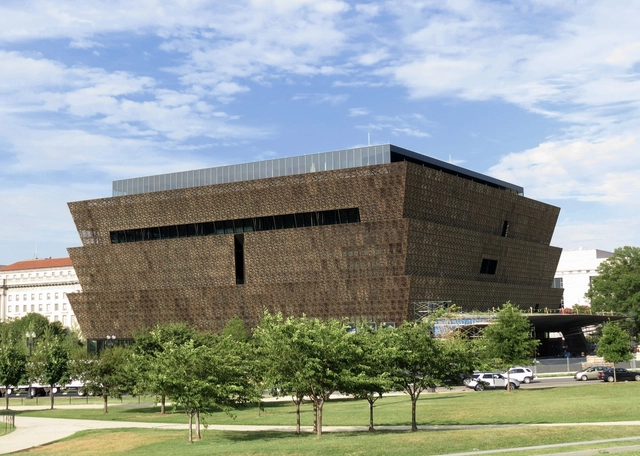
Photographer Paul Clemence of ARCHI-PHOTO has shared with us images of Adjaye Associates' nearly-completed Smithsonian National Museum of African American History and Culture. The building draws inspiration from the nearby Washington Monument, mirroring the 17-degree angle of its capstone in the museum’s tiered corona. Adjaye has described the building’s ornamental bronze lattice as “a historical reference to African American craftsmanship.” The skin can also be modulated to control the transparency and amount of sunlight reaching the interior spaces. The building will open to the public on September 24, 2016.
Videos
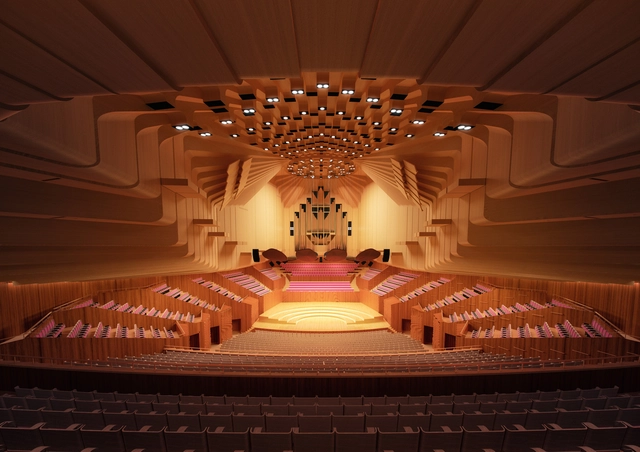
Concert Hall. Image Courtesy of Sydney Opera House
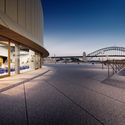
The Sydney Opera House has revealed designs for a $202 million renovation project, the largest upgrade program to the Jørn Utzon-designed building since it opened in 1973. Announced by New South Wales Deputy Premier and Minister for the Arts, Troy Grant, the project’s main goal is to “improve access and ensure it meets the needs and expectations of audiences, artists and the 8.2 million people who visit each year.”
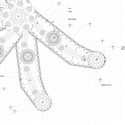
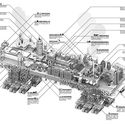
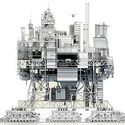
“Utopia”: the word was coined by Sir Thomas More in 1516 when he started questioning the possibility of a perfect world where society would suffer no wars or insecurities, a place where everyone would prosper and fulfill both individual and collective ambitions. Yet such a perfect society can only exist with the creation of perfect built infrastructure, which possibly explains why architects have often fantasized on megastructures and how to “order” this dreamed society.
Megastructures, as imagined after World War 2 by the CIAM international congress and Team 10, are now regularly revived with the intent to solve social issues on a mass scale. Notably, architecture students have shown a renewed interest for walking cities as first conceived by Ron Herron of Archigram in the 1960s, assuming that megastructures could solve major crises in remote areas. Just as ETSA Madrid student Manuel Dominguez developed a nomadic city to encourage reforestation in Spain for his 2013 thesis project, Woodbury University graduate Rana Ahmadi has recently designed a walking city that would destroy land mines on its way. But these utopian projects also involve a considerable amount of technology, raising the question of how megastructures and technology can work together to give societies a new beginning.



.jpg?1471338590&format=webp&width=640&height=580)















.jpg?1470992306 "Vara Pavilion / Pezo von Ellrichshausen. Image © Laurian Ghinitoiu")
.jpg?1471021982 "Vara Pavilion / Pezo von Ellrichshausen. Image © Laurian Ghinitoiu")
.jpg?1471021974 "Vara Pavilion / Pezo von Ellrichshausen. Image © Laurian Ghinitoiu")
.jpg?1470992306)


.jpg?1470952641 "Theater Mercury, Moscow, 2006. Image © Marco Zanta")
.jpg?1470952609 "Molochny Lane residential building, Moscow, 2003. Image © Yuri PALMIN")