In the middle of February, we were invited to visit Ljubljana and attend the Matchmaking Conference organized by Future Architecture Platform -- an organization, coordinated by Ljubljana's Museum of Architecture and Design (MAO), that provides young talents with the opportunity to share their ideas -- practical or conceptual -- and meet fellow emerging architects. The three-day event gathered 25 teams from all over the world to present their projects and discuss potential collaborations.
We always appreciate the people behind great initiatives in architecture, and try to never miss the chance to share their profiles and thoughts with our readers. Future Architecture Platform is no exception -- the Leader of the great team of architects, curators, publishers, and educators, Director of MAO and architecture critic, Matevž Čelik told us about the ideas driving the Platform, challenges that emerging architects face these days, and the future of architectural education and profession.
Henry N. Cobb, FAIA, Founding Partner of Pei Cobb Freed & Partners Architects, has passed away at 93, in his home in Manhattan, as confirmed by Ian Bader, a partner at their architecture firm, Pei Cobb Freed & Partners.
PAU or Practice for Architecture and Urbanism, a multi-disciplinary design and planning firm founded by Vishaan Chakrabarti, created a revitalization plan for Sunnyside Yard in western Queens, New York. Envisioning a more equitable and sustainable future, the 180-acre human-centered carbon-neutral master plan reflects the community’s needs.
Venice Biennale 2020, curated by Hashim Sarkis, has been postponed and will be held from August 29th through November 29th, as announced on the event's official website.
via Cities for Play. Designing Child Friendly High Density Neighbourhoods
'Cities for Play' is a project whose main objective is to inspire architects and urban planners to create stimulating, respectful, and accessible cities for children.
Natalia Krysiak, its creator, is an Australian architect who believes that children's needs should be placed at the center of urban design to ensure resilient and sustainable communities. In 2017, she produced 'Cities for Play,' studying examples of cities that are concerned with providing environments that are capable of promoting the health and well-being – physical and emotional – of children through a focus on play and "active mobility” in public spaces.
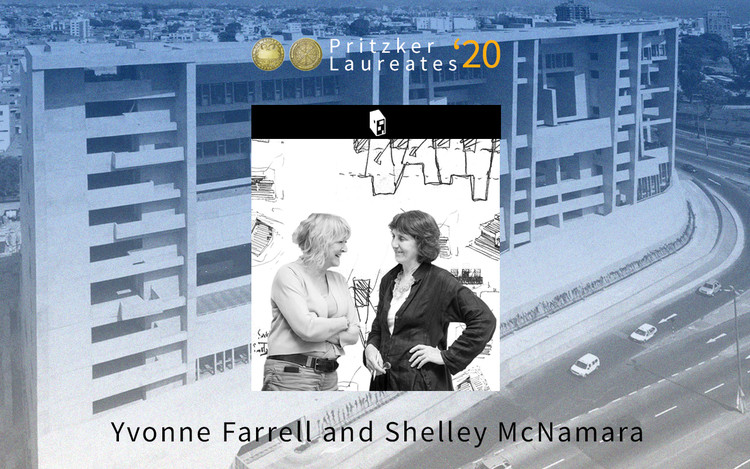
Pritzker Prize 2020 Laureates, Irish architects Yvonne Farrell and Shelley McNamara are known for their powerful yet delicate approaches. In this exclusive video for ArchDaily, Martha Thorne, executive director of the Pritzker Architecture Prize and Dean of IE School of Architecture and Design, shares some of the reasons why Grafton Architects has won the Pritzker Prize 2020.
I met with Juan Alberto Andrade and Cuqui Rodríguez from the JAG Studio in Ecuador during their conference for the sixth edition of EARQ (PUCE-SI). The young couple dedicate themselves to documenting and writing about Ecuadorian architecture. By covering the now famous works of Al Borde, Daniel Moreno Flores, Natura Futura, Rama Estudio, among others, the couple have become the unofficial emissaries of their country.
We sat down with the couple for World Photography Day where they shared, not only their start in and work in photography, but the role of photography in contemporary architecture.
The British Council has announced that curators Manijeh Verghese and Madeleine Kessler will represent the UK at the 17th International Architecture Exhibition at the Venice Biennale 2020. Selected from a shortlist of nine proposals, the winning project entitled “The Garden of Privatised Delights”, explores the creeping epidemic of privatized public spaces across cities in the UK.
John Ronan (b. 1963, Grand Rapids, Michigan) is known for his sensual atmospheric buildings that tend to unfold layer by layer their spatial complexity, as one moves through them. His focus is on the use of materiality in ways that reinvent architecture. Ronan holds a Master of Architecture degree with distinction from the Harvard University Graduate School of Design (1991) and a Bachelor of Science from the University of Michigan (1985). He has been teaching architecture at the Illinois Institute of Technology since 1992. John Ronan Architects was established in Chicago in 1999, the year Ronan won the Townhouse Revisited Competition sponsored by the Graham Foundation. In 2006, the firm was featured in the Architectural League of New York’s Emerging Voices and the Young Chicago exhibition at the Art Institute of Chicago. In 2007, the architect was selected to build the prestigious Poetry Foundation in Chicago, out of a pool of 50 international contenders. His monograph Explorations: The Architecture of John Ronan was published by Princeton Architectural Press in 2010. In 2016, the firm was named one of seven international finalists for the Obama Presidential Library. The following interview is a condensed version of our conversation at the architect’s studio in Chicago.
“When you read Love in the Time of Cholera you come to realize the magic realism of South America.” Yvonne Farrell, Shelley McNamara and I were in a corner of the Barbican Centre’s sprawling, shallow atrium talking about the subject of their most recent accolade, the Royal Institute of British Architects inaugural International Prize, awarded that previous evening. That same night the two Irish architects, who founded their practice in Dublin in the 1970s, also delivered a lecture on the Universidad de Ingeniería and Tecnologia (UTEC)—their “modern-day Machu Picchu” in Lima—to a packed audience in London’s Portland Place.
The Hungarian Pavilion at the 2020 Venice Biennale will feature the work of twelve design studios that will reconsider twelve iconic modernist buildings in Budapest. For the 17th International Architecture Exhibition, the pavilion's curator Dániel Kovács wants to explore the value and heritage of architectural modernism to reconcile past and future architecture.
Architectural rendering and visualization have become crucial tools in the art of communication. From client presentations to internal design reviews, showing your 3D models in lifelike, beautiful environments can convey both practical information about the project’s development, as well as the feeling and experience of a space.
Space Saloon and Designers on Holiday have announced DeSaturated, a week-long interdisciplinary community-in-residence design festival in California's Cuyama Valley. Following the success of the first two iterations, LANDING and FIELDWORKS, the team is returning to California once more. The community-in-residence program will bring together designers, artists and researchers to address issues of water scarcity.
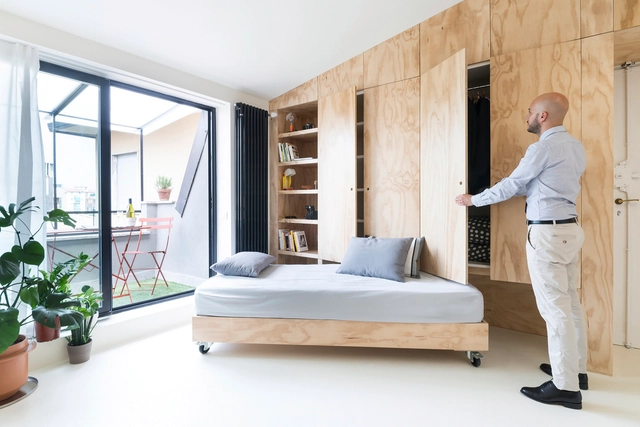
With residential developments offering ever-smaller housing units, the challenge for architects and interior designers to develop compact and multifunctional solutions for interior projects increases. From this perspective, it is increasingly common for professionals to focus on their clipboards in creating new solutions for joinery and multifunctional furniture that allow the space to transform completely in a few seconds, such as strategic cabinets and bookcases to supply the lack of storage space; sliding furniture on rails or pulleys; cabinets that turn into beds through vertical rotation; drawers in stairways, etc.
With more than 40 years of professional experience, Yvonne Farrell and Shelley McNamara, partners and co-founders of Dublin-based Grafton Architects, are the first women to be jointly awarded the architecture’s highest honor, the Pritzker Prize. In addition to a very welcoming breath of hope towards greater female representation in the field, the selection also cast light over an equally urgent theme in the profession: recognizing architecture practice as a collective effort.
This year, architecture’s highest honor, the Pritzker Prize, has been granted to Grafton Architects' Yvonne Farrell and Shelley McNamara of Dublin, Ireland. The 2020 Laureates, who are both educators and architects, are known for their powerful yet delicate approaches. Their contextual and modern interventions are very attentive to history, demonstrating high levels of sensitivity and craftsmanship.
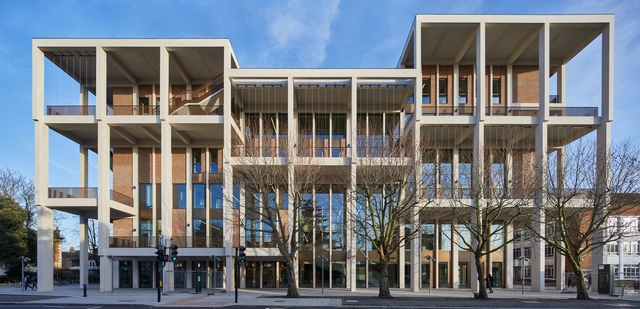
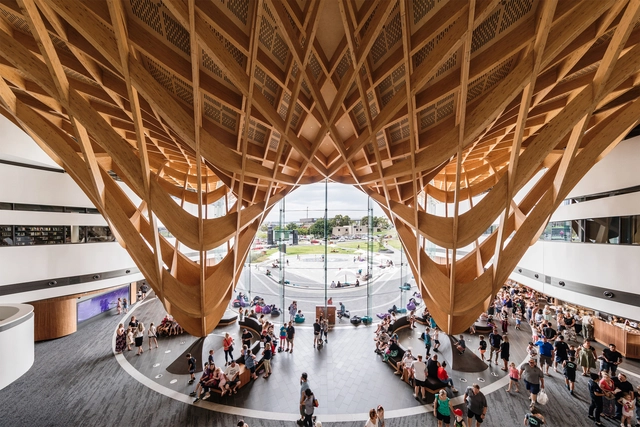
Yvonne Farrell and Shelley McNamara founded Grafton Architects in 1978, after they met each other at the School of Architecture at University College Dublin. The practice, named after the street where the duo's first office was located, has been awarded this year’s prestigious 2020 Pritzker Award. Grafton's built work reflects the continued search of architectural excellence, in buildings ranging from small scale housing to large public volumes.
https://www.archdaily.com/934727/grafton-architects-get-to-know-2020-pritzker-winners-built-workAD Editorial Team
Australian architecture is rooted in the land. From environmental and climatic concerns to the country's unique cultural background, the built environment down under is defined by a history of connections to local contexts. Today, Australian architecture has also come to embrace a multicultural identity, with a new class of cultural projects showcasing how contemporary buildings and structures are being designed for the future.
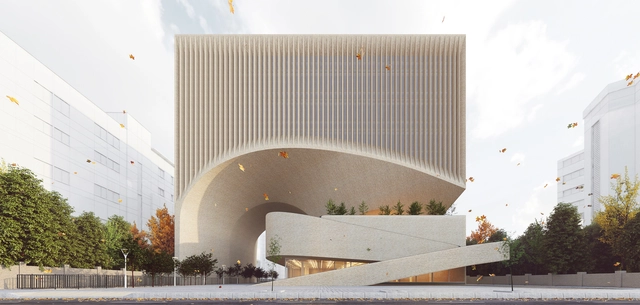
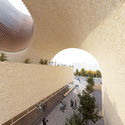
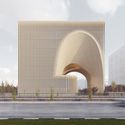
NextOffice has created a space where engineers can gather and communicate with each other. Located in Mashhad, Iran, the 14 200 square meter development was inspired directly from traditional Iranian constructions, with the implementation of a structural void that generates the rest of the morphology and defines access.
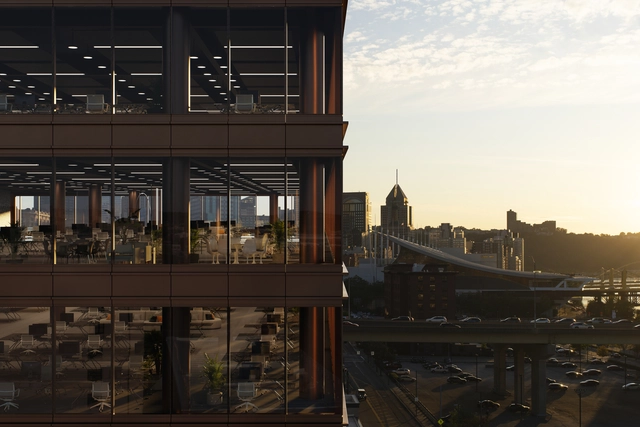
JMC Holdings unveiled images of a 21-story office building in Pittsburgh’s 1501 Penn Ave. Designed by Brandon Haw Architecture, an international architecture studio based in New York, in collaboration with the AM/Woolly Group, the new commercial structure is LEED-certified.
Door handles are a ubiquitous part of daily life, being used constantly in almost every space but rarely given thought by the passing user. Nevertheless, the chosen material of each handle can vary widely in terms of aesthetics, durability, and sustainability, with good choices going noticeably right and poor choices going noticeably wrong. For objects that are seen and used multiple times every day without fail, it’s imperative that designers get the choice right.
To deepen this topic, FSB helps us to lay out the properties of four of the most common handle materials below, allowing you to make an informed decision on which material aligns best with your project’s needs.
https://www.archdaily.com/929360/stainless-steel-bronze-brass-or-aluminum-how-to-choose-handle-materialsLilly Cao
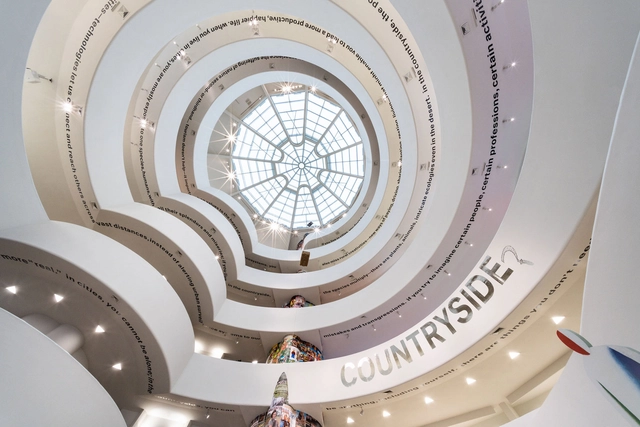
Entering the Guggenheim Museum, visitors find themselves surrounded by a feast of vivid colors and mismatched fonts. Passing the gigantic green tractor at the entrance, they move across the ground floor, littered with stickers, like a lunchbox, or a lid of a laptop. A thick pillar that pierces the internal atrium has become a garish advertising column. A bale of hay, a drone, and some other object (impossible to identify) levitate high overhead. A cardboard cutout of Joseph Stalin on robot wheels moves down the ramp, scaring off visitors. Big reflective letters say: “Countryside, The Future”.
Architect Rem Koolhaas, the founder of the Office of Metropolitan Architecture (OMA) and Samir Bantal, director of OMA’s internal think-tank AMO, created this utterly confusing environment to exhibit years of research on the space beyond the boundaries of the 21st-century city.
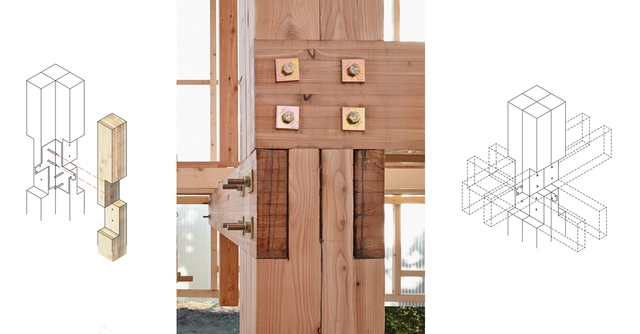
Kengo Kuma's architecture can be defined by its respect to Japanese constructive traditions and alignment with its context. Internationally recognized, the architect is known mainly for his wooden (or mixed) structures, which arise from a simple pattern of assembly and, which through different intersections and angles, generate a complex whole. The representations created by his team bring very specific details, ranging from didactic isometrics to complex parametric drawings. We have gathered details of five inspiring projects by Kengo Kuma that use wood.







.jpg?1583337854)




.jpg?1583151570&format=webp&width=640&height=580)
.jpg?1583151508 "Independence Library and Apartments. Image © James Florio")
.jpg?1583151444 "Independence Library and Apartments. Image © James Florio")
.jpg?1583151301 "Chapel of St. Ignatius. Image © Nathan Kirkman")
.jpg?1583151521 "Gary Comer Youth Center. Image © Steve Hall")
.jpg?1583151570)
.jpg?1484680102&format=webp&width=640&height=580)


_02_Fortepan.jpg?1583183522 "Courtesy of Venice Biennale, Hungarian Pavilion")
_Fortepan.jpg?1583183179 "Courtesy of Venice Biennale, Hungarian Pavilion")
_Magyar_Építőművészet.jpg?1583183591 "Courtesy of Venice Biennale, Hungarian Pavilion")
_Fortepan.jpg?1583183753 "Courtesy of Venice Biennale, Hungarian Pavilion")