How are Brazilian municipalities preparing to face climate change? What laws are being created? How are resources being invested? To increase transparency regarding public policies focused on the climate and the environment, the Diário do Clima was created.
Design stems from nuance, empathy, and understanding. The best solutions address the needs, identities, and context of a client and place. A designer's response needs to be informed by these different realities. Intersectional Design is a method of designing by thinking through how factors of identity (gender, race, sexuality, class, and many more) interact with one another. In understanding how these factors combine, we can more deeply understand the context of use and an individual user's priorities.
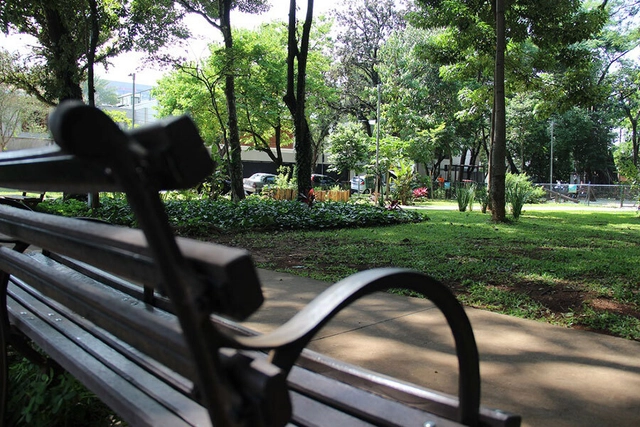
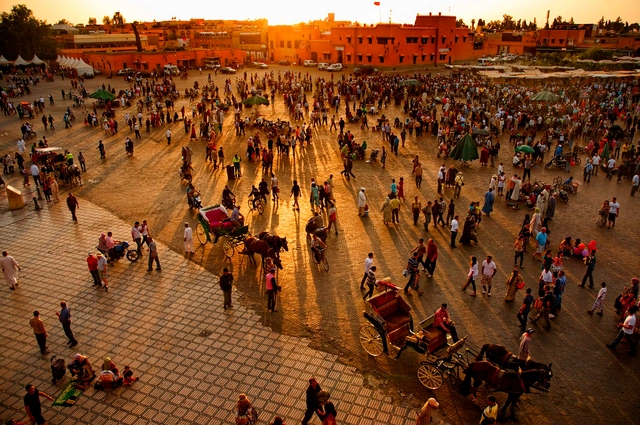
One of the things that catches my attention most when I visit major cities in other countries, whether they are European capitals or our neighbors here in South America, is how people occupy public spaces.
And I don't just mean parks or squares. Whether in Buenos Aires, Santiago, Paris, or Amsterdam, for instance, at least on sunny days, almost any patch of grass is occupied by people—children running and playing, friends having picnics, young people reading stretched out in the sun.
https://www.archdaily.com/1136266/in-sao-paulo-is-the-square-oursVitor Meira França
The Project Strategies Methodology (M.E.P.) is a process that has been under development since 2013 within the Architecture and Urbanism program at Mackenzie Presbyterian University (FAUMACK). It has been applied by the Project Strategies in Urban, Degraded, and Port Territories research group (LAB-STRATEGY) through international workshops, conferences, academic outreach, and educational materials across various geographical regions of Latin America and the Caribbean.
Protest has always been a powerful tool for creating change, and public spaces provide a platform for social engagement in societies. As part of the International Day of Democracy, we examine Africa, its series of emerging protests in the past year, and how citizens in various countries question political justice, demand better living standards from their government, and interrogate their nation’s sovereignty. With demonstrations ranging from organized large-scale marches to smaller spontaneous outbursts, residents of these countries have explored public spaces in symbolic and significant ways to amplify their voices. These spaces include public squares with cultural and historical meaning, sites of political buildings, or makeshift protest areas such as roads and open areas. Through this, African cities show how people make these spaces their own and how the power of their conglomeration cannot be ignored in unwrapping the democratic essence of public spaces.
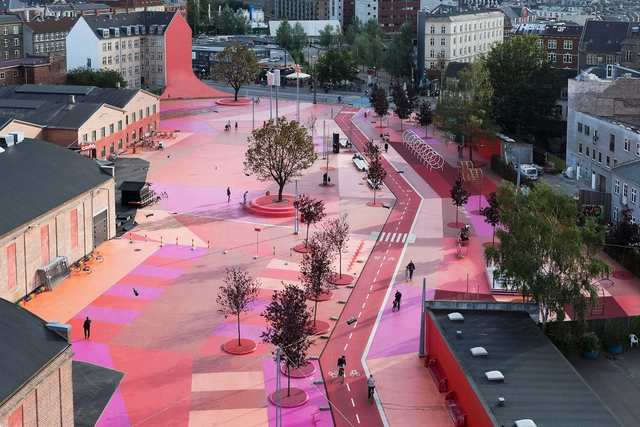
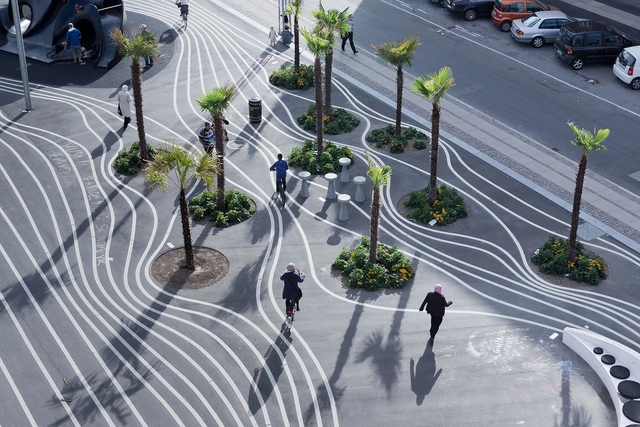
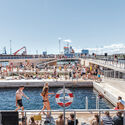
Copenhagen is a living testament to its architectural legacy, innovative urban development, and commitment to sustainability and liveability. The city inspires the whole world with its quality of urban life, made up of efficient and intelligent mobility systems, along with vibrant and interesting public and private spaces. It is in this context that the city has been awarded the title of World Capital of Architecture by UNESCO for 2023, and hosted the World Congress of the International Union of Architects. These milestones represent unique opportunities to highlight the crucial role of architecture and urban planning in building a sustainable future, establishing the city as a prominent international forum for discussing crucial issues related to the urban environment and the ongoing search for innovative solutions.
Visit Copenhagen has developed a series of four videos to explore the city's architectural wonders, guided by local architects. In the first one, which you can watch below, Danish architect Dan Stubbergaard –founder of Cobe– takes us on a captivating tour of Copenhagen, sharing his insights into what makes the city truly exceptional for its inhabitants.
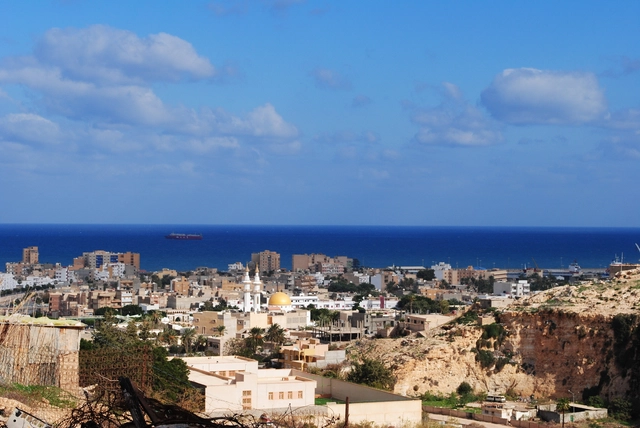
Within the span of a week, two natural disasters hit North African nations. On Monday, 11 September, just days after a major earthquake hit Morocco's High Atlas Mountains, Storm Daniel made landfall in Northwest Libya, leading to the collapse of two dams, which released torrents of mud and water into the country’s coastline, killing thousands and destroying large parts of the port city of Derna, as well as other cities and villages such as Benghazi, Bayda, and al-Marj. The scale of the disaster is still being assessed, with more than 10,000 residents still missing and thousands more displaced. Entire neighborhoods of Derna, a city traversed by the flooded Wadi Derna River, have been swept away.
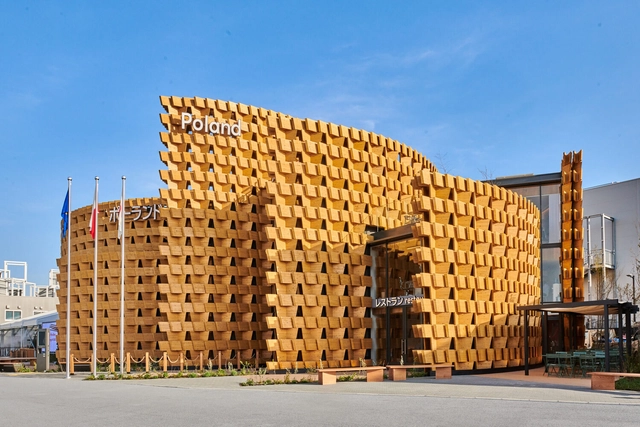
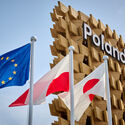
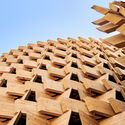
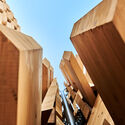
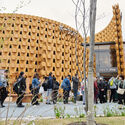
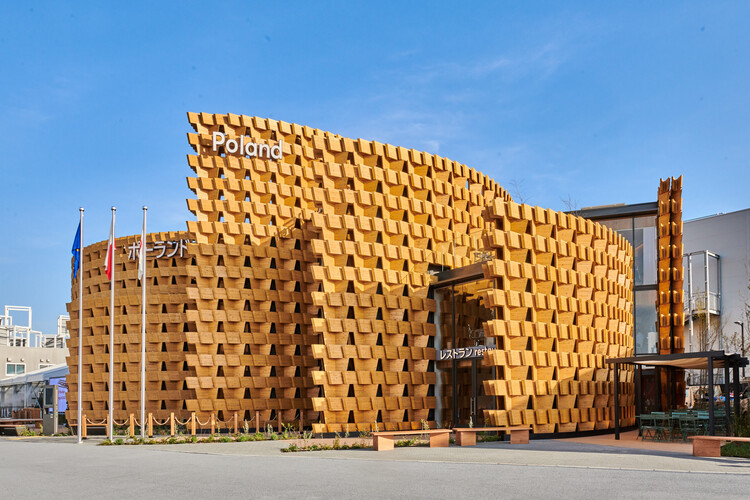
The Polish Pavilion at Expo Osaka 2025. Image Courtesy of Polish Pavilion Expo 2025
Commissioned by the Polish Investment and Trading Agency, Poland's Pavilion at the World Expo in Osaka is designed by Interplay The project is responding to the theme of the upcoming Expo, "Designing Future Society for Our Lives" and was born from the Interplay's fascination with spirals, specifically the shape's use in different scales, from "protein molecules to the structure of galaxies." Serving as a symbol of Polish ingenuity, the geometric-patterned pavilion aims to extend its influence beyond national boundaries.
Modernity and globalization have significantly reduced geographical distances, transformed social interactions, and accelerated the flow of information across nations, which has, in a sense, made the world more accessible to people everywhere. However, it's important to note that when we say "everyone," we refer to a vast and diverse population. Modernity and globalization had an impact on noticeable inequalities in both social and technological realms, as more advanced and privileged nations have established benchmarks and norms for leisure, culture, and consumption. As a result, certain cultures have established a dominant influence, promoting the notion that there is a "correct" way to live and build cities. This unchecked pursuit of development comes at a significant cost to the Earth's ecosystems and biomes.
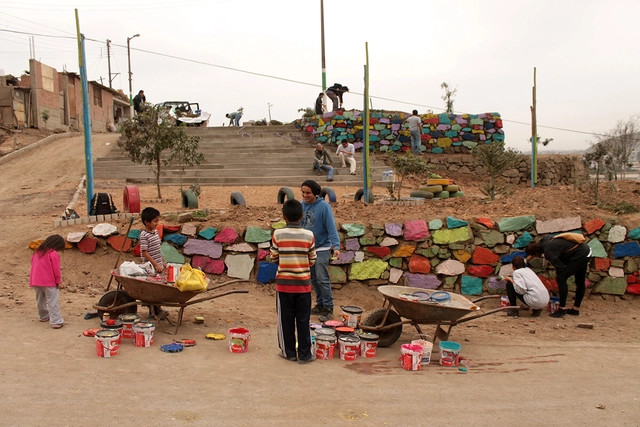
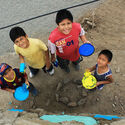
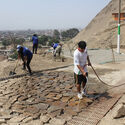
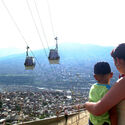
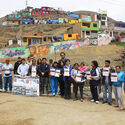
The research project that impressed the jury aims to explore the impact of highly successful informal settlement improvement initiatives implemented in various Latin American countries. Its primary objective is to uncover valuable design insights related to social and environmental sustainability. The research is founded on the recognition that Latin America is the most urbanized region globally, with approximately 80% of its population residing in cities. Nevertheless, nearly 15% of this urban population resides in informal settlements marked by inadequate infrastructure and a diminished quality of life. Various improvement programs have been implemented, and the active involvement of citizens has been a crucial factor in enhancing their effectiveness.
For the past three decades, YIMBYs and NIMBYs have been fighting pitched battles across the U.S. for the heart and soul of future development, but the housing crisis has only grown worse, especially since the crash of 2008, which changed so many things on the supply side.
This was followed a dozen years later by 2020, the strangest year of our lifetimes, which made those supply-side challenges even more pronounced. The roots of the problem, however, go back further than that, with mistakes made as long as 75 years ago now being repeated by completely new generations. Failure to understand those errors—and even why they are errors and not good practice—will perpetuate and exacerbate today’s crisis into future generations.
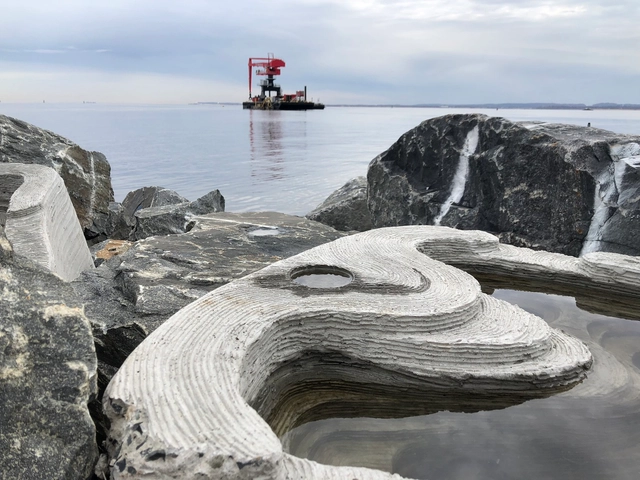
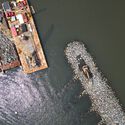
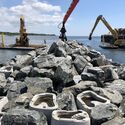
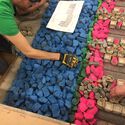
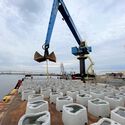
Focused in its fifth edition on Adaptation, the Obel Award has been granted to ‘Living Breakwaters’ in New York, a green infrastructure project off the shore of Staten Island. Awarded to SCAPE Landscape Architecture and its founder Kate Orff, masterminds behind ‘Living Breakwaters’, the yearly prize honors architectural contributions that positively impact both people and the planet.
The Obel Award is an international prize for architectural achievement presented annually by the Henrik Frode Obel Foundation, and each year, the jury sets a focus and awards a potential solution. Previously, it recognized Seratech, a carbon-neutral concrete solution, as the 2022 Obel Award winner, while in 2021, the concept of the 15-minute city received the prize for its value in creating sustainable and people-centric urban environments. The award ceremony will take place at the Sydney Opera House on 21 October 2023, and the winner will receive a prize sum of EUR 100,000 and a unique work of art by artist Tomás Saraceno as a trophy.
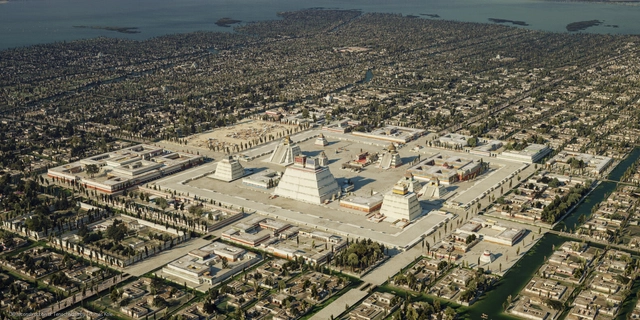
As part of a project led by Dutch artist Thomas Kole, a website titled "Portrait of Tenochtitlan: A 3D reconstruction of the Mexica capital" has been launched, presenting a variety of images of what Tenochtitlan once was. This reconstruction is based on historical and archaeological sources, as well as the collective knowledge that yields these images today to continue studying our history. The site offers navigation in three languages: Nahuatlahtolli, Spanish, and English, featuring an overlay of contemporary images where users can compare before and after simply by sliding the cursor across the screen. It was created using open-source software: Blender, Gimp, and Darktable.
Paola Jirón is the newly appointed president of Chile's new National Council for Territorial Development (CNDT), a recently established entity that merges the National Council for Urban Development (CNDU) and the National Council for Rural Development (CNDR). She takes on the challenge of promoting planning that accounts for the specific characteristics of each region, while facilitating dialogue to develop solutions for pressing spatial issues, such as the growing population in informal settlements, urban development in disaster-prone areas, and the increasing subdivision of rural land.
The city of Federación, located in the northeast of the province of Entre Ríos, was structured, like most Argentine cities, around “the classic block-by-block grid layout bequeathed by the Laws of the Indies,” taking shape alongside the development of its various economic roles. The evolution of economic functions and the actions of different social forces gradually shaped a unique organization of urban space, in which distinct “neighborhoods” or urban districts clearly reflected the inequalities of the local socioeconomic structure.
https://www.archdaily.com/1136219/the-origin-of-cities-federacion-in-argentinaMaría Rosa Catullo
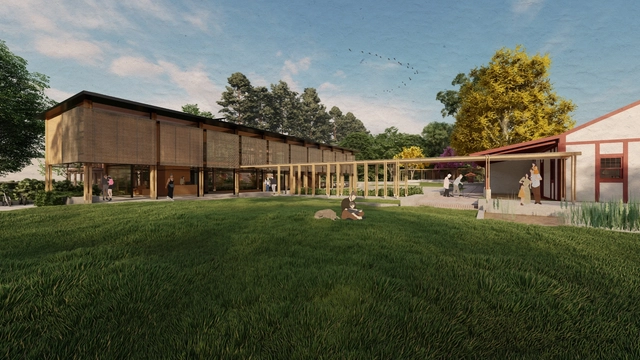
The firm Solss Arquitetura was awarded first place in the national competition Iconicidades, organized by the State Government of Rio Grande do Sul and launched in April this year. The initiative sought to select the best proposals for transforming public spaces into hubs that foster the creative economy in the cities of Pelotas, Rio Grande, Santa Maria, Cachoeirinha, and São Leopoldo.
The firm won the competition in São Leopoldo, which aimed to choose the best revitalization project for the Casa da Feitoria and the Immigrant Museum, preparing the site for the bicentennial celebrations of German immigration in Brazil. Discover the project below:
https://www.archdaily.com/1136008/solss-arquitetura-wins-competition-for-the-requalification-of-casa-da-feitoria-and-the-immigrant-museum-in-sao-leopoldoArchDaily Team
While it is undeniable that the surrounding environment is changing due to human activity, the effects can be difficult to perceive directly, as they are often illustrated with unrelatable pictures of far-away places or overused graphics and statistics. Danish office Tideland Studio aims to change this. Through their work, they aim to bring forth a new type of sensible understanding of the changes happening around us. They work across disciplines, melding research, art, and architecture while employing the newest survey and fabrication technologies to give presence to the abstract phenomena that shape our planet. Because of their practical approach to research and the new perspectives that they open toward extreme environments affected by climate change, ArchDaily has selected Tideland Studio as one of the 2023 New Practices. The annual survey highlights emerging offices that use innovation and forward-looking processes to rethink the ways in which we practice architecture.
Rosetta Bonatti – Untitled. Image Courtesy of URBAN Photo Awards
The URBAN Photo Awards 2023 has announced its list of Finalist Photographers, marking the penultimate stage of the international contest. The finalists, categorized by section and thematic area, are presented without hierarchical ranking, encompassing a collection of over 70 single photos, 20 projects & portfolios, alongside 5 Book Award volumes selected by the jury. As the competition unfolds, the internationally-recognized World Photography Day adds another layer of relevance to this display. Commemorated annually on August 19th, this celebration strives to bridge the divide between photographers and the broader public. This year's iteration revolves around the theme "Landscapes." The URBAN Photo Awards 2023's diverse showcase serves as a fitting nod to the upcoming World Photography Day, where the camera highlights facets of our urban surroundings.
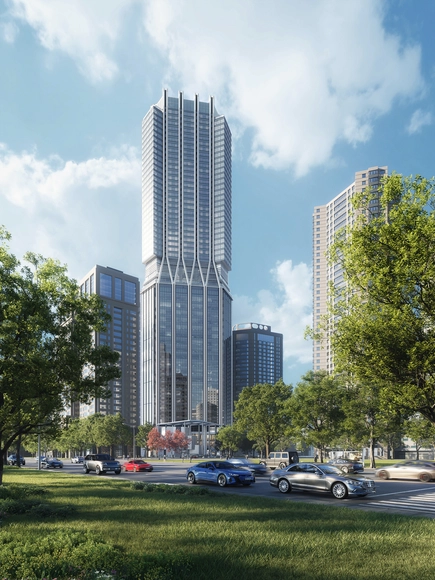
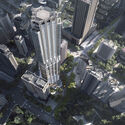
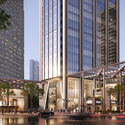
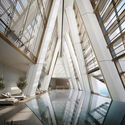
Foster + Partners has just revealed their first project in Qingdao, a major seaport and financial hub in the Shandong Province of China. 1 Nanjing Road is a mixed-use development in the city’s southern district. From office space to luxury apartments, the studio’s mixed-use design integrates into the existing urban fabric.
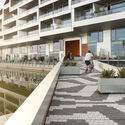
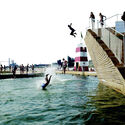
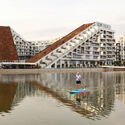
If you follow BIG, you have probably already seen Bjarke Ingels talk about hedonistic sustainability and how this concept permeates the most daring projects of the Danish office.
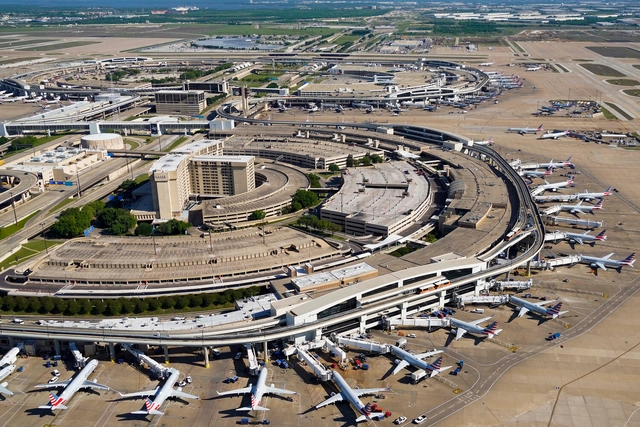
DFW International Airport Dallas, Texas. Image Cortesía de Soprema
Urban centers play a fundamental role in the advancement of contemporary architecture and in driving society's economic growth. At the same time, cities concentrate a large portion of the world's population and activities that contribute to global carbon emissions. This negative symbiotic relationship has brought us to a point where, according to WHO data, 99% of the global population breathes polluted air, consisting primarily of fine particulate matter and nitrogen oxide gases. These compounds have detrimental health impacts, linked to cardiovascular and pulmonary diseases.
Since these pollutants originate from human activity, it is crucial to seek approaches that reduce emissions and, from various angles, help improve air quality. These approaches range from adopting alternative construction methods for building structures and planning car-free urban environments to material innovations, including membranes with photocatalytic granules like those developed by Soprema. Through a photochemical reaction, these granules reduce pollutants at ground level, improving air quality and fostering healthier communities.
https://www.archdaily.com/1136353/photocatalytic-gravel-material-innovation-to-combat-smog-in-citiesEnrique Tovar
Mass timber has emerged as a sustainable alternative to replace concrete components in construction, as the latter alone contributes to 8% of global CO2 emissions. With various examples across different scales and applications, the material has shown promise in revolutionizing the industry by enhancing efficiency, strength, and comfort. Even when dealing with highly standardized and efficient processes in the manufacturing of structural elements, there is always room for improvement and waste reduction. This is mainly because the traditional industrial process of cutting logs into parts can generate substantial waste.
In this context, A.I. Timber emerges as an innovative construction material designed to minimize waste by preserving the natural contours of trees. Instead of employing conventional methods that involve cutting individual logs into standardized boards, A.I. Timber ingeniously utilizes Artificial Intelligence to fit these logs together like pieces of a perfectly assembled puzzle. To gain further insight into this initiative and the future of this material, we spoke with Carlo Ratti and Mykola Murashko, who coordinated the project.
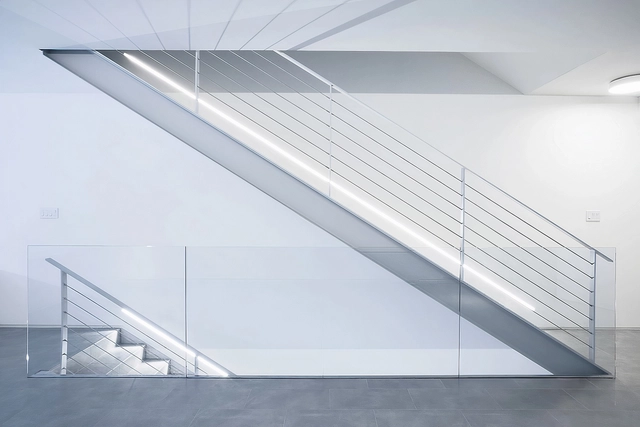
In the world of interior design and architecture, lighting has evolved from a mere functional necessity into a powerful tool for creating pleasant environments, accentuating design elements, and setting the mood for occupants. Embedded lighting systems have been a game-changer in this regard, especially when combined with LED technology, offering countless possibilities to transform spaces. LED strips, in particular, have revolutionized lighting by providing energy efficiency, longevity, versatility, and customization that was previously challenging with traditional lamp-based lighting. They have fundamentally changed how we illuminate homes, offices, and businesses, ushering in a new era in lighting technology.