

This guide explains how to structure multi-image prompts in the RunDifussion platform. Explore RunDifussion's product catalog.
Misc
How to Prompt and Annotate Multiple Images with AI
| Sponsored Content
https://www.archdaily.comhttps://www.archdaily.com/catalog/us/products/38860/how-to-prompt-and-annotate-multiple-images-with-ai-rundiffusion
A new vision for London's Tube Map

A new vision of the map for London’s Tube has been posted to depict a more geographically accurate representation of the underground train system. Navigate through the map for yourself here: http://www.london-tubemap.com/.
https://www.archdaily.com/159195/london-relaunches-tube-mapIrina Vinnitskaya
Eagle Nest Hut Proposal / Piero Ceratti

Architect Piero Ceratti shared with us his concept design, titled ‘Eagle Nest Hut’, for a mountain hut/shelter powered by wind turbines. This alpine hut can be installed in very extreme sites while minimizing the point of contact with the rocky ground. More images and architects’ description after the break.
https://www.archdaily.com/158010/eagle-nest-hut-proposal-piero-cerattiAlison Furuto
Snellen Eye Chart Reinvented for Designers

Joel Pirela of Miami based studio Blue Ant Studio has ingeniously reinterpreted the traditional ophthalmology exam to suit the refined tastes of designers. More after the break.
https://www.archdaily.com/155318/snellen-eye-chart-reinvented-for-designersTim Winstanley
Manhattanhenge

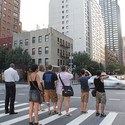
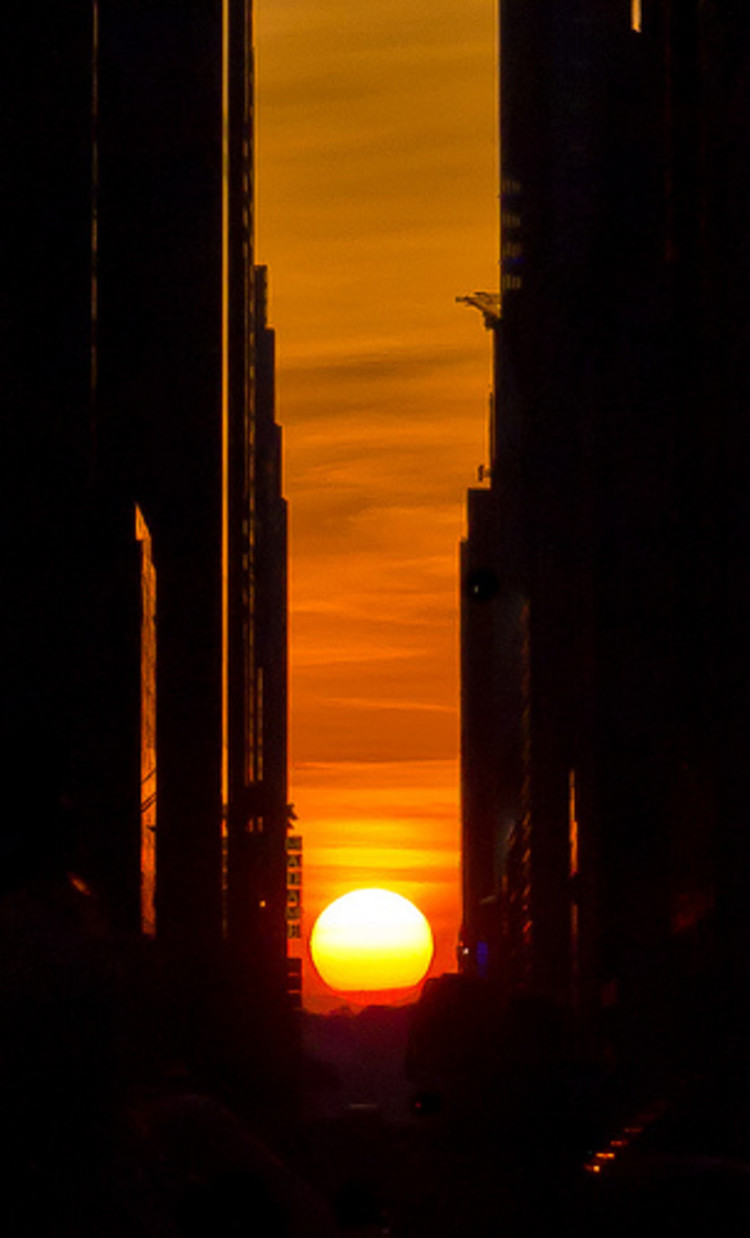
Manhattanhenge, is the term used to describe a biannual occurrence in New York City when the sun aligns with the east-west streets of Manhattan’s main grid. Adopted in 1811 the famous street grid of Manhattan, the Commissioners’ Plan, was the original design plan for the streets in which the grid plan is offset at 29.0 degrees from true east-west. Twice a year photographers gather to witness this urban solar phenomenon, when the sun sets perfectly between the skyscraper corridors and illuminates the north-south facades of the streets. Tripods and pedestrians filled the crosswalks this past Wednesday to catch a glimpse of this moment.



https://www.archdaily.com/151249/manhattanhengeKelly Minner
Architecture 3D Illustrations

Víctor Enrich recently shared with us his architecture 3D illustrations and visualizations. Over the years he has experimented with a variety of mediums resulting in these 3D creations. A full description of his work and further illustrations following the break.

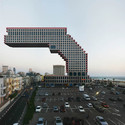

https://www.archdaily.com/149113/architecture-3d-illustrationsKelly Minner
Geopolitical Borders Competition / Adrian Lahoud and Samuel Szwarcbord

Adrian Lahoud and Samuel Szwarcbord shared with us their honorable mention entry for the recent Geopolitical Borders Competition organized by Think Space and judged by Teddy Cruz. This project is about two lines, one existing and one proposed. The first line is invisible. It runs horizontally from east to west across the Mediterranean Sea. Like the contour lines on a weather forecast, it bends and twists according to the vast differentials of pressure between North and South. From the perspective of the African continent, Europe holds a minimal promise of opportunity that cannot be found at home. From the point of view of Europe, North Africa represents a local pool of labor power, ready to be dipped into at will, a steady reserve of energy (increasingly solar) and kilometers of unspoiled coast ready for development. Like any bad relationship, the asymmetry is secured through structural violence. This violence must be flexible enough to accommodate the contradictions and dynamics of both parties. Changing domestic imperatives, economic demands and legal requirements form plastic limits through which the stability of the line must be coordinated.
https://www.archdaily.com/149148/geopolitical-borders-competition-adrian-lahoud-and-samuel-szwarcbordChristopher Henry
The Indicator: Made in China

“Made in China.” For so many in Western nations, this phrase conjures up a plethora of horrific images. There is the Human Rights argument: low wages, inhumane working conditions, and so forth. Then there is the issue of quality, as in, there is none.
First let’s talk about human rights in terms of manufacturing. The favored discourse is that Chinese factories exploit their employees and hence the resultant quality of the goods is far inferior. Sensational stories that support this conclusion always seem to cross international lines. Moreover, there are basic protestations of Human Rights’ violations and then the specter of Tibet is raised.
https://www.archdaily.com/147028/the-indicator-made-in-chinaSherin Wing
The Indicator: It’s Personal

My old firm, the one I got laid off from almost exactly two years ago, has had another round of layoffs. I’ve lost count how many that is (over ten I think), but since it included several principles, I’m guessing that this is either a death knell or time for a major restructuring of that office.
And that got me thinking about my own situation. Again. Because if there’s one thing that triggers intense feelings when you’re unemployed, especially when it’s been a really long time, it’s hearing other people at your old firm have suffered the same sad fate.
https://www.archdaily.com/144419/the-indicator-it%25e2%2580%2599s-personalGuy Horton and Sherin Wing
The Indicator: Death of a Critic

When a major architecture critic heads for the exit, does anyone care? One would suspect most architects would hold the door open and wave him on through. Critics, after all, can be quite nasty and make one’s life work look like so much poop.
So, it depends. When Herbert Muschamp died in 2007 the collective tissue boxes of the architectural profession were emptied as architects of all stripes, especially those he championed, shed rivers of tears. Mr. Muschamp, it seems, was a critic of consequence. People listened to him. What then of his protégé, Nicolai Ouroussoff? (Hereafter, simplified to N.O.) Will be N.O. missed?
More after the break.
https://www.archdaily.com/142684/the-indicator-death-of-a-criticGuy Horton