1. ArchDaily
  2. Mini

Mini

The Tale of Sydney's Urban Sellout

Subscriber Access | 

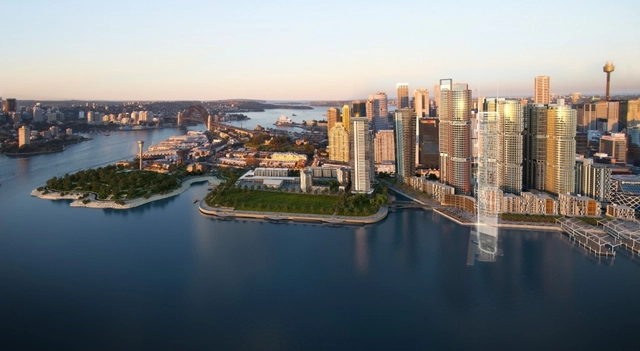
A recent, well-written article for The Guardian chronicles the story of Sydney's East Darling Harbour (also known as 'Barangaroo'), from the city's optimism in 2003 to the relative disappointment of today. David Shoebridge, a New South Wales Greens MP and the party's planning spokesperson, recounts the series of compromises and sellouts that have turned what was meant to be a "prime public space" into - to add insult to injury - the site for a casino.You can read this cautionary tale in full here.

The Portland Problem: $95 Million for a Hated Building?

In a provocative article, The Atlantic Cities explores the dilemma which Portland currently finds itself in: the Michael Graves-designed Portland Building, one of the most important examples of early postmodernism, requires renovation work to the tune of $95 million; unfortunately, most residents of Portland "really, really hate" the building - as they have since it was constructed in 1983. Should the city spend so much money renovating a building which is unpopular, dysfunctional and poorly built just because of its cultural significance? Read the original article for more.

361° Conference 2014: Architecture and Identity

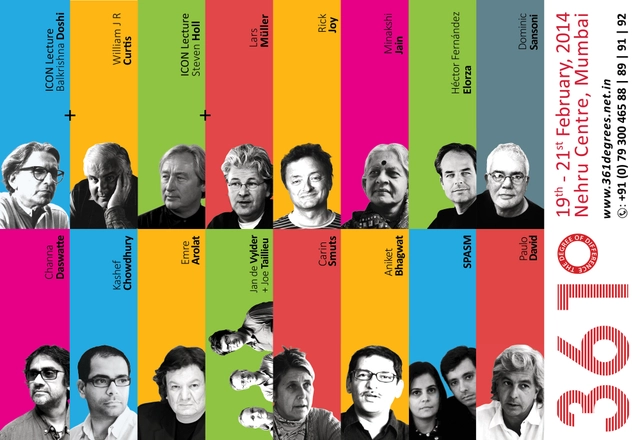
The 361° Conference, an initiative by Indian Architect & Builder to create a relevant platform for dialogue on architecture in India, will take place on February 19th to the 21st in Mumbai. This year's edition, based on the theme of "Architecture and Identity," will include renowned speakers, including Steven Holl and Dr. B V Doshi. More details, after the break...

Denise Scott Brown: A Must-Read Interview

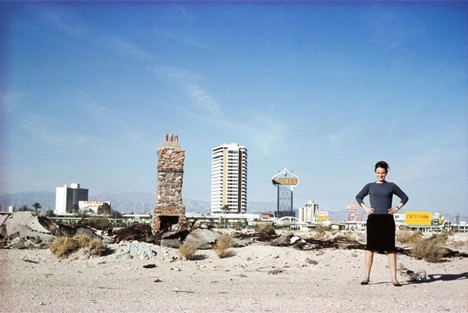
Designers & Books editors Stephanie Salomon and Steve Kroeter sat down with Denise Scott Brown for a conversation centered around Learning from Las Vegas, the seminal work penned by Scott Brown, Robert Venturi, and Steven Izenour in 1972. The must-read interview reveals some fantastic insight into Scott Brown's personal and professional life - her unending love of neon (one which led her to Las Vegas), her distaste for the "tyranny of white paper" (which gravely afflicted the design of the first edition of Learning from Las Vegas),as well as her - rather surprising - position on awarding group creativity. Read the full interview here and check out some select quotes from the interview, after the break.

Should NYC Be Curbing Its Tall Buildings?

New York Times architecture critic Michael Kimmelman puts forward his opinion on what should be done about the new breed of supertall residential buildings threatening to place Central Park "inside the world’s biggest chessboard". While he accepts that they may be an important factor in bringing wealth (and tax revenue) to New York, he offers some simple changes in legislation that could protect the city's famous skyline from abuse by high-power development firms. Read the full article here.

Wang Shu's Partner Lu Wenyu: I Never Wanted a Pritzker

In an interview with Spanish newspaper El País, Lu Wenyu defends her husband Wang Shu for solely receiving the Pritzker Prize in 2012. Despite the fact that the couple co-founded Amateur Architecture Studio and have worked side by side ever since, Wengyu maintains that her husband would have shared the Prize with her - she just didn't want it.

She confides to El País: "In China, you lose your life if you become famous. I want a life and I prefer to spend it with my son. Over there I don't accept interviews. And not in English-speaking countries either [...] I'm happy to be able to do architecture that I believe helps our towns and cities to be better. I'm convinced that to talk about this awakens interest in others - not being famous." Read the full interview at El País

Sign Up Now for Porto Academy 2014

For the second year in a row, Indexnewspaper will organize ‘Porto Academy’ at the Faculty of Architecture of the University of Porto (FAUP) in Portugal from the 21st to the 28th of July 2014.

The academy will consist of a weeklong workshop in which students will have the chance to work closely with: Antón Garcia-Abril, Cecilia Puga, Diogo Seixas Lopes (Barbas Lopes), Emilio Marin, Jan De Vylder (Vylder Van Vinck Tallieu), José Paulo dos Santos, Nuno Valentim, Paulo Providência, Smiljan Radic and Tetsuo Kondo. Participants will attend twelve lectures from those architects as well as three master classes from Valerio Olgiati (and two more architects soon to be revealed).

Porto Academy will take place in the FAUP's famous building, designed by Álvaro Siza. More details, after the break...

We Need More 'Building' in Architecture School

"Architectural education is very abstract." Virginia Tech professors and Rural Studio alumni Keith and Marie Zawistowski sit down to talk about the importance of a hands-on experience, suggesting a fundamental restructuring of curriculums. With projects such as the Masonic Ampitheater, they — together with their students — set out to prove that somethings are simply solved by building. Read the full article here, "What Architecture Schools Get Wrong"

Joi Ito Explains His Theories of Organic City Design

As part of their coverage of the Global Agenda Council on Design and Innovation, Grasp Magazine interviewed Joi Ito, director of MIT's Media Lab. He voices his opinion that current strategies for masterplanning do not work, as designers struggle to reliably "predict and cause a future to occur" (a better approach is to enable and empower innovation on a grass-roots level); that designers need to find the right balance between intuition and data; and that new technologies should not just improve existing systems, but preferably overhaul them entirely. You can read the full article here.

How We Can Code Democracy Into the Design Process

In this interview with Grasp Magazine Tim Brown, the CEO of IDEO, explains his belief that in order to develop solutions to the complex problems found in cities, the only successful approach is from the bottom-up. In order to make this possible, he says, we need to democratize the design process by encouraging and empowering more people to engage in design, by operating with 'codes' rather than 'blueprints' which invite further contribution. Platforms like Kickstarter are one way that this process is already in motion. You can read the full article here.

Cast Your Vote for the Audi Urban Future Award 2014

How will data shape mobility in future mega-cites? This is precisely what three innovation teams are striving to answer for the 2014 Audi Urban Future Award. Review each team’s revolutionary idea after the break and cast your vote on the most innovative solution here. The winner of the voting will be announced by Audi's CEO, Rupert Stadler, at the International CES in Las Vegas on January 6, 2014, and will be one participant in next year's Audi Urban Future Award.

Kickstarter: REM

UPDATE: REM's Kickstarter campaign was successfully funded!

There are only three days left for you to help fund the most highly-anticipated documentary film about the legendary Rem Koolhaas: REM. Directed by the architect’s son, Tomas Koolhaas, the film will explore an unprecedented perspective on what gives Koolhaas’ work function and purpose: how it is used by people. Learn more and donate to Koolhaas’ campaign here on Kickstarter.

Call for Papers: STUDIO#06 – POWER

The relationship between Architecture and Power has been the main character in the urban transformation with no space-time boundaries. Architecture has historically demonstrated its Power in creating different urban landscapes capable of influencing spaces that are lived.

Raphael Sperry Speaks About His Quest for Humane Prison Design

In this interview in Metropolis Magazine, Raphael Sperry elaborates on the goal of his organization Architects / Designers / Planners for Social Responsibility to ban members of the AIA from designing execution chambers and certain forms of prisons. He explains why the AIA's existing charter should make this ban a no-brainer as well as highlights the success and support the campaign has received, even in unexpected places. You can read the full article here.

Could Facebook Help Us Understand Urban Migration?

According to this article on Quartz, Facebook is now so widely-used (providing readily available information about the hometowns of millions - or even billions - of people) that it can help researchers analyze migration patterns and trends. Find out more here.

Bloomberg Rushes to Approve Billion-Dollar Projects Before Leaving Office

Mayor Bloomberg's decade long administration may be ending this January, but not before he ensures the approval of $12 billion worth of privately developed projects throughout New York City. Under Bloomberg, 40 percent of NYC has been rezoned, creating a hot-bed of new construction. From multi-million dollar research centers to multi-billion dollar neighborhoods — complete with luxury waterfront apartments, outlet malls and the western hemisphere's largest Ferris Wheel — each one of these megaprojects will undoubtedly transform NYC in the coming decades. Check them out here.


Kickstarter Campaign: The Blindspot Initiative

Like many in architecture, the Blindspot Initiative has grown tired of "the exclusive, winner takes all mentality of competitions." Instead, they value collaboration and open access to design ideas, and so are renting a studio in East LA for an exhibition that will display the work of 10 fringe (blindspot) designers, "presenting work on a neutral ground to encourage conversations and practice which lives outside the conventions of typical design outputs and practices." Visit their kickstarter project to learn more and contribute to their cause (and check out their video, after the break).

Can a Law of Linguistics Predict How Cities Grow?

An interesting article on io9 unveils a curious law that can apparently predict the size of cities - a law developed by a linguist. The original version of Zipf's law states that in any language, the most common word was used twice as much as the second most common, three times as much as the third and so on. It seems though, that this law also applies to the populations of the cities in a given country. And the most interesting part? Nobody really knows why. You can read the full article here.

You've started following your first account!

Did you know?

You'll now receive updates based on what you follow! Personalize your stream and start following your favorite authors, offices and users.