Stephen Hodder, the current President of the Royal Institute of British Architects (RIBA), has spoken out about a "U-turn" following the proposal of March 19th (passed under past President Angela Brady) condemning the Israeli Association of United Architects (IAUA) for its failure to "resist projects on illegally-occupied land" in the West Bank and Gaza. According to BDOnline, the RIBA has "been forced to abandon its policy [...] after an internal report said it should never have been put to a vote in the first place."
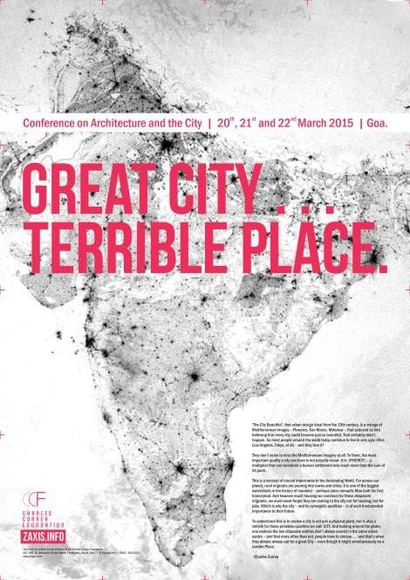
Curated by the Charles Correa Foundation, the Z Axis is an annual conference bringing together pioneers, thought leaders, influencers, professionals, and students in the fields of architecture and urban design to create an intellectual community focused on issues related to the context of India and the developing world. Fifteen speakers will gather from across the globe to explore the theme of Great City…Terrible Place, including Charles Correa, David Adjaye, Alfredo Brillembourg of Urban Think Tank, Spain's "guerrilla architect"Santiago Cirugeda, Simone Sfriso of Studio TAM Associati and more.
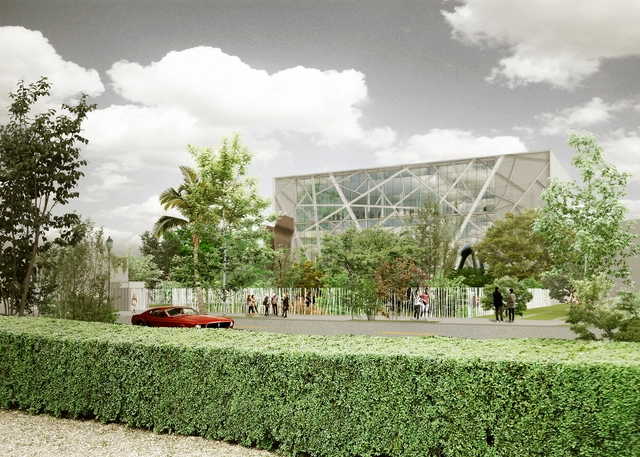
Jose Ahedo, Blanca Pyrenees, Education Center (Els Hostalets de Tost, Spain, 2013). Image Courtesy of Wheelwright Prize
The Harvard Graduate School of Design (GSD) is pleased to announce the third edition of the Wheelwright Prize, an open international competition that awards $100,000 to a talented early-career architect to support travel-based research. The 2015 Wheelwright Prize will begin accepting applications online on January 5; the deadline for submissions is January 30. This annual prize is dedicated to fostering new forms of architectural research informed by cross-cultural engagement.
Applications have opened for the Australian Institute of Architects’ 2015 Droga Architect in Residence program. The Droga residency, one of only a few architectural residencies worldwide, offers successful applicants the opportunity to engage with the Australian architecture community over a 12 week period. Submissions are invited from practitioners based outside Australia for residencies available between June and December 2015.
Speaking to The Guardian, David Chipperfield has stated that he regards the hold of private investment over new architecture in London as an "absolutely terrible" means of building a city. He argues that Berlin - where he spends considerable amounts of time and runs a large office - "is a much more reflective society than ours" because the UK has sunk into "a success-based culture."
With 1,715 entries submitted, the Guggenheim Helsinki Competition has become the most popular architectural competition in history. Only six proposals have made it through to the final round, however we believe there is something to be learned from the hundreds of proposals that didn't make the cut. Therefore, if you participated in the Guggenheim Helsinki Competition and would like ArchDaily’s team of architects and editors to review your proposal for publication, we ask you to submit your proposal here (under "Submit an event, competition, award, news") by Wednesday, December 10. All proposals submitted after this deadline will not be considered. Take a look after the break for the required format for submitting project materials.
Are you currently enrolled in a NAAB-accredited architecture program or other degree-granting institution? You may qualify for the 2015 WIA (Women in Architecture) Fund's Emerging Professional Inspiration Award, now open to all US-based and international applicants. Working to inspire emerging professionals, one woman at a time, the WIA Fund will award one national and one international professional with a cash grant to help further their career. Depending on the quality and quantity of entries, other awards may also be given. Entries will be shortlisted and winners will be selected by both a committee and the public via the WIA Fund Facebook page. Submissions are due January 10, 2015. For more details, visit their page, here.
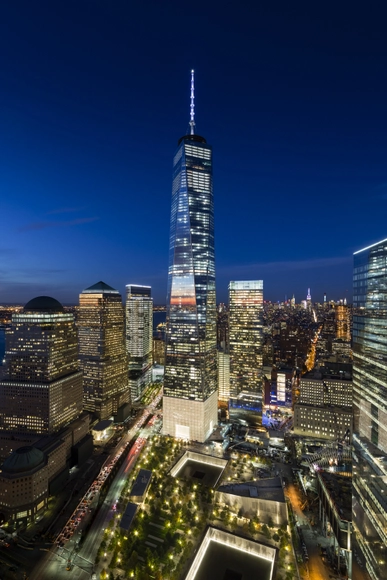
Santiago Calatrava’s head-turning World Trade Center Transportation Hub has assumed its full form, nearly a decade after its design was revealed. In light of this, the New York Times has taken a critical look at just how the winged station’s budget soared. “Its colossal avian presence may yet guarantee the hub a place in the pantheon of civic design in New York. But it cannot escape another, more ignominious distinction as one of the most expensive and most delayed train stations ever built.” The complete report, here.
Madrid-based Aranguren & Gallegos Arquitectos has been tapped to design their first US project, a permanent museum building for the Institute of Contemporary Art, Miami (ICA Miami). The 37,500-square-foot building, planned to open in time for Art Basel 2016 on Northeast 41st Street in Miami’s Design District, will feature three stories of exhibition space and a 15,000-square-foot sculpture garden. Final designs will be released in early 2015. Groundbreaking is expected to occur in the summer 2015.
In an era in which architectural style is constantly recycled and reinterpreted, how do we know which ideas are original and which characteristics reveal deeper functions? In a recent article by Rowan Moore from The Guardian, architect Farshid Moussavi discusses fashion, function, and physical space as they relate to the concepts of her latest book The Functions of Style, which examines style in architecture beyond external appearance with a belief that style is rooted in a building's organizational ideas. Consequently, says Moore, each of Moussavi’s works are unique and do not rely on repeating trademark artistic moves. To learn more about how Moussavi’s philosophy is embodied in her most recent works, along with her belief in the power of physical space in a virtual world, read the full article on The Observer here.
With their latest cover, The New Yorker is addressing the tragic unrest in Ferguson which has followed Monday's decision not to indict the officer who shot Michael Brown in August, using an image of Eero Saarinen's iconic Gateway Arch. The image, designed by Bob Staake, shows the arch divided, black on one side and white on the other in reference to the racial tensions that underpin the dispute. "At first glance, one might see a representation of the Gateway Arch as split and divided," says Staake, "but my hope is that the events in Ferguson will provide a bridge and an opportunity for the city." To read more about the ideas behind Staake's design, visit The New Yorker's website.
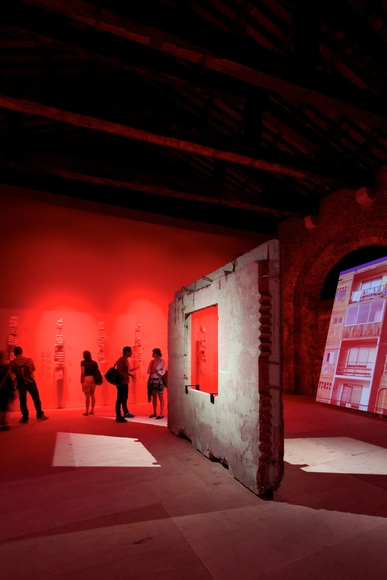
At a time when everyone is constantly interacting with the digital social universe, it's becoming increasingly easier to gather informal data on how well received, recommended, liked (or disliked) an event or exhibition is. Compiled as a series of diagrams for Domus, Maria Novozhilova examines the 'social ranking' of the 2014 Venice Biennale by dissecting the three core exhibitions (Fundamentals, Monditalia and Absorbing Modernity) and revealing the apparent 'winners and losers' as far as social engagement is concerned. Noting that "it is only by starting from the end and working backwards, like a salmon swimming against the current, that we can see more exhaustively how things went,", Novozhilova's visualisations reveal a number of fascinating results. See all the diagrams here.
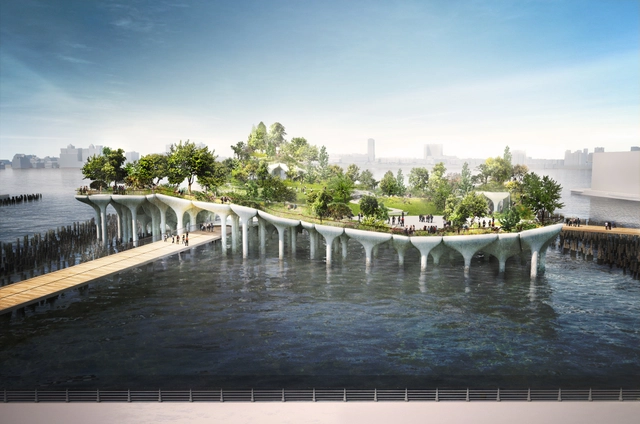
Last week, Thomas Heatherwick unveiled his fairytale-like designs for what will hopefully be New York's latest and most ambitious park, Pier 55 (with apologies to the High Line, New York's last "next big thing" in the public park arena). Envisaged as an undulating artificial landscape on a cloud of mushroom-like supports, Pier 55 has the internet buzzing. In this interview with FastCo Design, Heatherwick discusses the inspirations behind his latest project, explaining how everything including New York's street grid, the ruins of Pier 54 and yes, even the city's other recent global green space phenomenon, have manifested themselves in his latest madcap creation. Read the full article here for more.
Paul Katz, president and managing principal of Kohn Pedersen Fox (KPF), has died at the age of 57. The “mastermind” behind some of the world’s tallest mixed-use buildings, such as the Shanghai World Financial Center and International Commerce Centre in Hong Kong, Katz was praised by colleagues for his attention to detail and ability to foresee a building’s impact on the larger urban scale. “For Paul, it was the entire assemblage, not triumphant individual pieces, that gave the project its urban value,” said KPF design director James von Klemperer, who will succeed Katz as president.
Comparing Feilden Clegg Bradley Studios’Dyson Centre for Neonatal Care to a Scandinavian spa, Gizmodo author Lucy Maddox considers the healing potential of well-designed hospitals as she recounts one woman’s postpartum experience following the birth of premature twins. Natural light, calming materials and colors, a thoughtful layout and clever use of technology have all contributed to making patient recoveries in the new center outperform those in the old hospital’s corridors. “Essentially we want the building to be a great big nurse. A really good nurse," says clinical psychologist Dr Mike Osborn. Read the complete article, here.
After a fortnight of highs and lows for Thomas Heatherwick and British celebrity Joanna Lumley's campaign for a garden bridge stretching across London's River Thames, Rowan Moore of The Observer has meticulously described the project as "nothing but a wasteful blight." Although he acknowledges that support for the bridge "has been overwhelming," he argues that Heatherwick - though an "inventive and talented product designer" - has a past record in large scale design which "raises reasonable doubts about whether his bridge will be everything now promised."
The Glenn Murcutt Architecture Master Class in Australia has become an major annual event on the international architecture calendar. Started in 2001, architects and senior students from over 70 nations around the world have now traveled to Australia to participate in the two-week residential studio based program. The intensive two-week design studio program involves a design project undertaken in groups and culminating, at the end of week two, with a design presentation by participants and a critique by Glenn Murcutt and the other tutors.