Mini
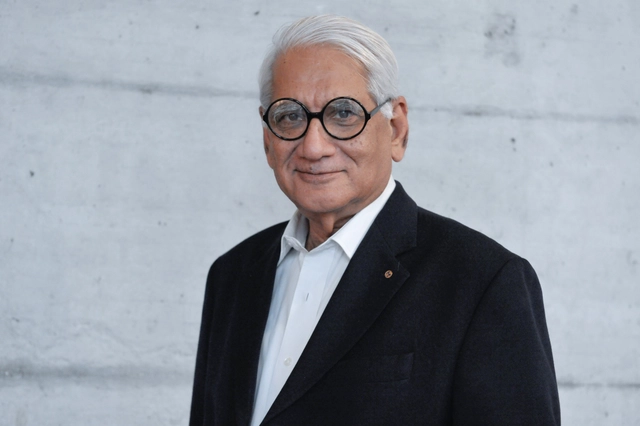
RIBA To Open Chapter In India
https://www.archdaily.com/580144/riba-to-open-chapter-in-indiaJames Taylor-Foster
Samsung Commissions Choon-Soo Ryu to Design Vietnamese Community Center

Samsung Electronics is spearheading a village development project in ThuyHoa, Vietnam, as part of a new social contribution program named “the Nanum Village.” The Nanum Village is a project where the local government cooperates with residents of a village who are willing to develop their neighborhood, improving the public infrastructure and supporting local people’s initiatives for sustainable development of the village. This new community center by Korean architect Choon-Soo Ryu will be built in 2015 as a result of that initiative.
https://www.archdaily.com/580539/samsung-commissions-choon-soo-ryu-to-design-vietnamese-health-and-community-centerKarissa Rosenfield
In Defense of Santiago Calatrava
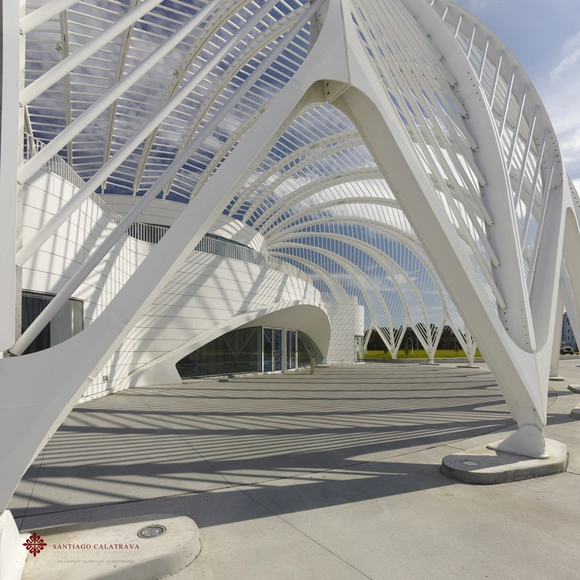
In recent years, few architects have had a tougher time in the media than Santiago Calatrava. Whether it's his repeated legal battles over leaking roofs and peeling facades, the unceremonious death of his Chicago Spire project, or the media firestorm over his New York Transportation Hub that is $2 billion over budget, Calatrava has become a poster boy for those who criticize the supposed arrogance of today's architects. However, in an engaging article for FastCo Design, Karrie Jacobs responds to what seems to be "a concerted effort to shore up his reputation," coming to the defense of this "unreconstructed aesthete." Read the article in full here.
https://www.archdaily.com/579745/in-defense-of-santiago-calatravaRory Stott
BIG Returns to the National Building Museum with “HOT TO COLD: an odyssey of architectural adaptation”
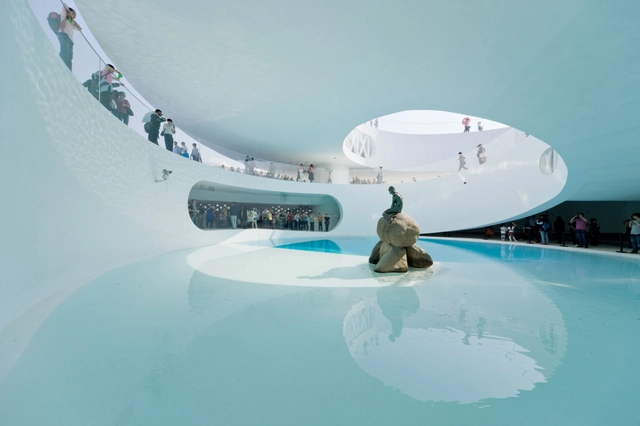
On the heels of its summer blockbuster indoor maze, which attracted more than 50,000 visitors, the international design firm BIG-Bjarke Ingels Group (BIG) returns to the National Building Museum this January with a behind-the-scenes look at its creative process. The exhibition, HOT TO COLD: an odyssey of architectural adaptation, takes visitors from the hottest to the coldest parts of our planet and explores how BIG´s design solutions are shaped by their cultural and climatic contexts. More than 60 three-dimensional models will be suspended at the second-floor balconies of the Museum’s historic Great Hall in an unprecedented use of this public space.
HOT TO COLD premieres 20 of the studio's latest projects, interpreted through Iwan Baan's masterful photography of BIG's built work, films by Ila Bêka and Louise Lemoine, and the Grammy Award-winning graphic artist Stefan Sagmeister’s design for the accompanying catalog by Taschen. HOT TO COLD opens on January 24, 2015 and remains on view through August 30, 2015.
https://www.archdaily.com/579245/big-returns-to-the-national-building-museum-with-hot-to-cold-an-odyssey-of-architectural-adaptationKatie Watkins
BAG Transforms Wooden Pallets into Temporary Space Observatory
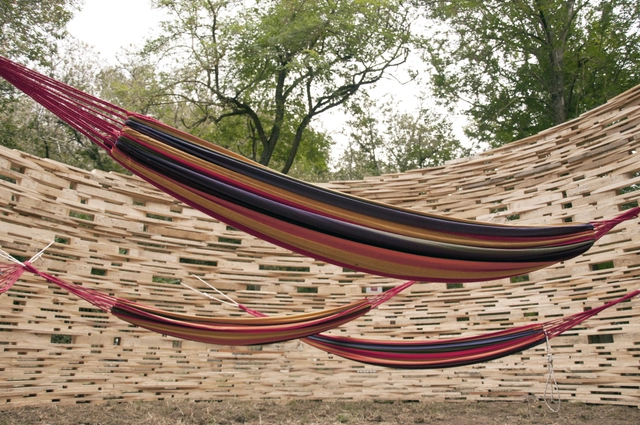
Rome-based firm Beyond Architecture Group (BAG) has designed “experimental furniture” - dubbed Looking (C)up - for the Frammenti Music Festival at the Archaeological Park in Tusculum, Italy. The firm, known for building houses with bales of straw, chose to craft an astronomical observatory with wooden pallets.
https://www.archdaily.com/579713/bag-transforms-wooden-pallets-into-temporary-space-observatorySadia Quddus
Could Smart Cities Slowly Destroy Democracy?

Has the concept of the smart city "crystallised into an image of the city as a vast, efficient robot?" In the age of the "Internet of Things," where does the citizen fit in? In this article from The Guardian, journalist Steven Poole takes a critical stance against the purported utopian ideals of smart cities. Poole delves into the nuances of who the smart city is truly meant to serve, questions the debate over whether it should develop along a top-down or bottom-up approach, and poses the provocative thought: "a vast network of sensors amounting to millions of electronic ears, eyes and noses - also potentially enable(s) the future city to be a vast arena of perfect and permanent surveillance by whomever has access to the data feeds." Questions of control, virtual reality, free-will, and hierarchies of power, Poole asserts are critical to the discussion of technology's powerful role in the future. Read the full article to learn more about the possible potential of the smart city to "destroy democracy," here.
https://www.archdaily.com/579709/could-smart-cities-slowly-destroy-democracySadia Quddus
RIBA Future Trends Survey Reveals A Dip In UK Workloads

The Royal Institute of British Architects (RIBA)’s Future Trends Survey for November showed that confidence in workload among UK architects fell back slightly with the workload index returning back to +29. This is compared to +37 in October, which was the second highest ever balance figure. The highest balance figures were in Northern Ireland (+50) and the North of England (+46), areas with the RIBA state "were initially the slowest to indicate a return to growth." In addition, the percentage of respondents reporting that they had personally been under-employed remained at 12% for the second month running – the lowest figure since the survey began in January 2009. Practices report that they are currently employing 6% more year-out and post Part II students than they were twelve months ago.
https://www.archdaily.com/579659/riba-future-trends-survey-reveals-a-dip-in-uk-workloadsJames Taylor-Foster
King George III, an Aspiring Architect

Not sure if “manic” can be classified as an architectural style, but that is what some are choosing to describe the newly discovered, hand-drawn floor plans of a grand place envisioned by King George III. According to the British Library, the King was “passionately interested” about architecture and drew plans for a future living quarters in Kew - now a district in West London - during a time when he was suffering from severe mental illness in the late 1780s. Learn more about the King’s vision for a grand palace, here.
https://www.archdaily.com/579689/king-george-iii-an-aspiring-architectKarissa Rosenfield
Open Call: Chicago Architecture Biennial Lakefront Kiosk Competition

The Chicago Architecture Biennial announces the Lakefront Kiosk Competition, organized in partnership with the Chicago Park District and the City of Chicago. In keeping with the mission of the Chicago Architecture Biennial, the Lakefront Kiosk Competition is an opportunity to support innovative architectural work and to use the city—more specifically, the iconic shoreline of Lake Michigan—as a laboratory for architectural experimentation.
The competition calls for the inventive design of a new kiosk that will be installed on Chicago’s lakefront, one of the city’s most vibrant public spaces. A jury of architects, curators, and city representatives will select one winner to receive the BP Prize, which includes an honorarium for design development and a construction budget to realize the design.
https://www.archdaily.com/579707/open-call-chicago-architecture-biennial-lakefront-kiosk-competitionKarissa Rosenfield
Davis Brody Bond and KieranTimberlake Chosen to Design New NYU Facility

As the culmination of a five-month selection process, New York University (NYU) has announced that Davis Brody Bond and KieranTimberlake will be designing its major new facility along Mercer Street between Houston and Bleecker in New York. The facility's many uses will include classrooms, teaching spaces for performing arts, a state-of-the-art sports facility, and student and faculty housing.
https://www.archdaily.com/579265/davis-brody-bond-and-kierantimberlake-chosen-to-design-new-nyu-facilityKarissa Rosenfield
Reconfiguring Urban Spaces To Compensate For "Poisonous" Air

In an article for The Guardian, Oliver Wainwright steps "inside Beijing's apocalypse": the poisonous, polluted atmosphere that often clings to the Chinese capital. He explores ways in which those who live in this metropolis have started to redefine the spaces they frequent and the ways in which they live. Schools, he notes, are now building inflatable domes over play areas in order to "simulate a normal environment." The dangers were made clear when "this year’s Beijing marathon [...] saw many drop out when their face-mask filters turned a shade of grey after just a few kilometres." Now, in an attempt to improve the living conditions in the city, ecologists and environmental scientists are proposing new methods to filter the air en masse. Read about some of the methods here.
https://www.archdaily.com/578342/reconfiguring-urban-spaces-to-compensate-for-poisonous-airJames Taylor-Foster
Humorous Short Stories About Austin's Madcap Growth

Award-winning architect, writer, and professor David Heymann has just released his first work of fiction: My Beautiful City Austin. Composed of seven humorous tales, the stories document the misadventures of a young architect in Austin and his accidental involvement in the slow decimation of his city’s charms. Unable to deter his clients from their poor choices, the well-intentioned designer finds himself complicit. Using fiction, Heymann paints a sharply dynamic picture of the architectural consequences of Austin’s rapid growth and “rediscovered allure.” Check out the book, here.
https://www.archdaily.com/578932/humorous-short-stories-about-austin-s-madcap-growthSadia Quddus
The Growth Of "Hipster Stalinism" In Areas Of Moscow

In an article for The Guardian, Maryam Omidi explores Moscow's Door19, a place where "Damien Hirst and David LaChapelle artworks adorn the raw concrete walls," "flair bartenders serve up gem-coloured cocktails," and "a rotation of Michelin-starred chefs flown in from around the world curate new menus each week." It is indicative, she argues, of what Kuba Snopek (a lecturer at the Strelka Institute) describes as "hipster Stalinism" - a surge of redevelopment in certain parts of Moscow that cater to the 'oligarchs', wealthy creatives and Muscovite 'hipsters'. At Door19, for example, apartments sell for between $15,000 and $20,000 per square metre.
https://www.archdaily.com/577906/the-growth-of-hipster-stalinism-in-areas-of-moscowJames Taylor-Foster
How to Rebuild Architecture

Architect Steven Bingler and architectural journalist Martin C. Pedersen fear that architecture is loosing its credibility. In their recent op-ed on the New York Times, the pair claims that our profession’s biggest challenge is regaining public trust by reconnecting architecture with its users. Referencing his mother’s aversion to a student-built affordable housing project that he considered a “bold statement of design,” Bingler believes the key to salvaging the profession is for architects to stop dismissing and start listening to the general public’s take on architecture.
https://www.archdaily.com/578313/how-to-rebuild-architectureKarissa Rosenfield
Studio Gang Tapped to Extend American Museum of Natural History

Chicago’s Studio Gang Architects have been selected to design a new Center for Science, Education and Innovation for the American Museum of Natural History in New York. Named after its largest donor, the $325 million Gilder Center will include 218,000-square-feet of existing and new space. It is slated to open on Columbus Avenue at 79th Street on the west side of the Museum campus, in conjunction with its 150th anniversary in 2019–2020.
https://www.archdaily.com/577666/studio-gang-tapped-to-extend-american-museum-of-natural-historyKarissa Rosenfield
Go on a Sweet Getaway with these Gingerbread BNBs

Vacation just got a little bit sweeter with these Gingerbread BNBs. Looking for a luxurious getaway? The Gingerbread Modern Home is a gorgeous estate, made from gluten-free gingerbread and featuring a frosted stucco exterior and mid-century taffy furniture (but please don’t eat the artwork). The house is part of a fundraiser for New-York charity Robin Hood to provide shelter to homeless families in New York during the holiday season.
https://www.archdaily.com/576839/go-on-a-sweet-getaway-with-these-gingerbread-bnbsKatie Watkins
AIA Honors Edward Mazria with 2015 Kemper Award
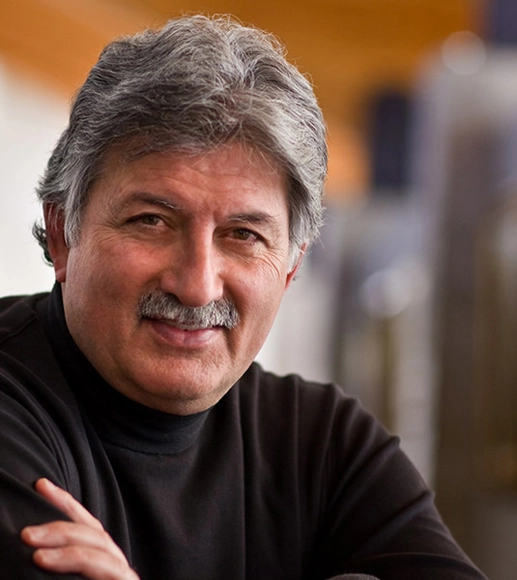
Edward Mazria, AIA, founder of Architecture 2030, has been selected to receive the 2015 Edward C. Kemper Award. The American Institute of Architects (AIA) chose Mazria for “catalyzing the architecture community to address climate change through the design of decarbonized, sustainable and resilient built environments.”
https://www.archdaily.com/577490/aia-honors-edward-mazria-with-2015-kemper-awardKarissa Rosenfield
RIBA Awards 2015: Call For Entries
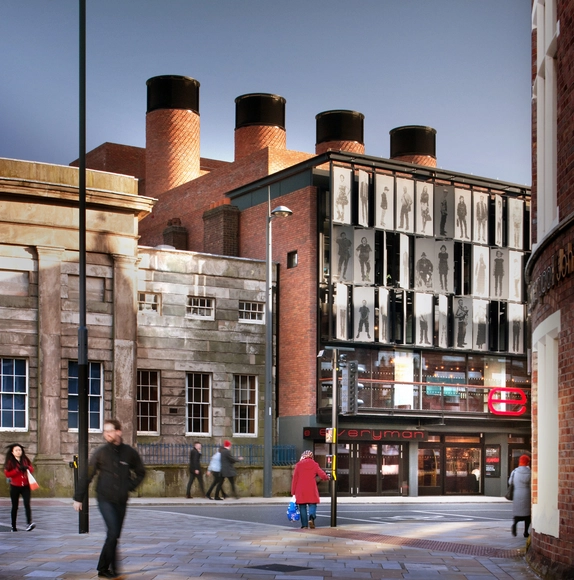
The Royal Institute of British Architects (RIBA) have today announced a call for entries to the 2015 RIBA Awards programme. The prestigious awards are designed to celebrate the best architecture projects that have been opened within the past two years. Projects of all sizes and budgets from across the UK (excluding those in Scotland) are eligible to be entered to the RIBA Regional Awards. Scottish projects can be entered into the RIAS Awards. Those that are successful in the regional rounds are made eligible to be considered for the RIBA Stirling Prize, one of the most coveted awards in the architectural world.
https://www.archdaily.com/577261/riba-awards-2015-call-for-entriesJames Taylor-Foster