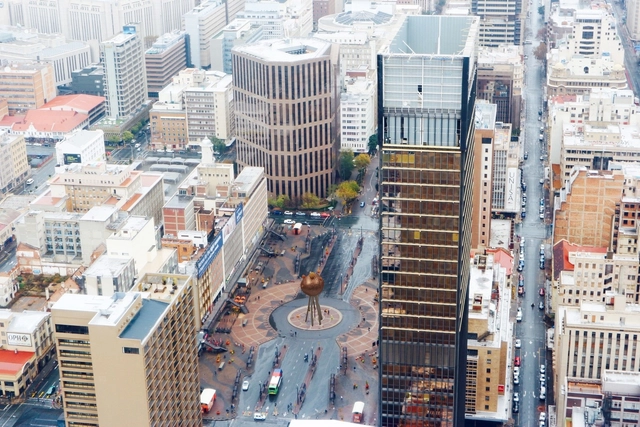
With an academic background that includes social sciences, curatorship, and architecture, Michelle Mlati's trajectory is an interesting one; more so for the way her current work dabbles in these areas simultaneously.
Describing herself as an afrofuturist critical spatial designer, Johannesburg-based Mlati’s practice investigates elements of the city, from sustainability through to social dynamics, architecture to aural and visual cultures.
The A’ Design Award was "born out of the desire to underline the best designs and well-designed products." It is an international award whose aim is to provide designers, architects, and innovators from all design fields with a platform to showcase their work and products to a global audience. This year's edition is now open for entries; designers can register their submissions here.
Why do we build? How do we build? Who do we ultimately build for? These have been questions that have dominated the worlds of both practice and pedagogy since the early ages of architecture. On a basic level, those questions can be answered almost reflexively, with a formulaic response. But is it time to look beyond just the simple why, how, and who?
In a world where the physical processes of architecture are becoming increasingly less important and digital processes proliferate through all phases of architectural ideas and documentation, we should perhaps be looking to understand the ways in which architects work, and examine how we can claim the processes—not just the products—of our labors.
'Tis the season of holiday cheer, and with that comes the creative greetings from offices, museums, photographers and collaborators around the world! See our favorites below (or check out our best reader-submitted cards).
When the world undergoes major changes (be it social, economic, technological, or political), the world of architecture needs to adapt alongside. Changes in government policy, for example, can bring about new opportunities for design to thrive, such as the influx of high-quality social housing currently being designed throughout London. Technological advances are easier to notice, but societal changes have just as much impact upon the architecture industry and the buildings we design.
The tale began with a simple idea - a toy that every child, regardless of age and ability, can play, dream, and learn with. But things turned out less than simple. Fights, lawsuits, and even a death all mark the road it took to make a now-ubiquitous toy a reality. The object in question? Lego.
It’s tales such as this one that Alexandra Lange explores in her new book, The Design of Childhood: How the Material World Shapes Independent Kids. Some may scoff at the seemingly trivial subject matter. Surely children, with their boundless imaginations and appetite for play, can discover ways to find fun in anything.
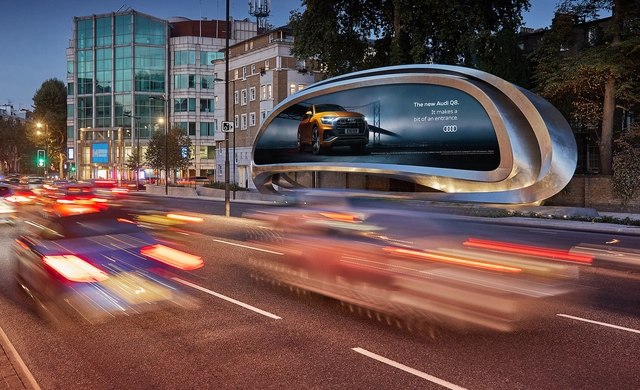
Zaha Hadid Architects have released images of their latest project, a sculptural billboard named for its location in Kensington, London. The project, a collaboration between the late Zaha Hadid and partner Patrik Schumacher, marks the firm’s first direct foray into advertising.
https://www.archdaily.com/901776/zaha-hadid-architects-reveal-twisting-steel-billboard-in-west-londonKatherine Allen
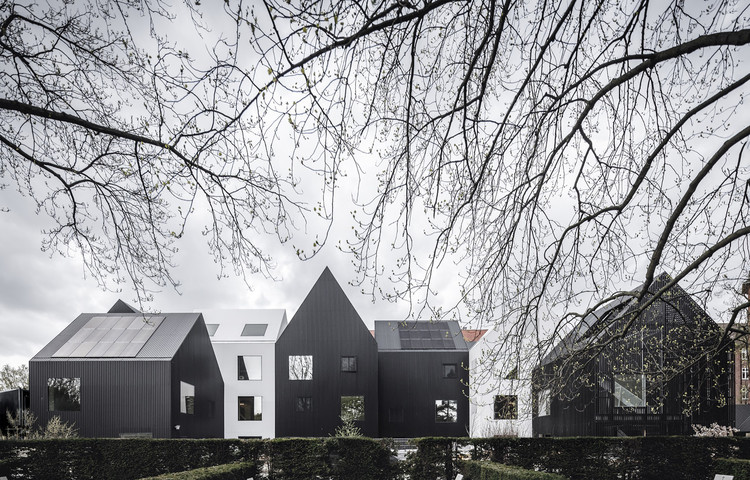
Le Corbusier stated in his seminal text, Towards a New Architecture, that “...man looks at the creation of architecture with his eyes, which are 5 feet 6 inches from the ground.” Logical and rational codes such as this form the standard for much of architectural production - but of course, these "norms" are as constructed as architecture itself. This particular standard is especially irrelevant when designing for children, for whom the adult-centric assumptions of architecture do not and should not apply.
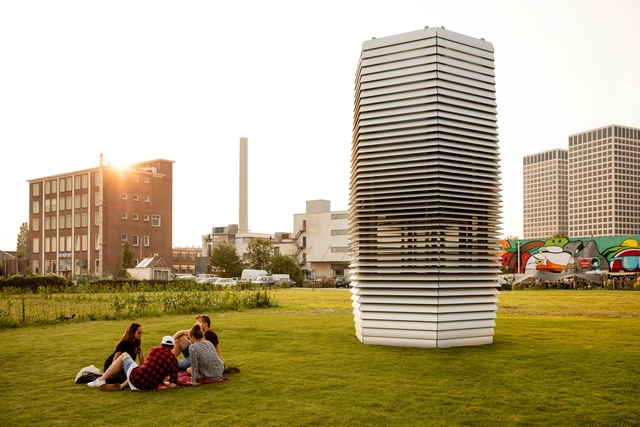
Courtesy of Studio Roosegaarde. ImageStudio Roosegaarde's Smog Free Tower
In Metropolis Magazine's latest - and last - installment in their annual design cities review, the focus is not on output or culture but on cities themselves as the point of inspiration. For the designers surveyed, these were the cities that made their hearts beat a little faster; the ones that remained in their minds and wormed their way into their work.
https://www.archdaily.com/901153/the-top-10-inspirational-design-cities-of-2018-as-revealed-by-metropolis-magazineKatherine Allen
At a new corporate headquarters in Chicago’s West Loop neighborhood, there’s a double-height lobby filled with green walls and massive art installations. Travel to its top floor roof deck and you’ll find a cozy fire pit next to a fitness center and bar (happy hours are on Thursday). Elsewhere, stair-seating terraces face floor-to-ceiling windows with views of the Chicago skyline. This vertical campus settles in peaceably among its tony Randolph Street neighbors—Michelin stars, tech giants, and boutique hotels. At first glance, it’s refined and tasteful enough to be any one of these.
In a follow-up to their 10 Powerhouse Design Cities, Metropolis Magazine also reveals their choices for the "buzziest" design cities of 2018. Unlike the big-hitters of the Powerhouse category, these are a bit smaller - even scrappier - but punch far above their expected weight.
https://www.archdaily.com/900450/the-10-buzzing-design-cities-of-2018-as-selected-by-metropolis-magazineKatherine Allen
For this year's annual city listings, Metropolis Magazine took an unusual approach: they took the analysis to the streets, surveying nearly 100 design professionals across the globe to get their opinions. The result? A list that boasts not just the cities you'd expect (Milan, London, Berlin) but the under the radar powerhouses you might not have anticipated.
The Eurasian Prize Awards Program is a globally targeted initiative which welcomes participants from all countries. Architects, designers, technologists, building contractors, architectural bureaus, design studios and boutiques, manufacturers and real estate companies are invited to enter the professional competition program. As a student of an industry-specific school or experienced design enthusiast, you are offered a unique opportunity to get an independent expert evaluation of your skill, knowledge and talent. In its 14th edition, the Eurasian Prize Student’s main topic is living environment.
Are you in the market for a new set of minimalist earrings or a necklace inspired by the constructivist movement? You can now own all of this and more, with RIIA's line of minimalist-inspired jewelry. This Los Angeles-based jewelry designer is removing the overly decorative elements in jewelry and bringing to light the beauty of pure forms.
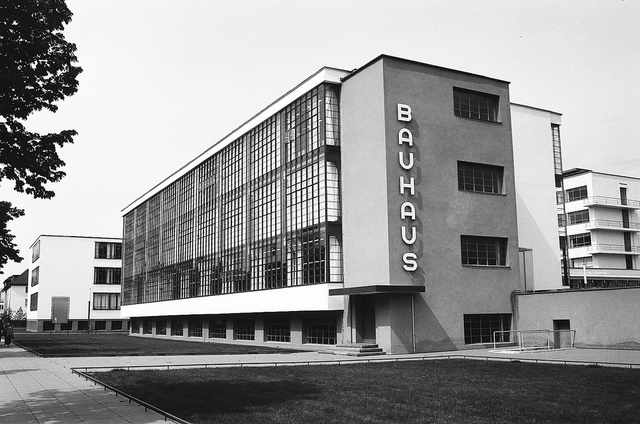
The idea of a total work of art - Gesamtkunstwerk - guided several schools and movements in the 19th century, including the Bauhaus, which brought the term into the modern era. With the school's unstructured architecture and avant-garde furniture design came new ways of designing clothing, graphics and painting, etc. In the Bauhaus different fields influenced each other, diluting the border between art and industry as they evolved together. When the school was closed 1933 many projects were left unfinished.
In order to revive some of the work begun at the Bauhaus, Adobe launched the Hidden Treasures project to revive five fonts inspired by the original designs of five of the school's masters: Joost Schmidt, Xanti Schawinsky, Reinhold Rossig, Carl Marx and Alfred Arndt.
Not many architects will come across the challenge of building in outer space, but who knows what the future will hold... asteroid mining and space photobioreactors? In a recent article, Metropolis Magazine looks into the design of the International Space Station, examining how our conventional rules of architecture become obsolete in zero gravity. Walls, ceilings, and floors can be interchangeable, and "form follows function" is taken to the extreme.
2018 marks 20 years since construction first began on the International Space Station. The satellite is made up of 34 separate pieces, each of which was either delivered by space shuttle or self-propelled into space. With absolutely no room for error, the 13-year construction of the space station was perhaps one of the big success stories of the millennium, seeing 230 astronauts, cosmonauts and space-tourists visit over the past two decades.
Last week, the City of Arlington, Texas announced plans to collaborate with Populous in transforming the city’s convention center into North America’s first Esports Stadium. This 100,000-square-foot venue will be designed to draw in both competitive players and fans from around the world, and create the most immersive experience in the live esports market.
As part of our 2018 Venice Architecture Biennale coverage we present the proposal for the Greek Pavilion. Below, the participants describe their contribution in their own words.
Xristina Argyros and Ryan Neiheiser have been selected to curate the exhibition of the Greek Pavilion in the 16th International Architecture Exhibition – La Biennale di Venezia - under the general theme “Freespace,” commissioned by Yvonne Farrell and Shelley McNamara. Entitled “The School of Athens,” the project will examine the architecture of the academic commons - from Plato’s Academy to contemporary university designs. The selection was made by The Greek Ministry of Environment and Energy and the Secretary-General of Spatial Planning and Urban Design, Eirini Klampatsea.
https://www.archdaily.com/890480/greek-pavilion-at-the-2018-venice-biennale-to-explore-utopian-visions-of-learningAD Editorial Team









_Katsuhisa_Kida_2.jpg?1535707378 "© Katsuhisa Kida")
_Antoine_Espinasseau_2.jpg?1535707302 "© Antoine Espinasseau")
_John_Donat_RIBA_Library_Photographs_Collection.jpg?1535707315 "© John Donat RIBA Library Photographs Collection")
_Dorte_Mandrup.jpg?1535707286 "Courtesy of Dorte Mandrup")