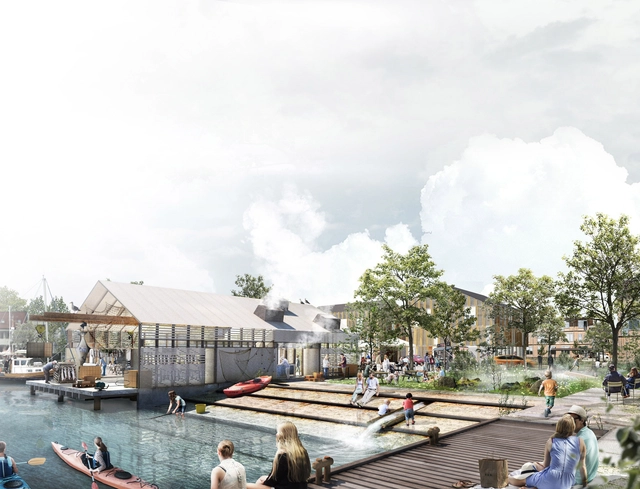
The park ends with a broad staircase leading into the sea next to the Fishermen's House. Image Courtesy of BOGL
BOGL, a Danish landscape architecture studio, won the open planning and design competition for an urban development project in Norway. Located in the harbor city Tananger, a growing area, the proposal highlights the possible evolution of the space into an attractive place to live, work and visit.
City of the Future is a bi-weekly podcast from Sidewalk Labs that explores ideas and innovations that will transform cities.
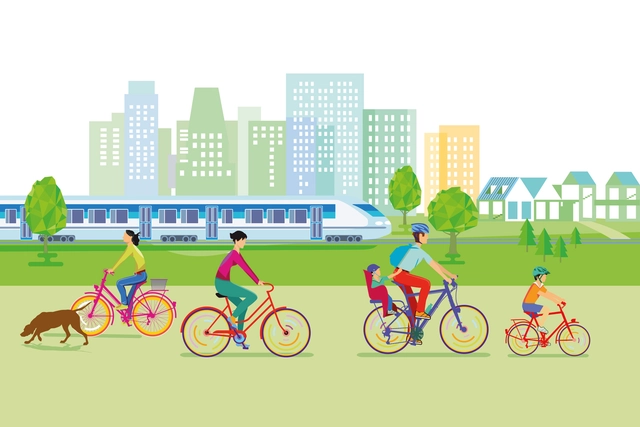
In the third episode from season 2, hosts Eric Jaffe and Vanessa Quirk discuss the future of mobility in cities and share ideas that would make it way easier to get around without owning a car. In the podcast, author Horace Dediu talks about micro-mobility; TriMet's Bibiana McHugh tells the story behind GTFS and the OpenTrip Planner; MaaS Global CEO Sampo Hietanen explains the concept of Mobility as a Service (MaaS); and Sidewalk Labs' Corinna Li explains what Mobility on Demand could be like in the city of the future.
Every year, France uses 66,600 tons of plant protection pesticides for its agriculture and produces 4.5 million tons of plastics, of which only 22% are recycled. Almost 48,000 deaths are attributed to fine particle pollution and automobile activity, and the planet is still expected to endure. In such grave situations, urban developments have become subject to new ecological criteria that focus on finding biodiverse solutions for both public and private sectors.
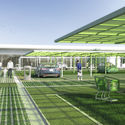
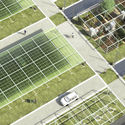
In compliance with the United Nations Sustainable Development Goals Agenda 2030 that aims to find eco-responsible urban solutions, Studio NAB created Car Parks 2.0, an ecological parking space that rethinks commercial parking areas and transforms it into a more sustainable and humane place.
City of the Future is a bi-weekly podcast from Sidewalk Labs that explores ideas and innovations that will transform cities.
In the second episode from season 2, hosts Eric Jaffe and Vanessa Quirk discuss the future of retail with author Mark Pilkington, social entrepreneur Sarah Filley, Sidewalk Labs’ Director of Development Carrie Jackson, and others.
City of the Future is a bi-weekly podcast from Sidewalk Labs that explores ideas and innovations that will transform cities.
In this episode, the first from season 2, hosts Eric Jaffe and Vanessa Quirk discuss the future of housing with Ori CEO Hasier Larrea, architect Eric Bunge, Starcity CEO Jon Dishotsky, Sidewalk Labs housing expert Annie Koo, and others.
The Truman Show is a 1998 dramedy starring Jim Carrey as Truman Burbank, the unwitting star of a 24-hour reality show that began at his birth. Set in Seahaven, a city-scale television studio designed to covertly record Truman's entire life, the show attempts to divert Truman from any potential suspicion that every single person he meets is an actor or actress.
Accessibility and mobility. When perceived through the architectural lens, these terms often evoke a range capped by two extremes. On the one end, the flexibility of circulation systems; the universality of egress networks; and the technicalities of minimums and maximums. On the other end, a project’s capacity to support broad ranges of socioeconomic narratives; its malleability in the face of rapid fluctuations of program and function; and its reactivity in maintaining a productive role amidst the ebbs and flows of societal dynamics.
Everyone wants to travel the world, whether it's to meet new people, taste new food, or visit new places. Travel is consequently an extremely lucrative industry, but tourist destinations are getting more crowded than ever and associated pollution emissions are only worsening the climate emergency.
Why do we travel? In this edition of Editor's Talk, four editors from ArchDaily based in Lebanon, the United States, and Chile share their thoughts on the meaning of travel, and why tourists enjoying a beach in a location like Brazil should also care about the cities they visit.
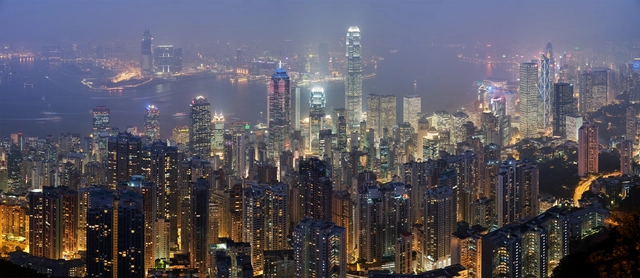
Wikipedia User: Diliff Licensed under CC BY 3.0 . ImageHong Kong
In the 25th addition of Mercer's ranking for the cost of living for cities, Hong Kong again took the first place spot, continuing the trend of Asian cities as being the most expensive places to live for foreign workers.
The factors determining the cost of living in this edition are food, housing, living and personal care expenses, alcohol and tobacco, clothing, housing maintenance, public services, transportation, recreation, and entertainment.
Check out the ranking of the top 10 most expensive cities in the world for cost of living and the top 5 most expensive by region: North America, South America, Asia, Pacific, Eastern Europe, Western Europe, the Middle East, and Africa.
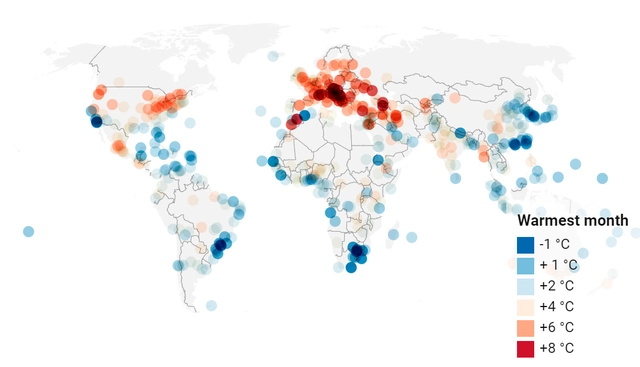
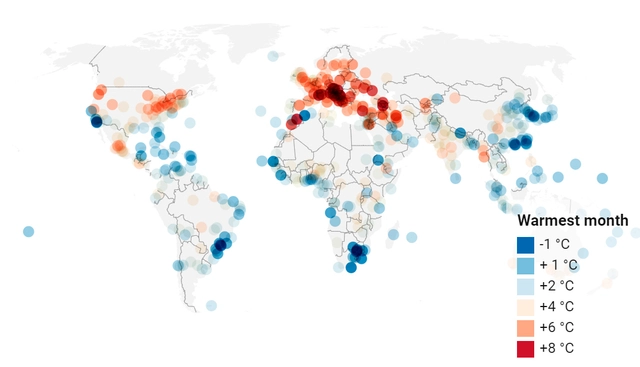
Map: Crowther Lab, Fuente: Bastin et al. 2019 Plos One, Created using Datawrapper
The climate in Madrid in 2050 will look more like the climate in Marrakesh, Morocco today. Stockholm will feel more like Budapest, London like Barcelona, Moscow like Sofia, Seattle like San Francisco, and Tokyo like Changsa in China.
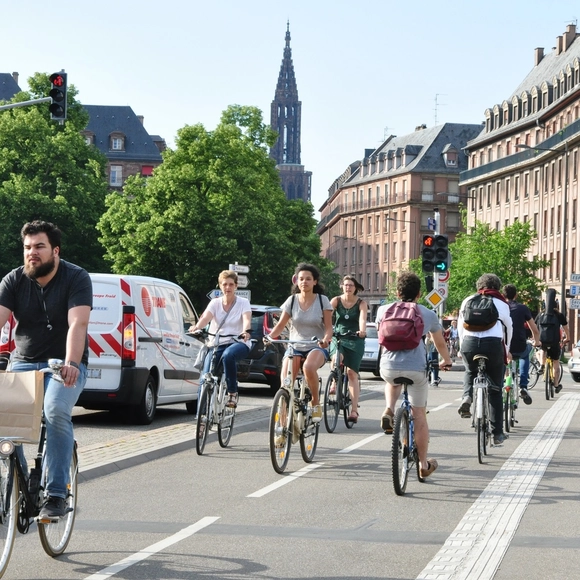
It should come as no surprise that one of the most respected surveys about bicycle use comes from a Danish organization. This ranking by Copenhagenize Design Company uses a point system to compile a list of the cities looking to re-establish the bicycle as an accepted and practical mode of transportation.
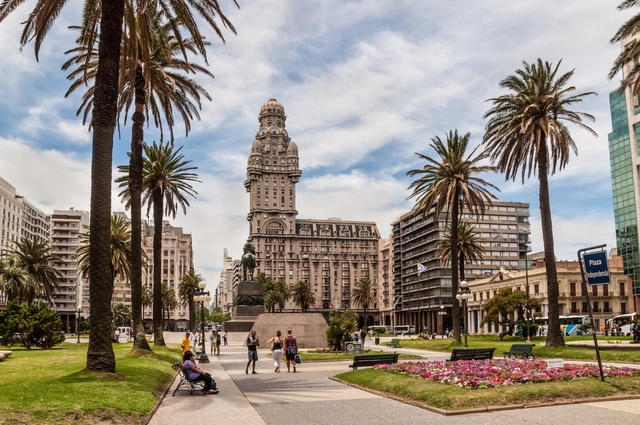
Vienna, Austria has been ranked as the city with the best quality of life in the world for ten consecutive years. The ranking made by multinational consultancy Mercer is dominated by Western European cities in the highest positions, while Vancouver, Canada reached third place, becoming the highest-ranking city in North America for the last 10 years.
From the Publisher: The book presents the first historical analysis of the productive tension between the city and the architectural form. It introduces 20th-century theories to construct a historical context from which a new architecture-city relationship emerged. The book provides a conceptual framework to understand this relationship and comes to the conclusion that urbanization may be filled with potential, i.e. be a Good Metropolis.
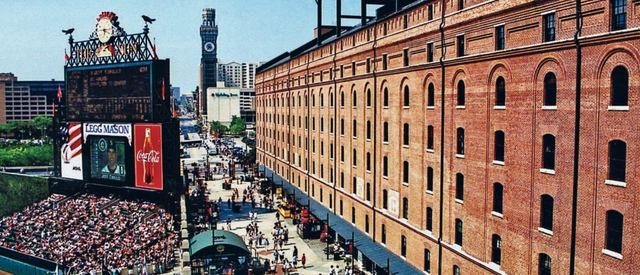
Paul Goldberger has a new book out, released just this week, entitled Ballpark: Baseball in the American City. Taking a page from the Ken Burns playbook, the book looks at a particularly American building type as a lens for looking at the broader culture of cities. Goldberger’s premise is a good one: Ballparks do parallel, to a remarkable degree, trends in American urbanism. They start as an escape from the city, then the city builds up around them. Post–World War II, they escape to the suburbs, then decades later return to the city. Today, privatization of the public realm and real estate development are driving the agenda. Recently I talked with Goldberger about the new book and a whole slew of magical ballparks, both living and long gone.
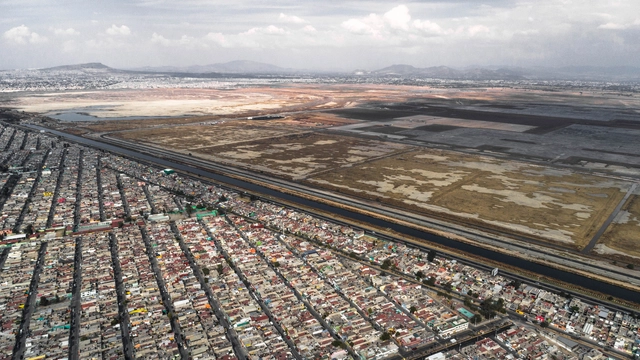
"Soy de Azteca" (Or "I'm from Azteca") is a photographic project by Zaickz Moz that seeks to re-think the expressions of community and identity of the periphery of Mexico City—which is becoming more diffuse and overflows beyond its geographical limits. The objective of this project is to re-think the interpretations of community and identity of the residents of Ciudad Azteca (State of Mexico) manifested in private, public and urban spaces, through photographic series that addresses issues such as appropriation and modification of space habitable, urban development and the sense of community in the neighborhood of Ciudad Azteca.
The particular characteristics of a community give the inhabitants a sense of identity and belonging. Does this happen in any inhabited place? When observing that the history of Ciudad Azteca always exists in relation to Mexico City, it is worth asking if identifying traits have emerged among the inhabitants of Ciudad Azteca. As in other areas of the capital's periphery, it is possible to observe in this group of neighborhoods located in the municipality of Ecatepec the capacity of the locals to build and transform a space into a variety of forms of urban habitat.
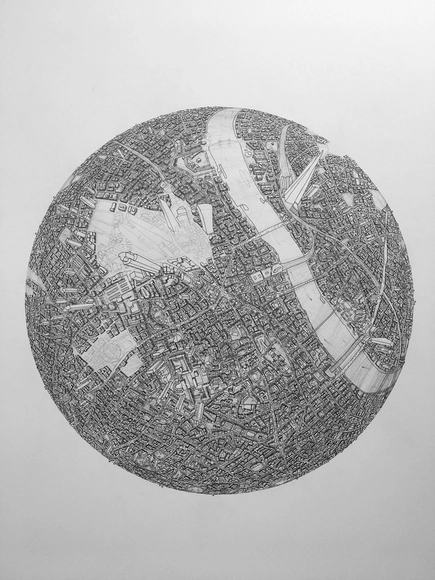
Amer Ismail, architect-turned-artist based in London, has developed a spectacular set of intricate “Globe Drawings” of cities around the world. Beginning in 2016, Ismail developed these 5-point-perspective drawings with heavy inspiration from artist Stephen Wiltshire. Having spent many years drawings architecture, including time at Foster+Partners, Ismail tasked himself with developing a series that encompassed his “interest for architecture, city planning, travel, drawings, and Star Wars.”
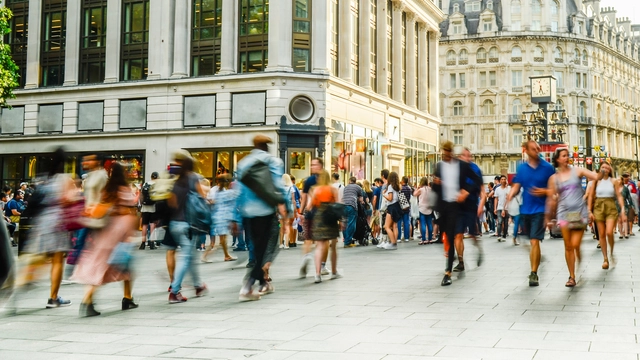
Last week, we asked our social media followers, "What does public architecture mean to you?" These thoughts are intrinsic to the architectural debate and come into play in various types of projects, especially in those related tothe planning of common-use spaces in cities.



.jpg?1568826815&format=webp&width=640&height=580)