Animals measure distances and weight for their survival. On the other hand, stemming from their need to communicate to live in society, humans created languages and, later, established the standards of measuring. Whether for moving around, portioning food, making tools, or calculating the weight of objects and animals, measurement standards arise from this need that was already present in human activities in the age of chipped stone and has been with us ever since. Nowadays, most of the world's population uses meters and centimeters to measure distances. These standards come from the need to establish comparisons that allow trade between peoples and also from political and social disputes.
When Airbnb began nearly 15 years ago, it offered a new and innovative solution to book short-term stays without any hassle. By renting out a spare room or an entire apartment, it provided an alternative to traditional hotel models which were often overpriced and overbooked. Airbnb now faces many critics as the company quickly grew, offering hundreds of thousands of stays around the globe, but not without a handful of negative experiences. Now, planners and policymakers are beginning to see the effects of the abundance of Airbnb listings and how it impacts a growing housing crisis.
The Second Studio (formerly The Midnight Charette) is an explicit podcast about design, architecture, and the everyday. Hosted by Architects David Lee and Marina Bourderonnet, it features different creative professionals in unscripted conversations that allow for thoughtful takes and personal discussions.
A variety of subjects are covered with honesty and humor: some episodes are interviews, while others are tips for fellow designers, reviews of buildings and other projects, or casual explorations of everyday life and design. The Second Studio is also available on iTunes, Spotify, and YouTube.
This week David and Marina are joined by Architect Joshua Aidlin, Founding Partner of Aidlin Darling Design to discuss his background in the arts; his design approach and philosophy; camping on project sites; creating good office culture; his partnership with David Darling; and more.
Research by the Science Museum Group based on objects from different periods of UK history shows how their colors have transformed over time, leaving vibrant tones behind and becoming grayer every day.
Cat Sleeman examined more than seven thousand photographs of everyday objects from the Science Museum Group Collection in research funded by the Creative Industries Policy and Evidence Center (PEC). From cameras to lamps and other household objects, they were organized into 21 different categories according to their use. The analysis was carried out based on counting pixels of different colors and also addressed the shape of the objects.
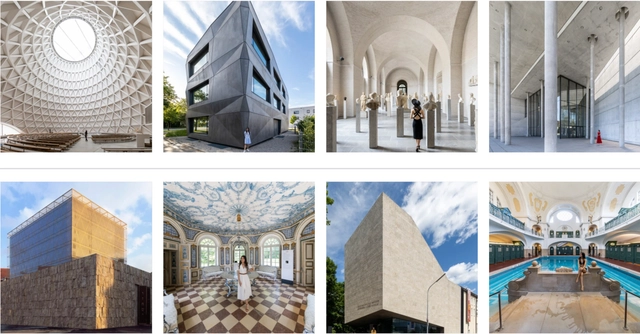
Munich – Bavaria’s capital since 1506 – is a city with layers and layers of history. Its many years as a rising architectural epicenter have left an interesting and unique mix of buildings. From Middle Age churches and cathedrals to contemporary synagogues. From skyscrapers to small pavilions. Brutalism to Art Nouveau. Munich’s architecture is truly extensive and marvelous.
Though not acknowledging Munich’s beer wonders would be wrong, the only mention of this substance would be in the stunning buildings (like the new Paulaner HQ by Hierl Architekten) that contain them. Yes, other aspects of the city are grandiose, but let’s focus on Munich’s top attraction: its architecture.
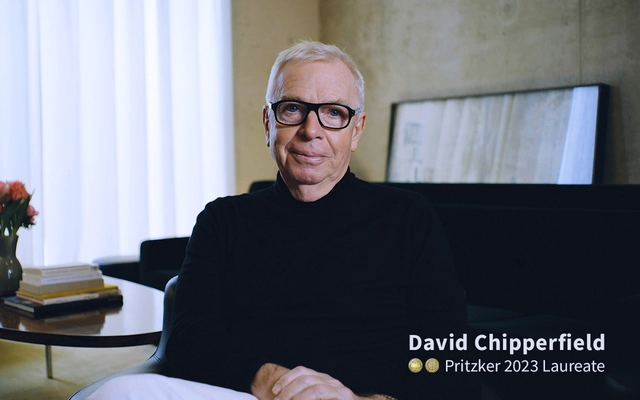
Sir David Chipperfield has been awarded with the 2023 Pritzker Prize, the highest distinction in the architectural profession. Known for his well-crafted, precise, and sensible response to complex environments, the architect became initially recognized for the skillful restoration and renovation of existing buildings, often cultural institutions, before expanding the range of projects to include new structures. While his built body of works demonstrates many of the core principles of good architecture, the ongoing projects reveal an equally relevant narrative: that of his direction moving forward and the way in which his approach to these principles evolves.
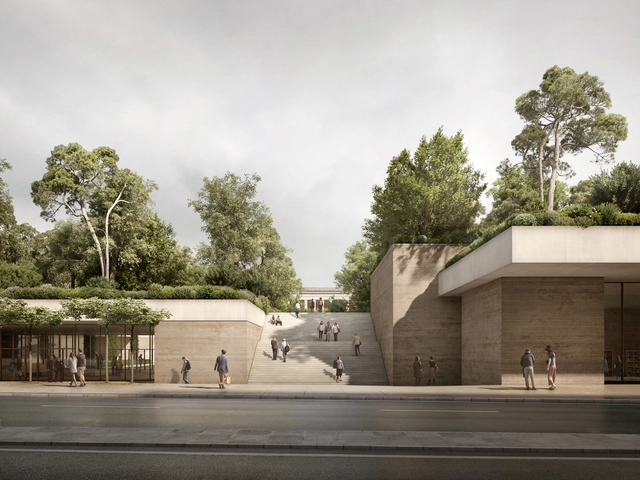
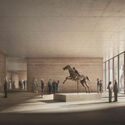
Many of the ongoing projects continue Chipperfield’s interest in museological and cultural institutions, yet he continues to work across a wide array of building types. The latest major project announced tackles one of the most prominent institutions in Greece, the National Archeological Museum. This represents yet another opportunity for the architect to present museums as institutions that offer a transformation of the urban life of the cities where they are located, while also bringing forward the historical layers that define its architecture. Other projects, such as the Santa Giulia Arena in Milano or the Elbtower in Hamburg, expand the range of programs and typologies addressed by Chipperfield.
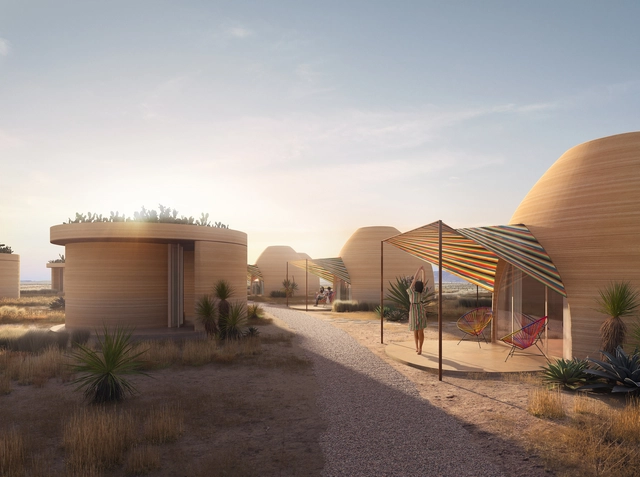
El Cosmico 3D-printed Hotel - exterior. Image Courtesy of ICON, BIG for El Cosmico
Hospitality expert Liz Lambert has announced a collaboration with ICON, the office that pioneered large-scale 3D printing, and BIG – Bjarke Ingels Group, to rebuild El Cosmico, a campground hotel in Marfa, Texas. The team plans to relocate the venue to a 62 acres plot, where new architectural approaches are made possible by including advanced technologies and 3D-printing elements such as domes, vaults, and parabolic forms. The innovative development will feature guest accommodation and new hospitality programming, including a pool, spa, and shared communal facilities. The project is expected to break ground in 2024.
After the interruption of the 2019 edition due to the Social crisis in Chile, the Chilean Architecture Biennial returned to Santiago in January 2023 under the theme of 'Vulnerable Habitats', addressing issues such as "the emergence of the housing deficit in a context in which slums, informality, and illegal land takeovers have increased in recent years" and "the vulnerability and deterioration of public spaces; the urgent protection of tangible heritage; and environmental vulnerability in a context of a climate crisis."
In both cases, the reduced area, simple materials and modest budget were not impediments to a virtuous architectural project that took full advantage of the qualities of the surroundings and the terrain's orientation, proving that limitations can serve as an impetus for higher quality projects.
Lighting is often a numbers game — too much, and interiors lose their edge (literally), too little, and the dim atmosphere can make a space seem bland. Its importance in interior design cannot be overstated: done right, it not only accentuates a space's architectural features but also makes inhabitants feel at ease. As Carmelo Zappulla of Lighting Studio External Reference explains in a recent interview with Architonic, light is a crucial tool to add an emotional element and "animate a space." It follows that a lighting concept gone wrong can have catastrophic consequences for an otherwise perfectly designed room.
The 2023 Pritzker Prize has been awarded to Sir David Chipperfield, London-born, architect, urban planner, and activist. David Chipperfield, founded his architectural practice in 1985 in London under the name of David Chipperfield Architects, after shaping his career working with renowned architects such as Norman Foster, Richard Rogers, and Douglas Stephen. He studied art and architecture at the Kingston School of Art, graduating in 1976, and continued his studies at the Architectural Association School of Architecture in London, concluding in 1980. Today, David Chipperfield Architects has expanded to include offices in Berlin, Shanghai, Milan, and the latest office opened in Santiago de Compostela.
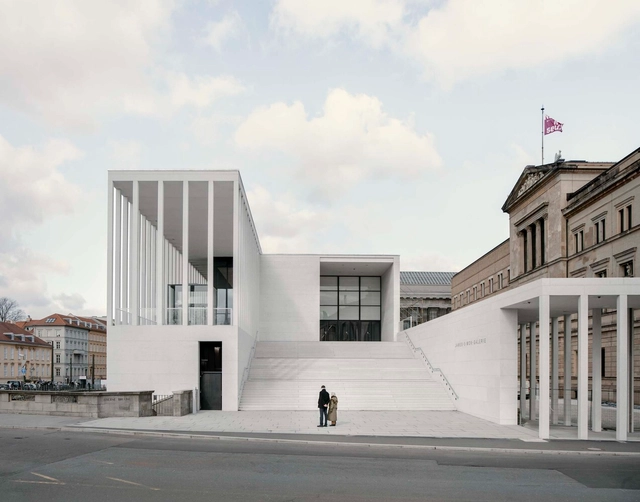
Few architects in history have had the honor and privilege of intervening in the famous St. Mark's Square in Venice — a tourist landmark of incomparable historical value to humanity. Sir David Chipperfield is one of them. As if that was not enough, he also left his mark on another project of inestimable value: the Neue Nationalgalerie, designed originally by Mies van der Rohe in Berlin. The four centuries that separate the design from its restoration seem to pose no difficulties for the 2023 Pritzker Prize winner, who rejects an international style of architecture in search of a trait that highlights local qualities.
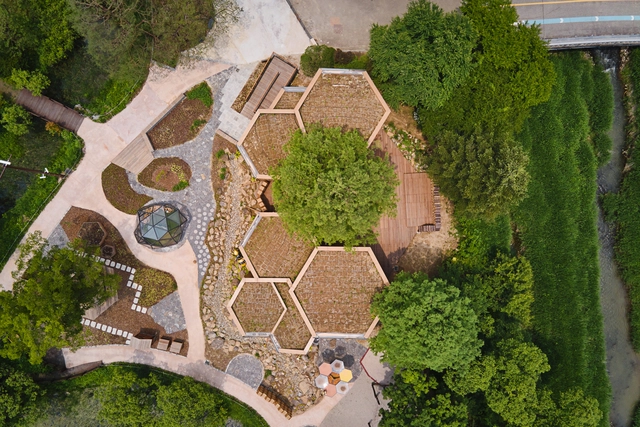
Despite not being found in nature, right angles are the most used by architects. In the search for more functionality and practicality in construction, squares and rectangles emerge as the main option when designing. On the other hand, several vernacular and ancestral architectures adopted arches and circular plans as a solution. The game of geometric shapes in the architectural composition is vast, but we cannot forget a polygon that also stands out: the hexagon.
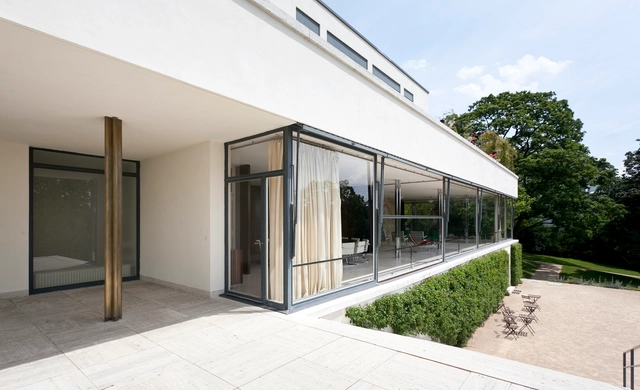
When people describe the modernist movement as a whole, they broadly reference the steel and glass skyscrapers which dot many of our cities’ skylines, or more specifically, the International Style that once emerged from Europe after World War I. The International Style represented technological and industrial progress and a renaissance of social constructs that would forever influence the way that we think about the use of space across all scales. Often designed as politically charged buildings seeking to make a statement towards totalitarian governments, many architects who influenced the style moved to the United States after World War II, paving the way for some of the most iconic buildings and skyscrapers to be built in the 20th century.