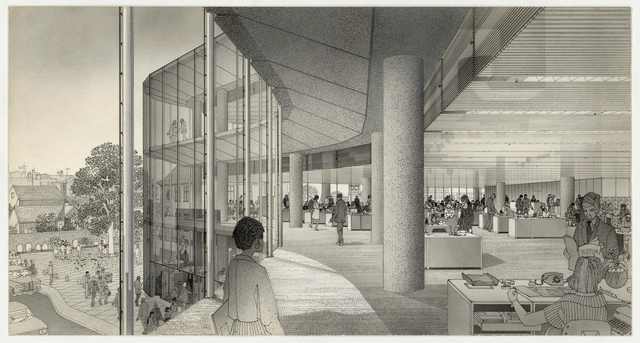
Throughout history, drawing has been the essential medium of conveying architectural ideas, operating on multiple levels, from the practical application of serving the construction process to the more artistic quality of expressing a vision and providing an impression of what the architecture will be like. The book Architecture – Drawn, From the Middle Ages to the Present, authored by University of Stuttgart Prof. Dr. Phil. Klaus Jan Philipp, recounts the historical development of architectural drawings, exploring all the different inventions, revolutions and continuities spanning eight centuries of architectural representation.
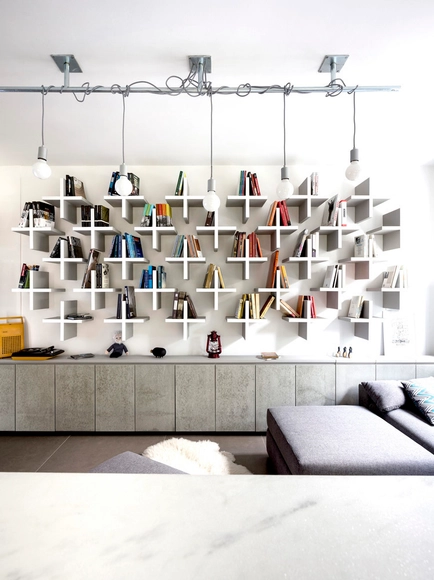
Sharing your shelf is, in a way, sharing yourself. Every element —from the titles you choose to the way you organize them— says something about your personality and your interests.
https://www.archdaily.com/897991/home-library-architecture-smart-and-creative-bookcase-designsArchDaily Team
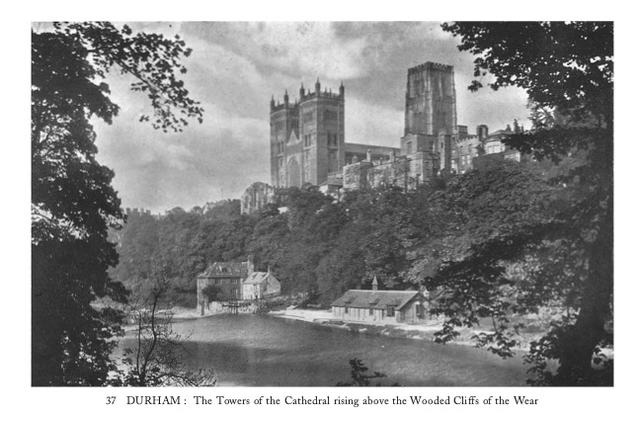
Durham Cathedral. Image Courtesy of Pavilion Books
The most recent edition of The Cathedrals of England brings to a new generation the classic 1930s Batsford guide to England’s religious architecture. Concisely written and speaking to a broad readership, the book serves as a practical guide today as it did almost a century ago, acting as a reference catalogue for every Church of England cathedral in the country at the time.
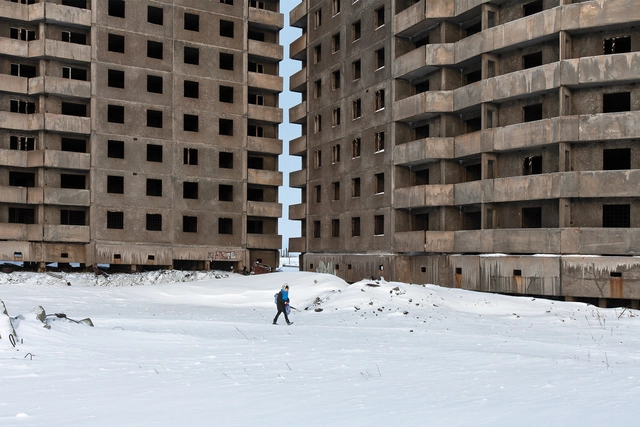
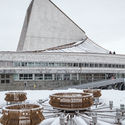
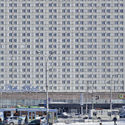
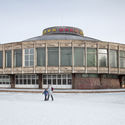
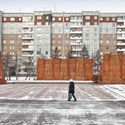
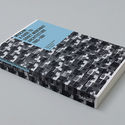
Over the past few years, a series of exhibitions and monographs have prompted a rediscovery of socialist modernism, its powerful expression and exoticism stirring significant interest. The recently published photo book Concrete Siberia. Soviet Landscapes of the Far North by Zupagrafika casts a new light on this relatively unexplored chapter of architecture history by showcasing the Soviet architecture of Siberia's major cities while providing an insight into a little-known landscape. The book presents the architecture and urban environment of six Siberian cities: Novosibirsk, Omsk, Krasnoyarsk, Norilsk, Irkutsk and Yakutsk, through the lens of Russian photographer Alexander Veryovkin, bringing about a new-found perspective on post-war architecture.
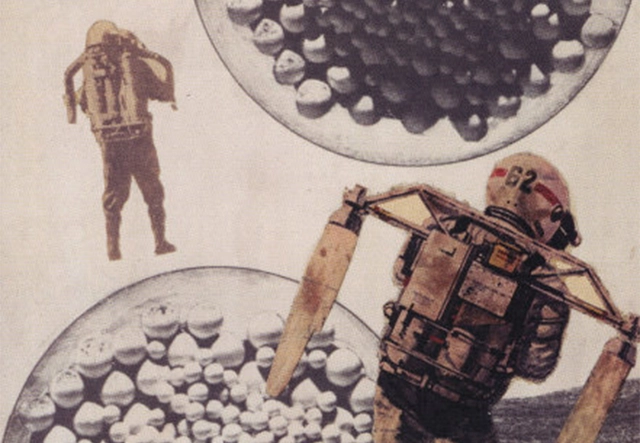
Raimund Abraham’s Air Ocean City. Image Courtesy of MIT Press
For more than a century, architects have been addressing the world as a project through speculative designs in an attempt to imagine the future and reframe global issues. Globalisation, the ever-increasing interconnectedness demands action on a worldwide scale and invites a reflection on the profession's responsibilities. The latter is precisely what the book The World as an Architectural Project achieves, through a compilation of world-scale speculative projects of the past century, making a compelling case for the agency of architecture.
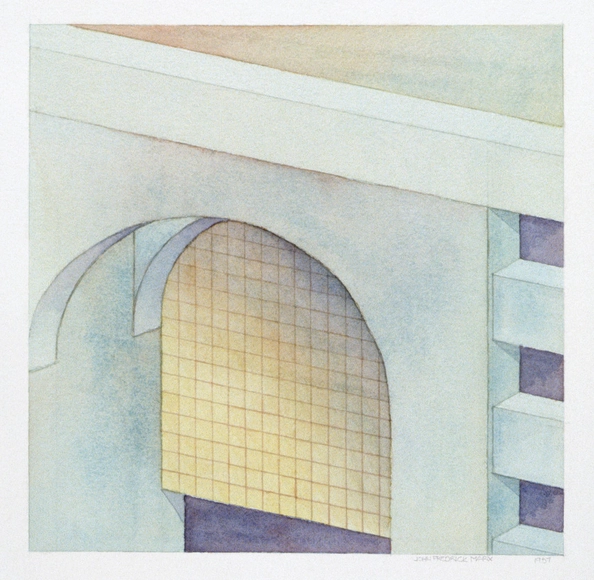
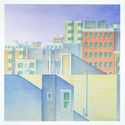
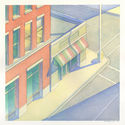
Etudes is a rare thing amongst architecture books. Its subject is neither built nor unbuilt projects but instead imaginary places and abstract compositions by San Francisco architect John Marx. Rendered in delicate watercolours, Marx’s places are dreamlike and akin to the structure and sentiments of his taut poetry that sits alongside pages of his paintings.
Curiously, the quiet streets and vacant landscapes of Marx’s imagination speak to us in an acutely timely fashion as we find ourselves in a new world of empty cities closed for business, a world that feels as if it has come to a standstill.
After the success of the original guide-book on underrated Soviet architecture, Garage Museum of Contemporary Art is publishing an English version of the bestselling guide: Moscow: A Guide to Soviet Modernist Architecture 1955–1991in a new digitalized format with six new chapters.
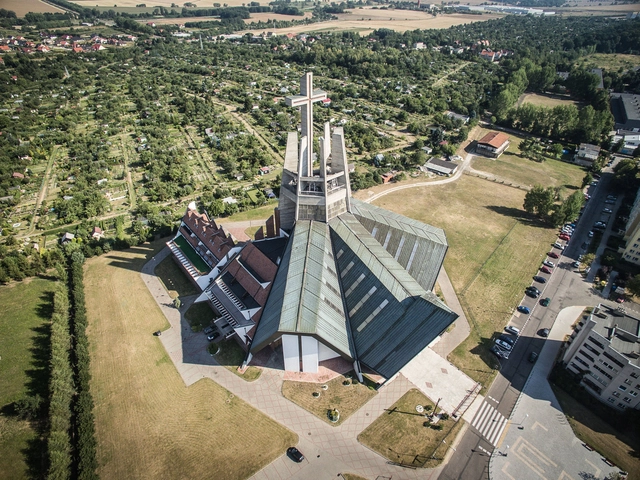
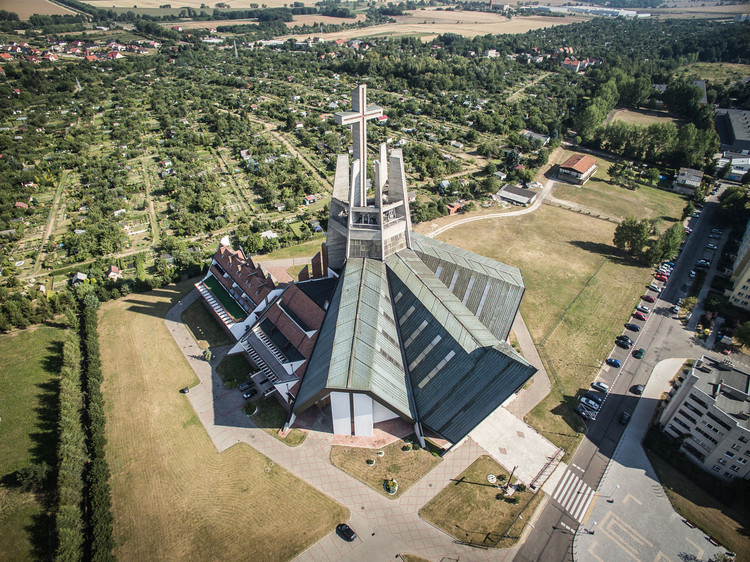
In the mid-to-late 20th century, a secular, socialist Poland served as the backdrop for the construction of thousands of Catholic churches. In their book Day-VII Architecture, Izabela Cichonska, Karolina Popera, and Kuba Snopek analyze the paradoxical facets of this architecture born at the intersection of secularity and religion, charting how its development was influenced by liturgical reform, political movements, and the growth of postmodernism. In the excerpted introduction below, the authors unfold this history, touching on the Second Vatican Council, Solidarity, the Iron Curtain, and more in relation to the development of Day-VII Architecture's ultimately unique postmodern style. The publication has collected photographs of 100 Polish churches built after the year 1945, accompanied by interviews with their architects. To read more about the authors' original Day-VII documentation project, which served as the groundwork for this book, be sure to visit the original article "These Churches Are the Unrecognized Architecture of Poland's Anti-Communist 'Solidarity' Movement."
https://www.archdaily.com/922363/day-vii-architecture-how-the-architecture-of-polish-churches-developed-in-a-secular-socialist-stateLilly Cao
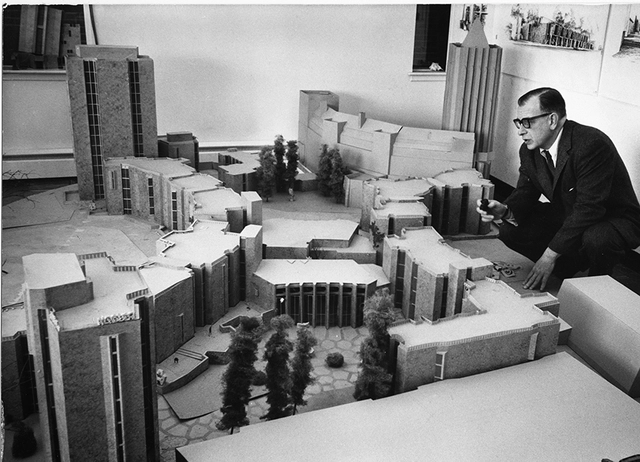
Photograph of Eero Saarinen with two Yale residential colleges. From "Living on Campus: An Architectural History of the American Dormitory". Image Courtesy of Metropolis Magazine
Modernism in Pittsburgh. Central Park. Space settlements. Interwar typography. What do these topics all have in common? They are the subjects of a new batch of architecture and design books released this past year – books that constitute Metropolis Magazine’s spring/summer edition roundup of architecture’s newest and most exciting publications.
https://www.archdaily.com/922326/new-architecture-and-design-books-to-read-this-summerLilly Cao
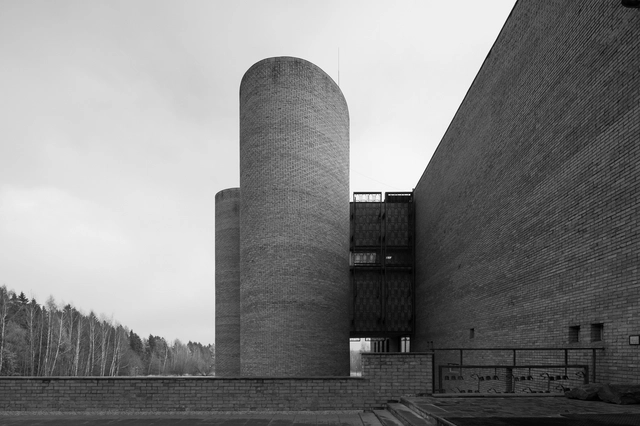
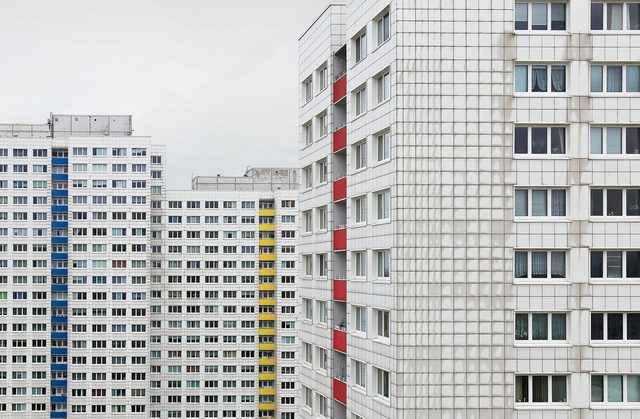
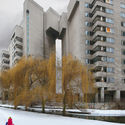
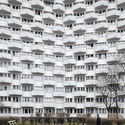
Post World War II, Brutalism found its way across Europe, redefining modernist architecture and establishing a new style for mass housing and communal buildings. Although most of the light was shed on concrete landmarks in major cities, European suburbs have also housed many exceptional brutalist buildings such as the 'Hammer-shaped Tower Blocks' or the 'Houses on Chicken Legs'.
Why don’t architects often consider the ethics of what they do? Thomas Fisher’s new book, The Architecture of Ethics, digs into this topic in great depth and with engaging insight. At the recent AIA convention in Las Vegas, I sat down with Fisher—former dean of the University of Minnesota College of Design, and now a professor in urban design at the school, as well as director of the Minnesota Design Center—to talk about his book and the ethical dimension of designing and building in the context of contemporary practice.
https://www.archdaily.com/919412/thomas-fisher-on-the-ethics-of-architecture-and-other-contradictionsMichael J. Crosbie
The need to substantially reduce our impact on the planet must be translated into a significant change to our lifestyle and habits. One of these is to consume responsibly and consider that waste does not exist, but that all material can be transformed into something useful again following a circular ecological system.
In his book Upcycling Wood, Reutilización creativa de la madera, the architect and artist Bruno Sève writes and edits a non-exhaustive guide of the uses and possibilities of recovered wood, as a framework for responsible reuse; from small scale, such as furniture or artists' canvases, to medium scale, with its use in interiors and facades. This book seeks to raise awareness among professionals and citizens in general through analysis of the life cycle, examples of uses and finishing processes, leading to an ecological and responsible framework. The book is illustrated by numerous design and architecture teams who follow the guidelines of ecological design with reclaimed wood.
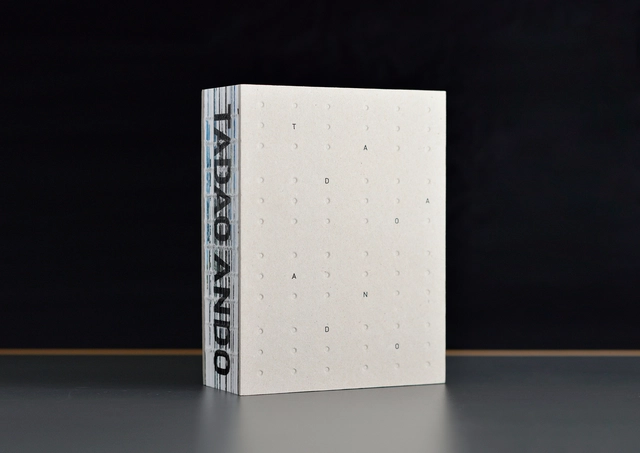
Throughout his distinguished career, Pritzker award winner Tadao Ando managed to trigger every human’s sensations upon entering his structures. It was never just the buildings’ forms that let the architect earn his status, but the manipulation of light and shadow and the impulsive sensation of sanctity that his buildings impose, are what led him to become one of the world’s most renowned architects.
To showcase Ando’s recent works and to honor their ongoing relationship with the architect, Oris House of Architecture have created a monograph titled Transcending Oppositions, celebrating his buildings and their relationship with the contemporary culture of Japan. Judging this book by its cover, readers will have a clear notion of what to expect, as the monograph reflects Tadao Ando’s architecture on fine print.
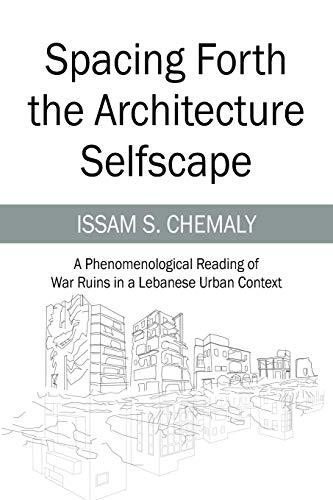
Book Review by Gioia C. Sawaya; Chemaly’s book offers a different attempt to reading war ruins in a Lebanese urban context. It suggests another perception of an architectural space, with the need for a built environment that encourages empathy with the user. He defines this space as a verb (an affording action) rather than a noun. The introduction of the book helps to locate the author’s main aim and frame his discourse.
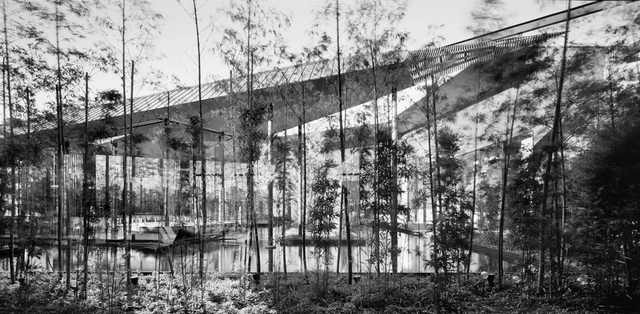
Erieta Attali has devoted two decades to exploring the relationship between architecture and the landscape at the edges of the world. Attali’s photography interrogates how extreme conditions and demanding terrains provoke humankind to re-orient and center itself through architectural responses. Her unrelenting and highly physical expedition has seen her traverse four continents, working in isolated and remote terrains from Iceland to the Indian Ocean.
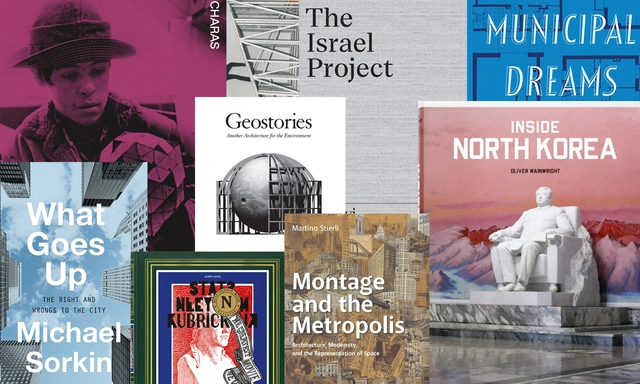
Metropolis Magazine has released a curated list of 19 new books to read this spring, with topics ranging from the evolution of social housing to Stanley Kubrick's unfilmed masterpiece to a fascinating tome on the architecture of Zionism. Not simply volumes detailing well-tread histories, these chosen titles explore every niche category through the lens of architecture. Ever wondered how Buckminster Fuller inspired six former gang members to construct his geodesic dome? Or what metro stations in North Korea look like?
The MIT Press, in collaboration with the Andrew W. Mellon Foundation, is set to digitize landmark out-of-print architecture and urban studies books published by the MIT Press, making them freely accessible online for discovery and research. Aided by a $157,000 grant by the Andrew W. Mellon Foundation, MIT Press are enabled to digitize a collection of “image-rich and intellectually prized architecture and urban studies titles” complete with the commissioning of new forewords for the works. Following the project’s completion, MIT Press intends to distribute a minimum of 25 titles for free on several platforms, including its own ebook service.
Among the titles to be released are Francoise Choay’s “The Rule and the Model: On the Theory of Architecture and Urbanism,” which links modern theory with classical and Renaissance architecture, and John Templer’s “The Staircase,” regarded as the first theoretical and historical analysis of the elemental stair. Books on the subject of famous architects will also be released, such as Donald Leslie Johnson’s “Frank Lloyd Wright vs. America: The 1930s” and Grant Hildebrand’s “On Leon Battista Alberti: His Literary and Aesthetic Theories.”
https://www.archdaily.com/893543/mit-press-to-make-landmark-architecture-books-freely-accessible-onlineNiall Patrick Walsh
Everyone knows that becoming an architect translates to a lot of time in front of a computer screen, or on-site or in the model shop—or waiting for renders to finish. But we also know that being a good architect is about much more; truly savvy architects and really thoughtful projects often spring from strong theoretical, philosophical or practical trains of thought (and they are not always directly inspired by architecture itself!).