

-
Architects: 6717 Studio
- Area: 190 m²
- Year: 2020
-
Manufacturers: Jotun, Kohler, Xinfa

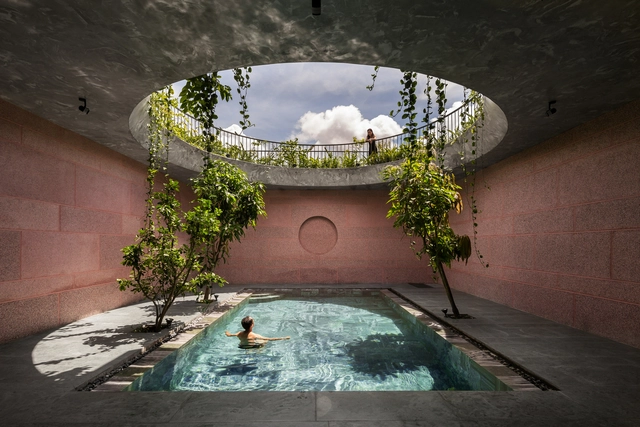
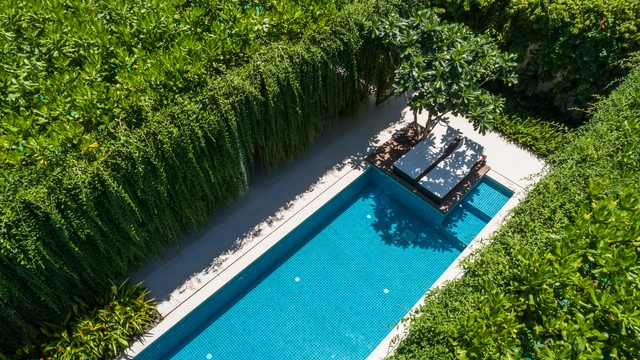
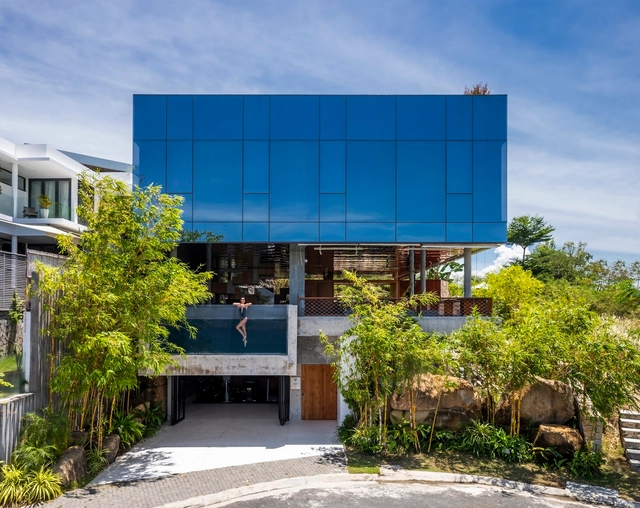
Designer pools bring status to luxury homes and five-star hospitality spaces. But adding the cooling, calming, energizing, and environmental benefits of a hyper-local water body to a residence can far outweigh the cost of installation. With a range of long- and short-term landscaping options possible, meanwhile, luxury is available, whatever the budget.
Most pools are built below ground to retain unobstructed visuals above. While all in-ground pools start off the same way – with excavation, then connecting the plumbing and filtration systems – the main difference is in the construction of the pool’s basin. The simplest and quickest method is to lower a pre-fabricated reinforced plastic pool or pre-cast concrete basin into the cavity, before connecting the pipework and backfilling the recess with sand. But this is only suitable for off-the-shelf pools with simple geometries. In order to make the most efficient use of all available space, bespoke pool shapes and sizes are best achieved by pouring or spraying concrete into a rebar or timber frame.
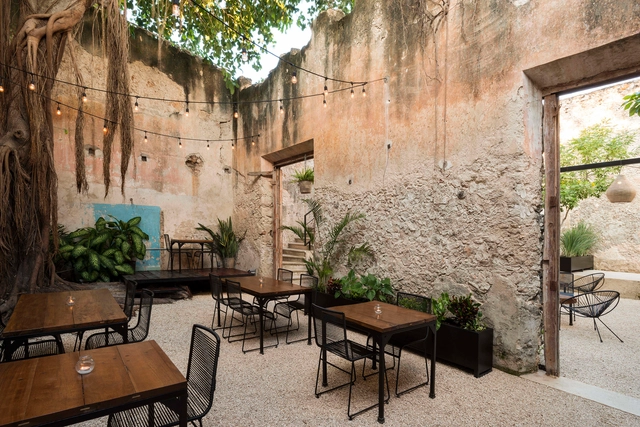
The spatial distribution of a restaurant or bar is essential to its success. Faced with this design challenge, several architects have experimented and proposed configurations that both enhance the use of space in different culinary experiences.
With this being said, take a look at 50 gastronomic establishments in plan and section to inspire your next design.
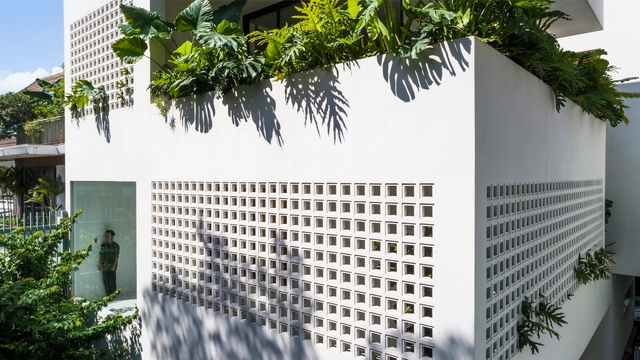
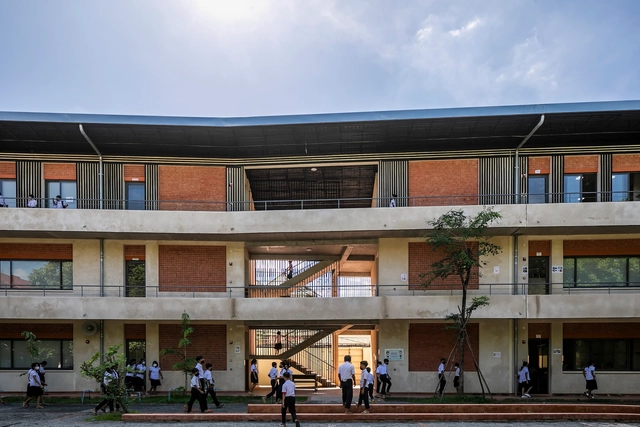
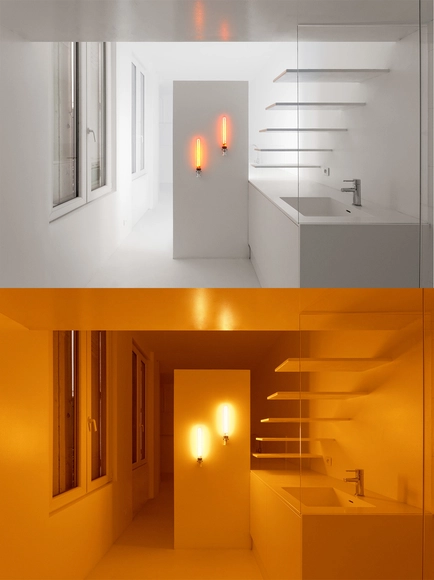
Light is a key feature in architecture. Centuries ago, the sun and fire were the only sources of illumination, but in today's technology-driven world, artificial lighting and cutting-edge optical technologies have found ways to mimic the qualities of natural light, making it possible to have a naturally-lit-looking space within four walls. LED technologies have even made it possible to embed lighting in furniture, interior surfaces, and facades, altering their intensities and hues to make light a main feature in the architecture's storytelling.
If used effectively, lighting can become a lot more than just an illuminator; it becomes a mood setter, a symbol of a specific emotion the architect is trying to convey. For instance, indirect lighting becomes a floater, levitating the walls from the ground and making the space seem lighter in weight, whereas orange light manipulates the space's temperature, creating the illusion that the users are walking into an intense, overheated room.
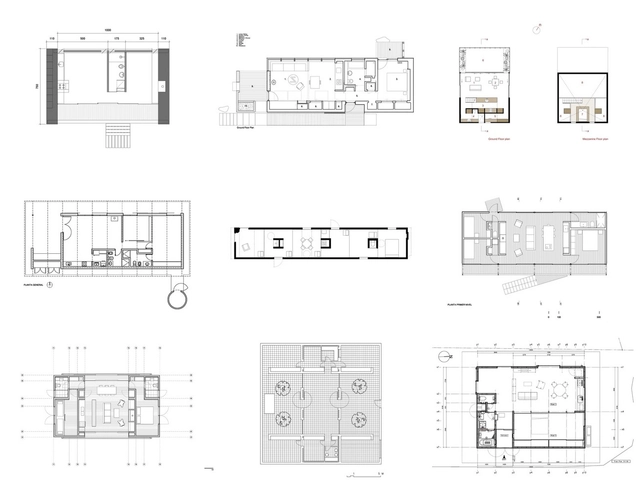
The challenge of designing a house with a tight budget and space constraints, together with the essential duty of responding correctly to the requirements of the user, is sometimes one of the most challenging and motivating tasks an architect can face. How can you take advantage of space most effectively? How can you avoid wasted material? How do you anticipate the possible future expansion of the house? And how do you develop a simple design that also delivers value to its inhabitants?
To help you in this process, we scoured our projects archives to select 30 houses that provide interesting architectural solutions despite measuring less than 100 square meters.
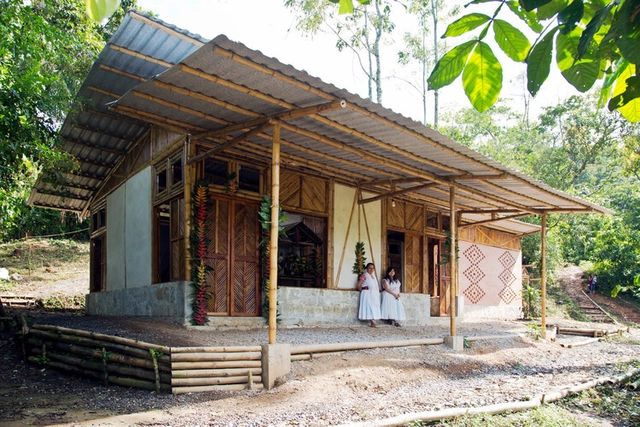
The Royal Academy has honored Shane de Blacam at the 2023 Royal Academy Architecture Awards, alongside announcing the finalists for the Royal Academy Dorfman Award—an accolade that celebrates global architecture, looking toward the future of the discipline and architectural practice. The finalists are COMUNAL (Mexico), Taller Gabriela Carrillo (Mexico), H Arquitectes (Spain), and Tropical Space (Vietnam).
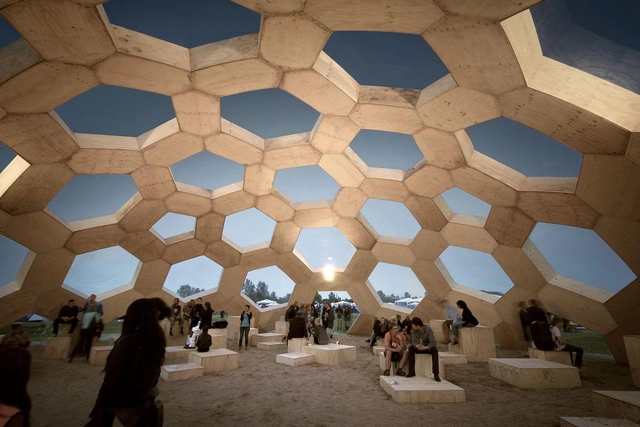
Houses and buildings are one of the first subjects children learn to draw. The simple arrangement of squares and rectangles with a triangle on top is easy and efficient, and quickly identifiable. Once we graduate from drawing to building, however, perhaps there is a better way. These five examples of domed buildings, pavilions, and installations support the thinking that there is an easier way to do it when you think outside the square.