Soporte oculto para vigas - CBH. Image Cortesía de Simpson Strong Tie
In the field of architecture, wood was one of the first materials used by humans for construction, evolving and facing various challenges over the years. From the integration of new technologies into industrial production processes to ancestral techniques and materials reinterpreted for contemporary times, timber construction continues to garner significant interest among architects and designers. Beyond its versatility, strength, appearance, and sustainability, cross-laminated timber, commonly known as CLT, presents a highly promising future for the industry.
Due to high demand, we are temporarily reopening applications for the ArchDaily Student Ambassador Program 2026/2027.
ArchDaily was born within a university, founded by two architecture students who believed that architectural knowledge should circulate more freely. Eighteen years later, this conviction remains unchanged—but our insights, tools, and opportunities have grown. We launched the Student Ambassador Program to give the next generation of architects a direct role in connecting their universities to the global architectural conversation.
By popular demand, we are briefly reopening applications for the ArchDaily Student Ambassador Program 2026/2027.
ArchDaily began on campus, founded by two architecture students who believed that architectural and design ideas should be accessible to everyone, spreading further and wider. Eighteen years later, while our tools have advanced, our horizons broadened, and our opportunities expanded, our core mission remains unchanged. ArchDaily is now officially launching the Student Ambassador Program, empowering the next generation of architects to play a direct role in connecting their campuses with the global architectural dialogue.
Due to high demand, we are briefly reopening applications for the ArchDaily Student Ambassador Program 2026/2027.
ArchDaily was founded within a university, started by two architecture students who believed that architectural knowledge should reach further than it did at the time. Eighteen years later, that conviction remains unchanged—but the perspectives, tools, and opportunities have grown. We launched the Student Ambassador Programto give the next generation of architects a direct role in connecting their universities with the global architectural conversation.
National Museum of Ecuador (MUNA). Image Courtesy of Studio Campo Baeza
Studio Campo Baeza, based in Madrid, together with Quito-based Maoda, has won the international competition to design the new National Museum of Ecuador (MUNA) in Quito. Their proposal, titled Echoes of the Sun, was selected by a national and international jury from 17 finalist entries in the second phase of the competition. The public competition initially attracted 148 teams from around the world, with 20 shortlisted to develop design proposals before the winning scheme was announced during a public ceremony in Quito on July 6, 2026.
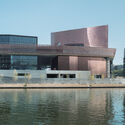
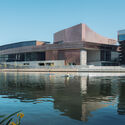
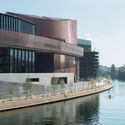
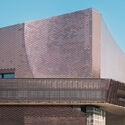
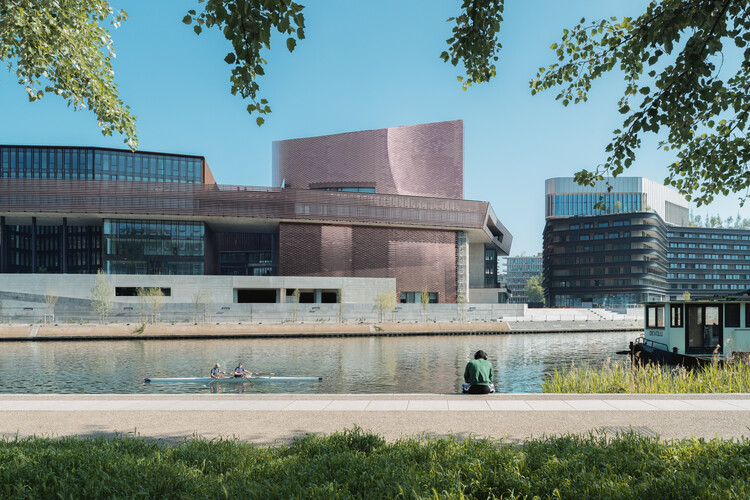
A new space dedicated to contemporary art on the Île Seguin, in the Greater Paris area, is opening in October 2026. The new cultural institution, named "Large," will be housed in a building designed by Catalan architects and Pritzker Prize recipients RCR Arquitectes, the studio's first project in Paris. It is situated on La Pointe des Arts, a large-scale redevelopment of the Île Seguin's former industrial area into a mixed-use complex spanning more than 53,000 m² and focused on arts and culture. The project's architectural massing follows the stratification concept set out in the masterplan by Ateliers Jean Nouvel. The institution will open with the exhibition "Imaginary Engine: From Masterpieces of the Collection Renault to Artists of Today," bringing together 55 artists from 23 countries to explore the relationship between humanity and machines, in tribute to the site's industrial history and Renault's decades-long collaboration with artists.
Hudson's Detroit mixed-used development. Aerial view.. Image Courtesy of Bedrock
Urban planning is often confused with adjacent disciplines: urban design, environmental policy, civic strategy, local politics, or data analytics. Moreover, the overlap in training and responsibilities between planning and urban practices makes the field difficult to define clearly. In practice, it is often easier to recognize the consequences of bad planning than to articulate the outcomes of good planning. When planning is working well for residents, it should disappear altogether. It should remove friction from daily life so that people would not think to credit a discipline at all. At its core, urban planning is the relationship people have with their environments, and when that relationship is functioning, the mechanics of housing, transportation, affordability, access, and inclusion should feel ordinary and expected.